
The Twisted Psychology of Giving
Do we give because we care? Or because it makes us feel good? And what happens if we come into a pile of money?
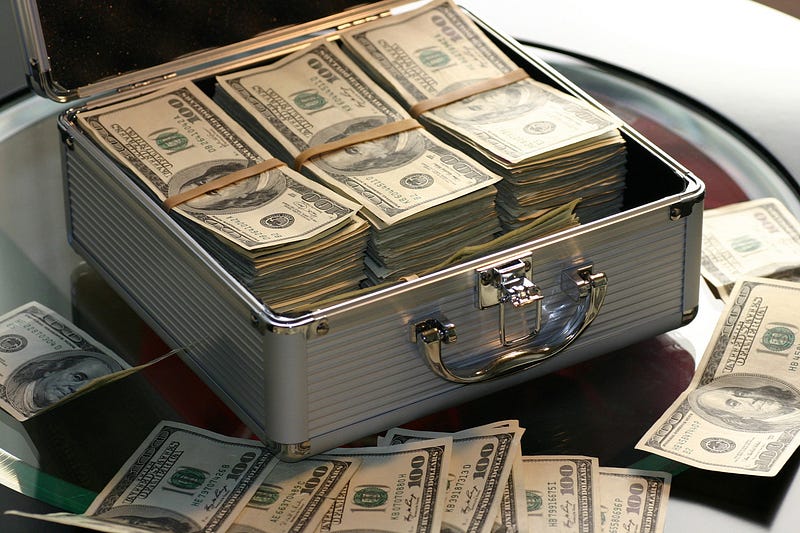
If you knew your favorite uncle might someday leave you a fortune, would you be willing to commit today to giving a chunk of it to charity? If you weren’t sure whether the old man had you in his will, or how generous he’d be, odds are good you’d make a solid pledge, research suggests. But soon as ol’ Uncle So-and-So was six feet under and your bank account six figures stronger, odds are all bets would be off.
Much about the psychology of giving remains a mystery, but a picture is emerging that’s a little twisted. First …
Why We Give
Donating to charity has been shown in some studies to make people feel good. Sounds logical. But despite lots of expert explanations about how and why giving makes us happy, the evidence is pretty thin (especially in terms of any lasting happiness). But much of the research is based on experiments in lab settings, involving fake money or points.
Social psychologist Elizabeth Dunn of the University of British Columbia did a series of experiments a decade ago that indicated money was linked to happiness, but only if people gave it away versus spending it on stuff for themselves. Giving once might bring a brief bout of joy, Dunn figured, but “if it becomes a way of living, then it could make a lasting difference.”
However, studies like these, as with many studies in psychology, typically struggle to show cause and effect: Does a giving spirit creates happiness, or are happy people more generous?
Such research also doesn’t typically address the philosophical elephant in the room: Do we give because we simply care, or do we give because it makes us feel good (or because of the tax deductions)? Some research shows that people are more likely to donate if they get swag in return — something that suggests at least a bit of selfishness, and which reduces the effective amount of their gift, of course.
Don’t expect a conclusion on the altruism question anytime soon.
Meanwhile, what’s really fascinating — and a little easier to pin down with research — is how a person’s perception of money and giving change when they suddenly have more of it.
The Windfall Effect
When people come into big money — from, say, the lottery or an inheritance — research suggests they’re be more willing to donate a portion of that windfall than they had been willing to part with their regular earnings.
But that’s not the whole story, as David Reinstein, a University of Exeter economics lecturer, has shown.
At the end of a web survey, Reinstein and colleagues told a few hundred UK residents they had a 50/50 chance of winning 10 pounds (about $13). Not exactly a windfall, but scientists don’t typically have lot of money to throw around (hence all the experiments with points or fake money).
Before they knew if they’d won some cold hard cash, some of the participants were asked if they’d like to donate part of their potential mini-windfall to one of two well-known charities. Others were told they’d won the cash and then were asked if they’d like to donate.
Those who were asked about their generous nature prior to winning were about 50 percent more likely to give some away, and their donations per participant were twice as much the other group.
“People are more generous before they know how much money they will receive,” says Reinstein, co-author of the study published in the January issue of the Journal of Public Economics.
(For the record: The participants who won were actually paid; the donations were actually made; and the losers actually got nothing.)
What Gives?
I asked Reinstein why getting the influx of cash tends to turn people from generous to stingy. His team, drawing from their own work and other research, offers several possible explanations, and Reinstein created three cartoons to summarize the ideas:
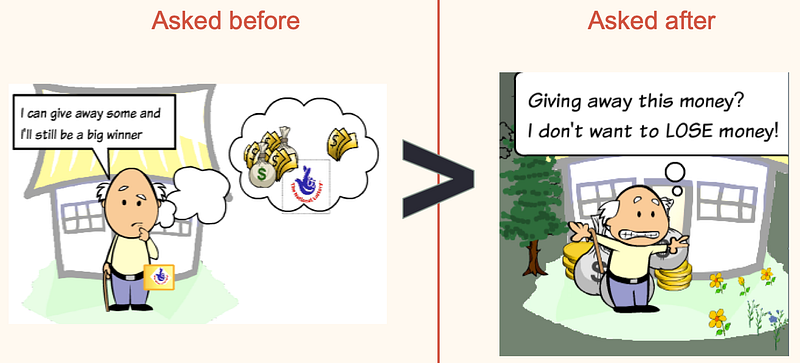
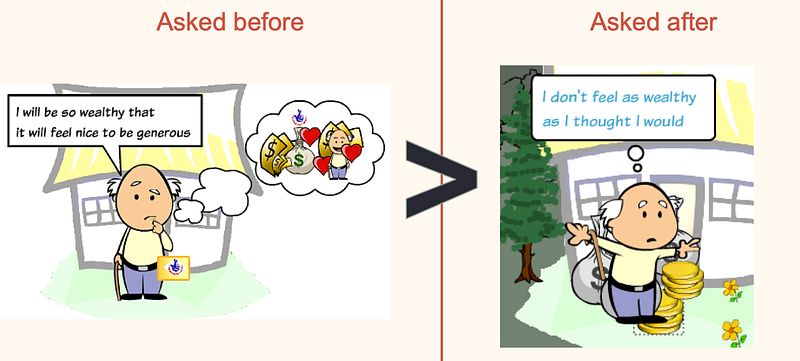
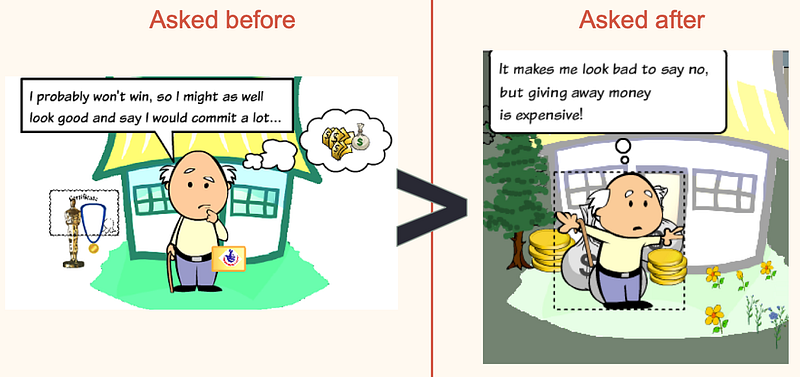
But will 10 pounds have the same effect on a person’s goodwill as scoring the Mega Millions jackpot? Reinstein acknowledges that gap, but he says other real-world research, involving greater sums of money, suggests the motivations his team has uncovered “would carry over” to real windfalls.
There’s a point to all this.
“These findings have real implications for fundraisers who are trying to find the best time to ask someone to commit to giving a donation,” Reinstein says.
And that time is, of course, before people come into serious money.
Reinstein hopes to test his ideas in a big way. Through his website Give if You Win, he’s encouraging businesses and charities to get together and create programs in which white collar employees are encouraged to pledge a percentage of their year-end bonuses before they know how big those bonuses will be (or if they’ll even get one).
He figures such pledges could make the culture of big corporate bonuses more palatable. “When bankers succeed, so will charities,” he says.


