
The Trusty Gardener-Building a Second Hugelkultur Bed (An Old-Time German Gardening Method)
Taking Advantage of the Unusual January Weather
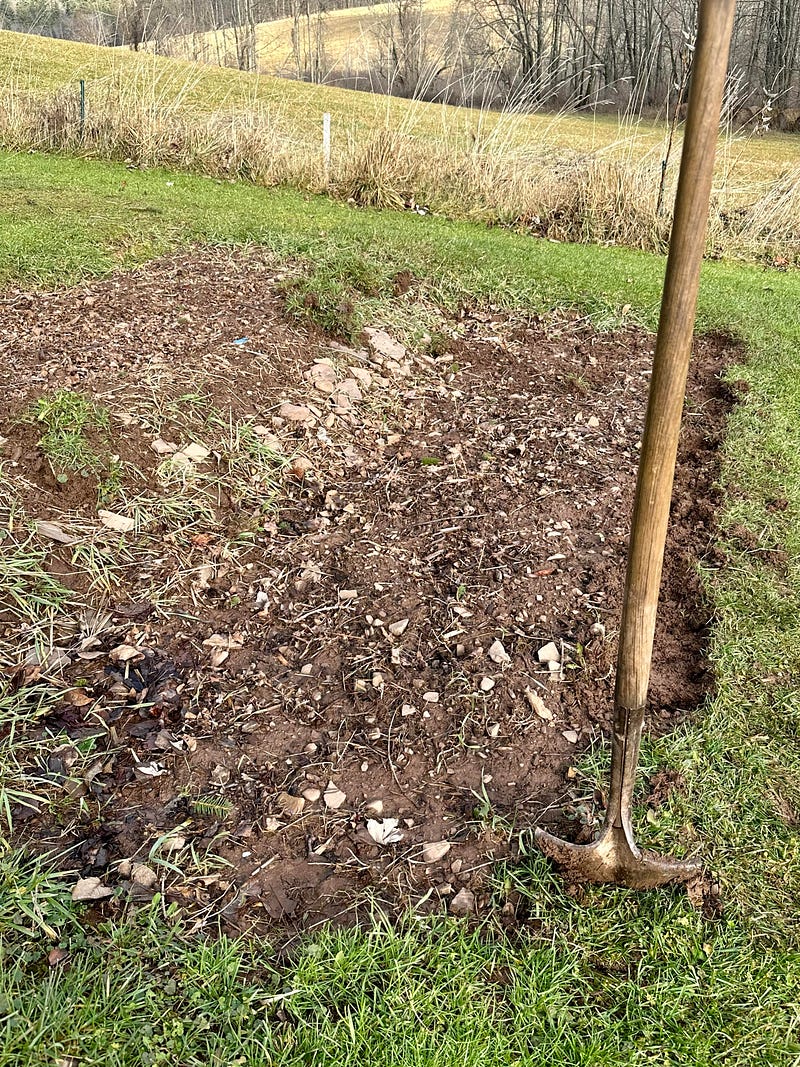
Welcome back. So far 2023 has been very strange, at least weather-wise. We had a white Christmas with very cold temperatures and wind chills well below zero. Four or five days later a warm-up began which has lasted for a week now. Temperatures have been as high as 60 degrees, not even dropping to freezing at night. All the snow has melted and it feels like Spring. But I know better. I took advantage of the weather to work on another Hugelkultar garden bed (an old-time German gardening method). I was happy with the first one I made last Spring; the results were pretty good overall.
While the snow was here, I took advantage of the one-foot plus snow cover to enjoy some cross-country skiing. I’m glad I did. I was able to get out 3 times before the snow disappeared.
Gardening in January — In Central New York State?
It’s very unusual indeed that I can do anything garden related in January. Outside that is. I am beginning to look through seed catalogs and get some ideas for the upcoming growing season. I still have to go through my seed bin to discard old seeds. The process begins.
The Hugelkultur Gardening Method
Last Spring I wrote several articles on this gardening method. The idea is to use rotting wood and other organic materials to form a mound that produces an ideal growing medium as the wood and other materials decompose. It has several advantages including raising plants off the ground, providing ample nutrients, and holding a good supply of moisture (the rotting wood acts as a sponge) to help during dry periods. It is similar to a compost pile but constructed to last several years or more.
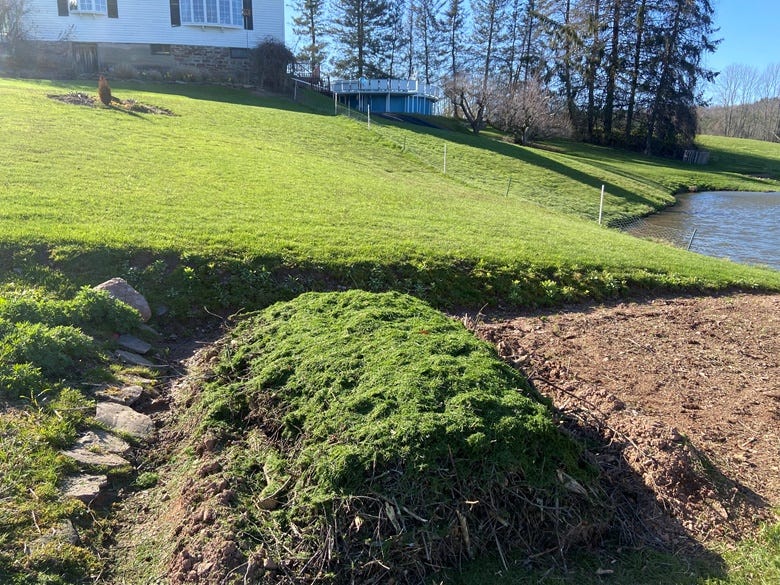
Overall I was satisfied with the results from my first Hugelkultar mound. The cucumbers and squash did fairly well, and I even got a few pumpkins. I didn’t keep it watered enough, however, and the yields started to dwindle as we got a lot of hot dry weather. This coming season I plan to use a few sprinklers during the prolonged dry periods.
One Hugelkultur Bed Is Not Enough!
I decided I need another one of these in my auxiliary garden down behind the pond. In this small plot, I usually plant extra tomatoes, also gourds, pumpkins, and acorn squash. I am going to use this second bed for pumpkins and gourds, maybe acorn or butternut squash. This auxiliary plot is a 2 tiered garden due to the slope of the ground; I will make the lower tier into a Hugelkultur bed. I have been planting potatoes on the upper tier for the last few years using the straw method.

The Hugelkulatur Bed in the Lower Garden will be dedicated to cucumbers, along with Zucchini and summer squash. Last year I tried to crowd pumpkins in also. They need more room to grow.
Building Hugelkultur Bed # 2
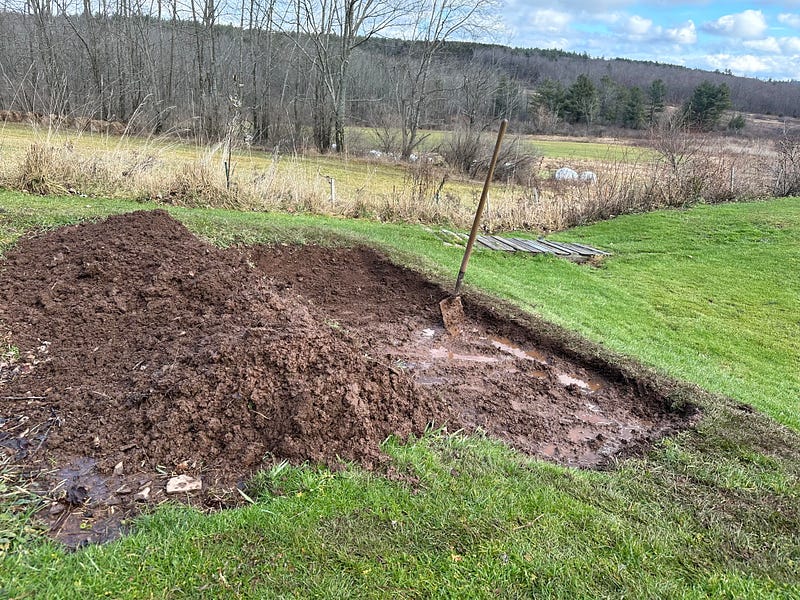
Yesterday I started work on this. I wanted to start in the Fall but didn’t get time. I am fortunate, however, to be able to work on this in January. I dug out the dirt (about 6 or 8 inches) and set it aside to put on the top once all the wood is placed. The garden soil was pretty muddy on the one side but overall not too bad.
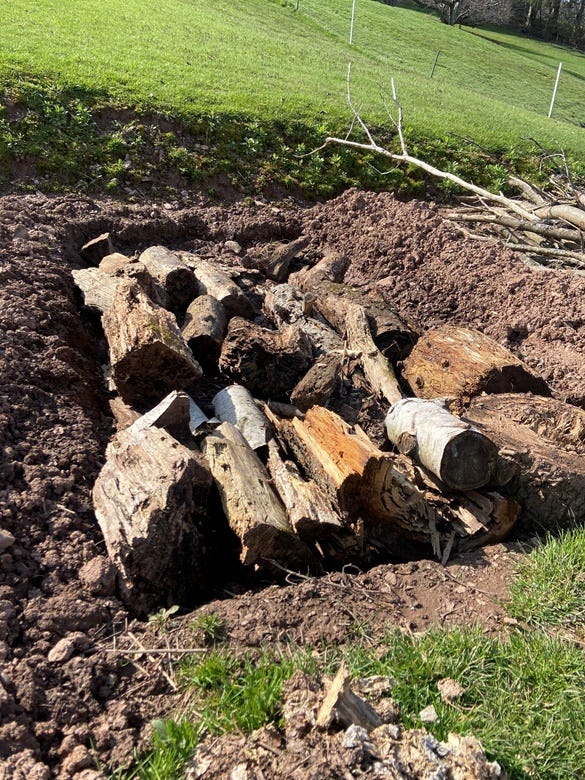
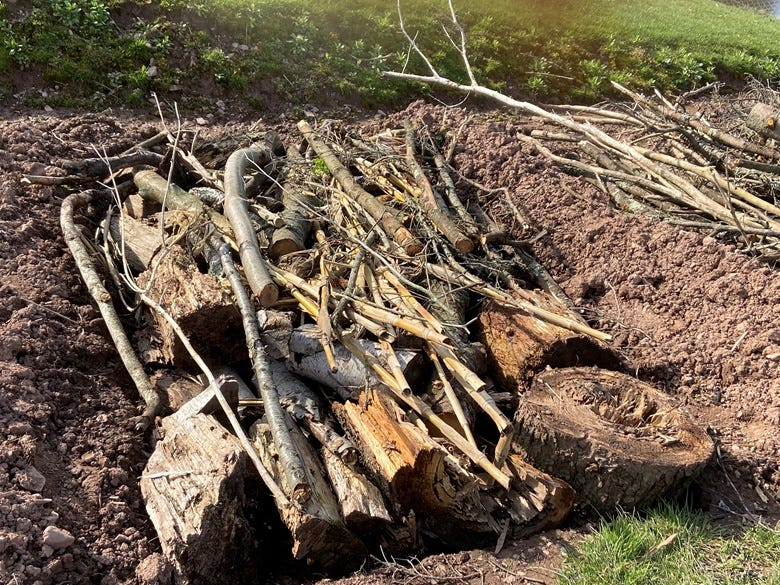
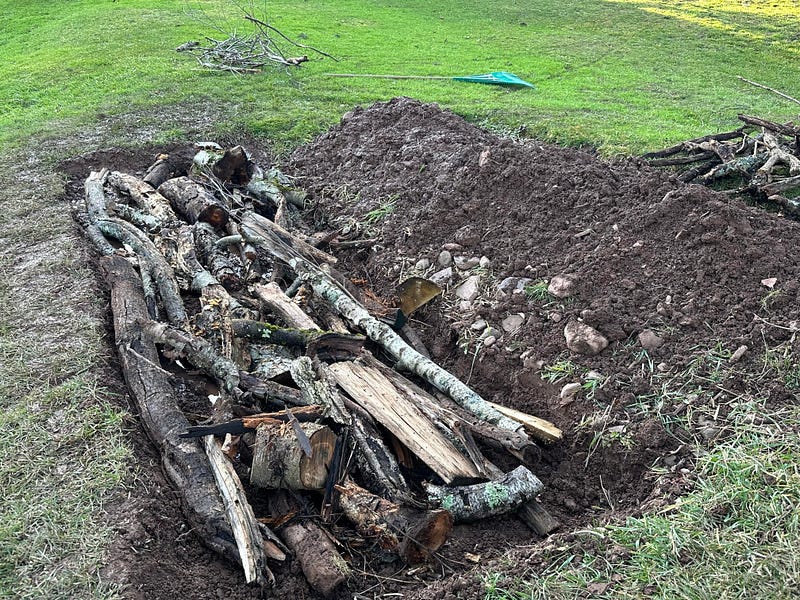
I then gathered the wood I needed and built up the pile, using larger pieces on the bottom and smaller ones near the top. On the top, I put some fine debris that I raked up last year when we had several pine trees come down. Then I added some rotting leaves that I mulched in the Fall to add.
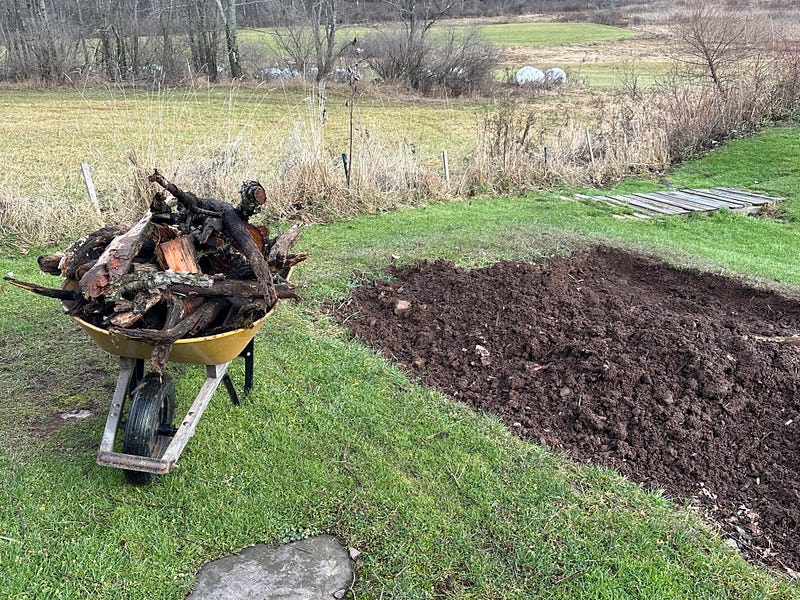
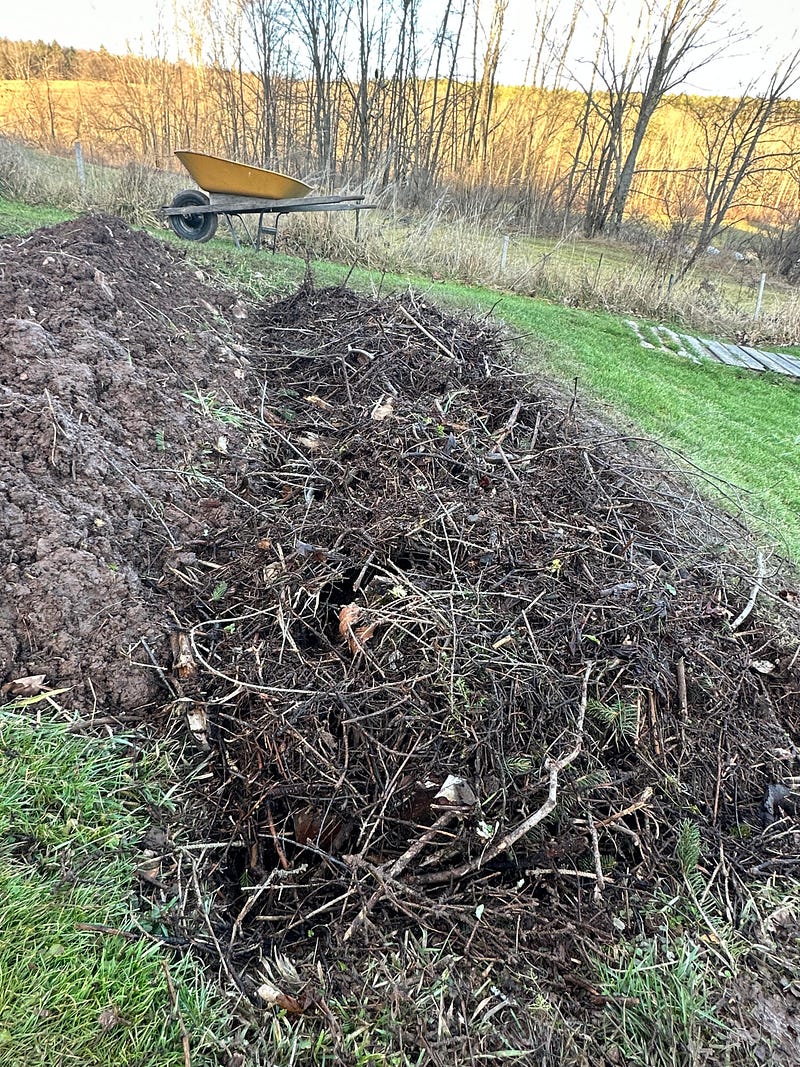
Today, the final step was to add the dirt back on the top; the good topsoil that I removed to begin the project. I also may get some composted manure from a neighbor to add as the top layer. The bed will have time to “percolate” over the Winter and Spring. It should be ready for planting come May or June.
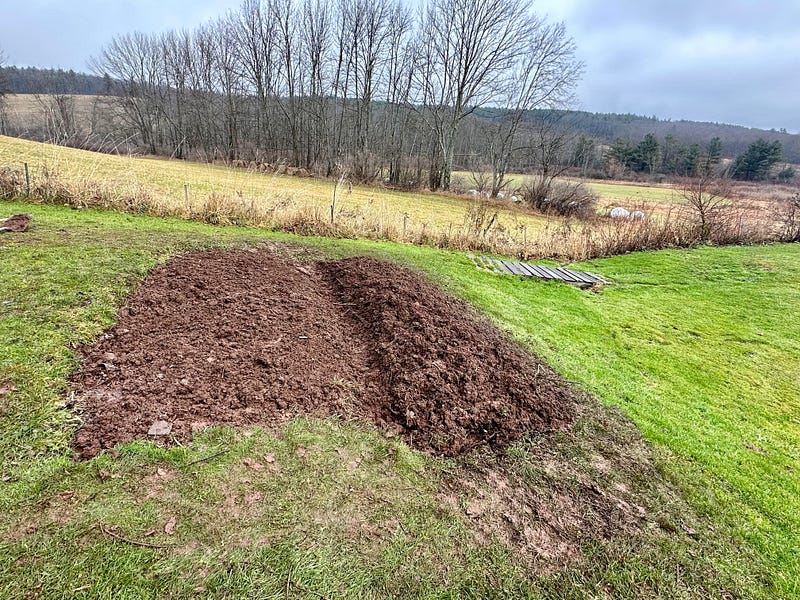
Over time, the idea is to keep adding organics to the pile. Once I start mowing the lawn, I will add grass clippings. As with a compost pile, it is good to add both green and brown organics. Composted manure and even some good quality bagged garden soil also works.
Stay tuned for more updates and gardening articles.


