
The Train Ride That Took Away My Innocence
Growing up among perverted men

I was 13 when I had my first taste of sex. It wasn’t with a boy. It wasn’t in the privacy of my room. It was on a train.
I was naive. I thought the function of a train was to carry me to a destination. I didn’t know it was a private cocoon for guys to initiate juvenile girls into womanhood.
I didn’t know a guy in a business suit would be sniffing for a uniformed schoolgirl like me.
I didn’t know enduring chikan (groping and molestation) was Japan’s celebrated tradition for girls.
Erika
It was 1986.
That day, as usual, I wore my school uniform — a green checkered skirt and a white shirt, my pubescent breasts poking ever so slightly.
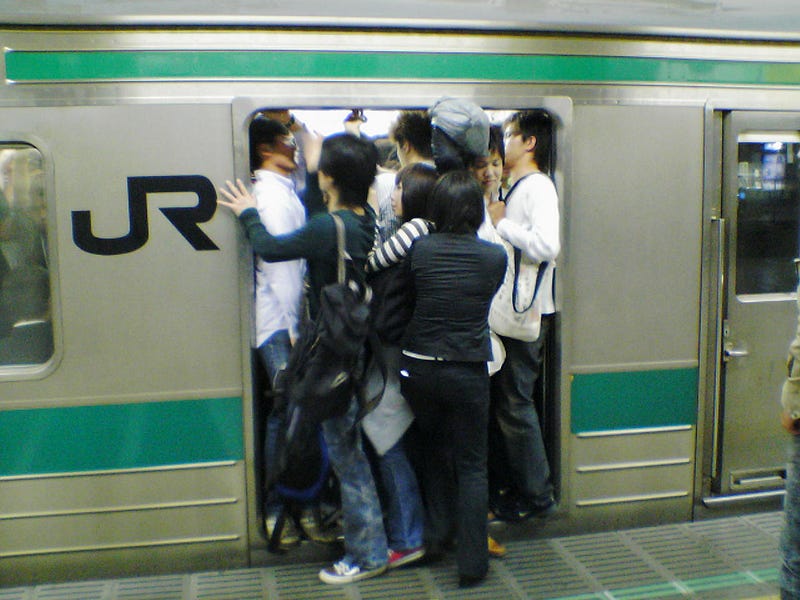
Once I entered the smothering train, my body tossed around on hot bodies of suited men carrying briefcases — some thinking about their upcoming work duties, others dreaming up their favorite manga (comic book) character coming to life.
A manga character like Erika, a schoolgirl with a tiny waist and big breasts that popped out of her shirt. Like me, she too boarded an early morning rush hour train only to get groped by a hungry man.
In the manga, his hands crawl up her thighs and explore her privates. Her face flushes pink and her body squirms. She wants him to stop, but she freezes.
I did the same. I squirmed, but that was because I was trapped.
He must have mistaken my attempts to wiggle out of his hand as a sign of consent. Like Erika, perhaps he thought I was shy. That I liked it.
I get why. It’s not like I stopped him. I stayed silent.
Confusion
Yes, I didn’t rat him out. That realization is still lodged somewhere in my body waiting for the right moment to manifest as rage. Or is it guilt? I’m not sure.
This was the first time it had happened. It was like I was out of my body. It’s like I died, floated above myself, and watched the whole thing in slow motion. I couldn’t tell if what happened really did happen.
Maybe denial sets in when one is violated. I questioned the details — Did some guy just massage my privates? Did he press me against another guy? Were two guys involved?
Immediately afterward, I wanted to shower to get rid of his stench. I blamed myself because I had folded my skirt shorter. I unbuttoned my shirt three buttons down instead of one.
I had never touched myself. I didn’t know what masturbation was. Sex education was non-existent at my school or home. Heck, I had never even held hands with a guy, let alone kissed him.
I must have asked for it. I didn’t stop his finger from going inside me. My pupils dilated, my privates tingled, and my heart beat faster.
It was like he and I were now forever bound together in secrecy. I carried his shadow all day. He even showed up in my dream as a faceless man.
Taboo
This became a regular thing. It was like I had a sign on my back that said, “Innocent Girl Available”.
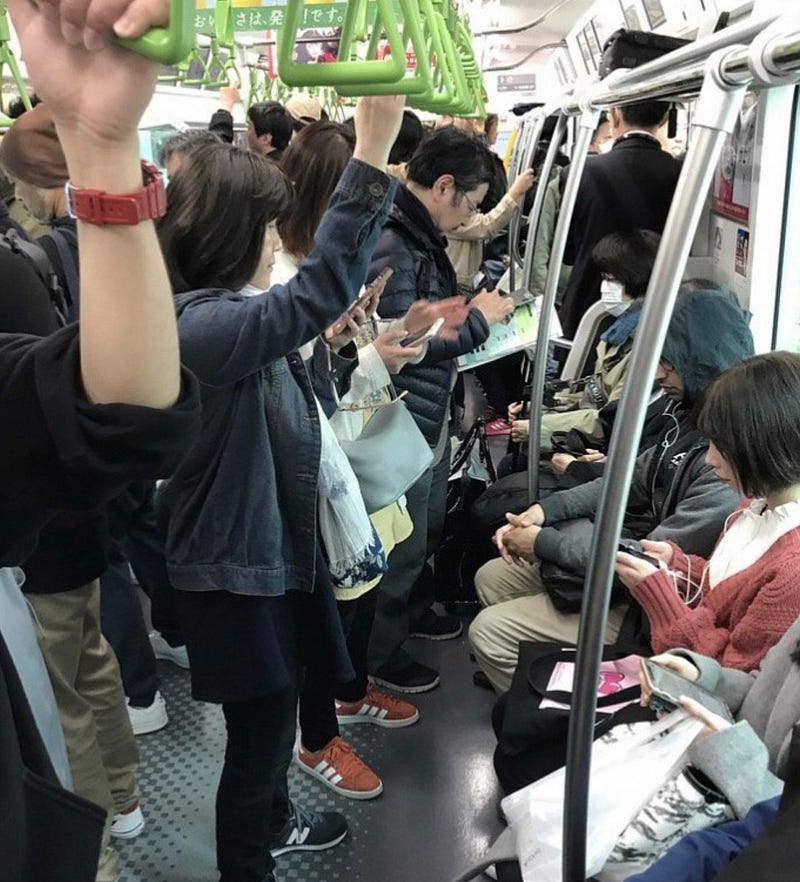
I dreaded going on that train, but that was my only mode of transportation. As a preventative measure, I stopped rolling my skirt up and buttoned my shirt to my collarbone. But, it continued.
I told no one, not even my best friend. I didn’t feel like I had the right to tell anyone or to speak up. It was this humongous elephant in the room that no one touched.
If I could go back in time, I’d grab the guy’s arm, lift it, and scream “chikan!” I’m sure a girl’s scream would have startled him and maybe he would have thought twice about attacking again.
But I was young. It was the ’80s. I was also living in a culture where reporting such crimes created more shame for the victim. Would the police have taken me seriously? I doubt it. Plus, how do you prove a chikan?
Even witnesses looked the other way when a girl was attacked. I’m guilty of it too.
Road to recovery
I was molested from age 13 to 18 until I left the country.
In that period, the list of men who molested me ranged from perverts in trains, a well-known Japanese music producer, gropers on the streets, an old neighbor, my dad’s colleague, and my boss at my part-time job.
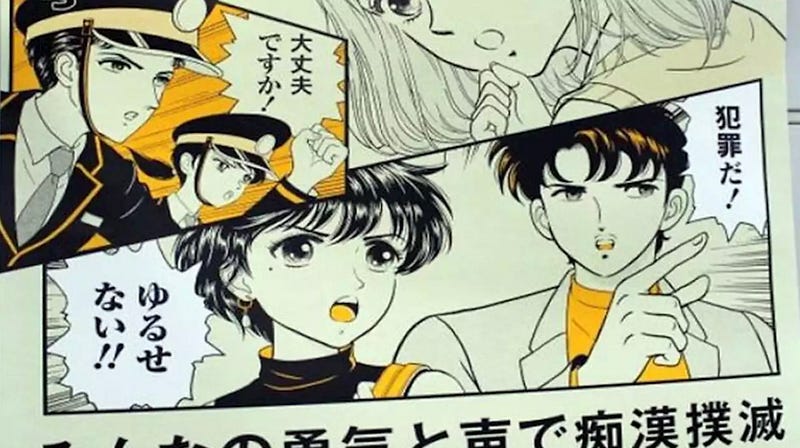
The times have changed. Japan now has women-only train compartments and anti-groping posters (like the one below) on train stations.
And more school girls and other victims of chikan are speaking out, thanks to social media.
In 2016, the Japanese police developed a smartphone app to help women protect themselves from gropers in packed trains.
It allows victims to press an icon that produces this message; “There is a groper here. Please help.”
When pressed again, a voice repeatedly says, “Please stop!” The app also allows users to locate crime-prone areas and police stations on a map.
Despite this, Japan is far from resolving this issue. A 2018 survey revealed that 70% of women between the age of 15–49 living in Tokyo experienced some form of public harassment.
Nevertheless, girls are coming out of their shells. Tokyo Metropolitan Police said 2,620 sexual crimes were reported in 2017, including 1,750 cases of chikan in trains or stations.
On top of that, childhood pornography became a crime in 2014 with the Child Pornography Act, but it didn’t go far enough to make an impact in the world of groping.
The Act doesn’t regulate cartoons, animations, and games that include “artificially created images of the pornographic depiction of children or stories of child sexual abuse” due to “infringement of free expression.”
That’s significant because those types of entertainment are ingrained in Japanese culture. When a nation allows women and children to be portrayed in vast numbers in this way, even if it’s “artificially created images,” it normalizes it.
Now that I’m an adult, I know it wasn’t my fault. I was completely innocent. The world was small then and voices didn’t reach far.
The sad part is when I was molested at my sexual peak, my innocence vanished. I had problems with regular intimacy because my first experience was with someone who didn’t respect my boundaries. That became my foundation.
Basically the deviant grooms another deviant. She is no longer pure. She is tainted by his darkness.
The shame remains.


