
Inspiration and Life
The 3 ‘isms in Your Life
How you can measure your pessoptimism
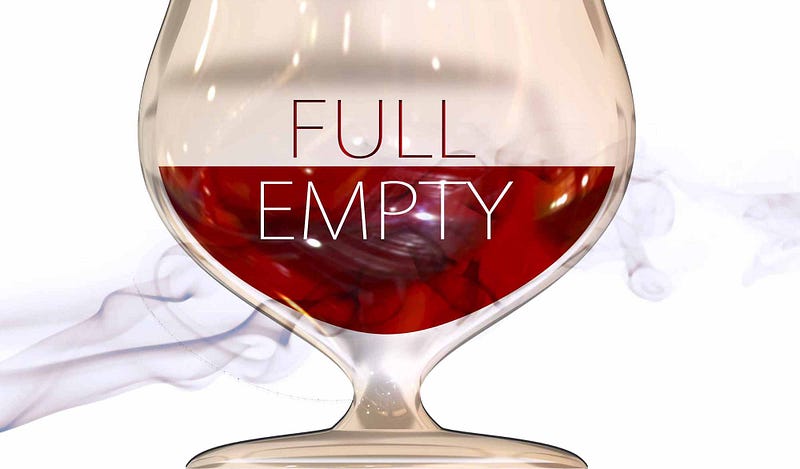
Like many people, I’m a natural introvert with pessimistic tendencies. I prefer to live in a different land than some. Most people who know me well would not guess I once leaned heavily toward the negative.
As I aged, I shifted more toward the middle of being optimistic and pessimistic. Some refer to this middle ground as the land of reality.
“Some people see the glass half full. Others see it half empty. I see a glass that’s twice as big as it needs to be.” George Carlin (1937–2008)
Because someone identifies as pessimistic or optimistic, it does not mean they are always one or the other. On the contrary, it is normal for people to swing from one side to the other.
Let’s look at what it means to be a pessimist and an optimist. Each has advantages and disadvantages, which is why many of us strive for the middle ground. A relatively new term defines this middle ground — pessoptimist.
“A pessimist sees the difficulty in every opportunity; an optimist sees the opportunity in every difficulty.” Winston Churchill (1874–1965)
Optimism
Optimism and pessimism come in varying degrees. You have likely heard such idioms as “They see the glass half full instead of half empty.” or “Every cloud has a silver lining.” While some optimists can go to extremes, most are not necessarily unrealistic. Many look for the good in things, leaning toward positive thoughts and outcomes.
A common definition of an optimist is:
Optimist (noun) — a person who tends to be hopeful and confident about the future or the success of something. Oxford Languages
Depending on the circumstance or subject, we will be optimistic or pessimistic, and possibly both. For example, you can be optimistic about your job and pessimistic about a significant relationship. Or you can be optimistic about buying a new car but pessimistic about getting financing simultaneously.
Some benefits of being optimistic include:
- Better overall health and wellbeing
- More positive emotions and happiness
- Better relationships
- An improved attitude
- More expansive thinking
- Seeing failure as a new beginning
- Learning from failure
- A growth mindset
“The average pencil is seven inches long, with just a half-inch eraser — in case you thought optimism was dead.” Robert Brault (1963-present)
Pessimism
As with optimism, there are varying degrees of pessimism, ranging from slightly to overly pessimistic. Pessimists tend to see the negative potential in things, whereas optimists lean toward positive potential. Typical pessimistic idioms include “seeing the glass half empty instead of half full.” “If something bad can happen, it will.” and “If it weren’t for bad luck, I’d have no luck at all.”
A common definition of a pessimist is:
pessimist (noun) — a person who tends to see the worst aspect of things or believe that the worst will happen. Oxford Languages
As with optimists, few people are always pessimistic. Some of the benefits of being pessimistic include the following:
- Less disappointment with people and circumstances
- Longer life
- A tendency to be more level-headed
- Guarding against perceived risks
- Fewer surprises in life
- Taking many things less personally
- Knowing when to give up
“The optimist sees the donut, the pessimist sees the hole.” Oscar Wilde (1854–1900)
Pessoptimist
There seems to be little debate about whether pessoptimism is better than pessimism or optimism. It is perhaps a more accurate description of many of us. A standard definition of a pessoptimist is:
Pessoptimist — A pessimist and an optimist. An individual who combines pessimism and optimism into a cohesive worldview that is neither purely negative nor wholly positive. They are the quintessential happy-sad person. Urban Dictionary
Being a pessoptimist requires having one foot in optimism and the other in pessimism. Rather than seeing only good OR bad, you will see both good AND bad.
As a pessoptimist, the proverbial glass is neither half empty nor half full. Instead, the glass is both half empty and half full. This allows you to enjoy its fullness while simultaneously despising its emptiness!
“We can complain because rose bushes have thorns, [and] rejoice because thorn bushes have roses.” Abraham Lincoln (1809–1865)
Where are you on the optimism-pessimism scale?
Think of optimism and pessimism as a continuum. It is the rare person who is entirely one way or the other. But it is easy to gauge where you are.
For example, on a scale of 1 to 10, with one extremely pessimistic and ten extremely optimistic, where would you rate yourself much of the time in a typical day?
When I was younger, I believe I was consistently at a 2 or 3. I am closer to the middle now, around 5 to 6ish, much of the time. I can rise to 7 or more and occasionally dip to 4 or 3 or lower. It depends on the day, what is happening, and what I am doing.
P 1 — — — 2 — — — 3 — — — 4 — — — P — — — 6 — — — 7 — — — 8 — — — 9 — — — 10 O
Using this subjective test, you can check yourself at any time in any given situation or circumstance. To learn more about yourself, try rating yourself on the scale several times over a week or more to provide you with a good gauge of where you are and how often you fluctuate. Once you have a couple of weeks of ratings, examine them closely to see what you can learn.
“The optimist proclaims that we live in the best of all possible worlds, and the pessimist fears this is true.” James Branch Cabell (1879–1958)
Final thoughts
Being a pessimist or an optimist is not wholly about seeing everything positively or negatively, or each simultaneously as a pessoptimist does. Each style has a particular slant.
In the end, it is the outcome of your life that matters most. Any of the three ‘ism’s can produce a good or not-so-good result. Don’t get stuck in trying to be one way or the other. Choose which is best for you based on your situation and what you need to live an extraordinary life!
I leave you some wisdom from one of the most amazing and well-known people in the 20th century:
“An optimist is a person who sees a green light everywhere, while a pessimist sees only the red stoplight … the truly wise person is colorblind.” Albert Schweitzer 1875–1965)
LinkedIn |Twitter| Medium| UncommonSense| AmazonAuthorPage | Parlor | Truth
Bill Abbate Leadership Writer and Editor in ILLUMINATION
Thank you for reading this article! If you enjoyed it, please check out the others below!


