
The Tattooist Who Helped Me Reclaim My Body
C.W. Eldridge’s art helped me take back my sense of self
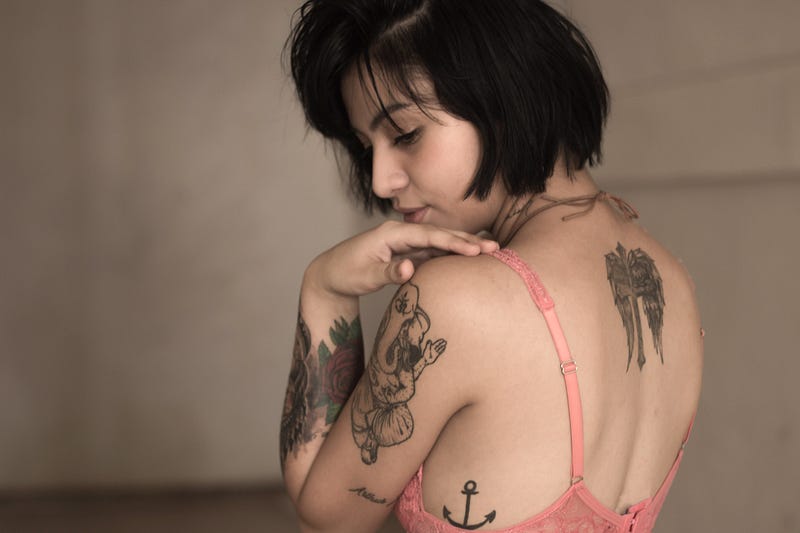
A few nights ago we watched a Netflix show called Explained and in the episode about tattoos, there on the screen was C.W. Eldridge, the man who inked all four of mine. I knew he was a legend in the business and I feel very lucky to have his artwork on my body, but I was still pleasantly surprised to see him up there on the screen. “That’s Chuck,” I said excitedly to my husband James as we settled in to watch.
Chuck Eldridge owns a place called the Tattoo Archive, and it is filled with books and posters showcasing the art of tattooing from all around the world. He even has a poster with some iconic tattoo artwork signed, “Fuck you, Ed Hardy.” I remember the first time I walked into his shop on 4th Street in Winston-Salem, North Carolina. I immediately felt at ease, because it looked more like a museum than the dodgy looking tattoo places that line Silas Creek Parkway on the south side of town. This was a place I could feel comfortable getting my first tattoo, and all of my subsequent ones.
On Explained, Chuck talked about the American tradition that came out of carnival sideshows as well as the sailor tradition where certain tattoos signal particular achievements, (e.g., a swallow indicates having sailed more than 5,000 nautical miles). Indigenous groups have their own meaning for particular symbols, indicating which village or side of the island they are from, or what rite of passage they have passed. Japanese and Russian mobsters have tattoos that convey certain things as well.
Although they aren’t from any certain tradition, I have chosen to only use black ink on mine and my tattoos all mean particular things to me. I didn’t start getting tattoos until I was in my late 40s. Before that time I’d had no interest in them but as I started to more actively peel away the parts of myself that weren’t me that I’d subconsciously adopted, I found that I wanted one. And of course, one led to more. As my friends who already had tattoos told me, they tend to be addictive.
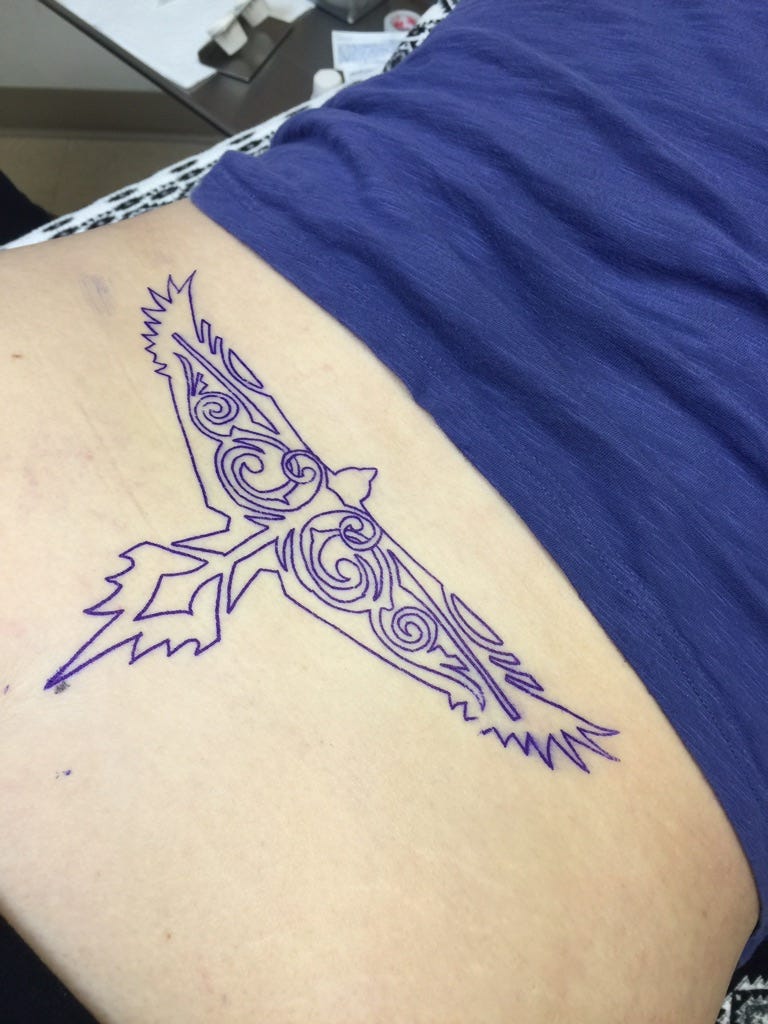
The reason that tattoos are addictive is that they give you the opportunity to adorn yourself in a highly personal way. Your tattoos all say something about who you are, whether or not they have personal meaning. The fact that you have selected a certain image to be on your physical self for the rest of your life conveys something about who you are. I think this is particularly compelling to women, who have quite often spent their lives being given the message that their bodies belong to someone other than them. It’s a way of reclaiming agency over them.
Men who catcall and wolf-whistle, who tell women on the street to smile, are all conveying that the physical self of these women is for their consumption — it doesn’t belong to the women themselves. Tattoos are one way to dismantle that paradigm. Of course, women with tattoos still get catcalled and visible tattoos can incur a whole new kind of body entitlement when people feel free to touch other people’s tattoos without asking.
When astrophysicist Neil Degrasse Tyson saw the solar system tattooed on a woman’s shoulder at a conference, he wasn’t shy about peeling back the sleeve of her dress so that he could see where the rest of the tattoo went. I’ve heard a lot of similar stories, from women in particular, but even this does not significantly diminish the sense of having claimed one's physical self through tattooing.
Even though only one of my tattoos is visible when I’m wearing street clothes, I still feel like getting tattoos has helped me to feel more deeply in touch with my body as something that belongs to me alone. It’s been a part of the healing process from a lifetime of being touched, groped, and commented upon by other people without my consent.
I’d like to get a few more but just haven’t taken the time to find the right person since we moved. Because Chuck did all of mine, I’ve not had to go through that search process until now. Three of my tattoos were stencils of images that I’d found on-line, but the vine on my ankle is something that Chuck drew for me. It’s an original piece of art that I carry with me all of the time, and I like knowing that.
My lover Tamara is covered in tattoos and has some of the most beautiful ink I’ve ever seen. On her, it looks both feminine and badass at the same time. She recently did a shoot for a tattoo magazine and I look forward to seeing that when it gets published. Of course, she’s got some good people that she trusts, and when I’m ready to proceed, I’ll definitely work with one of her tattooists (Chuck’s preferred term).
I’ve got about 3 or 4 tattoos in mind, but the other issue is deciding where they should go, although I’ve got some ideas about that also. That too is a part of the body agency process — I get to not only select what to get and what it looks like but where on my body that it goes. It’s a way to take back my body for myself.
In Japan, tattoos were used for many years as a form of punishment and a way to indicate that someone was a criminal. In concentration camps, tattoos were used as a part of the dehumanization process, reducing names to numbers. But in contemporary times, tattoos allow people to express themselves in a very personal way, and for many women, in particular, it’s an act of autonomy. That’s certainly been the case for me.
It was great to see Chuck talking about the thing that has been his life’s work, and even if you never intend to ever get a tattoo, the history of the art form around the world is something that I think most people would find interesting. And if you are ever in central North Carolina, swing by and visit the Tattoo Archive. It’s a fascinating place, but if you want to get a tattoo from the great C.W. Eldridge, make an appointment. Chuck doesn’t do walk-ins.
© Copyright Elle Beau 2020 Elle Beau writes on Medium about sex, life, relationships, society, anthropology, spirituality, and love. If this story is appearing anywhere other than Medium.com, it appears without my consent and has been stolen.


