
The Surprising Ways Death Inspires Us to Review and Do Better
Obituaries remind us of where we’ve been and how we got here
The unexpected deaths keep coming.
First, I learn that Lois Bass, a valued therapist whom I hadn’t seen in nearly 30 years, is dead.
Then, fifteen months after the fact, I hear that Rich Simon, an editor from my print journalism years, took his own life.
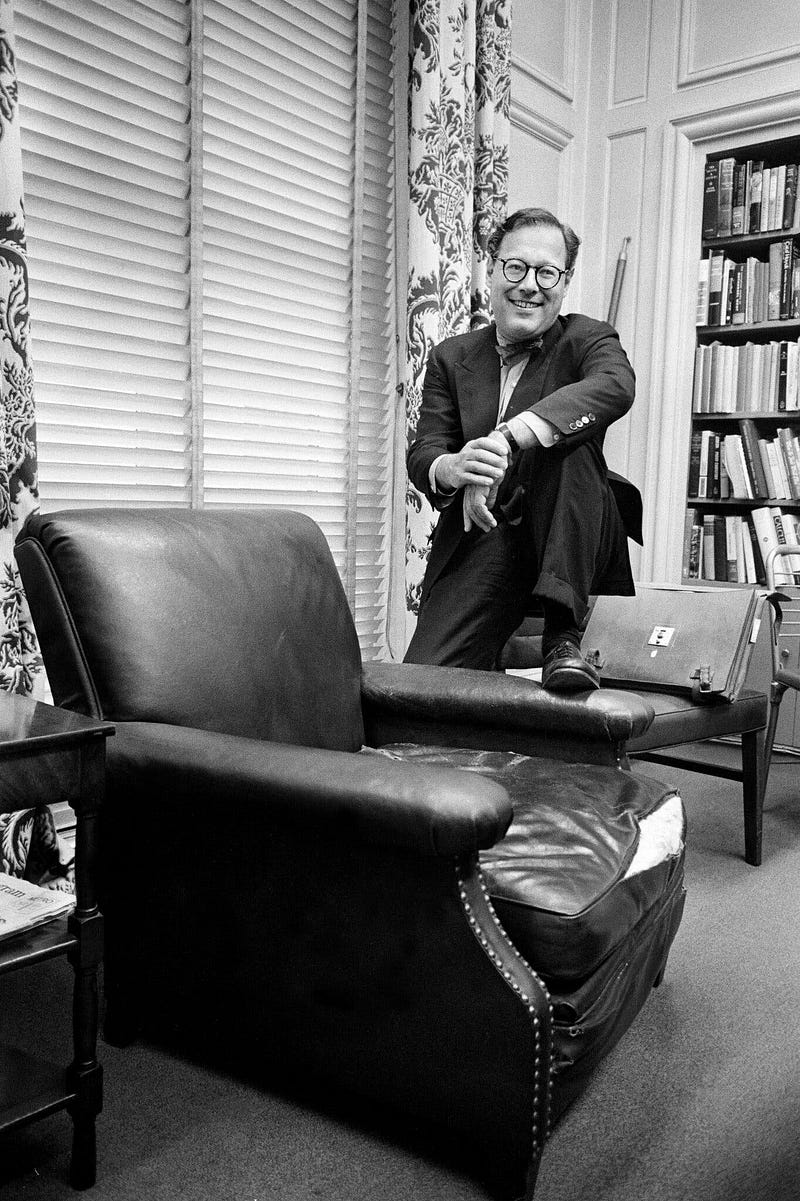
And yesterday — looking for something else on the Publisher’s Weekly website — I stumble on an article by Erroll McDonald about Jason Epstein, who died on February 4 at age 93.
He was, of course, one of the most consequential literary and publishing figures in the history of American publishing, his ambition being to make culture accessible to as many as possible.…
I devour the beautifully wrought tribute, which talks about this legendary editor at Random House, where I spent the better part of my editorial career. Jason, who also founded and edited the New York Review of Books, was known for his outsized personality and progressive daring.
Reading the tribute brings me back to the 24-year-old me. In 1967, Jason hired Charles Harris — Random House’s first Black senior editor. Charlie, coincidentally my first boss in publishing, asks me to join him. He warns that Jason is “a trip” but “one of the smartest guys you’ll ever meet.”
Among other exploits, Jason “invented” the paperback.
Jason was brilliant and, at times, brutal. He’d walk into my office, ignoring that I was on the phone and, sparing any niceties, shout at me:
“Get off! I need to talk to you.”
Ultimately, Jason put me in charge of New York, New York. He reasoned that if schoolchildren throughout the U. S. looked forward to Weekly Reader, why not create a magazine tailored to kids in the City? Though Charles Harris was my immediate supervisor, I always know that Jason had the last word.
I learned from Jason. His critiques thickened my skin. I was flattered that he kept me on.
Deaths bring us back to earlier touchpoints.
Patricia Ross, leaves this comment after reading the piece about Rich Simon. Clearly, she identifies :
The losses are piling up these days, and none so wrenching as those we find out after-the-fact, sometimes a year more later. Why didn’t we know?
Why? We simply lose touch. We haven’t forgotten them. We’ve moved on to the next chapter. As Patricia puts it,
…no longer a daily presence but a permanent presence that eschews time
Lois, Rich, and Jason impacted my life’s journey but never truly left my “social convoy” — that caravan of people I picked up along the way.
As I wrote in Consequential Strangers, “Life is not a series of events. It is a cavalcade of people.”
Perhaps I feel the impact of Lois, Rich, and Jason’s death because they came at me in such a relatively short time. Once familiar and significant, each is now gone, and I am left only with memories.
Lois evokes scenes of a former relationship, a time of betrayal, a break up, and a building-back of my wounded-but-finally-wiser 50-year-old self.
I was at the height of my print career when Rich was in my life. I remember his bold, red marks, dashing all hopes that this is a last draft and, at the same time, cheering me on to the finish line.
Jason’s death brings me back to a much younger me, stringing love beads at my desk at lunchtime, living the life of a newly married Manhattanite. When Jason barked, my 24-year-old self didn’t dare answer back. I was just a “girl,” green, and lucky to be there.
Life happens this way. We pick up acquaintances as we drive through the passages of our life. We stick with a few for most or much of the journey. But most of our connections pull ahead or take an off-ramp.
Somehow, though, we still see them in the rear view mirror. We might slow down long enough to think of them, but not to reconnect.
The Takeaway
Cherish the rag-tag collection of people you’ve picked up along the way. See how they changed you, what they brought into your life, where they encouraged you to travel. Better yet, tell them. Let them know the older you — the you of today. Thank them while you still can.
Sad footnote added 2 days later…
Following my own advice, I try to reconnect with Charles F. Harris, my first boss in publishing. Looking for clues online — where he lives now, his current projects, his family — I instead come across his obituary.
How could that be? I had searched his name when writing this piece and found his bio on The History Makers. I went back to reread it. Somehow, I had missed the last line: “Harris passed away on December 16, 2015.”
Too late to tell him what he meant to me, I at least find his wife on Facebook and leave her this message:
Sammie, I don’t know if you remember me, but I recently looked up Charlie — just to reconnect. I learned that he passed in 2015. Just to tell you what a wonderful guy he was. He danced with me at my wedding and taught me a lot about words and editing and life. May he rest in peace Best, Melinda Blau


