
At Poet’s Corner, I Found My Calling as a Teacher and as a Writer
The sun ignited more than just the Rose Window at Westminster Abbey
The field trip unofficially commenced at a pub in Bayswater, London, with my friend Tim O’Neill, my Rowan English professor, Dr. Edward Wolfe, and 20 other wayfarers.
I was 19 and far too excited for my bulky winter clothes to contain my springs of electricity. It was the first day of a three-week literary pilgrimage of England. It was my first time in Europe. It was also the first time savoring a legal pint of Guinness.
But the official tour started the next day at Westminster Abbey. Of course, I knew about Westminster, watching when I was 12 the marriage of Diana and Charles. I don’t remember caring. My mom just had it on television. At the time of the tour, I don’t even remember knowing about Poet’s Corner, the burial place, and a place of homage to Britain’s writers and luminaries, like Sir Isaac Newton.
Was it like a baseball fan not knowing about Cooperstown?
As a freshman, clueless to a career, I started as a business major in search of easy diamonds. The Wall Street Journal and The National Review I read in high school mostly for flash and scandal. Oh, and I also wore a tie to emulate Michael J. Fox from “Family Ties.” (A gentle wind back then would make an impression on me.)
There was nothing especially stellar about my academic record; the moment was always too precious to sacrifice to the tedium of studying for the sake of a grade or the Ivy League.
Writing was one of the few things that I did that I wasn’t obligated to do.
Dr. Wolfe taught an introductory course on British literature. I was a sophomore and a history major, but it wasn’t until I felt Dr. Wolfe’s infectious enthusiasm for literature that I started to entertain changing my major to English.
Dr. Wolfe was vested in tweed, always with a tie, even on holiday, and he stood at least two busts of Pallas taller than I did, with hands that could palm a globe and a pace that could rival the HMS Victory.
His eyebrows always looked like he had just been walking through a stiff Yorkshire wind and he possessed an endlessly retrievable Bodleian library of knowledge and tales. With Dr. Wolfe as a professor, I was a scholar at Oxford or Cambridge.
If one class a week with Dr. Wolfe was awesome, what would be the appropriate adjective for every day for three weeks?
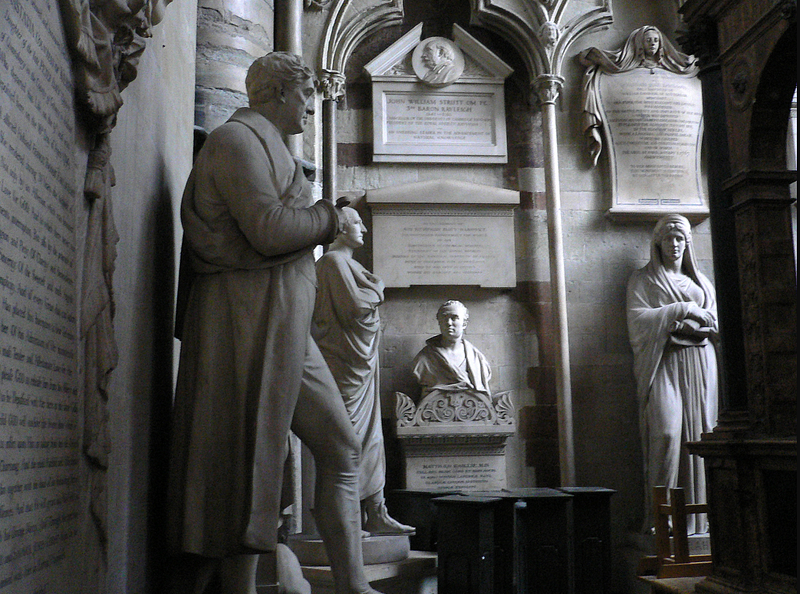
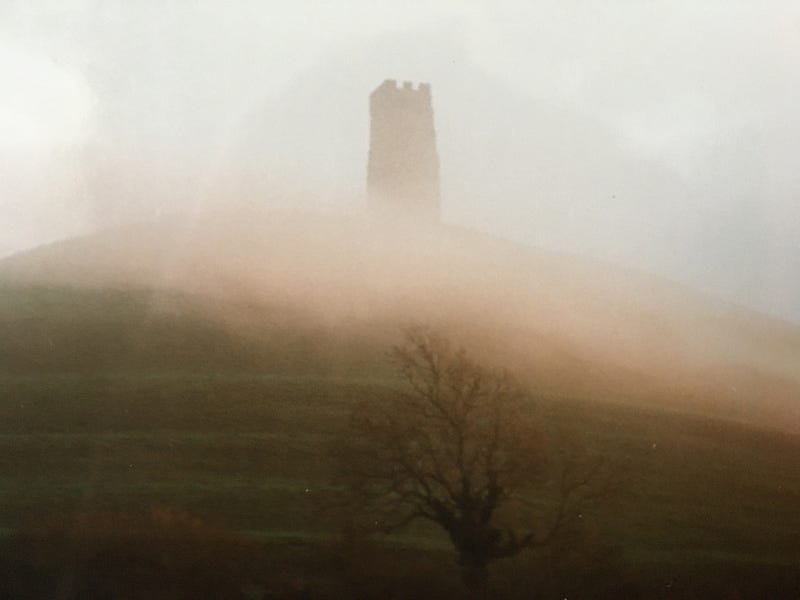
The morning of the tour was overcast, no sun would treat us to the full effect of stained glass, but I was surprised when the tour group entered the South Transept known as Poet’s Corner. I was Monsieur Dantes suddenly stumbling upon yellow riches to become the Count of Monte Cristo. Forget about the rumors of Glastonbury Tor containing the Holy Chalice; the grail appeared before me in that room.
I actually teared up when I read T.S. Eliot’s epitaph: “The communication of the dead is tongued with fire beyond the language of the living.”
“Are you okay?” Tim asked.
“If I were any more okay, I’d be canonized as a saint,” I replied.
Swirling about me in the room were the ghosts of many hoary British writers of yore, Thomas Hardy, Charles Dickens, Samuel Johnson, but not in the frosty outlines of spectral form, but in the gyrating, concave outlines of words.
Geoffrey Chaucer appeared as “And gladly wolde he lerne, and gladly teche.” Edmund Spenser swirled by as “For there is nothing lost, that may be found, if sought.”
Robert Browning floated as “my last Duchess painted on the wall, looking as if she were alive.” And there was Alfred, Lord Tennyson, peeking behind the medieval carvings, depicting censing angels: “Words, like nature, half reveal and half conceal the soul within.”
Some of the students seemed bored as if the immortal tonic ran off their crowns without penetrating their pores. Perhaps they wanted to hurry to shop at Harrods.
I stood transfixed.
I treat authors the way many kids treat professional baseball’s sluggers; my heroes do not hit grand slams; they write masterpieces that change the way I view the world and myself.
I tingled. My heart raced. Arm hair, leg hair, chest hair — every strand stood erect as I murmured, ‘Ars longa, vita brevis” (Art is long, life is short.).
I was the last one in the room. The sun ignited the famous rose window. I finally knew my destination.
I would be a writer. I would be a teacher.
Thank you for reading! If you want to read more, check out the following:
You can share your outstanding stories and inspire others. Just click the below image and be a writer for The Masterpiece.


