
The Strangers Came and Tried To Teach Us Their Way
A Bing Crosby song from 1947 has words that resonate today.

I’ve been reflecting on the words of an old song that I’ve known for decades, and I’m seeing truths that were there all the time, but … I was blind to them.
Truths about oppression of Native Peoples; truths about Minorities; truths about Conquerors; truths about Slavery; truths about how those who are or have been taken advantage of, carry within their collective souls an inner strength that will always be there … suppressed at times, but always simmering below the surface, and always yearning to be freed.
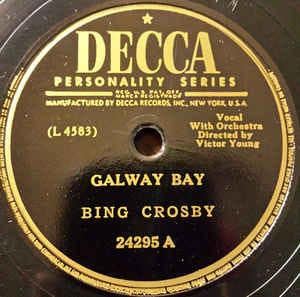
The song I’m focusing on was released by Bing Crosby in 1947 on Decca Records: (‘Galway Bay’). It was one of our family favorites. I was only a kid, but I well-remember this song being played time-and-time-again by mum and dad who adored Bing Crosby, and I got to quite like it.

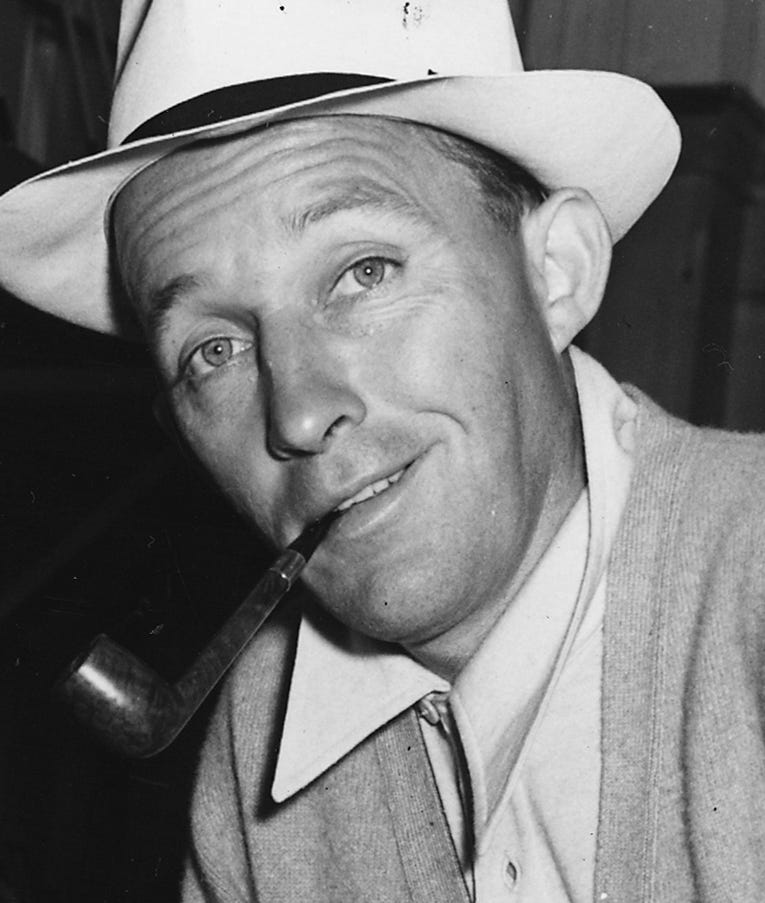
I often find myself singing the words of ‘Galway Bay’ even now, over 70 years later! One verse in particular.
The words of that one verse seem to have ‘stuck’ in my mind, and it’s these words that sort of ‘haunt me’. Until recently I never even thought about the meaning of the words, but now I know why they keep echoing around in my mind.
Let me explain, but first a brief intro to the record in our family archive collection (yes, it’s still there … kept since 1948!)
“Galway Bay” was the song written by Arthur Colahan in Leicester in 1947. It was recorded and popularized by Bing Crosby after the release of the record on 27 November of that year. It became a huge hit around the world, and in the UK my mum & dad bought a copy.
So, what is it that makes me keep singing words from this song? It’s not the only song that makes its way into my mind and gets me singing. I sing a lot!
Am I the only one that ‘sings along to himself’ (and anyone in earshot!)?
This particular song, or more precisely, a particular verse in that song, has more about it than just the musical delivery and Bing’s mellifluous voice. There’s a deeper meaning that until now, I never realized?
You can listen to the full version of the song via a YouTube clip that I’ll put at the end of my story, though the singer in that clip isn’t Bing Crosby.
First though, let me set out the background to the song, then focus on ‘that special verse’, dissecting it for its sociological implications, to show you what seems to be affecting me. You might end up feeling the same! Let’s see.
The background to the song: It’s Ireland, more than a century ago … largely a rural landscape of green hills, with large expanses of heather-moorland.
The song tells us that the women and the men of that land and time worked hard doing traditional jobs, like picking potatoes (referred to in the song as praties) in the fields all day, or working in other rural trades and traditions, but that they also enjoyed the peaceful realities of ‘that place’; their place, whenever they had the chance.
They liked sitting around the campfires burning traditional fuel (peat turf); watching the barefoot boys at play (the song calls them ‘gossoons’); fishing in the trout stream; simply enjoying the sweet smell of fresh hay in the meadows; watching the moon rise over Claddagh (a local fishing village near Galway city); and the the sun setting over the Bay. These things were ‘sweet’.
Is it any wonder that even generations later, when many of these folk had emigrated to all parts of the world, their memories of those times in that land were so treasured that they passed it on to their children.
And so it is that Irish men and women, even those who have never seen their homeland ‘know’ the memories of their nation’s soul. Irish folk hold these memories and notions of life in the old country so dear that many modern traditions, festivals and commemorative days (like St Patrick’s Day) still occur wherever the Irish or their descendants live.
I said before that the words of one particular verse were those that echoed in my mind and are the words that I find myself singing. I’ve now discovered in these words, a deeper meaning. Before I dissect the verse, here are the words:
For the strangers came and tried to teach us their way They scorned us just for being what we are But they might as well go chasing after moonbeams Or light a penny candle from a star
Perhaps you can also see a deeper meaning in the words? Can you see why I chose to title this story: “The Strangers Came and …”?
This is my ‘take’:
The words of this verse carry with them, a disdain for incomer-power-brokers who came to ‘their land’ and tried to change them: ‘They scorned us just for being what we are’.
And I really like the response held within the words of that verse that doesn’t need to be said, but just comes naturally to the oppressed. The words are unspoken, but here is what they are ‘saying’: ‘They might as well go chasing after moonbeams or light a penny candle from a star’.
In other words: (“They are wasting their time if they think they can change us”).
Oppressed people around the world, throughout human history, have always known within themselves that those who come to dominate, oppress, enslave, or conquer, will never … never … conquer the soul.
Native Americans; Australian Aborigines; Indigenous people of the world (First-nation peoples), and Black People whose ancestors were Slaves. All Subjugated Minorities and Immigrant groups in ghettos share this common note of defiance: “Our souls will not be destroyed”
Our souls will not be destroyed
They know the truth. They feel it in their bones. It’s part of their souls.
Perhaps you are like me … a member of the dominant group in society. What do we know, really know? What burns in our souls? Do we ‘hear’ or do we simply dismiss them, saying deep within, even maybe thinking out loud sometimes:
“They deserve what they get. After all, what can you expect? They know nothing … I am superior!”
Now, here’s the promised YouTube clip:
***********************
“The strangers came and tried to teach us …” by Fred: Almost Famous * * * * * © Fred Ogden 2021 * * * * *
Thank you for reading … Hope you enjoyed the read.

* * * (Feel free to share it on social media if that’s your scene) * * *
You can also Clap & Comment (via icons at top or bottom of this article)
******************************************
NAVIGATION PANEL: TO EVERYTHING FRED: (clickable links)
- All You Need to Know About Fred (including an Index to Fred’s Stories)
- New Index to ALL Fred’s Story Collections
- Get Fred’s new stories delivered to your email inbox … There’s no charge
- Fred’s Email: [email protected]
******************************************
- Follow Fred on Medium: 👉 Fred’s Follow-button (top of all his stories), and he’ll click YOUR ‘follow’ button if he finds your stories appealing.


