avatarAnne Bonfert

Free AI web copilot to create summaries, insights and extended knowledge, download it at here

5789

Abstract

though I had no qualifications in the topic I was reading on.</p><p id="092e">They also asked me a few questions about what I was doing in the country, how I lived, and so on. We laughed a lot and I will never forget those shining eyes I was allowed and invited to look at.</p><p id="2b3e">I did find the African spirit in Tanzania after a while and when I was sitting on a trail leaving the country for Zambia, I had one more memorable experience I will never forget.</p><p id="286b">We were standing in the middle of nowhere waiting for an incoming train to pass when soon the wagon was surrounded by locals, mostly children staring at the only window showing a white face.</p><p id="e3ae">I don’t remember how it started but one of them was carrying an old, beaten-up soccer ball that soon landed in my hands leaning far out of the window.</p><p id="1073">For the next hour, I was throwing the ball back and forth to the children down on the train tracks. There was laughter, there was cheering and there was so much joy on both sides.</p><p id="c038">This experience made me smile for the rest of the 48-hour train journey.</p><p id="2327" type="7">“We do not inherit the earth from our ancestors, we borrow it from our children.” — African proverb</p><figure id="3882"><img src="https://cdn-images-1.readmedium.com/v2/resize:fit:800/1*7l7qcy9Ar5tbxffuOgL_ag.jpeg"><figcaption><b>This was just before we played soccer. | </b>Credit: <a href="undefined">Anne</a></figcaption></figure><h2 id="c762">Learning to trust strangers is part of the spirit</h2><p id="ab49">Part of my experience with the African spirit was to trust others. To trust strangers. Some people would have described me as naive. I went to travel on my own, as a white woman with blonde hair and blue eyes across the <i>dark</i> continent.</p><p id="4f01">But I did believe in the good in people. And I still do as I believe this is what forms the base of a functioning society. Distrust together with dishonesty forms fear and fights.</p><p id="d618">And so I did trust strangers. Every day. I listened to my gut feelings of course. That was what kept me safe on my way of trusting strangers. But it was also what brought me so far.</p><p id="a7ed">And as I jumped onto the <a href="https://readmedium.com/a-train-ride-through-the-green-heart-of-africa-86d84b9c344c">48-hour train ride</a> from Tanzania to Zambia, I landed in a four-bed bunk cabin with three other strangers.</p><p id="ea85">While two beds were constantly swapped and changed as people got on and off, I shared the entire journey with a Zambian woman. She and I always looked after each other's belongings when one of us went down the wagon to go to the bathroom or to stretch our legs.</p><p id="0e34">We hugged each other when we parted ways arriving in Zambia.</p><p id="2907">This train had allowed us to share a special connection.</p><p id="a01b">People, connections to people, a large family and the entire community surrounding you are part of the African spirit. It’s not a society of individuals. The collectivism they practice focuses on the culture as a whole.</p><p id="b17d" type="7">“It takes a village to raise a child.” — African proverb</p><figure id="0bff"><img src="https://cdn-images-1.readmedium.com/v2/resize:fit:800/1*zt14IuoT34hmJP9J0L0Yrg.jpeg"><figcaption><b>A village celebrating the life of a chief. | </b>Credit: <a href="undefined">Anne</a></figcaption></figure><h2 id="75fb">Finding the African spirit in nature</h2><p id="6800">Growing up close to the mountains, I always had a connection to nature but none of my experiences came close to what I would see and feel the following five years as I settled down in <a href="https://medium.com/@anne.bonfert/list/namibia-my-second-home-b7aec5f3d0ca">Namibia</a>.</p><p id="ad74">During my travels through different countries, I explored an incredibly vast wilderness filled with an abundance of wildlife I had up until then, only seen on TV.</p><p id="995a">The purity of those experiences seeing wildlife in their natural habitat and somewhat being part of that when camping in the wild, sparked a deeper feeling inside my body.</p><p id="dc5c">I never wanted to leave those landscapes.</p><p id="4b5c">I <a href="https://readmedium.com/when-science-cant-explain-what-you-experience-26631ff259e1">touched a crocodile</a> in the North of Ghana, watched lions take down a giraffe in Namibia, and waded on foot through the world's natural heritage site of the Okavango Delta ending up eye-on-eye with an elephant bull.</p><p id="2f9d">The tastes, the sounds, the smells, the sun’s rays on my skin and all other feelings combined ensured I’d never be the same again. I learned how to eat spicy food, smelled the ground before an incoming rainstorm in the desert, listened to the cry of the hyena while camping in the wild and felt the sand blasting my skin while standing atop one of the tallest dunes.</p><p id="8d1c">I held my breath far too many times and closed my eyes even more often in an attempt to save that memory for later.</p><p id="4bdf">I looked up at the stars which shine as bright as nowhere else on Earth and walked through the night by no other light but the shining of those distant sparkles in the sky.</p><p id="d87b">Yes, I did find the African spirit in nature.</p><p id="e74d" type="7">“The baobab’s strength is in its roots.” — African proverb</p><figure id="5092"><img src="https://cdn-images-1.readmedium.com/v2/resize:fit:800/1*EFK4QeeIdbJNs3dFi5RKvQ.jpeg"><figcaption><b>A baobab. | </b>Credit: <a href="undefined">Anne</a></figcaption></figure><h2 id="2793">The African spirit taught me a different feeling for time</h2><p id="7469">Growing up in Germany I led a very busy life. I was functioning but busy. Every minute of my day was planned

Options

out and if a bus was two minutes late, that could mean the day’s schedule was ruined.</p><p id="fe9d">And then I arrived at a bus station in Ghana where I was seated inside a minivan and had to wait for five hours before the vehicle would leave.</p><p id="6d5f">No bus would leave before not every seat was filled with a person. Waiting for a bus to fill up before smartphones and scrolling through social media was a thing that taught me a lot about patience.</p><p id="39c9">But also about time.</p><p id="6c64">Time is relative. It all depends on what you make of it. And so I sat in those buses watching people walk by. I bought food from street stalls, drank water out of plastic sachets and explained to Ghanaian men I was not interested in marrying. Which they didn’t understand but accepted.</p><p id="4889">I sat there for five hours until the bus finally began to roll and spent another eight hours squeezed between humans, chickens between my feet and goats on the roof.</p><p id="364e">And I learned there was nothing I could do to speed up the journey. If a road was closed for the night, I had to sit and wait like everyone else.</p><p id="6df6">After this experience, I never owned a watch in my life again but had so much more time.</p><p id="ef06">Because I learned how to be.</p><p id="35d5">To live <i>in the moment</i>.</p><p id="f63f" type="7">“Westerners have watches, Africans have time.” — African proverb</p><figure id="58e2"><img src="https://cdn-images-1.readmedium.com/v2/resize:fit:800/1*y_V8vsBi0kgxbrQCg-KAQg.jpeg"><figcaption><b>Learning the meaning of time while looking at the stars. | </b>Credit: <a href="undefined">Anne</a></figcaption></figure><h2 id="119d">The African spirit taught me there is always more to learn</h2><p id="6dff">Not that I was a person believing I was on top of the world and knew everything but living with and like the locals taught me how much one can learn from the person next to you.</p><p id="13df">As long as you are open and willing to learn.</p><p id="39c0">Every human has a different past, different experiences and learned different lessons. If we are willing to listen, we can learn so much from their stories.</p><p id="5198">We can learn from them and grow.</p><p id="84ce" type="7">“Knowledge is a garden. If it isn’t cultivated, you can’t harvest it.” — African proverb</p><figure id="3f43"><img src="https://cdn-images-1.readmedium.com/v2/resize:fit:800/1*a3fn6GWibOj1RNv-dPa8DQ.jpeg"><figcaption><b>Watching others and learning from their mistakes. | </b>Credit: <a href="undefined">Anne</a></figcaption></figure><h2 id="463c">The complexity of the spirit</h2><p id="6220">While many associate spirituality with a religion, this continent housing hundreds if not thousands of different religions might be the one with the most diversity among its people and still sharing a lot in common.</p><p id="031d">Of course, I’m not blindfolded. I know how much is going wrong on the African continent and how many problems are sitting in every corner but this article isn’t about that. You can read about wars, poverty and crime in every newspaper and TV channel as that is what they love to show. The bad.</p><p id="bab9">But the spirit I got in contact with when I first placed foot onto this continent has never left me.</p><p id="ae4c">The African spirit is about the people, the environment and how the two coexist. It is complex and yet simple. Live in the moment and share the joy of life with others.</p><p id="b853" type="7">“If I have ever seen magic, it has been in Africa.” — John Hemingway</p><figure id="bf58"><img src="https://cdn-images-1.readmedium.com/v2/resize:fit:800/1*iRwm7lDt046tbAW2Hldz0A.jpeg"><figcaption><b>Happiness. | </b>Credit: <a href="undefined">Anne</a></figcaption></figure><p id="4a3a" type="7">“The only man I envy is the man who has not yet been to Africa — for he has so much to look forward to.” — Richard Mullin</p><p id="3983"><i>This is a writing prompt response to Globetrotter’s monthly challenge. Read about how to take part in it in the link below:</i></p><div id="207c" class="link-block"> <a href="https://readmedium.com/december-monthly-challenge-spiritual-sites-de5b25cec88c"> <div> <div> <h2>December Monthly Challenge — Spiritual Sites</h2> <div><h3>Religious and spiritual places of worship</h3></div> <div><p>medium.com</p></div> </div> <div> <div style="background-image: url(https://miro.readmedium.com/v2/resize:fit:320/1*Q6FrymqSMN2Wc_1XLbgtPw.jpeg)"></div> </div> </div> </a> </div><p id="5a1f"><i>Also, please take the time and read other writer’s submissions to the prompt.</i></p><p id="200b"><a href="undefined"><i>Adrienne Beaumont</i></a><i> with “<a href="https://readmedium.com/the-journey-within-navigating-the-intersection-of-travel-and-spirituality-a31a2788ff8a">The Journey Within: Navigating the Intersection of Travel and Spirituality</a></i></p><p id="c84d"><a href="undefined"><i>Brad Yonaka</i></a><i> with “<a href="https://readmedium.com/a-puja-in-sikkim-a8741522a9a1">A Puja in Sikkim</a></i></p><p id="3a95"><a href="https://www.shutterstock.com/g/Anne+Bonfert"><i>Shutterstock</i></a><i> | <a href="https://www.instagram.com/mydreamofafrica/?hl=en">Instagram</a> | <a href="https://www.youtube.com/channel/UCjXOWGPFOVRSXu9-F14313w">YouTube</a> | <a href="https://mailchi.mp/9dd74c10ac6b/signup-mydreamofafrica">Mailchimp</a> | <a href="https://www.amazon.com/-/de/Anne-Bonfert/e/B08PPD2Y41?ref=sr_ntt_srch_lnk_1&amp;qid=1668865050&amp;sr=8-1">Amazon</a> | <a href="https://www.redbubble.com/people/Bonfi92/shop?asc=u">Redbubble</a></i></p></article></body>

GLOBETROTTERS MONTHLY CHALLENGE

The Spirit of Africa

And how I learned about the meaning behind it

Credit: Anne Bonfert

Those who have never been might be over listening to one more story of someone talking about the African spirit but those who have been, will not only know what I’m talking about, they will be able to relate to my words.

It’s something I haven’t experienced traveling or living on any of the other continents and it is something that has gotten deep into my soul. It’s more than a holiday happiness. I wouldn’t call it a religion but it carries more than a feeling. In some sense, it is a belief.

The African spirit

Ghana or the country that induced me with the African spirit

I read about Ghanaians claiming to be the friendliest nation on Earth and decided I wanted to find out if it was true. Ghana wasn’t the most beautiful African country I ever visited. Sure, it has tropical beaches, national parks, rain forests and lakes to swim in or not.

But what blew my mind were the people. The culture. Their mindset. It didn’t matter if they were Christian or Muslim. They all had one thing in common.

Hospitality.

I arrived in a country where I couldn’t understand the language, and often the people among themselves couldn’t communicate as what is today known as one nation, is a mixture of countless tribes. Over sixty languages are officially spoken in Ghana.

But getting around in cities as large as I had never seen before, taking busses from stations with no signboards or directions written anywhere, I had to rely on the locals.

And I could.

There was not one day of traveling when I didn’t get taken by the hand of a Ghanaian showing me not only to the exact station I had to go to but also making sure I got a seat in the minivan and paid the local price while telling the driver where I had to be dropped off.

And within the blink of an eye, the person was gone. I mostly couldn’t say more than medaase (thank you) before they disappeared in the cloud of people.

During those months living in a clay hut in the very remote northern region of the country, I learned so much more about life than in 12 years in school.

But most importantly I learned about caring.

  • Caring for others means sharing with them no matter how little you have.
  • Caring means to walk a few steps down the road with the person who embarks on a journey. Even if that person only goes to the next city for a day.
  • Caring means cleaning wounds and giving medications even though I was only classified as medical personnel due to my extensive first aid kit.
  • Caring means taking the lady’s second child onto your lap on the bus.
  • Caring means walking with the white woman through the coastal rain forest and protecting her from thieves of your own nation.
  • Caring means having long greeting conversations.
  • Caring means asking the other side what they need instead of just buying something.
  • Caring means helping another person to become independent and not buying things for them to make them more dependable on you.
  • Caring means sharing joy and being happy for someone else’s success.
  • Caring means trusting the other person.

These were all lessons I learned while living in Ghana. The way the people shared their knowledge, mindset and care for me changed something so deep inside of me, that I haven’t gotten rid of it until today. And I’m glad about it.

“If you want to go fast go alone. If you want to go far, go together.” — African proverb
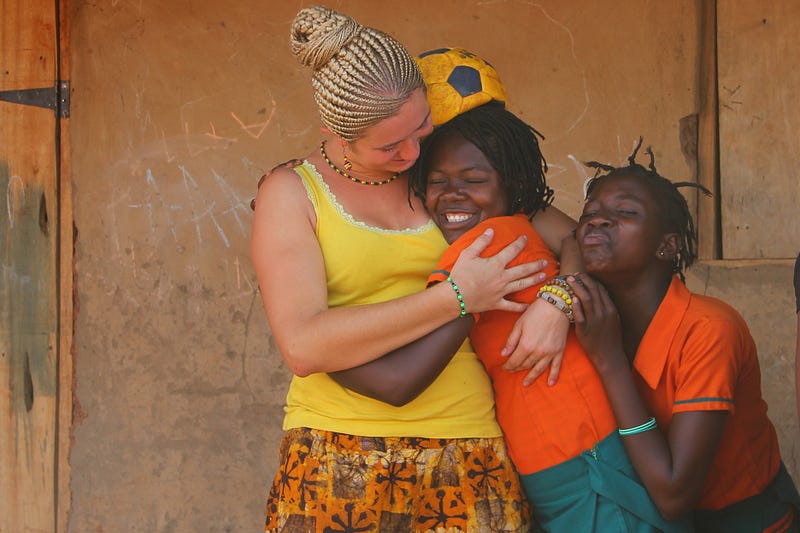
Sharing is caring. With two of my students in Ghana. | Credit: Anne

Fearing there was no spirit to be shared in Tanzania

I was in utter shock after the first day I arrived on the other side of the continent trying to find my bearings in the capital Dar Es Salaam. Sure, locals helped me to find the harbour, get a SIM card and find a place to eat but they also always asked for money in return.

Something that never, ever, happened to me in Ghana. Even if I offered money in exchange, it was denied.

I soon escaped to the island of Zanzibar where I was met again with this African spirit. Walking the backroads I stumbled upon groups of girls studying an English subject. They were all sitting in circles in a local park when one of them pulled me closer.

While all of them had long dresses covering their entire body, wearing head scarves, some even had their faces covered in a hijab leaving no more than their sparkling eyes for me to look at.

The girls pulled me in for me to read aloud the manuscript they were studying and explain it word by word in easy English. They were hanging on my lips even though I had no qualifications in the topic I was reading on.

They also asked me a few questions about what I was doing in the country, how I lived, and so on. We laughed a lot and I will never forget those shining eyes I was allowed and invited to look at.

I did find the African spirit in Tanzania after a while and when I was sitting on a trail leaving the country for Zambia, I had one more memorable experience I will never forget.

We were standing in the middle of nowhere waiting for an incoming train to pass when soon the wagon was surrounded by locals, mostly children staring at the only window showing a white face.

I don’t remember how it started but one of them was carrying an old, beaten-up soccer ball that soon landed in my hands leaning far out of the window.

For the next hour, I was throwing the ball back and forth to the children down on the train tracks. There was laughter, there was cheering and there was so much joy on both sides.

This experience made me smile for the rest of the 48-hour train journey.

“We do not inherit the earth from our ancestors, we borrow it from our children.” — African proverb
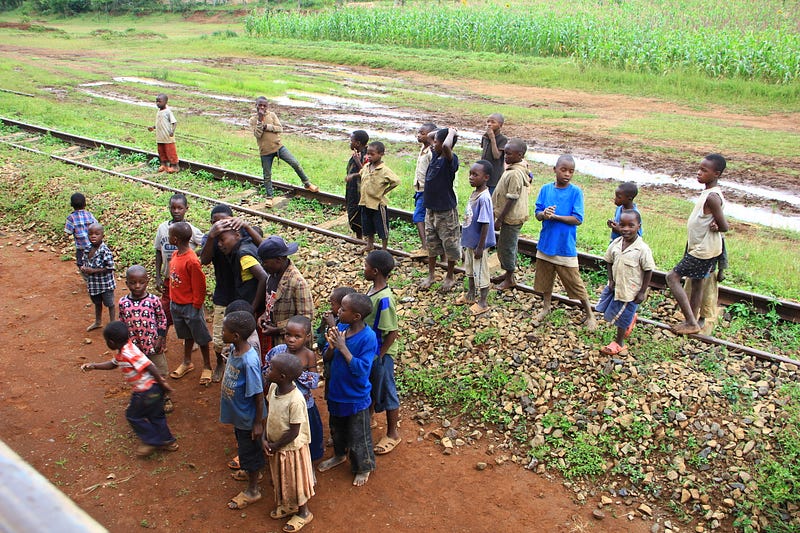
This was just before we played soccer. | Credit: Anne

Learning to trust strangers is part of the spirit

Part of my experience with the African spirit was to trust others. To trust strangers. Some people would have described me as naive. I went to travel on my own, as a white woman with blonde hair and blue eyes across the dark continent.

But I did believe in the good in people. And I still do as I believe this is what forms the base of a functioning society. Distrust together with dishonesty forms fear and fights.

And so I did trust strangers. Every day. I listened to my gut feelings of course. That was what kept me safe on my way of trusting strangers. But it was also what brought me so far.

And as I jumped onto the 48-hour train ride from Tanzania to Zambia, I landed in a four-bed bunk cabin with three other strangers.

While two beds were constantly swapped and changed as people got on and off, I shared the entire journey with a Zambian woman. She and I always looked after each other's belongings when one of us went down the wagon to go to the bathroom or to stretch our legs.

We hugged each other when we parted ways arriving in Zambia.

This train had allowed us to share a special connection.

People, connections to people, a large family and the entire community surrounding you are part of the African spirit. It’s not a society of individuals. The collectivism they practice focuses on the culture as a whole.

“It takes a village to raise a child.” — African proverb
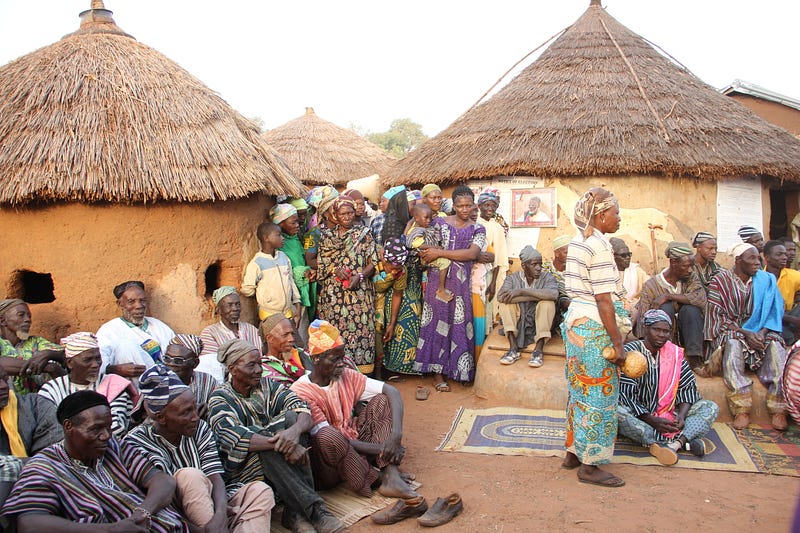
A village celebrating the life of a chief. | Credit: Anne

Finding the African spirit in nature

Growing up close to the mountains, I always had a connection to nature but none of my experiences came close to what I would see and feel the following five years as I settled down in Namibia.

During my travels through different countries, I explored an incredibly vast wilderness filled with an abundance of wildlife I had up until then, only seen on TV.

The purity of those experiences seeing wildlife in their natural habitat and somewhat being part of that when camping in the wild, sparked a deeper feeling inside my body.

I never wanted to leave those landscapes.

I touched a crocodile in the North of Ghana, watched lions take down a giraffe in Namibia, and waded on foot through the world's natural heritage site of the Okavango Delta ending up eye-on-eye with an elephant bull.

The tastes, the sounds, the smells, the sun’s rays on my skin and all other feelings combined ensured I’d never be the same again. I learned how to eat spicy food, smelled the ground before an incoming rainstorm in the desert, listened to the cry of the hyena while camping in the wild and felt the sand blasting my skin while standing atop one of the tallest dunes.

I held my breath far too many times and closed my eyes even more often in an attempt to save that memory for later.

I looked up at the stars which shine as bright as nowhere else on Earth and walked through the night by no other light but the shining of those distant sparkles in the sky.

Yes, I did find the African spirit in nature.

“The baobab’s strength is in its roots.” — African proverb
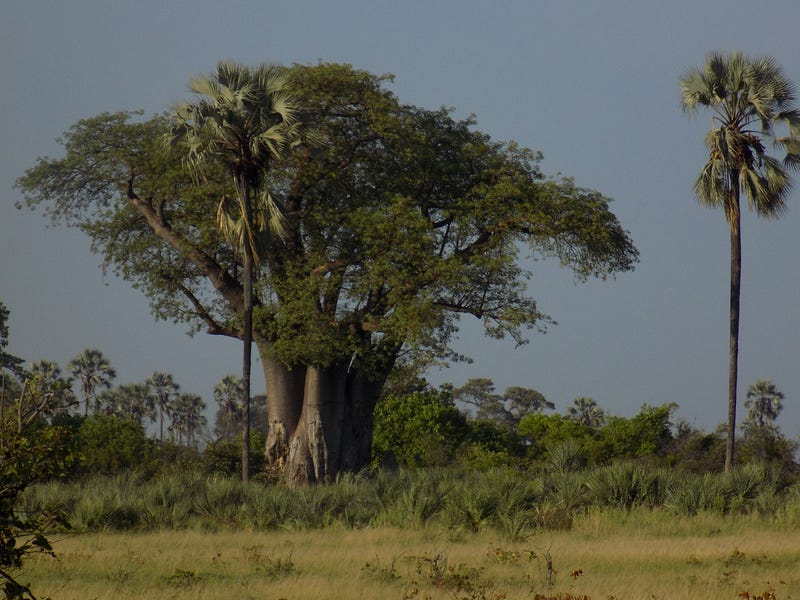
A baobab. | Credit: Anne

The African spirit taught me a different feeling for time

Growing up in Germany I led a very busy life. I was functioning but busy. Every minute of my day was planned out and if a bus was two minutes late, that could mean the day’s schedule was ruined.

And then I arrived at a bus station in Ghana where I was seated inside a minivan and had to wait for five hours before the vehicle would leave.

No bus would leave before not every seat was filled with a person. Waiting for a bus to fill up before smartphones and scrolling through social media was a thing that taught me a lot about patience.

But also about time.

Time is relative. It all depends on what you make of it. And so I sat in those buses watching people walk by. I bought food from street stalls, drank water out of plastic sachets and explained to Ghanaian men I was not interested in marrying. Which they didn’t understand but accepted.

I sat there for five hours until the bus finally began to roll and spent another eight hours squeezed between humans, chickens between my feet and goats on the roof.

And I learned there was nothing I could do to speed up the journey. If a road was closed for the night, I had to sit and wait like everyone else.

After this experience, I never owned a watch in my life again but had so much more time.

Because I learned how to be.

To live in the moment.

“Westerners have watches, Africans have time.” — African proverb
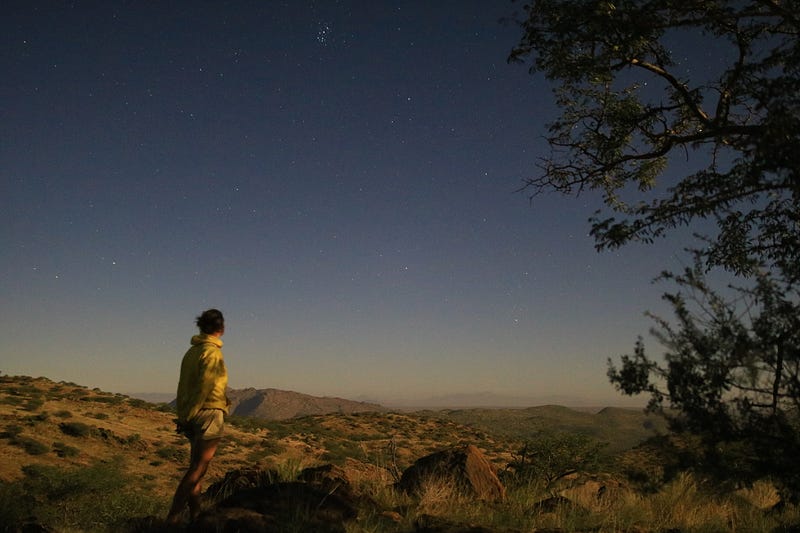
Learning the meaning of time while looking at the stars. | Credit: Anne

The African spirit taught me there is always more to learn

Not that I was a person believing I was on top of the world and knew everything but living with and like the locals taught me how much one can learn from the person next to you.

As long as you are open and willing to learn.

Every human has a different past, different experiences and learned different lessons. If we are willing to listen, we can learn so much from their stories.

We can learn from them and grow.

“Knowledge is a garden. If it isn’t cultivated, you can’t harvest it.” — African proverb
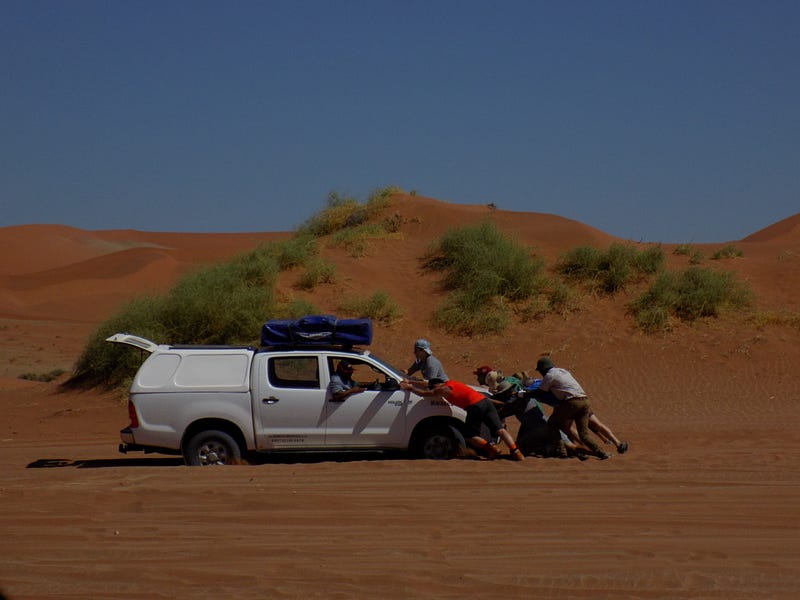
Watching others and learning from their mistakes. | Credit: Anne

The complexity of the spirit

While many associate spirituality with a religion, this continent housing hundreds if not thousands of different religions might be the one with the most diversity among its people and still sharing a lot in common.

Of course, I’m not blindfolded. I know how much is going wrong on the African continent and how many problems are sitting in every corner but this article isn’t about that. You can read about wars, poverty and crime in every newspaper and TV channel as that is what they love to show. The bad.

But the spirit I got in contact with when I first placed foot onto this continent has never left me.

The African spirit is about the people, the environment and how the two coexist. It is complex and yet simple. Live in the moment and share the joy of life with others.

“If I have ever seen magic, it has been in Africa.” — John Hemingway

Happiness. | Credit: Anne

“The only man I envy is the man who has not yet been to Africa — for he has so much to look forward to.” — Richard Mullin

This is a writing prompt response to Globetrotter’s monthly challenge. Read about how to take part in it in the link below:

Also, please take the time and read other writer’s submissions to the prompt.

Adrienne Beaumont with “The Journey Within: Navigating the Intersection of Travel and Spirituality

Brad Yonaka with “A Puja in Sikkim

Shutterstock | Instagram | YouTube | Mailchimp | Amazon | Redbubble

Travel
Culture
Africa
Spirituality
Monthly Challenge
Recommended from ReadMedium