
The Sky and Its Secret Power in Shaping Our Lives
Looking to the sky as an infinite landscape of truth, creativity, and inspiration
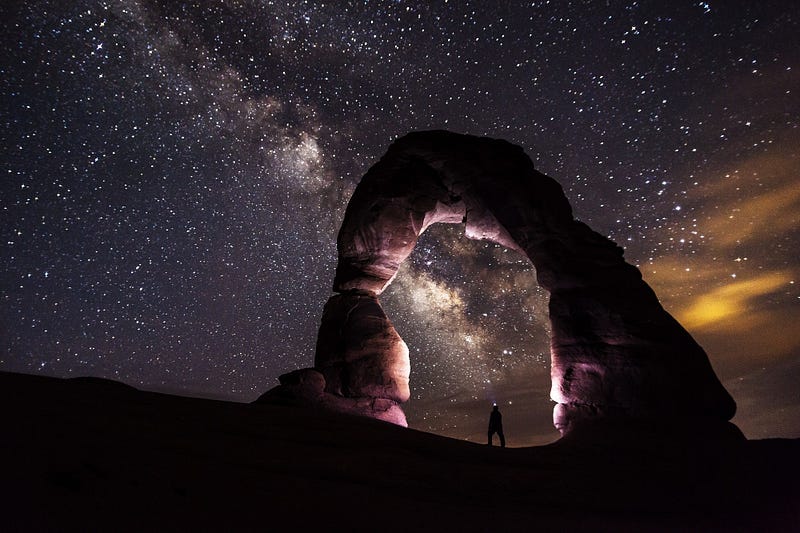
I have looked to the sky as a source of inspiration since I was a child. We’d lay on the grass in our backyard looking up, telling stories about the shapes of clouds. I wasn’t alone. Sky-watching is perhaps the most ancient and universal cultural act.
I learned to fly kites, feeling the invisible winds carry my creation and send reverberations back through the string to my hands. It was as if the kite was trying to pull me up.
Was I flying the kite? Or were my feet following the magical dance between the kite and the wind — the kite flying me?
At night we’d watch for shooting stars and ancient comets making their journey across the galaxies. The sun’s departure revealed an infinite world of possibilities, patterns, and stories.
Contemporary culture often associates day and light with truth — we shed light on a matter, participate in “blue sky” thinking, and hope to see light at the end of the tunnel.
But blue sky is merely an illusion masking the invisible but boundless depth that lay behind it. It is the darkness of night that reveals the infinite, finally making it possible to see clearly.
Night and day remind us of the duality of existence — shadow and light, yin and yang. Night is the daily season of expanding one’s perceptions. Day is where our attention narrows to focus on the immediacy of life.
Some religious traditions talk about a “dark night of the soul,” referring to a difficult period or rite of passage that eventually leads to spiritual transformation. I’ve had several uncomfortable but entirely necessary “dark nights” in my life.
It is said the night is darkest before the dawn, indicating that things will always get harder before they get better. One cannot avoid the darkness if wanting to have this transformation.
Eventually the dawn comes, and a new cycle appears. The new day allows us to draw on the wisdom of the night, if we know how to speak its language.
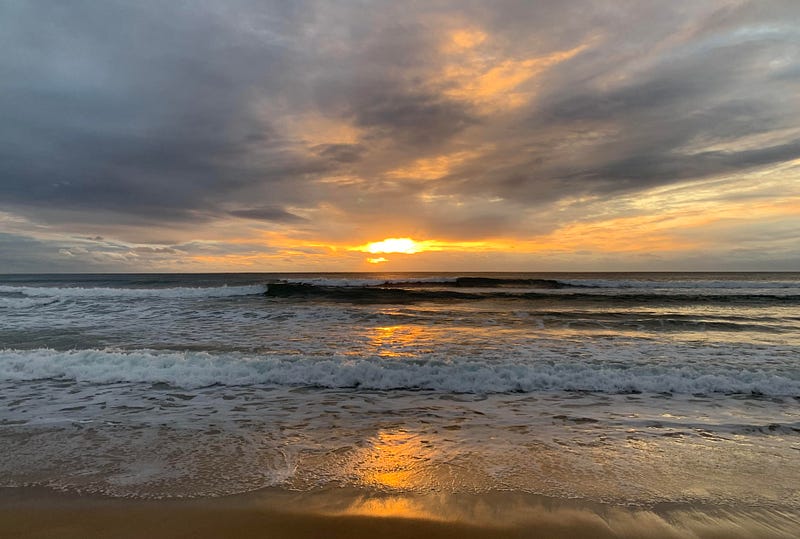
Of all landscapes — mountains, rivers, deserts, forests, caves, oceans — it is sky that is most mysterious. This is perhaps because we cannot live in the sky permanently. It is a landscape experienced mostly from a distance yet continuously shaping us in all kinds of ways.
The sky brings sunshine, wind, and rain. It carries storms, tornadoes, and cyclones, and can create droughts, floods, and fire. Much like life, sky is never fixed, often unpredictable, and permanently in flux.
Sky is the great humbling agent of change in our lives, reminding us to remain present, attuned and aware of the world around us.
Sky has inspired cultural storytelling for millennia — from the creation stories of Indigenous peoples to the myths of many religious traditions. While our daily lives may be pulled by the forces of gravity, these stories remind us of our more-than-earthly existence .
Contemporary myth-makers continue to create worlds and stories in the likes of Star Wars and other science-fiction tales. These modern stories speak of the human desire to venture out into other worlds and allow us to contemplate the possibility of existence in other galaxies.
For some it represents yet another landscape to be conquered and colonised. For others, it’s a source for gaining understanding about our own existence.
The first images from the moon and satellites allowed us — as if for the first time — to see ourselves from the outside. The sky gifts us both perspectives — looking out and looking in. From a distant perspective we can see Earth as one global entity. Gaia.
Years ago I was working in the Philippines and struggling with some events going on there at the time. While meditating one evening, I found myself pulled at light speed from my body through my crown. I hovered there in space looking back at Earth. My problems disappeared and emotional attachments dissolved.
From the distant vantage point of space, borders disappear, and human machinations are revealed for their illusory temporality. The gift of distant perception helps— in the dark of night — to finally see things clearly.
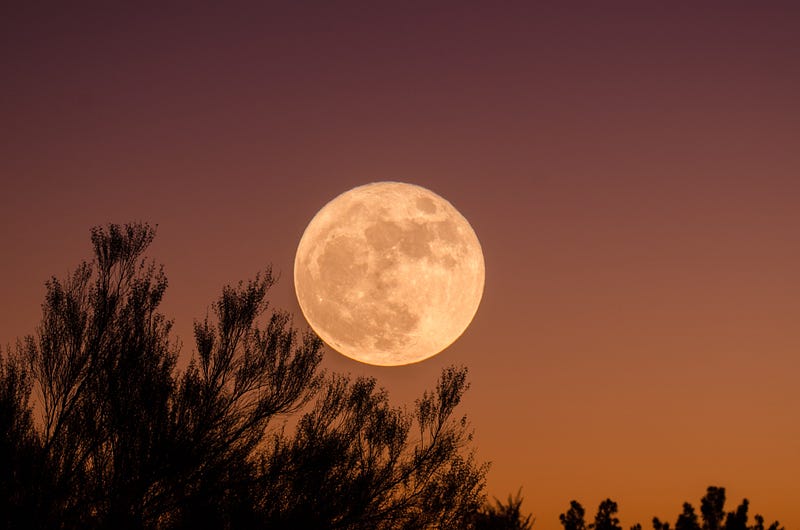
The moon and its orbit remind us of the cycles of time. Every month, on full moon, I feel its gravitational pull. Humans are made of up-to-60% water. And just like the moon creates tides, so too does it change the balance of the body.
I’ve observed this pattern in myself time and again — difficulty sleeping and creative surges in the night. Whereas I once resisted this, I now honour the cycle and tap into the creativity that comes with a full moon. I imagine myself sitting on the moon looking back at the world and my life. I write and create.
I’ve never really gotten into astrology yet respect those who seek to understand its patterns. I prefer the mystery. Humans are naturally sense-making beings. We look to the stars for answers and find patterns to feel secure in the insecurity of randomness.
I’ve looked at Saturn in a telescope and appreciated the detailed rings that encircle it. And yet part of me wishes I hadn’t seen it. I feel like I enjoyed Saturn in my mind’s eye more than the physical reflection created by the telescope.
For me, this is the beauty and mystery of the sky. It is the gift of laying on the earth and looking up, contemplating existence. Seeing is done with more than one’s physical eyes.
There is a human tendency to want answers to questions, and yet in the attempt to colonise this mysterious landscape, we risk ending up with narrow answers that colonise our minds.
Sky is the landscape of perception. And as light pollution engulfs cities, it becomes even more urgent and important to find time away from the visual noise and look upwards.
As a culture we have much to learn about embracing the truth and beauty of darkness. Truth may be a journey of “seeing the light,” but perhaps one must journey through night to get there.


