
The Art of Seeing the Forest and the Trees
Letting go of purpose to appreciate the interconnected nature of life
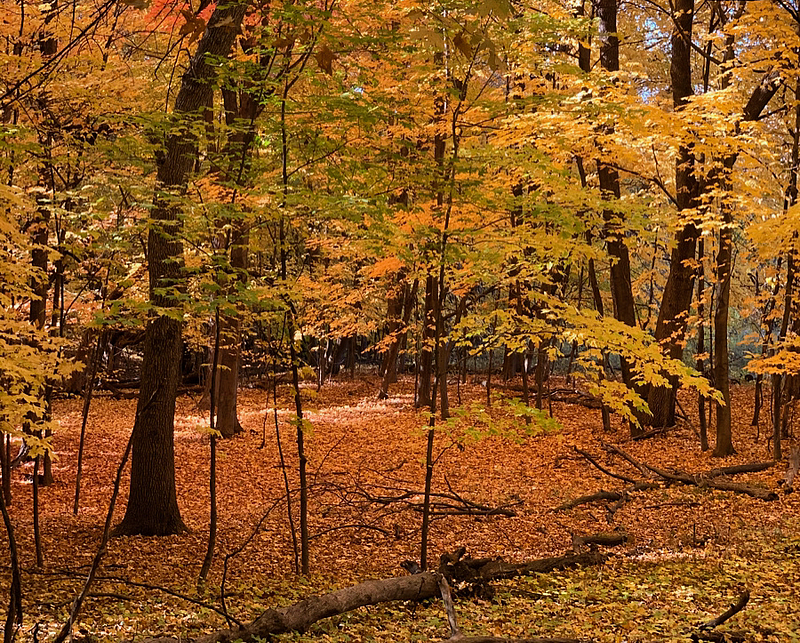
I recently went through a major life transition where I left a partner, job, community, and friends. But perhaps the thing I ended up losing the most was the sense of purpose all of these gave me. I landed back in Australia feeling lost and directionless. In placing my attention on the bigger picture of what was happening in my life, I was not seeing the interconnected perfection of how life was sustaining me.
Where does your focus go?
Some of us are inclined to focus on the minutia or the trees, looking at every little thing while not being able to see the forest or the bigger picture. I have often had the inverse problem. I am usually so focused on the bigger picture that I miss the beauty that can exist in the details.
I recently went for a hike in the D’Aguila Ranges with a friend and her two children. My usual hiking style is to focus on the end goal, stopping at clearings along the way to take in the view. When hiking alone, I am often lost in my thoughts, not really paying close attention to what is going on around me. I simply trust the trail will get me there.
My friend’s young children wanted to stop at every other tree to admire or make comment on it. We poked around looking for funnel webs and spotted birds. We pulled on vines to see where they were connected and wondered how they travelled horizontally to connect between trees. We admired the oddly shaped fungi that attached themselves to fallen trees. A simple hike of getting from Point A to Point B became a botanical science lesson.
It was revelatory for me, and I was grateful that they helped me slow down to appreciate parts of the rainforest I would have otherwise missed by being lost in my head.
The hidden life of trees
“A tree’s most important means of staying connected to other trees is a “wood wide web” of soil fungi that connects vegetation in an intimate network that allows the sharing of an enormous amount of information and goods.” ― Tim Flannery (in The Hidden Life of Trees by Peter Wohlleben)
There is much more going on in a forest than simply being a collection of trees. It is an interconnected web of information and mutually beneficial support. And not just trees of like species talking to each other. Flora and fauna of all varieties have ways of seeding and communicating. Its interconnectedness is necessary for its survival.
Interconnection happens at all levels of the forest. Branches reach out and leaves touch each other. Even in the canopies, they know not to encroach too much on each other — letting enough light in to reach the floor. Root systems intertwine, sending electrical pulses of information from tree to tree.
“There are more life forms in a handful of forest soil than there are people on the planet. A mere teaspoonful contains many miles of fungal filaments. All these work the soil, transform it, and make it so valuable for the trees.” ― Peter Wohlleben, The Hidden Life of Trees: What They Feel, How They Communicate — Discoveries from a Secret World
Even the fallen tree or remaining stumps become home to fungus, insects, and more. It is easy to look at rotting material on the forest floor as things in decay or having passed their contributing life cycles. Yet nothing is wasted in a forest. Amongst other things, it feeds the nutrient-rich soil necessary for new growth.
Then there is that invisible and most life-sustaining substance of them all: air. The climate of a forest is so perfectly self-regulated between heat and cold, dry and humid, to create the most vital environment for optimal growth. The oxygen in a forest is so pure that research has shown a walk in the woods can help with health:
Korean scientists have been tracking older women as they walk through forests and urban areas. The result? When the women were walking in the forest, their blood pressure, their lung capacity, and the elasticity of their arteries improved, whereas an excursion into town showed none of these changes. — Peter Wohlleben, The Hidden Life of Trees
I had always interpreted the idiom, “cannot see the forest for the trees,” as a need to get above the canopy to see the forest from a higher perspective. That the only way to view a forest as a whole was from above. I was discovering a whole new way to see a forest.
Discovering the Forest
While I usually have an inclination toward seeing the forest over the trees, lately I have felt lost. It seems as if all I can see are the trees. This morning I had a session with a life coach where I explained how I felt lost in the forest and was looking for direction. I said I wanted to be able to get a higher perspective on a mountaintop and get a better sense of purpose and direction.
Without realizing it, I was trying to avoid looking at what was happening in my life by wanting to get to the mountain view. My coach invited me to look at what the forest was showing me. I closed my eyes and began to look around at all the trees in my life. I saw what I perceived to be all the disconnected things I was filling my life with. My trees:
- Writing on Medium
- Spending time with friends and family
- Babysitting
- Going to the gym
- Studying a coaching course
- Reading
Just because it doesn’t look connected, doesn’t mean it isn’t connected.
These trees all seemed random and disconnected when they were actually deeply connected. My coach invited me to look at the forest again and here is what I found:
- My coaching course was helping me learn important skills to be more present and helpful to my friends and the children I was spending time with
- Working with a personal trainer at the gym was teaching me a lot about body transformation and the process of supporting someone through change
- The experiences I was having gave me great fodder for my writing on Medium
- My reading has helped me hone my craft and given me valuable quotable sources for my writing.
My missing sense of purpose distracted me from seeing how mutually supportive each of these activities are. It was profoundly moving for me to see how I was growing a forest in my own life. And how even those elements of my life that I had lost were feeding the nutrient-rich soil necessary for new growth.
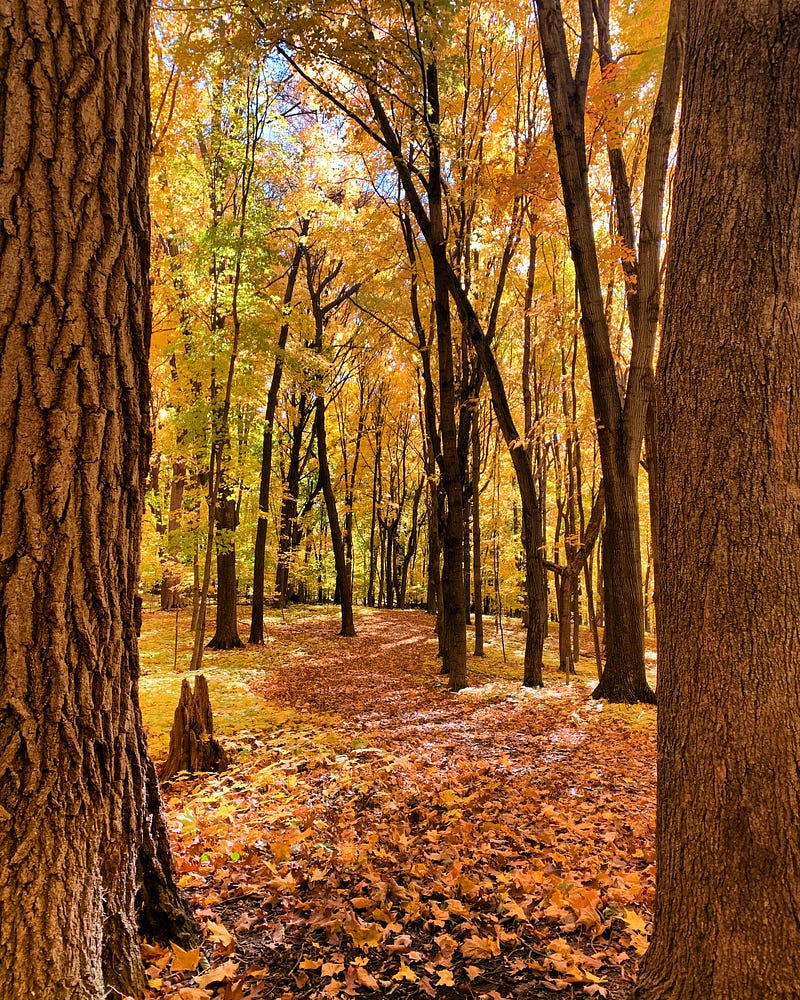
My coach invited me to look at the forest again. This time I saw a clear path through the forest. No doubt the path was there before, but now I had the eyes to see it. The shift in perspective of being able to see both forest and trees allowed me to see a way through it.
The path meandered through the forest, and I couldn’t see beyond fifty feet in front of me. But the path was nonetheless there. If I stayed present to the experiences of the forest and continued to move forward, perhaps it will eventually open to a new landscape.
Make your life a rainforest
If my life was a mono-crop forest of the same activity over and over again, I wouldn’t benefit from the rich interconnectedness it is all feeding. There’s something to be said for having a rich and diverse life. And, as Peter Wohlleben talks about in The Hidden Life of Trees, it creates rich and fertile soil for transformation and growth.
I’m no botanist, but I get the sense that a forest doesn’t care about its purpose. It simply exists, and any purpose is inherent to its beingness. Purpose is a mental construct manufactured by humans to help us survive. It probably came about through our own disconnection from nature and life.
I admit to falling into the societal trap of the mountain-driven life — the need for an iconic destination as a life purpose. I am starting to settle into the idea that perhaps there are seasons where not having a direction is okay. That perhaps purpose can come not from the destination one is moving towards, but stopping to enjoy the trees, birds, and fungi of our lives. To see and appreciate the interconnectedness of all life.