
The sex life of Harold Bloom
Was a literary superstar a sexual predator?
He seemed made to study literature. Looking like an eccentric genius, he spoke the language of poets, and knew every book ever written.
In 1955, Harold Bloom became a member of Yale University’s English Department from 1955, as he remained to his death in 2019. He was a literary superstar, teaching a deeper kind of reading. That was the act.
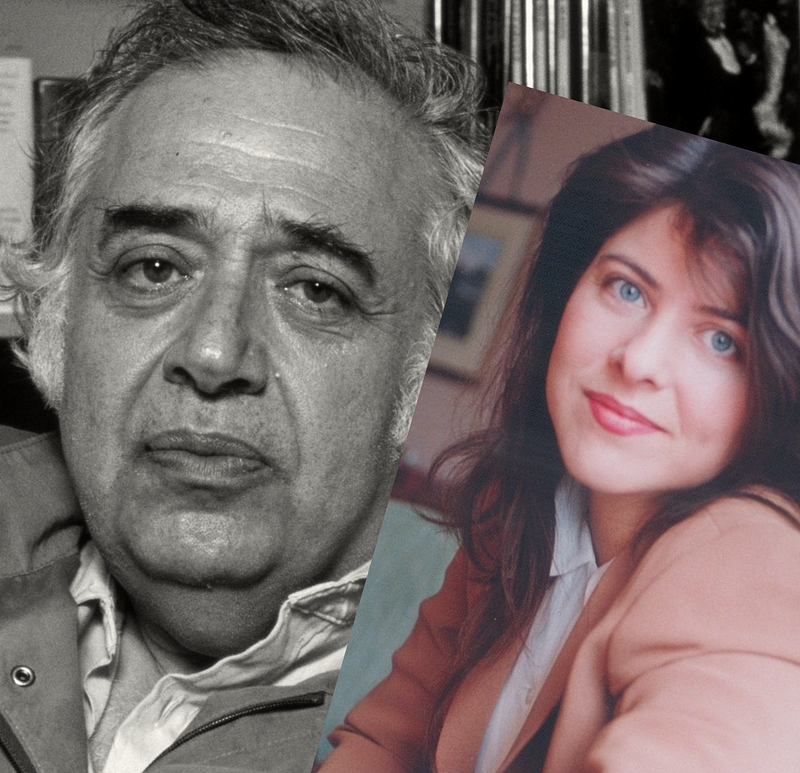
He didn’t seem particularly sexual.
He was married with children. He’d mention sexual themes in books, with little feeling, except a few unusual hints at anal sex with women.
In 1977 he was writing to the poet James Merrill and adds: “I take it that the straight strong poets truly bum-buggered their ladies.”
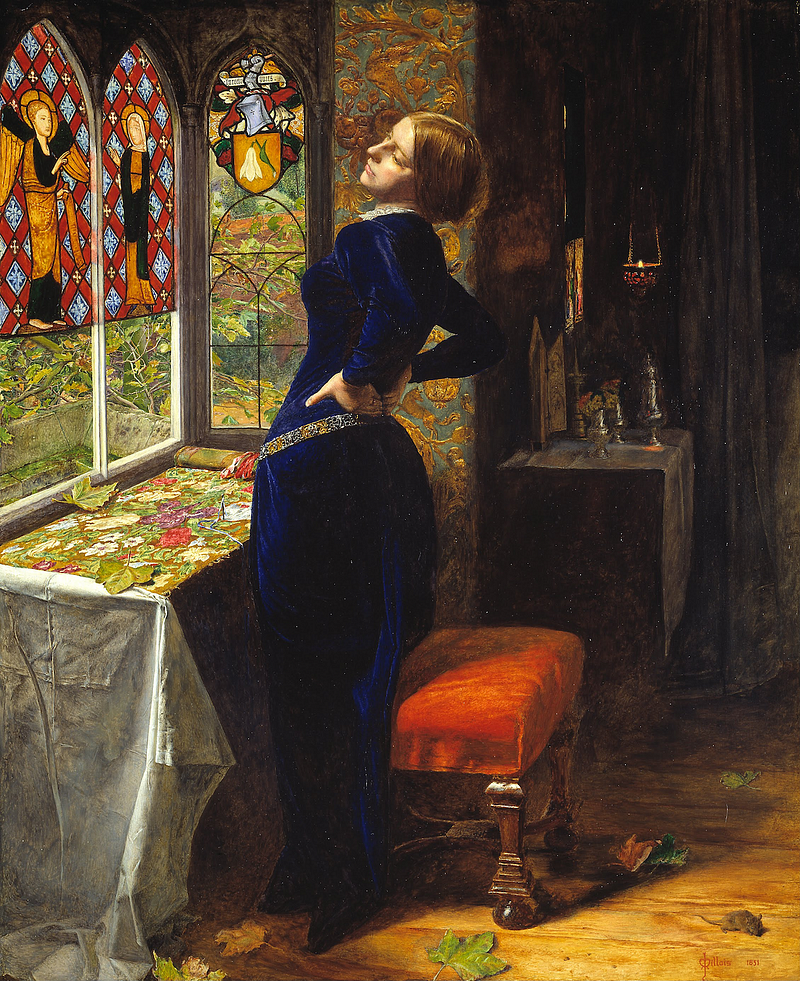
There’s memories of him drawn to the female posterior, as when pausing a class on Tennyson’s poetry to stare at John Everett Millais’s painting Mariana, a painting of the poet’s character.
He called her “deliciously broad in the beam.”
But the Harold Bloom in private was different from the one his public saw.
A 2020 article in The Politic, Emily Tian dips into Bloom’s archive, and finds him, in 1965, writing to a colleague, John Hollander:
“I am trying to give up my major vices (lady graduate students, gluttony, sado-masochism, melancholy, paranoia) but it is not easy.”
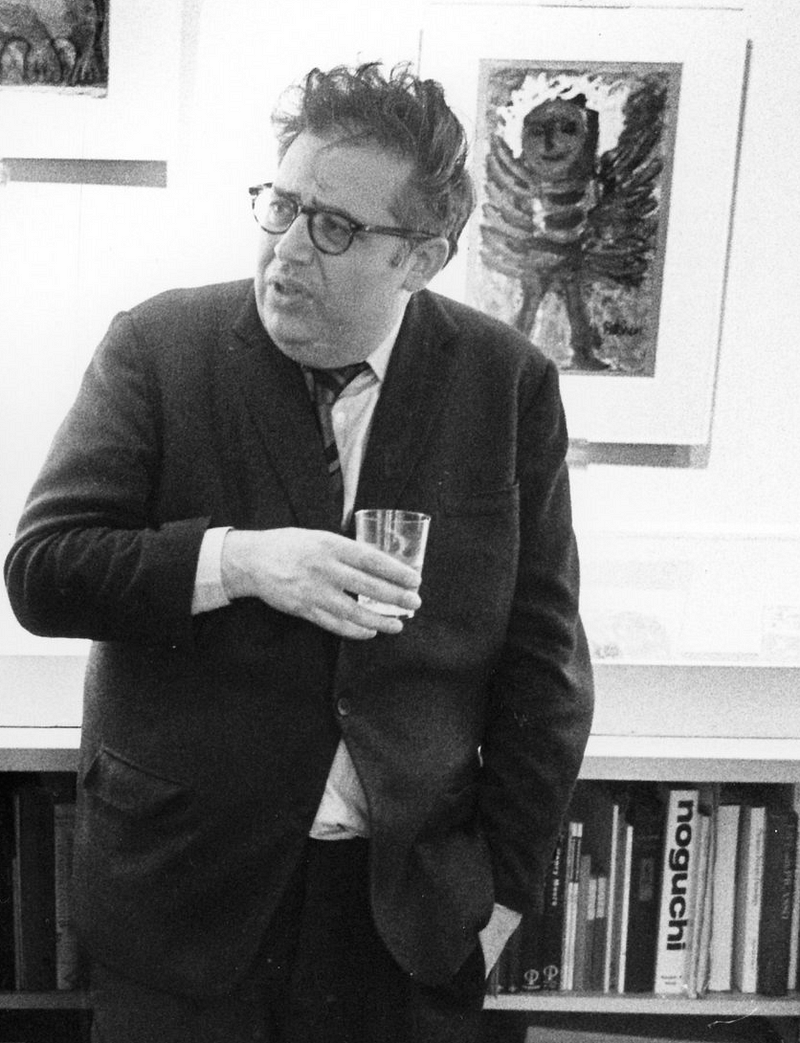
Bloom could also leave a ‘queerish’ suggestion.
It wasn’t just his regular reference to gay writers like Hart Crane, Walter Pater or Oscar Wilde. It was also his habit of kissing men in public.
Sam Schulman, a scholar long on the Yale faculty, recalls a day in 1977. He was age 27, slim, with long blond hair, he notes—and met Bloom on the street. He complimented a recent lecture Bloom had given, and recalls the unexpected reply.
“My dear,” Bloom said, “what a lovely thing to tell an old and tired man. Here, let me kiss you.” And he did—on the mouth.
He was well known for “sexual misconduct.”
In 2018, when #MeToo was in the air, the noted scholar Patricia Klindienst wrote in to the New Haven Register about Bloom. She recalls:
“In 1984, when I was a new Ph. D. about to take a job in the Yale English Department, a senior faculty member at Stanford took me aside and warned me that Harold Bloom was notorious for sexual misconduct with women and I should be on my guard.”
And it does seem that he used his female grad students as a kind of harem—including his most famous one, the lesbian literary critic Camille Paglia.
When she was working on her dissertation in 1971, Bloom took her on, even though her theme, unusual for the time, was androgynous characters in literature.
It’s not a matter Paglia has much discussed.
But in one 2018 interview she recalled a “huge scene” with her “dissertation advisor” — leaving Bloom unnamed—which she called a “major incident where I fought back.”
As she narrated it, in vague terms:
“I was compromising, potentially, my entire future career. But I stood up for myself. I would not permit any man to put his hand on me, even in a friendly way…”
Bloom continued on as her dissertation advisor. But she had contemplated that he might’ve retaliated against her.
In the fall of 1983, a 19-year-old graduate student in poetry had an interaction with him.
In her 1998 book, Promiscuities, Naomi Wolf begins the story: “I once had a professor whom, since I am still afraid of him, I will call Dr. Johnson.”
She presents the scene as a fictionalized re-enactment, but the details could hardly be missed. She was auditing one of this professor’s classes. He seemed to like her. When taking a paper from him, he grabbed her wrist, and said, “Come and see me.”
She’d heard “rumors” about him.
But for Yale faculty members that was nothing new. Wolf writes:
“We knew that the smart young men, our peers, were mentored to take these elders’ places and the smart young women were either chosen to be handmaidens or over-looked altogether. The role of intellectual handmaiden was heavily eroticized—though the eroticism expected of us was usually sublimated and very seldom explicit.”
To be a female student was to produce “emotional submission,” she adds.
Her senior advisor — John Hollander — had urged her to do an independent study with Bloom.
Bloom agreed. The single subject would be her development as a poet. She gave Bloom a manuscript of her poems.
She writes: “To me, at the time, it was the most important gift I had ever given any man.”
Weeks passed. The end of the semester came in view. He didn’t reply—until he set up a time to come to her apartment for dinner. They would discuss her poetry.
In 2004, Wolf wrote a fuller treatment of the matter.
An article for New York magazine, “Sex and Silence at Yale,” narrated in more detail the scene that followed.
“Most of my friends in the Literature department were his acolytes, clustering around him at office hours for his bon mots about Pater and Wilde,” she writes. “He called students, male and female both, ‘my dear’ and ‘my child.’ Beautiful, brilliant students surrounded him. He was a vortex of power and intellectual charisma.”
She recalls the dinner. Her roommate, with boyfriend, were there too. She’d lit candles, and chosen her outfit carefully, she’d think later, since she “wanted him to think I was attractive.”
Discussing her poems was the overt point.
Throughout dinner, Bloom didn’t seem to be thinking about it. “You seem so cheerful…externally,” he said to her. “I see sadness in your eyes.”
Wolf recalled a female friend telling her Bloom had said the same to her.
Would he be discussing her poetry? He’d brought the manuscript with him. She noticed the manuscript seemed unread.
“I’ll get to that,” he said. “In good time.”
But then he was moving toward her, into her space.
“You have the aura of election upon you,” he said. She writes: “The next thing I knew, his heavy, boneless hand was hot on my thigh.”
She backed away, disoriented. He moved closer, stroking her hair.
The room seemed to spin. Feeling the effects of the wine he’d brought and the disgust she felt, she “doubled over the kitchen sink, heaving the red liquid from the pit in my stomach.”
Bloom darted into the bedroom to fetch his coat.
“You are a deeply troubled girl,” he said, grabbing the wine bottle as he left.
The scene did trouble her.
She writes in Promiscuities of her inner dialogue that ensued:
“You allowed him over to your apartment?” “Yes.” “In the evening?” “Yes.”
She went over, with herself, the details of the encounter.
“So you responded to his flattery?” “Yes.”
She adds: “Those details damned me into blaming myself in part for what happened.” She didn’t wish to discuss it…until she did.
Bloom never replied to Wolf’s article.
Long before #MeToo, the media was on his side. Even feminists seemed to think the accusation was unfounded, or not really that bad.
Camille Paglia came out to defend her mentor, saying:
“I just feel it’s indecent that if Naomi Wolf did not have the courage to pursue the matter at the time, then to bring all of this down on a man who is in his 70s and has health problems, to drag him into a ‘he said, she said’ scenario so late in the game, to me demonstrates a lack of proportion.”
In another article, for Britain’s Daily Telegraph, Paglia likewise called Wolf “indecent,” saying it was wrong:
“…to bring all of this down on an elderly man who has health problems, to drag him into a ‘he said/she said’ scenario so late in the game. How many books, how many articles, Naomi, are you going to impose on us so we have to be dragged back to your teenage heartbreak years? This is regressive. It’s childish. Move on! Get on to menopause next!”
Wolf recalls she had discussed it with people around her, who urged her to be silent.
She recalled the talk: “He’s well known for this. Don’t do anything about it. He’ll ruin your career. Other women who tried to bring it up had their careers destroyed.”
But he surely would move against her, she thought. Her goal of being an English professor and part-time poet seemed remote.
“I had to take a complete detour for the next three decades,” she says in a 2023 interview with Jordan Peterson. She began to think about systems of sexual control. “What allows a rape culture on campus?” she wondered.
A different path opened up: a feminist commentator.
After Bloom’s death, his colleagues were left trying to manage his reputation.
The “literary hero” vibe was so compelling, yet there were questions about his behavior with women. On March 10, 2022, the University of Louisiana at Lafayette hosted a lecture by David Mikics, a friend of Bloom’s who wanted to give him a tribute.
At the lecture, he was asked about Wolf’s accusation. He replied that Bloom didn’t remember the encounter, and added:
“To my knowledge, there’s only one accusation, and that is the accusation by Naomi Wolf that at a party, Bloom placed his hand on her knee or the inside of her leg, something of that sort. And that’s not corroborated by anyone else.”
I’m unaware of a source that finds Bloom saying he denied the encounter.
I wrote to Mikics asking when Bloom denied it. He kindly replies:
“He publicly said that he didn’t remember having met her, and you can find that remark quite easily. And yes, he denied it to me and to many others, and was very disturbed by attempt to destroy him.”
I go looking again through period news coverage. Bloom was said to have “maintained a dignified silence,” as one report goes. His wife is quoted: “He has no comment.”
But in British media there was more. An update from the London Times:
“Mr. Bloom, 73, a world famous authority on Shakespeare, Chaucer and Milton, has not commented in public on Ms. Wolf’s accusation, but has let it be known through friends that it is a ‘vicious lie.’”
Naomi Wolf was the only one who accused him.
I’m left thinking about the women who might’ve had more serious accusations against Bloom, and of a culture in which the sexual use of grad students was apparently pervasive.
Even after Naomi Wolf, they never spoke up—if they existed at all. 🔶


