
The Serenity and the Beauty of Tea Gathering
In response to the April 2023 DEP Photography prompt and weekly prompt 27/52
I was away from daily writing while hosting two students from Kyoto. After hectic (though deeply meaningful) days with them, I had an opportunity to enjoy the serenity moment by attending Chaji 茶事, the most formal tea gathering, last weekend.
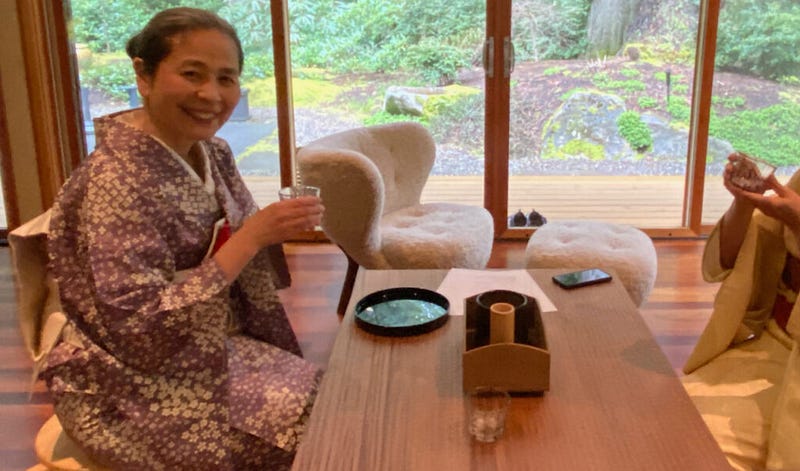
First, the guests (three of us) were drawn to the waiting room. The hosts use their Northwestern-style living room for this space. They first served us a glass of warm water. Inside were several cherry blossom petals, slightly salted.
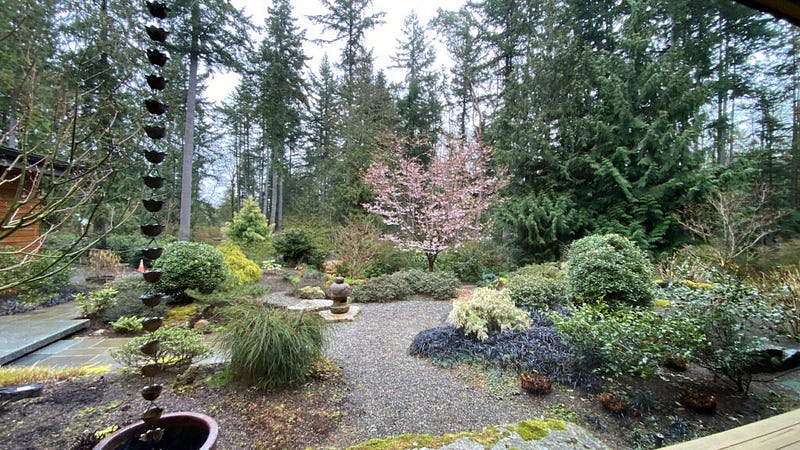
We guests moved to the bench overlooking the beautiful Japanese garden. The hosts have spent 9 years carefully landscaping the yard once filled with wild trees. We enjoyed the scenery for a while, purified our hands and our mouth with water, then went into the tea room.
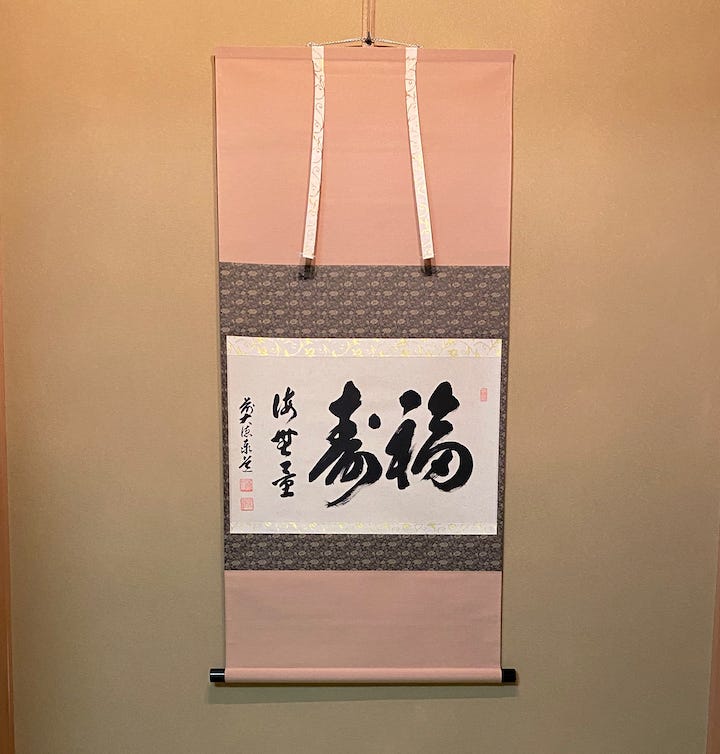
On the alcove in the tea room was a scroll written by a Zen monk of Daitokuji Temple in Kyoto. It says 福寿海無量, meaning, happiness and joy can be infinite like the ocean. We the guests took time to look closely at the scroll and the kettle, then were seated.
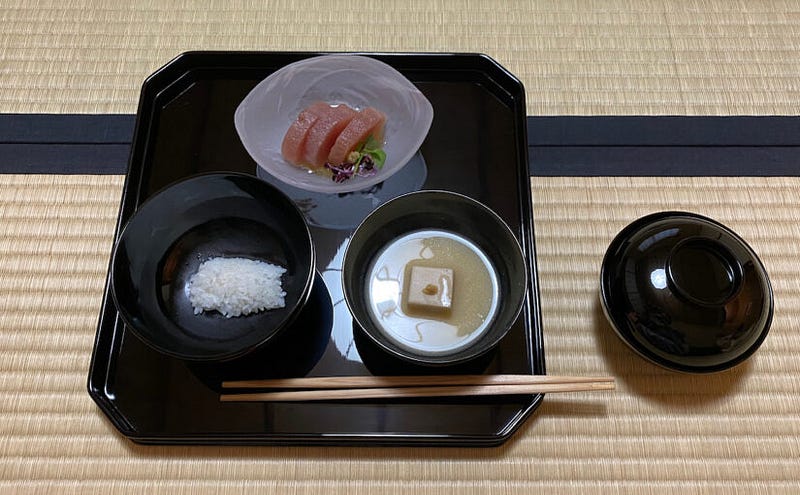
The host began serving us a light meal called Kaiseki. He first brought a black tray with rice, miso soup, and sashimi dish (see the first photo above), then brought in sake.
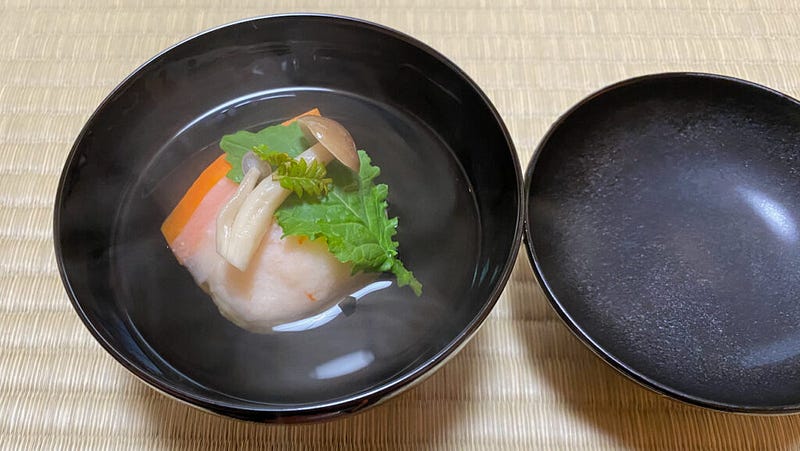
One by one the host brings in 2–3 additional dishes, including this meticulously decorated soup dish. Everything is carefully prepared and cooked by the host.
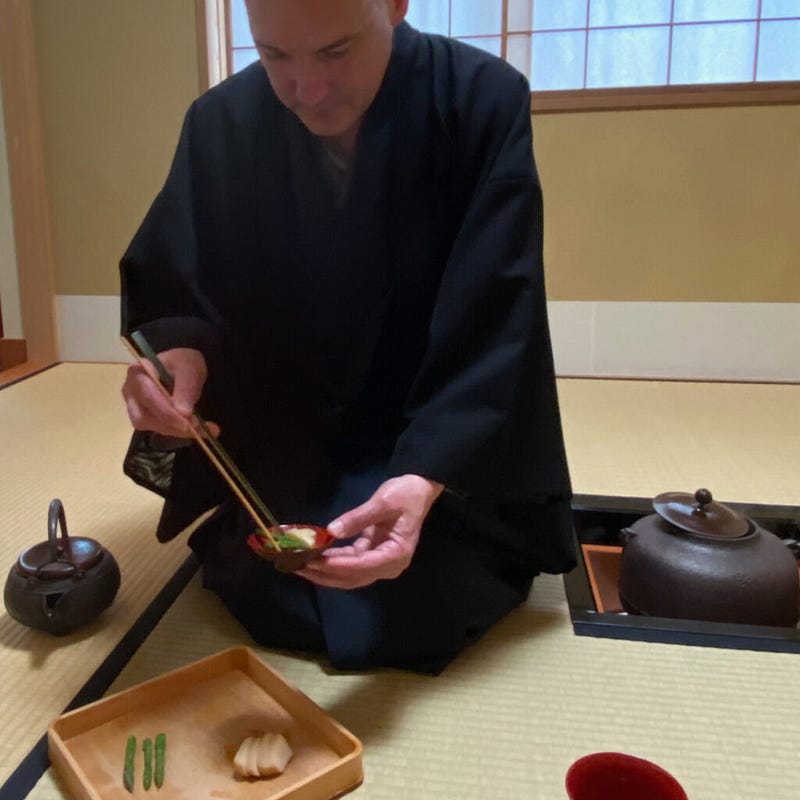
The host sometimes serves each one of us guests himself.
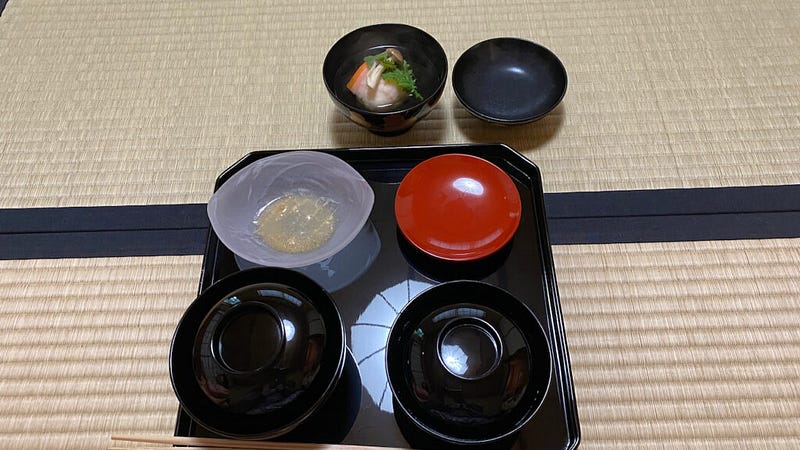
The shiny black and the vivid red… I just love the contrasting, rich colors of the Urushi lacquerware!
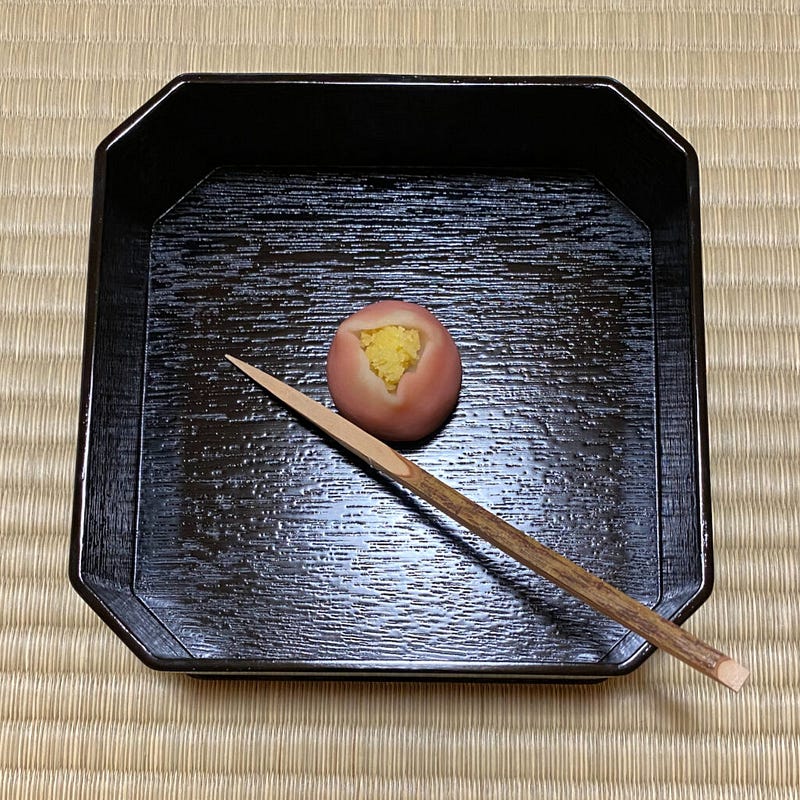
Once the meal is over, the host brings in sweets in a stacked box. Oh, the sweets are also handmade by the host!
After having the sweets, the guests leave the tea room and return to the bench by the garden. It’s like an intermission of the concert.
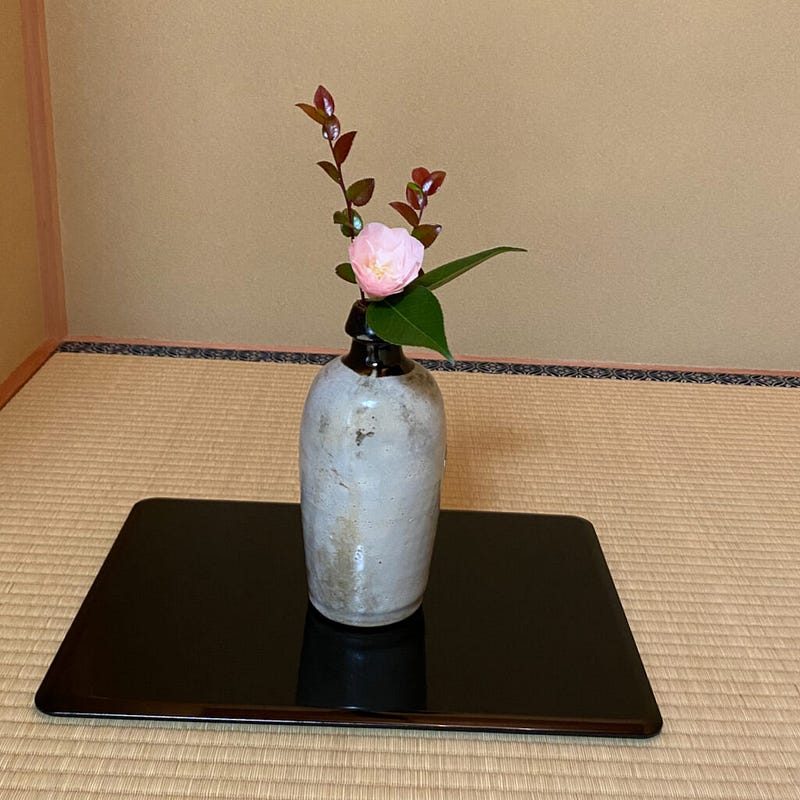
Time to go back to the tea room. Now the scroll is taken down, and a vase of flowers is placed on the alcove.
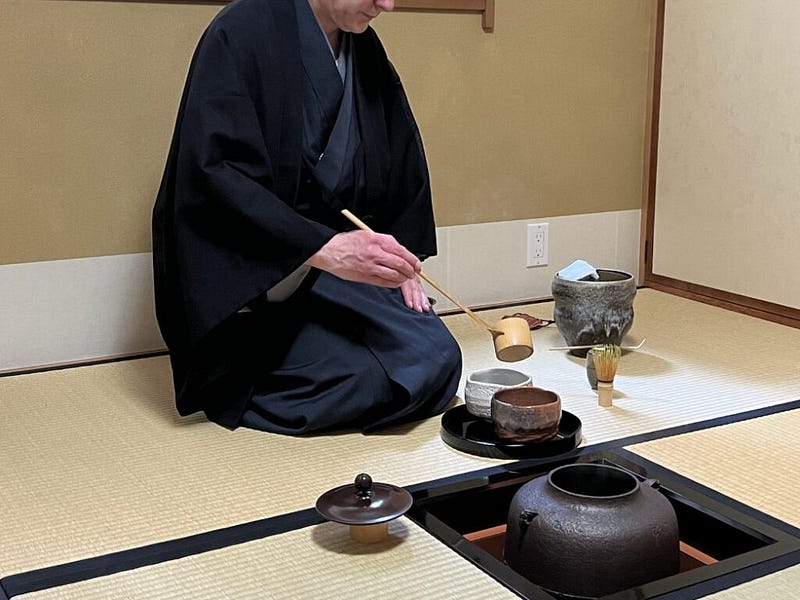
The host first serves us thick tea. The matcha green tea looks almost like paste rather than liquid. Thick tea is the highlight of the tea gathering.
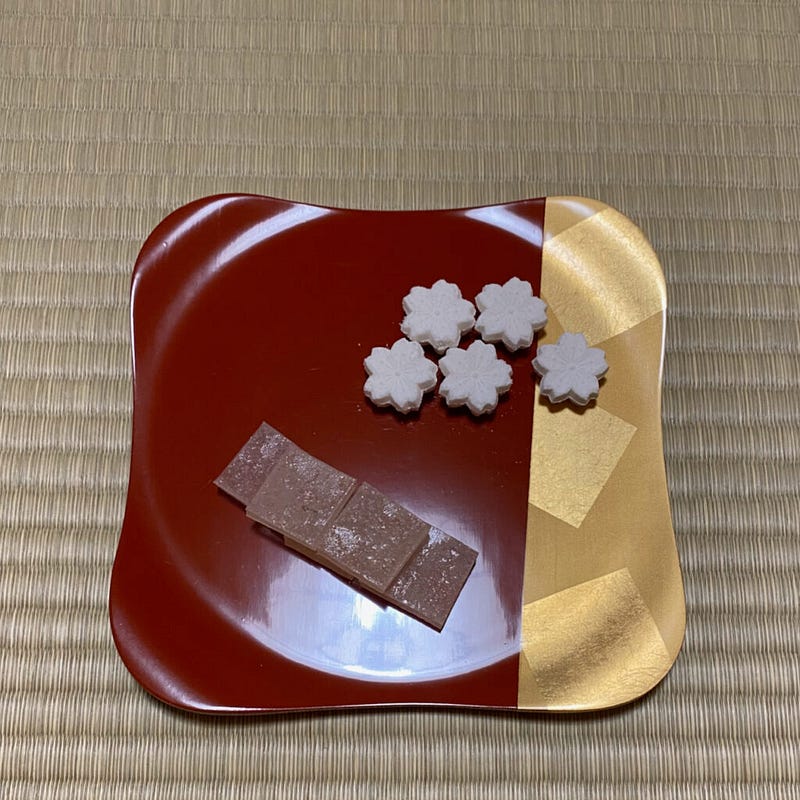
Another kind of sweets, this time rather dry, are served.
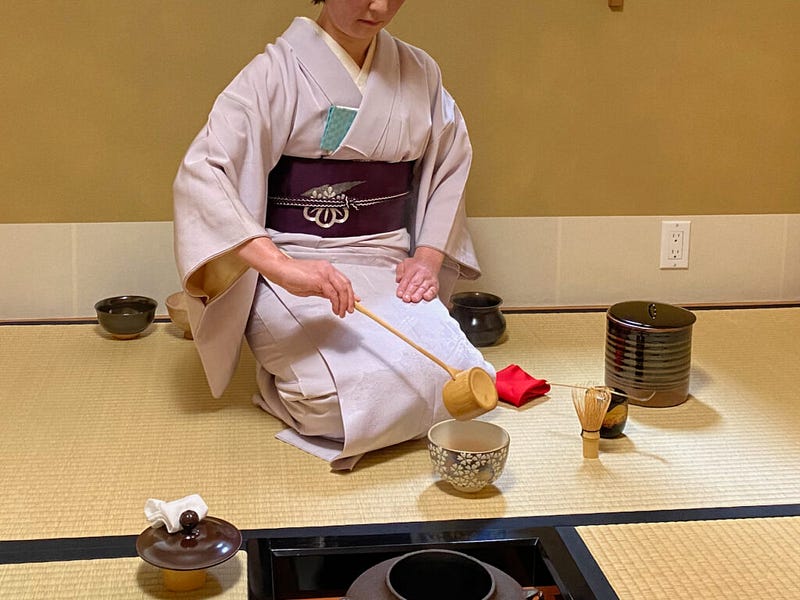
For this tea gathering, the couple divided the labor of a host. The wife served us thin tea. You can see the bowl has a beautiful cherry blossom pattern.
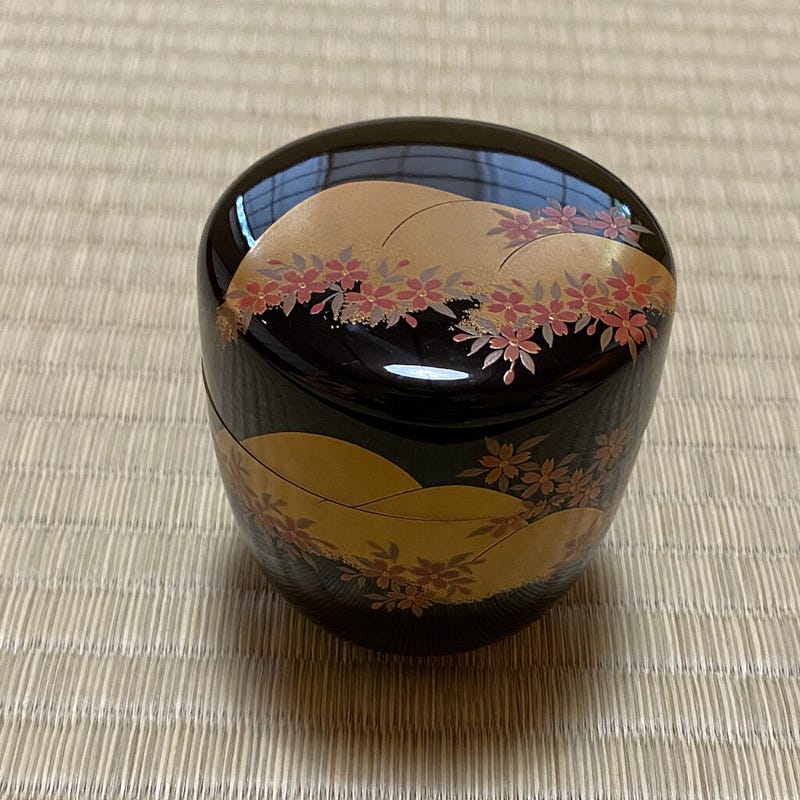
So does the Natsume, the thin tea container. The hosts paid close attention to choosing each tea utensil.
The whole procedure took almost 4 hours. It must have taken more than twice as long for the hosts to prepare for this tea gathering, including cooking and making sweets themselves.
Enjoying Chaji 茶事, this type of formal gathering, both as hosts and guests, is the very reason why we practice tea ceremony. I’m so thankful to the hosts for their dedication to making this gathering a memorable experience for all of us.
Many thanks to Vidya Sury, Collecting Smiles, for this timely writing prompt!
I didn’t know about Laburnum. Beautiful flowers! Thank you, Shubha Apte, for your sharing!
Leah Lynch’s poem resonates me.
Originally published at https://akemisagawa.com on April 11, 2023.


