
Food, Marketing, and Neuroscience
Why Doughnuts are Irresistible But Broccoli Sucks
Science has the answer. And 5 tips to change your appetite

Doughnuts are irresistible. We all know it. They are sweet, fluffy, and delicious — and it seems like everyone loves them. But what is it about doughnuts that makes them so addictive? And on the other hand, why is broccoli so almost universally disliked? It turns out that neuroscience can provide some answers to these tasty questions.
The History of the Doughnut
You may be surprised to find that the American doughnut has a long and storied history. The first recorded mention of the doughnut was in 1809, when Washington Irving (author of The Legend of Sleepy Hollow and Rip Van Winkle) wrote about a “dough nut” in his book Knickerbocker’s History of New York. However, it’s likely doughnuts were being made much earlier than that.
Historian Michael Krondl proposes in The Donut: History, Recipes, and Lore from Boston to Berlin that some ancient version of the doughnut has probably been a tasty treat since flour was first milled and frying was first discovered.
But doughnuts, as we think of them now, are relatively recent pastries. The North American version known in bakeries and Krispy Kremes all over the world has its invention in the decades following the American Revolution, when a traditionally Dutch dessert, “oliekoecken”, acquired a new name. Whatever you choose to call it, there’s a place in every American heart dedicated to the humble doughnut.
How did it get its distinctive hole, you ask? According to popular accounts, the mother of a New England sailor called Hanson Gregory found that the dough balls she made were too thick to fry evenly, so she would cut out the centre and replace it with almonds. Well, so the folklore goes, in the middle of a storm, the hardy Hanson Gregory jammed his mother’s doughnuts on the spokes of the ship’s wheel so he could continue to eat during the tempest!
Tall tale or not, America’s love affair with the doughnut is well-documented. They come in all shapes and sizes, from the classic Boston cream to the more elaborate (and calorie-laden) jelly doughnut. And whether you’re a fan of Dunkin’ or Krispy Kreme, one thing is for sure — we can’t to get enough of them. According to the Smithsonian and the US Census 10 billion doughnuts are consumed every year in the United States by 201.02 million Americans. So, what is it about the doughnut that has kept us coming back for centuries?
The Science of Flavor
One explanation for the doughnut’s appeal is flavor. Doughnuts are a classic example of comfort food — they taste good and make us feel happy. This is due to something called hedonic conditioning. Hedonic conditioning occurs when we pair a flavor with positive emotions. For example, recall the first time you ate your favorite food. Chances are, you felt really happy after eating it. Your brain has associated that flavor with happiness. If you ate on while in an MRI machine your brain’s reward system would light up like a pinball machine.

This is what doughnuts do to our brains — they create a Pavlovian response in which we start to associate the flavor of doughnuts with pleasure. And the more we eat them, the stronger this response becomes. This is because the brain is constantly looking for ways to make us happy, and it’s much easier to do this by triggering our pleasure centers with what it knows we already love.
This is what doughnuts do to our brains — they create a Pavlovian response in which we start to associate the flavor of doughnuts with pleasure. And the more we eat them, the stronger this response becomes. This is because the brain is constantly looking for ways to make us happy, and it’s much easier to do this by triggering our pleasure centers with what it knows we already love.
So what makes doughnuts taste the way they do? There are a few things going on. First, doughnuts are fried, and frying produces the Maillard reaction. This is the same reaction that happens when you brown meat or toast bread, and it’s responsible for the delicious toasty, caramelized flavor of doughnuts.

Second, doughnuts are often coated in sugar or frosting. Sugar is intensely addictive, and research has shown that it can be as addictive as drugs. The combo of sugar and fat in doughnuts is a powerful duo that is hard to resist.
Finally, doughnuts are easy to eat. This means that we can consume them quickly, without having to spend time chewing. This is another factor that contributes to their addictive nature. Doughnuts just hit all the right notes.
The Science of Why Broccoli Sucks
The science of flavor explains why broccoli sucks as well. Broccoli is good for us, but it’s not very tasty. This is because it doesn’t have any flavor compounds that are associated with happiness and pleasure. In fact, broccoli has a bitter taste that most people don’t like. It doesn’t have any sugar or fat in it. These are two of the main compounds that contribute to doughnuts’ addictive nature. Broccoli has bitter compounds instead that most people avoid.
For example, a compound called PROP (6-n-propylthiouracil) that is found in broccoli creates a bitter taste. Some of this comes down to genetics. People who have the gene for a bitter taste receptor known as TAS2R38 have an especially strong response to PROP. They find broccoli and green vegetables to be extremely bitter, which explains why some people like greens while others don’t. If you have an extreme dislike of broccoli and are a picky eater, it’s not your fault. It may be your genetics. You could even be a supertaster: a person whose taste receptors have an extreme sensitivity to the bitterness of greens!
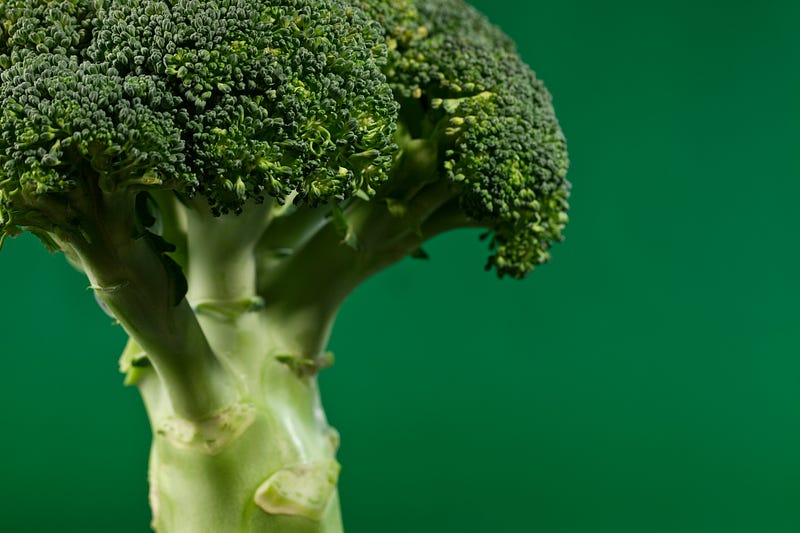
The ‘blergh’ of broccoli is also partly due to a phenomenon called sensory specific satiety. This occurs when our brains become overwhelmed by a certain type of taste. In the case of broccoli, our brains soon get tired of the taste. Additionally, broccoli is a vegetable that takes a long time to chew.
This means that it doesn’t digest quickly, and it can be difficult to eat a lot of broccoli in one sitting. This is another reason why it’s not as addictive as the ever-so bingeable doughnut.
A Broccoli by Any Other Name…
But it’s not just a matter of compounds. The name of a food can affect how we perceive it. Recent studies have found the brain considers contextual cues and information when deciding what to eat, which can alter how it tastes to us.
For example, one experiment gave people identical bowls of soup labelled “rich, delicious flavour”, or “boiled vegetable water”. They were both the same soup. People’s neural activity was measured with an MRI while they ate the soup. You can guess which soup lit up like a pinball the neurons associated with deliciousness, and which soup left the tastebuds starved of stimulation. Interestingly, the same can be applied to wine; simply telling people a bottle was more expensive made their brains respond to it in a more positive way.
The takeaway? The brain is a complex organ, and it’s not the objective taste or chemistry of food that determines whether we like it or not. Our experiences, memories and expectations can all play a role in how we perceive flavor. So even if broccoli doesn’t contain any flavor compounds that excite the senses, our brains may still find it palatable if we have positive associations with the vegetable. Unfortunately, broccoli has a bad reputation that doesn’t do it any favors in the flavor department — unlike the perenially delicious doughnut!

So What Can We Learn From All This Science?
We’re not entirely at the mercy of our brains, conditioning, or our genes. And if you’re anything like me, you probably need an effective strategy to increase healthy vegetable intake — either for yourself or your kids. Broccoli contains nutrients like vitamins and minerals that our bodies need to stay healthy. (Doughnuts… not so much).
5 Tips to Help You Eat More Broccoli (or any other vegetable):
- Variety is the Spice of Life — Prevent sensory-specific satiety by eating a number of different vegetables instead of just one type. For kids, we love this dinner tray that turns eating different veggies into a board game like Candy Landy. It comes in different themes including dinosaurs, fairies, outer space and superheroes. There’s something for every kid (or adult).
- Use the Maillard Reaction — If you don’t like the taste of broccoli, cook it in a way that brings out different flavors. For example, roast broccoli with olive oil and garlic for a delicious side dish. This is great for supertasters (like me).
- Don’t Slow Down — Broccoli is a healthy vegetable, but you don’t need to spend time chewing and savouring broccoli like you would with something delicious. Try chopping broccoli into small pieces so that it takes less time to eat.
- Change the context — We’ve talked about how identifying information can shape people’s perceptions of taste. So don’t call it “broccoli”. Call it something exotic and culinary. Try “Romanesco” (which is actually a variety) or something funny with personal relevance to your family.
- Light Up Your Brain’s Reward System — Associate positive emotions with vegetables by cooking together and having fun in the kitchen. Get your kids involved in the process! Kids are more likely to eat foods they have helped prepare. Check out these ideas for cooking with kids from topcellent. And for adults, try Hedonic conditioning. Pair your vegetables with a swig of wine, and make them part of a delicious meal. Enjoy the company of friends and family while you’re eating, too — good conversation can make any food more enjoyable.

Conclusion: Doughnut vs. Broccoli
So there you have it: the science behind why doughnuts are irresistible while broccoli sucks. It’s not just a matter of taste — our brains play a pivotal role in determining what we find appetizing.
So next time your partner or child turns their nose up at a healthy serving of broccoli, remember that it’s not just because they’re fussy. It comes down to genetics, as some people have a gene that makes them more sensitive to the bitterness of vegetables. But we can hack our brains and increase our intake of broccoli by using ingenious tricks to fool the senses. Try cooking it in different ways, making it part of a variety of dishes, or getting them involved in the cooking process. And if all else fails, try pairing it with a doughnut!

Leave a comment below about what flavors you most associate with happiness and memories. We’d love to hear your story
If you’ve enjoyed reading this article, please consider buying me a cup of coffee. It’ll be like we’ve gone for doughnuts!
I also offer professional content writing services — check out my Ko-Fi link to commission me. I will craft a persuasive article that’s perfect for your needs. Whether you’re looking to promote your business or educate your readers, I’ll help you hit your target audience.
I may receive small commissions for purchases made through links in this post. However, everything is personally recommended and I only link to products that I love.