Marketing and Psychology
The Mandela Effect in Advertising
10 Brands and Products You Remember Wrong

Do you remember the Mandela Effect? It’s when people recall things and events differently than what is actually true. For example, is it The Berenstein Bears or The Berenstain Bears? Some people remember it one way, and some the other. There are all sorts of examples of this effect — things people will swear they remember correctly, without proof it ever existed.
Brand recognition is a big part of marketing, so when it comes to the Mandela Effect, memories can have major implications. In advertising, products that are marketed heavily can become blurred and lead us to believe we remember them a certain way, even though there is no evidence to support these claims.
From movies and books to historical events, the Mandela Effect has been making waves. In this article, we’ll take a look at ten of the most famous Mandela Effects in advertising and marketing, and explain why it happens.
Fruit of the Loom
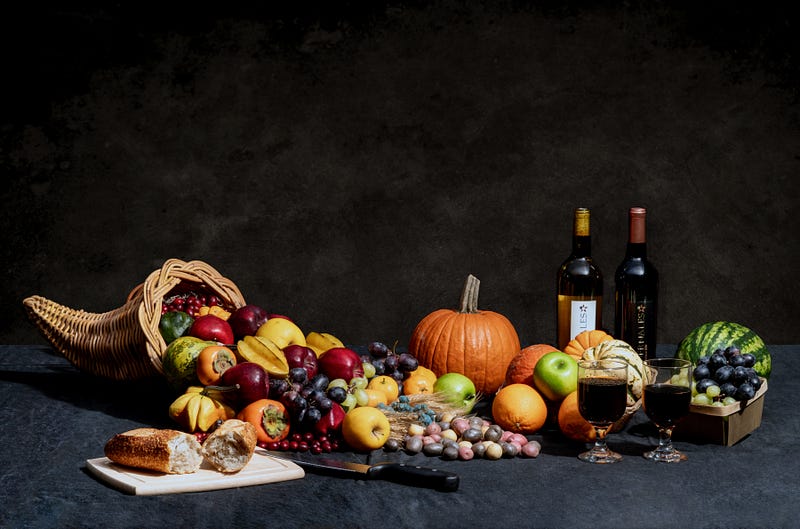
Fruit of the Loom’s distinctive trademark was a cornucopia, right? Many people recall a cornucopia on the label within this well-known brand. However, in reality, the fruit was never depicted as spilling out of a basket: It was always shown as a pile, with no horn o’ plenty. You can check it out here if you doubt us (or your memories).
And while we’re on the topic of fruit, do you remember:
Froot Loops or Fruit Loops?
What’s the name of that cereal with the happy toucan on the box? Fruit Loops, right? Well, Toucan Sam’s cereal of choice has always been called Froot Loops.
The four Os are delicious, crunchy, fruity circles. Or should that be “frooty”?
Oreos
One of the most famous examples of the Mandela Effect is the deluxe version of Oreo cookies — many people remember it as Oreo Double Stuffed when in reality, it’s just Oreo Double Stuf.
Now you’ve added another battle to your list of Oreo problems, after “How to eat one?” (We’re on team “twist, lick, and dunk”).
Kit-Kat vs KitKat
There is no hyphen, nor space, between “Kit” and “Kat.” It was only briefly hyphenated in the UK during the Second World War.
Jiffy Peanut Butter
America’s favorite peanut butter is Jiffy, right? Well, it turns out that Jiffy Peanut Butter was actually always called Jif. Theres’ never been a Jiiffy. There is a “Skippy”, so people might simply have blended the names of Jif and Skippy to make “Jiffy.”
Is it Cheeze Itz, Cheese-Its, Cheez-Its, or Cheez Its?
None of the above. This one might make some people feel a little…cheesy.
Oscar Mayer or Oscar Meyer?
This one was so memorable that it even had its own jingle. “My bologna has a first name, it’s O-S-C-A-R, my bologna has a second name, it’s…”
Can you finish the sentence?
White-Out vs. Whit-Out
If you’ve been calling it White-Out all this time, you need to use some to cover your spelling mistake!
Sketchers or Skechers?
Skechers has always been the correct spelling of this famous footwear brand. You might even be wearing a pair right now and got it wrong!
Febreze
Many people remember the air freshener as Febreeze, with an extra E. However, the correct brand name is Febreze.
So Why Does the Mandela Effect Happen?
Would you like the fanciful explanation, or the scientific one?
Some people believe that these popular misrememberings are:
- Evidence of parallel universes that we've briefly intersected with,
- A glitch in The Matrix,
- 'Residue' from time-travellers changing the past.
I love these sci-fi explanations, even though I don’t believe them.
With apologies to the wild imaginations of the conspiracy theorists, the notion of shared false memories isn’t proof that we’re living in a different dimension or an altered timeline. It’s simply how our brains work, and how our memories are made.
When we retrieve information, it’s reconstructed. This process allows for false memories because we make shortcuts (like correcting the spellings), and add things that we anticipate (like the cornucopia). We combine memories, taking pieces or elements from different recollections and fitting them where they belong (like combining Jif and Skippy into the never-existed Jiffy PB).
Once we’ve encoded this information inaccurately, that’s what we remember now (Fruit Loops, Jiffy, a horn o’ plenty) and it becomes what we expect to see. The pattern becomes self-perpetuating, and then a collective memory because we share it with others and find a confirmation bias in their recollections.
It’s possible that this is why the Mandela Effect was born in the internet era. Social media brings together like-minded people. Simply by asking about it (“Hey, does anyone else remember when Kit-Kat’s had hyphens?”) we can start to form and corroborate false facts that then exist in social memory.
False Memories and Advertising
Although ‘confabulation’ (filling in gaps of missing information) is an easy mistake to make, this work both ways. Not only do we misremember products — but products can make us misremember our own past!
Advertisers regularly leverage consumers’ memories and emotions through the use of what’s called “autobiographical referencing” — trying to link our personal history with their products. Perhaps the best example of this appeal to consumer nostalgia and remembrance is the classic “Pepperidge Farm Remembers” campaign.
A study in the Journal of Consumer Research found that especially vivid ads can actually give us false autobiographical memories — and that we are extremely sure afterwards that those recollections are true!
This ‘false experience effect’ has the potential to influence not only what we choose to buy, but how we perceive ourselves, our memories, and society. It’s possible that phenomena like the Mandela Effect could be misused by false advertising claims — or worse, deliberate misinformation campaigns by corrupt politicians. Some pundits even say it could alter very real events.
So next time you’re watching an ad and feeling those warm fuzzies, be aware that those memories might not be entirely your own.
Do you remember any other Mandela Effects in advertising? Let us know in the comments!
If this article has spoken to you, please consider buying me a cup of coffee.
You might enjoy these related articles from me:
I may receive small commissions for purchases made through links in this post.


