
The Truth About: The Mandela Effect
Are Things We Remember Differently Actually Thanks to Time Travel or Parallel Universes?
The human mind is possibly the greatest mystery of all. Even after centuries of scientific study, there is much still to unlock concerning how the brain works. Some believe, for example, in latent psychic powers or abilities that defy our understanding of what we are capable of. What, for instance, truly controls our own impulses and thoughts? What are the limitations on human consciousness? Of all these mechanisms, perhaps memory, however, could be said to be the most important. It is our memories that define us. They shape the very beings that we are and who we will become. Traumatic memories may damage us psychologically, while happier memories we will cherish into old age. But what if they were wrong?
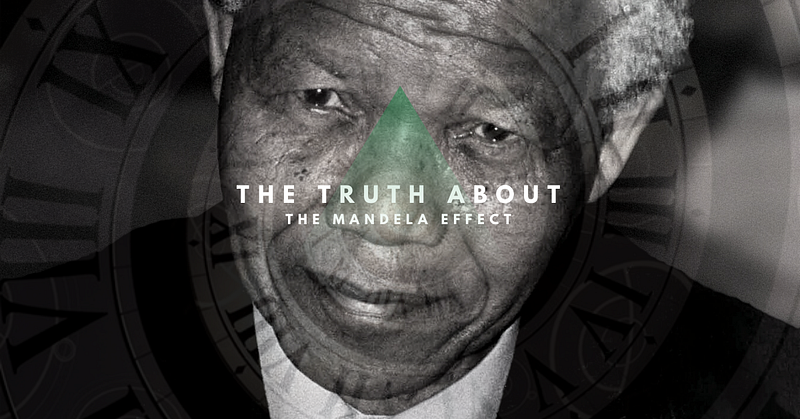
The Mandela Effect is an alleged phenomenon whereby people believe that something in society, often an item of popular culture, is not how they remembered it. The inference is that history has been altered. The alleged phenomenon takes its name from the late South African president and human rights activist Nelson Mandela, with some believing that the original record had Mandela dying in prison in the 1980s, swearing that they “remember” this event featuring on the news.

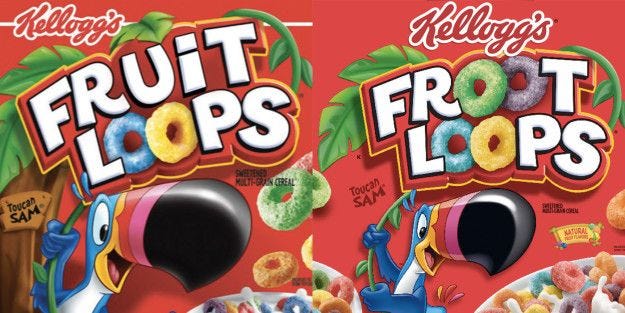
Famous people dying who are “already” dead is a regular feature of claims surrounding the Mandela Effect. Other significant incidences include the fact that Looney Tunes is not called Looney Toons, Sex and the City is not called Sex in the City, and Froot Loops have never been Fruit Loops. Indeed, the list of apparent changes to the timeline is endless. The Monopoly Man doesn’t really have a monocle, Pikachu doesn’t have any black in his tail, Forest Gump never said “Life is Like a Box of Chocolates,” and neither did Darth Vader say, “Luke, I am Your Father.”
Explanations as to what may cause these changes from those who believe the theory include changing history, possibly through the effects of humanity’s future ability to time travel. Others suggest that parallel universes may be involved where we are somehow being shunted into versions of the universe slightly different from the original. Some lay the blame at the feet of CERN and the Large Hadron Collider.
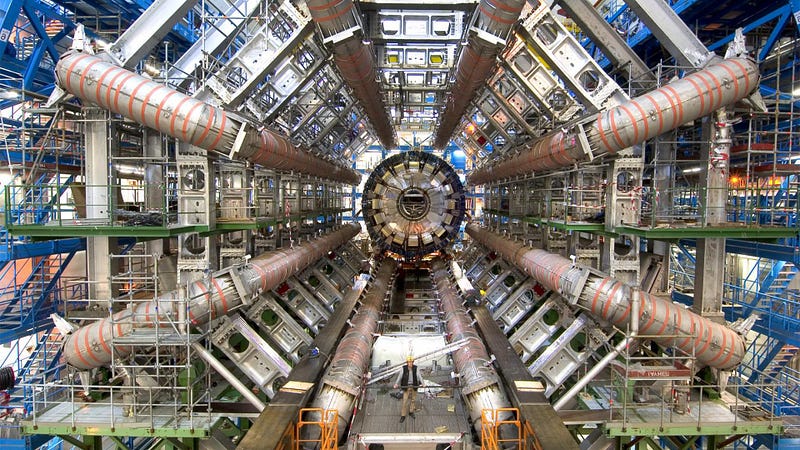
Scientists themselves raised the possibility of unexpected phenomena at the Swiss facility, their theories based on top-level research in the fields of theoretical physics and time travel. In 2009, two scientists hypothesized that something from the future may have interfered with the LHC to stop the discovery of the Higgs boson, which was eventually confirmed to exist in 2013.
“While it is a paradox to go back in time and kill your grandfather, physicists agree there is no paradox if you go back in time and save him from being hit by a bus. In the case of the Higgs and the collider, it is as if something is going back in time to keep the universe from being hit by a bus. Although just why the Higgs would be a catastrophe is not clear. If we knew, presumably, we wouldn’t be trying to make one.” — Holger Bech Nielsen of the Niels Bohr Institute in Copenhagen and Masao Ninomiya of the Yukawa Institute for Theoretical Physics in Kyoto
The immediate problem with these theories is that time travel is improbable under the conditions envisioned by popular culture and those who believe in the Mandela Effect. It is more than possible to send a human being into the future given that time slows down the faster you move through space, the future creation of near light-speed technology making this inevitable. However, there would be no way for the subject to return to the past. While Einstein theorized the possibility of an Einstein-Rosen bridge, a type of wormhole linking two points in spacetime, this would still not allow us to travel back beyond the point of the creation of the bridge. Equally, the grandfather paradox and ripple effect mean that even the slightest change to the past could have devastating consequences for not only history but potentially reality itself. Which, of course, is what the Mandela effect is suggested to be.
Parallel universes, meanwhile, are something there may be more evidence for. We don’t know the shape of spacetime. There is the distinct possibility it might be flat and infinite, and with infinity comes infinite possibilities; however, that is on the prerequisite of possibility. Just because something has endless chances of happening doesn’t mean it will if that thing is impossible. For example, you could toss a coin an infinite number of times, but it would never fall “tails” if it was a two-headed coin. However, we know that our planet is possible, and therefore it is logical that given infinite chances, a world the same would be created. Yet this alternate Earth would be within our own universe and reality and not the traditional vision of a parallel planet running alongside our own in a differing reality as postulated by the Mandela Effect, that being new universes created following every different outcome of an event.
Here we come into the realms of free will and predestination. Free will suggests that all our actions are “free,” and we could have made any choice we liked over everything from dinner to marriage or running for president. Predestination states that we are fated to take the same path no matter what, and our free will is merely an illusion of choice. If predestination is true, then there would be no parallel universes as no actual choice has ever been made, with the reverse being true of free will. If free will exists and daughter universes are possible, then alternative Earths running alongside our own may just be possible.
“We are not down to a single, unique universe, but our findings imply a significant reduction of the multiverse to a much smaller range of possible universes.” — Stephen Hawking
However, the truth of the Mandela Effect likely has a far less cosmic answer. Mandela, of course, lived to be president of South Africa and enjoy a respected position as an elder statesman of world affairs, dying in 2013. Yet after initially being posted to the internet by “paranormal consultant” Fiona Broome, many others agreed with her assessment and also claimed to “remember” Mandela dying in prison, with some, like Broome, even “remembering” a moving eulogy by his “widow” Winnie Mandela. So many people couldn’t be wrong, could they?
The Mandela Effect is a classic example of a small number of incidences being blown into something much bigger. It sits aptly as one of the prevailing conspiracy theories of our fake news era. Even if the number who “remember” Mandela dying is in its thousands, that is still a tiny fraction of the billions who remember his passing in 2013 and subsequent funeral. However, instead of accepting the clear evidence of a mistake, those who believe often double-down on being single arbiters of “truth.”
These beliefs are often posted in forums and online communities dedicated to investigating the Mandela Effect “phenomena,” which automatically puts them into the realm of confirmation bias. Other users will back up the notion that history has changed, rather than the memory of the alleged “original” object being false. If put to a broader audience, these falsehoods would likely be debunked by the majority who remember correctly. These forums appear to be significant while actually being a small number of a general population, giving the illusion of genuine phenomena in society. However, that is not to say those partaking are “lying” in the truest sense of the word.
Confabulation is a symptom of some memory disorders. Named by the noted German psychiatrist Karl Bonhoeffer, confabulation is when an individual gives a false answer to a question or as part of a statement while being entirely sure they are telling the truth, coming about through having a legitimate memory disorder. This disorder allows the subconscious to “fill in the blanks” of their memory with what they perceive must have happened, rather than what did. Much of this will be simple “confabulations of embarrassment,” small scale falsehoods to cover personal embarrassment, such as arriving late or forgetting a wallet. However, at the other end is “fantastic confabulation,” where the subject will tell elaborate falsehoods. As a symptom rather than a disorder, confabulation can be part of various conditions or come from injury or mental illness. These conditions include schizophrenia, dementia, Alzheimer’s disease, and traumatic injury to the brain.
However, there is significant evidence that confabulation may be more common than we think and not, in fact, exclusive to those with evident disorders. The concept of the memory being wrong has been central to countless criminal cases. Indeed, research has shown that our memories are not quite as perfect as many would like to think. Our brains are open to altering what we believe we saw when faced with opposing information and happy to fill in empty spaces in our recollection with what our brain tells us “must” have happened.
A 2017 study by the University of Huddersfield in the UK found that 32% of 600 test subjects gave false witness statements over a bar fight central to the research. Some of those involved in the study were deliberately told to lead other participants away from the truth, with witnesses willingly altering what they actually saw when faced with these opposing viewpoints. This is part of the Misinformation Effect, a term coined by another prominent psychologist, Elizabeth Loftus. Following a 1978 study, Loftus concluded that our recollection is open to change when we are presented with “new” information, saying: “the misinformation effect refers to the impairment in memory for the past that arises after exposure to misleading information.”
It would be fair to conclude that the Mandela Effect is a combination of both the Misinformation Effect and confabulation, with these false memories attributable to one or the other. Take, for example, the Monopoly man. Not recalling the image entirely, the mind remembers a posh capitalist of the pre-WW2 era, complete with a top hat. Our cultural familiarity with such pictures of the period adds a monocle, not because it actually existed, but because the mind filled the blank space with another image that we have filed away in an association. Similarly, it is logical that Darth Vader may have said, “Luke, I am your father” rather than simply “I am your father,” the brain easily adding the name that is the subject of the line. Equally, the phrase has been continually quoted wrong throughout popular culture alongside the Forest Gump example, this “new information” replacing the memory of what we actually heard.
Science-Fiction has long dealt with the concept of false or implanted memories, with films such as Vanilla Sky and Total Recall famously addressing the issues. More broadly, theories of mind manipulation will always fly well in conspiracy circles, explaining how the concept of the Mandela Effect has become so popular online. There is a great fascination with the universe and what might be possible in humanity’s future, with ideas of parallel universes and time travel being particularly enthralling as science still has no definitive answer.
However, the truth is that a combination of factors seems to be behind the Mandela Effect. False memories have been proven to be easily created through the brain’s openness to altering what we believe we saw and heard, either through creating the blank space ourselves or taking on new information and replacing truth with falsehood. These false memories are given social and cognitive reinforcement through being broadcast in a bubble of belief, the subject being assured their memories are true through confirmation bias. Yet, there is still a lack of complete understanding around the workings of the human mind and how we process memory, with science having yet to unlock much of what makes us tick. Whether the truth lay in the mysteries of the universe or in our own minds, the Mandela Effect proves that science has as much to uncover here on Earth as it does in the stars.
I am a freelance long-form writer who writes on true crime, politics, history and more. I am entirely self-funded and if you liked this article, please consider a donation via Patreon as a token of appreciation or directly via PayPal. You can join my mailing list for the latest articles and also like my Facebook page. I’m also active on Twitter. I can be contacted for projects through my website MichaelEastWriter.com where you’ll also find lots more content.


