avatarLucy Dan 蛋小姐 (she/her/她)

Summary

The web content presents a personal narrative on the understanding of anxiety through both lived experience and scientific explanation.

Abstract

The article titled "The Science of Anxiety" delves into the author's journey with anxiety, initially perceived as an uncontrollable and overwhelming force in their life. The author contrasts the raw, emotional narrative of anxiety with the scientific perspective, which provides a framework for understanding the physiological processes behind anxiety attacks. By integrating the average narrative of panic attacks with the knowledge of the body's sympathetic and parasympathetic nervous systems, the author finds a sense of control and safety, realizing that the body's alarm system, though sometimes misguided, is fundamentally protective. The piece concludes by acknowledging the power of both personal experience and scientific knowledge in comprehending emotions.

Opinions

  • The author initially believed that emotions, particularly anxiety, were best understood through personal experience rather than scientific analysis.
  • Through personal experience, the author felt that anxiety and panic attacks were unending and life-threatening.
  • Scientific understanding provided the author with a broader perspective on anxiety, including the average duration of panic attacks and the range of individual differences.
  • The author learned that the body's sympathetic nervous system acts as a fire alarm, sometimes falsely signaling danger, while the parasympathetic system helps to calm the body down.
  • Understanding the science behind anxiety gave the author the ability to reassure themselves and regain a sense of control during anxiety attacks.
  • The author values both the narrative of personal experience and the scientific explanation, seeing them as complementary in grasping the nature of emotions.

The Science of Anxiety

A poem about anxiety
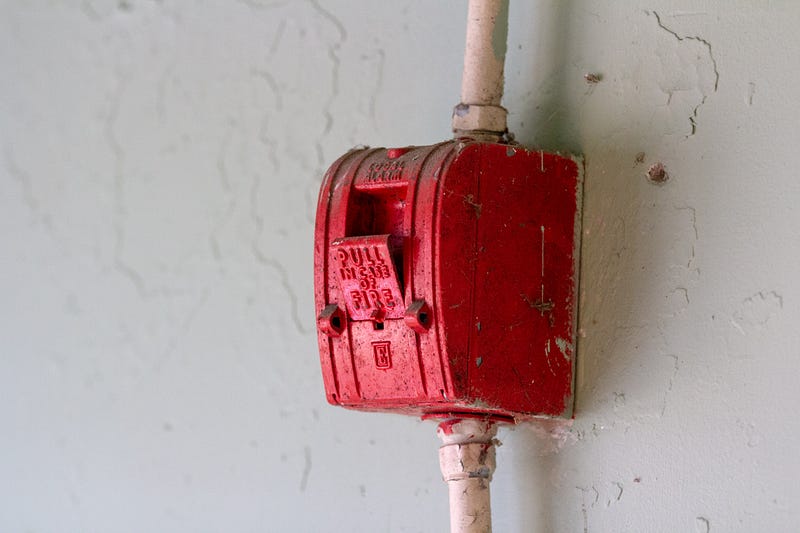
Photo by Dave Phillips on Unsplash

To me, emotions can be represented as dots on a graph or narratives of a lived experience.

To some, the gut feeling is to say that emotion, something so experiential is better described and understood through lived experience than trying to fit it into some box to understand why.

I used to believe this too.

In time I learned they both hold their own.

In experience, my anxiety is out of control, a firey red experience of sirens alerting me to every sensory experience, it blares and it blares, like it will never end.

Lived experience alone led me to believe that panic attacks could only go on forever and that because I felt like I was going to die meant that that would happen.

Science told me otherwise giving me the average of everyone’s experience delineating the limits of variation (i.e., just how different everyone could be) for some semblance of control.

It told me of the average narrative, that panic attacks subside once that parasympathetic nervous system kicks in, and the only reason they were there in the first place is my sympathetic nervous system is my body’s fire alarm alerting me to the burnt omelette threat that could be a fire but most likely is not.

Understanding that even in this most frightening of experiences my body is there despite feeling like the world is ending actually trying to protect me but perhaps in an erroneous way

gave me the power to softly climb on a stepstool and softly press that button that says shh there is no fire and we are safe.

There is power in both narratives in describing what we know what we experience and how we know.

Lucy Dan 蛋小姐 (she/her/她) wants to thank R. Rangan PhD for this poem prompt: Science of emotions. In turn, I want to tag Rebecca Stevens A. | Jade-Ceres Violet D. Munoz | Blank Voice | Baye Amina to try this out!

Poetry
Psychology
Emotions
Panic Attacks
Anxiety
Recommended from ReadMedium