
The Role of LEGO and DUPLO in Homeschooling: Inspiring Creativity and Problem-Solving Skills
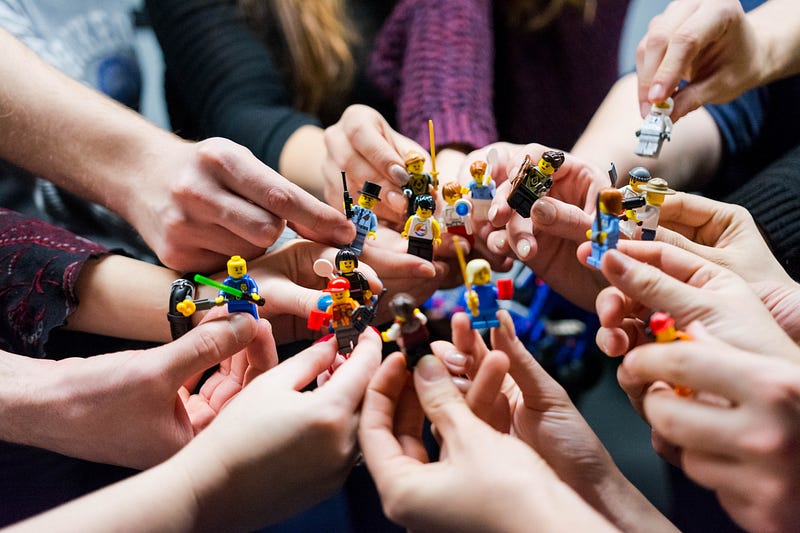
Homeschooling offers unique opportunities for tailored learning, fostering close family ties, and encouraging individualised pacing for each child.
I’ve written more on this previously, but when we evaluated different educational options, we felt drawn to this method due to its flexibility and the chance it gave us to cater to our children’s unique needs and interests.
Amidst the plethora of tools and resources we’ve employed, LEGO and DUPLO have stood out as remarkable aids, not only as toys but as vital instruments for learning and creativity.
For decades, these construction toys have been embraced by educators and schools alike — their modularity allows for the development of fine motor skills, while their versatility provides countless scenarios for role-play, storytelling, and even foundational mathematical concepts.
In our homeschooling experience, it’s clear to see why these tools have been favourites in classrooms for years.
For my own children, they have built not just structures but narratives and imaginative scenarios, highlighting their power not just as playthings but as vehicles for learning.
There’s something inherently powerful about physically touching, manipulating, and assembling pieces.
The tangible interaction with LEGO and DUPLO bricks facilitates a kind of learning that screen-based or theoretical lessons may not always provide.
I’ve noticed a significant difference in my children’s learning when they can touch and interact with their materials.
Using LEGO, their hands became tools of exploration, helping them understand the world and the concepts we discuss in a more profound way.
LEGO and DUPLO are also good for spatial awareness — that is, visualising patterns, comprehending proportions, and predicting outcomes.
With LEGO and DUPLO, children are constantly evaluating and reassessing how blocks of different sizes and shapes can be combined.
Not every creation goes as planned either. Sometimes, a structure might be unstable, or a certain piece might not fit where it’s intended. These moments of adversity teach children persistence, adaptability, and critical thinking.
There were times when my children do feel stuck, unable to make a particular design work. Instead of giving up, I encourage them to reassess, adjust, and often end up with a solution even more impressive than the original plan.
And of course when children collaborate on a project too, they learn to communicate, share ideas, and respect each other’s perspectives.
Once built, their creations are then also useful fodder for story telling and role play.
Some of my fondest memories involve watching my children huddled together, exchanging ideas and building upon one another’s visions.
Their ability to see potential in a collection of bricks and bring it to life is a constant reminder of the power of kids imagination.
We just need to provide guidance and the occasional tools (LEGO & DUPLO are great tools!) and they create their own worlds.
Incorporating LEGO and DUPLO into Homeschooling Curriculum
We began with simple structures, including kits with instructions, allowing my children to familiarise themselves with the basic pieces and how they fit together.
Over time, as their confidence and skills grew, we moved on to more intricate designs, with my encouraging simple original creations — simple cars with wheels and a driver for example.
This step-by-step approach ensured they never felt overwhelmed and always felt a sense of accomplishment with each new creation.
While structured assignments have their merits, especially in reinforcing specific lessons or concepts, we found that free play was just as important too.
It gave my children the freedom to explore, innovate, and express themselves.
Watching their imagination run wild, turning blocks into cities, vehicles, or imaginative landscapes, has been a heartwarming part of our journey.
We’ve also integrated LEGO & DUPLO into lessons from other disciplines.
As part of looking at ancient civilisations in history, for example, we’ve recreated famous landmarks.
During science lessons, we built structures that demonstrated principles of physics, like bridges.
Math concepts like fractions and geometry have come alive when they were visualised using DUPLO blocks.
One of our most memorable lessons was when we were learning about the animal kingdom in science.
Using their DUPLO pieces, my children constructed various habitats — from dense forests to arid deserts.
They then populated these habitats with LEGO representations of the animals that live there.
This tactile experience made the lesson more engaging and helped solidify their understanding of different ecosystems and the animals that inhabit them.
The Lasting Impact of LEGO and DUPLO
One of the most significant skills these building blocks nurture is perseverance. With every piece they attempt to fit or model they try to build, children encounter minor setbacks.
Maybe a piece doesn’t fit as they imagined, or their envisioned design doesn’t seem feasible. However, these small challenges push them to try again, reevaluate their approach, and remain persistent until they achieve their goal.
Attention to detail is another skill that gets honed with these colorful blocks. Children quickly realise that one misplaced piece can alter their entire structure.
This teaches them the importance of precision and careful observation, ensuring each step aligns with their desired outcome.
Critical thinking, a skill vital for adulthood, is nurtured when children conceptualise a structure and work through the steps to bring it to life.
They have to think ahead, consider weight distribution, balance, and aesthetics. Such thought processes stimulate their ability to evaluate situations, consider various solutions, and choose the most effective route.
On a personal note, I’ve seen these transferable skills manifest in other aspects of my children’s lives. For instance, my older boy recently took on a science project which required intricate assembly.
The patience and analytical thinking he’d developed from years of playing with LEGO was evident.
Instead of becoming overwhelmed, he methodically approached each step, showing the same dedication and precision he does when building his LEGO masterpieces.
Similarly, my younger son, during a reading comprehension exercise, showcased his refined critical thinking skills.
When asked about the implications of a particular event in a story, he mapped out potential outcomes, reflecting a depth of analysis reminiscent of his thoughtful LEGO creations.
In essence, while they might seem like simple toys at first glance, LEGO and DUPLO have been more than just a source of entertainment for our family.
They have acted as silent teachers, equipping my children with skills that they will carry with them into adulthood and apply in multifarious scenarios.
The true value of these building blocks lies not just in the structures they create but in the lasting legacy of skills they instill.