avatar0xAnn

Free AI web copilot to create summaries, insights and extended knowledge, download it at here

4659

Abstract

rket volatility.</p><p id="61b3"><b>#3 The non-KYC, free from regulations, censorship-resistant platforms become attractive lately</b></p><p id="1f96">With crypto wallets flagged — or having the potential to be blocked, incorrectly or not — due to a link with Tornado Cash, many CEXs become inhospitable for crypto users. CEXs must comply with regulations, and many people like this new reality of the crypto industry.</p><p id="ab1a">Hence why decentralized apps enjoy a rise in popularity. Especially the one fulfilling the criteria of <a href="https://readmedium.com/the-ideal-anti-fragile-decentralized-app-f510afa8d0d5">the ideal decentralized app I envisioned</a>. Grassroot apps, like GMX and Gains, are run in a decentralized manner with anonymous devs. So far they managed to avoid over-compliance popular dApps — including US-based dYdX — suffered. These apps can afford to not be OFAC compliant. No tracking, no blocking wallets, the true definition of permissionless.</p> <figure id="46d6"> <div> <div> <img class="ratio" src="http://placehold.it/16x9"> <iframe class="" src="https://cdn.embedly.com/widgets/media.html?type=text%2Fhtml&amp;key=a19fcc184b9711e1b4764040d3dc5c07&amp;schema=twitter&amp;url=https%3A//twitter.com/gainsnetwork_io/status/1562069937618829313&amp;image=https%3A//i.embed.ly/1/image%3Furl%3Dhttps%253A%252F%252Fabs.twimg.com%252Ferrors%252Flogo46x38.png%26key%3Da19fcc184b9711e1b4764040d3dc5c07" allowfullscreen="" frameborder="0" height="281" width="500"> </div> </div> </figure></iframe></div></div></figure><h1 id="b934">Obstacles</h1><p id="c3d1"><b>#1 CEXs are their biggest threat</b></p><p id="7aeb">Despite the improvement, decentralized preps still have a long way to go in terms of features.</p><p id="ed8e">CEXs had the earlier start in the race. I can imagine it is almost impossible to replace a behemoth like Binance. (Although, probably can if we’re talking about FTX).</p><p id="fcd5">If you are actively trading, you’d understand how features on CEXs are advanced, comprehensive, and seamless to use. It’s fast on both desktop and mobile. Little things like a slider to enter the amount of position (25%, etc) instead of manual input help to execute a trade faster.</p><figure id="2d82"><img src="https://cdn-images-1.readmedium.com/v2/resize:fit:800/1*3_BcpvvvUAawP-p3smVL3A.png"><figcaption>Binance Desktop</figcaption></figure><p id="6291">dYdX is probably the closest we can get for a CEX experience on a decentralized platform.</p><figure id="9c8e"><img src="https://cdn-images-1.readmedium.com/v2/resize:fit:800/1*uODUNSwxZFxGFJvc5N8LaQ.png"><figcaption>dYdX front end</figcaption></figure><p id="a879">As for the rest, things are pretty basic. take the example of Arthur Hayes-backed Mycelium.</p><figure id="5768"><img src="https://cdn-images-1.readmedium.com/v2/resize:fit:800/1*wcXMyuqP1Qn-hXOm3sYBYQ.png"><figcaption>The limit feature is coming soon. You also can’t set stop loss or take profit yet.</figcaption></figure><figure id="6b4f"><img src="https://cdn-images-1.readmedium.com/v2/resize:fit:800/1*4GUih5KEzij8P1kloQ5g9w.png"><figcaption>GMX is better than Mycelium but still pretty basic compared to Binance</figcaption></figure><p id="87e7"><b>#2 GUI is repelling serious traders with serious demand</b></p><p id="84fa">One of my dislikes of using GMX and friends is so many confirmations I got to go through when opening a trade. Since they use a crypto wallet, you will have to deal with signing and confirming txs several before opening and closing a position. When a trade is time sensitive, a split second can make or break your trade, especially when you use a hardware wallet.</p><p id="38a2">Using a hot wallet is quicker, but it’s not a good idea to trade a big amount with it.</p><p id="acd5"><b>#3 Liquidity doesn’t attract serious traders with serious capital</b></p><p id="7616">Especially on newer platforms, liquidity and token variation are other hindrances to growth.</p><p id="4d82"><b>#4 Assets onboarding takes several steps</b></p><p id="2338">Using decentralized preps requires you to be deep in DeFi. This limit users of those platforms to mostly existing DeFi users, who already have assets on-chain.</p><p id="4b67">For new entrants, several steps need to be taken for onboarding. For example, if you are trading on Arbitrum’s GMX, that means you have to withdraw ETH from a CEX like Coinbase and then bridge to Arbitrum. Compared with CEXs that let you top up funds with a credit card, DEXs seem like too much hassle.</p><h1 id="120b">Top Perpetual Trading Pr

Options

otocols</h1><ul><li><a href="https://dydx.exchange/"><b>dYdX</b></a></li></ul><p id="1154">Pros: The best prep engine on a decentralized platform. Has the best front end. Has the biggest TVL and volume, and this is where serious traders are playing.</p><p id="fb5b">Cons: Useless governance tokens with inflation and unlocks. A silicon Valley startup with US VCs backing will need to be compliant. Not exactly decentralized.</p><p id="f108">I’ve written about <a href="https://readmedium.com/3-cryptocurrency-making-their-way-back-to-the-watchlist-6ffb4ce64b9e">dYdX extensively here</a>, related to their V4 plan, which is expected to bring more tech independence — and decentralization — and for the DYDX token, more utility.</p><ul><li><a href="https://app.gmx.io/#/trade"><b>GMX</b></a></li></ul><p id="d01f">Anonymous devs with decentralized governance. Total permissionless trading. Staking that lets you earn ETH from fees and when traders lose — that’s partly the real yield about, you’re being like the Alameda here trading against users (although passively.) Currently, in the platform, there is 500 million in liquidity with increasing volume and fees.</p><figure id="070d"><img src="https://cdn-images-1.readmedium.com/v2/resize:fit:800/1*PqwqiD0whxYZ2Ncr3qGuKA.png"><figcaption>Looks bullish</figcaption></figure><p id="113d">Cons: A huge room for improvement if ever want to take over Binance. Hassle related to the use of the crypto wallet.</p><p id="db37">Yield opportunity on GMX:</p><figure id="4c24"><img src="https://cdn-images-1.readmedium.com/v2/resize:fit:800/1*_Bof1bGn5PdtSdyzpIA3cQ.png"><figcaption></figcaption></figure><ul><li><a href="https://app.perp.com/"><b>Perpetual protocol</b></a></li></ul><figure id="1485"><img src="https://cdn-images-1.readmedium.com/v2/resize:fit:800/1*AKGCqqpAAg-HWADXklj6HQ.png"><figcaption></figcaption></figure><p id="9b2b">Simple front-end but often charts don’t load on launch. Running on Optimism for pennies of the gas fee. Perpetual Protocol has around 22m in liquidity which is a lot less than GMX. I suspect it’s because providing liquidity here involves users buying options. Not interesting for people who’d like to earn yield no matter the market direction is going.</p><figure id="286a"><img src="https://cdn-images-1.readmedium.com/v2/resize:fit:800/1*_uOO9ROTHJAD4myIRJF7mg.png"><figcaption></figcaption></figure><ul><li><a href="https://gains.trade/decentralized-trading/"><b>Gains Network</b></a></li></ul><p id="ab89">Running on Polygon, gains network is on the same level as Perpetual Protocol in terms of TVL. According to this stat, it has a sizable volume, partly contributed by the fact it’s the largest perp platform on Polygon chain.</p><figure id="2983"><img src="https://cdn-images-1.readmedium.com/v2/resize:fit:800/1*rkn0pvaBEkvRhy04cckAUg.png"><figcaption>Gains network stats — <a href="https://dune.com/unionepro/Everthing-Gains-Network">Dune Analytics</a></figcaption></figure><p id="c2d0">However, I think it’s a mistake for them to choose Polygon chain as their home chain, as Polygon is notoriously slow. I experienced it immediately as I try to connect my wallet and switching the chain gives me an error from the start. I had to try several times. This is discouraging for traders who prioritize speed on the platform they use.</p><ul><li><a href="https://swaps.mycelium.xyz/"><b>Mycelium</b></a></li></ul><p id="6dd7">Has the inventor of perpetual itself, Arthur Hayes, among the advisor (also own 1% of the token.) Mycelium is new, but recently enjoyed a sharp rise in popularity, and TVL, thanks to the news of Arthur’s involvement.</p><p id="f093">The newness of this protocol can be seen on their trading platform. There are unfinished features, like limit order and stop loss.</p><h2 id="11a7">Verdict</h2><p id="ffb3">Seems to me the main focus of these perpetual protocols is to attract users and volume as much as possible to their platform. After all, that’s where the yield and liquidity come from.</p><p id="0fe5">To attract activities, you need a good GUI and a fast engine in the background. That is what’s required to steal users from CEXs, their biggest competitors.</p><p id="3f54">Not to mention they will compete with each other too among these dApps. GMX and dYdX currently are ahead in the race. Especially GMX they do a good job attracting activities while balancing it with proper decentralization.</p><p id="da79">Overall, the initial growth is on a positive trajectory. The main strength is decentralization. That’s the key selling point CEXs don’t offer, and it will be a good idea if they polish this feature more.</p></article></body>

The Rise of Decentralized Perps

And a new narrative called “Real Yield”

I remember when the DeFi space was younger. Whenever I looked at a decentralized trading platform, I’d sigh in disappointment (while muttering “we’re still early.”) At the time, practically nobody is using decentralized derivative trading. It’s cricket on the protocol. Liquidity and volume are very low. Fees are too high. The GUI is barely usable.

But we have come a long way since then. These days, Derivatives are a category in their own right in DeFi. The bear market has been kind to them because according to the DeFi analytic platform DeFillama, Derivatives are practically the only category enjoying significant TVL growth this past month.
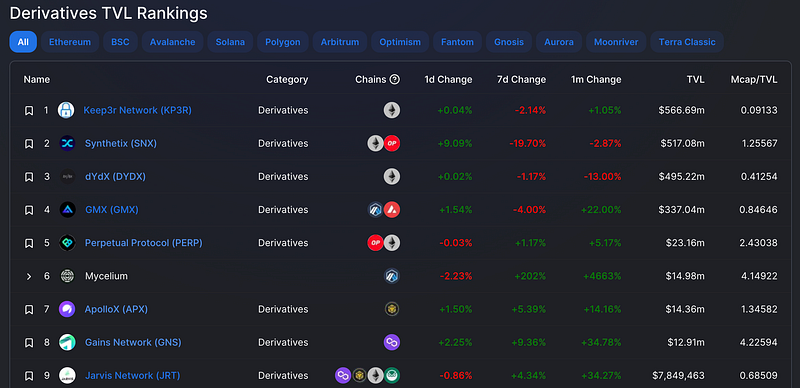
The rise of decentralized platforms feels like the crypto space is beginning to embrace its ‘identity’. Despite the reluctance of evangelists to admit it, the main use case of crypto is indeed still speculation. With the Tornado Cash incident and the subsequent folding of major dApps to the FED, crypto so far proved to be incapable of being censorship resistant anyway.

If indeed crypto = gambling, what if we just embrace that and get freaking good with it?

Derivatives protocols are answering that challenge. As you can see from the TVL growth, the reaction has been nothing but positive.

Along with their recent popularity, a new narrative grew surrounding them. It’s called Real Yield. Basically, Preps have the potential to attract recurring users paying endless fees (gambling in crypto does feel like drugs people can’t get enough of.) Yield from fees makes token staking sustainable rather than relying on token emissions.

Is there any merit in this narrative? Well, referring to CryptoFees, two of the top 5 revenue-collecting dApps — GMX, and Synthetix — are derivatives trading platforms. As it turns out, a lot of people do use them.
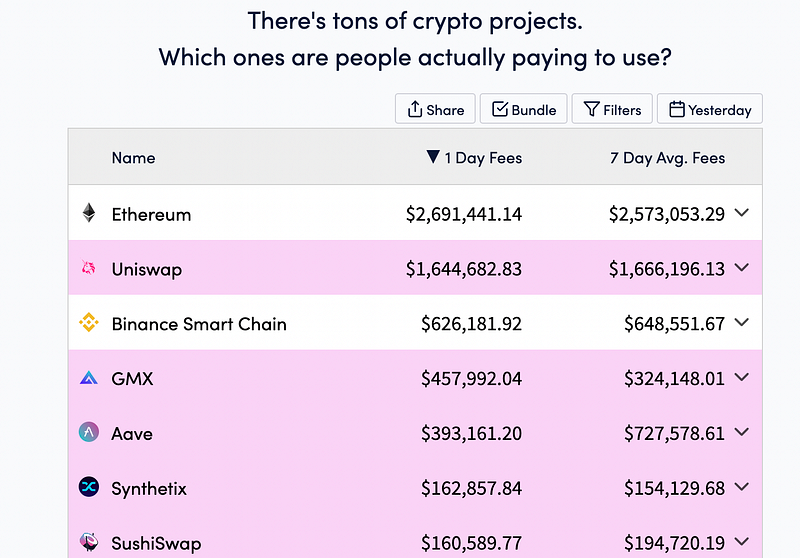
If you aren’t convinced, let’s go to Token Terminal.
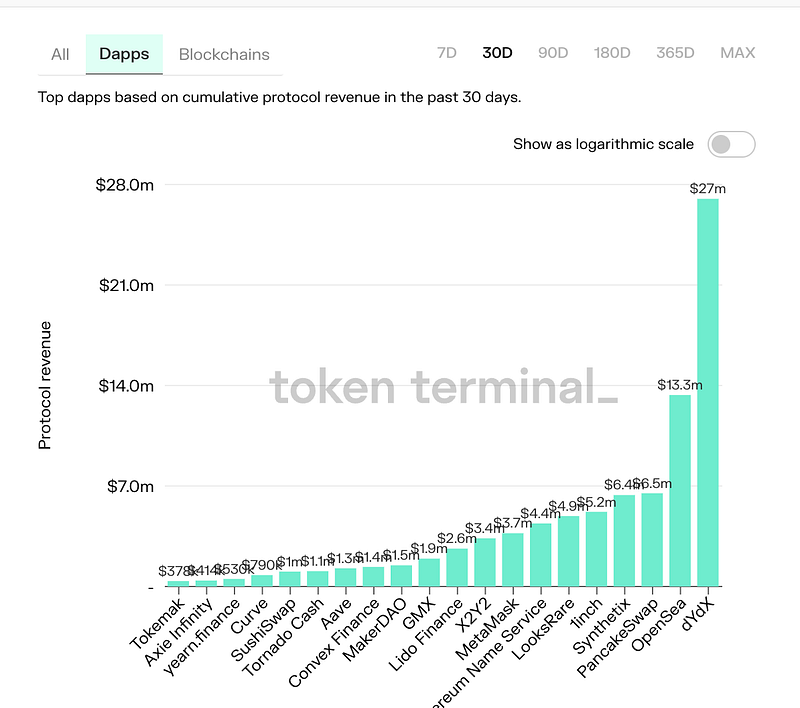
trading platforms dYdX, Syntetix, and GMX making the top 10

So, the data looks good. But how bullish we can be? What’s promising about this Real Yield narrative? And what is the obstacle?

Let’s dive in.

The bullish case of Decentralized Trading Platforms

#1 consistent money maker in bull and bear

The number one strength of the trading platform that no other category of DeFi enjoys is the fact they are bear market resistant. Bull or bear, people gonna be keep trading — or gambling — especially when the volatility is there. When the market is hot and emotions are high, you can expect lotta users who try to make it back in one trade by using leverage.

Compare that with DeFi lending, for example, which becomes high-risk low ROI activity once the market becomes super volatile like what we saw in June.

Activities on NFTs, gaming even basic swapping on DEXs are also winding down during bear as narrative falters.

The market is filled instead by participants who hope to trade the volatility. What else you can do except flipping preps using leverage on derivatives platforms?

This is why we see 7–9 gwei gas price on Ethereum mainnet as activities move to Layer 2s like Optimism and Arbitrum. Especially Arbitrum, where most Derivatives apps are located.

#2 More options, more liquidity, better GUI

Derivatives crypto platforms have come a long way since a year ago. Today, you have more options — dApps, chains, level of leverage, tokens available to trade, etc. It was different than the day when dYdX was the only usable decentralized trading.

Liquidity was significantly higher, so you users trade bigger amounts without having to worry to cause volatility, or getting wick-scammed. Having gone through the liquidation crash in June this year, many platforms have shown resilience by having no outages during peak market volatility.

#3 The non-KYC, free from regulations, censorship-resistant platforms become attractive lately

With crypto wallets flagged — or having the potential to be blocked, incorrectly or not — due to a link with Tornado Cash, many CEXs become inhospitable for crypto users. CEXs must comply with regulations, and many people like this new reality of the crypto industry.

Hence why decentralized apps enjoy a rise in popularity. Especially the one fulfilling the criteria of the ideal decentralized app I envisioned. Grassroot apps, like GMX and Gains, are run in a decentralized manner with anonymous devs. So far they managed to avoid over-compliance popular dApps — including US-based dYdX — suffered. These apps can afford to not be OFAC compliant. No tracking, no blocking wallets, the true definition of permissionless.

Obstacles

#1 CEXs are their biggest threat

Despite the improvement, decentralized preps still have a long way to go in terms of features.

CEXs had the earlier start in the race. I can imagine it is almost impossible to replace a behemoth like Binance. (Although, probably can if we’re talking about FTX).

If you are actively trading, you’d understand how features on CEXs are advanced, comprehensive, and seamless to use. It’s fast on both desktop and mobile. Little things like a slider to enter the amount of position (25%, etc) instead of manual input help to execute a trade faster.
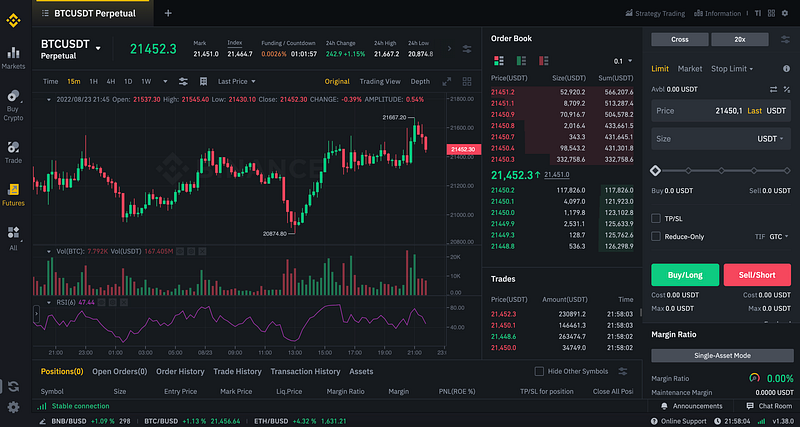
Binance Desktop

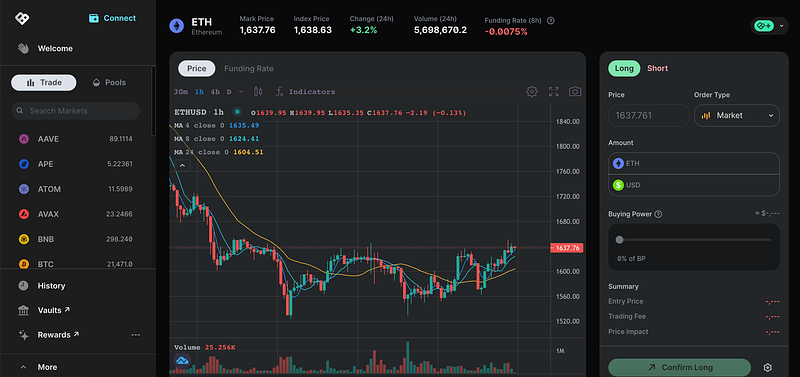
dYdX is probably the closest we can get for a CEX experience on a decentralized platform.
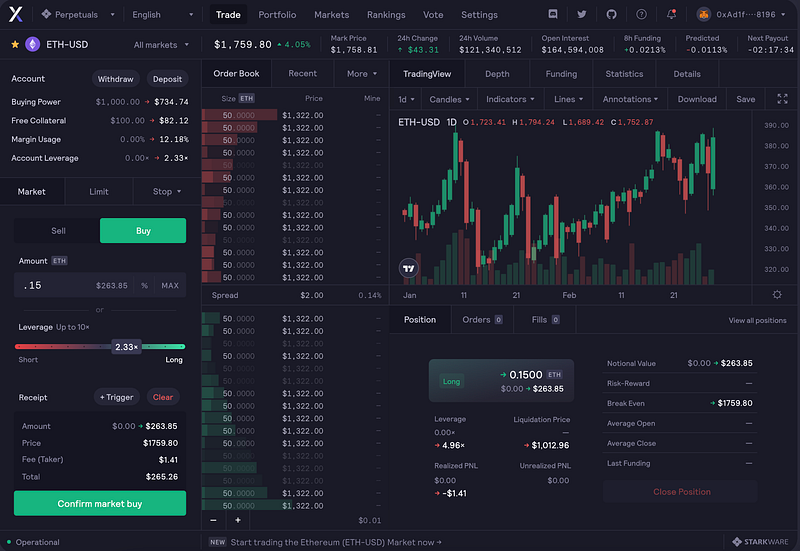
dYdX front end

As for the rest, things are pretty basic. take the example of Arthur Hayes-backed Mycelium.
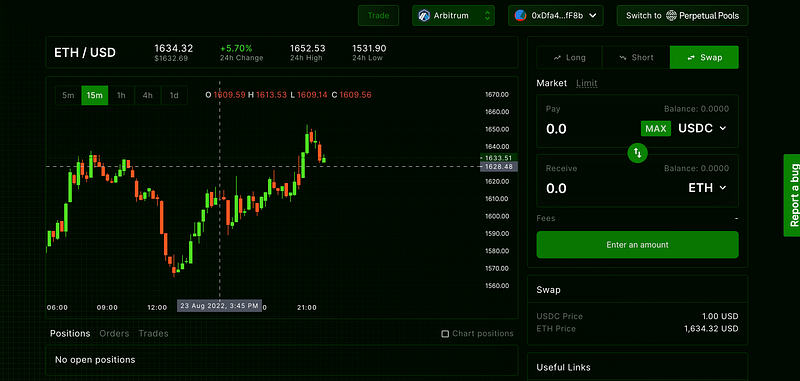
The limit feature is coming soon. You also can’t set stop loss or take profit yet.
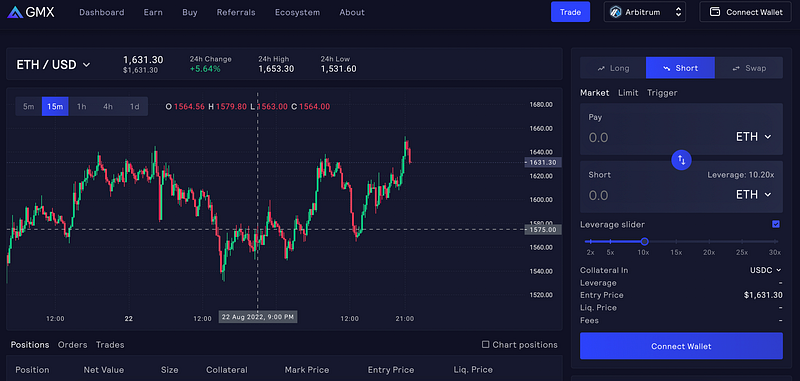
GMX is better than Mycelium but still pretty basic compared to Binance

#2 GUI is repelling serious traders with serious demand

One of my dislikes of using GMX and friends is so many confirmations I got to go through when opening a trade. Since they use a crypto wallet, you will have to deal with signing and confirming txs several before opening and closing a position. When a trade is time sensitive, a split second can make or break your trade, especially when you use a hardware wallet.

Using a hot wallet is quicker, but it’s not a good idea to trade a big amount with it.

#3 Liquidity doesn’t attract serious traders with serious capital

Especially on newer platforms, liquidity and token variation are other hindrances to growth.

#4 Assets onboarding takes several steps

Using decentralized preps requires you to be deep in DeFi. This limit users of those platforms to mostly existing DeFi users, who already have assets on-chain.

For new entrants, several steps need to be taken for onboarding. For example, if you are trading on Arbitrum’s GMX, that means you have to withdraw ETH from a CEX like Coinbase and then bridge to Arbitrum. Compared with CEXs that let you top up funds with a credit card, DEXs seem like too much hassle.

Top Perpetual Trading Protocols

Pros: The best prep engine on a decentralized platform. Has the best front end. Has the biggest TVL and volume, and this is where serious traders are playing.

Cons: Useless governance tokens with inflation and unlocks. A silicon Valley startup with US VCs backing will need to be compliant. Not exactly decentralized.

I’ve written about dYdX extensively here, related to their V4 plan, which is expected to bring more tech independence — and decentralization — and for the $DYDX token, more utility.

Anonymous devs with decentralized governance. Total permissionless trading. Staking that lets you earn ETH from fees and when traders lose — that’s partly the real yield about, you’re being like the Alameda here trading against users (although passively.) Currently, in the platform, there is $500 million in liquidity with increasing volume and fees.
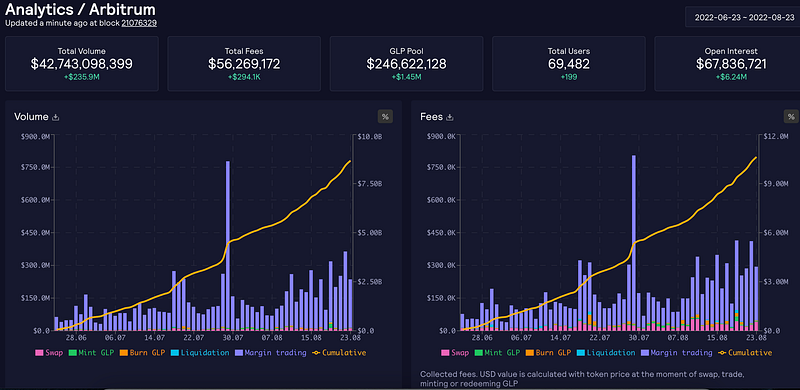
Looks bullish

Cons: A huge room for improvement if ever want to take over Binance. Hassle related to the use of the crypto wallet.

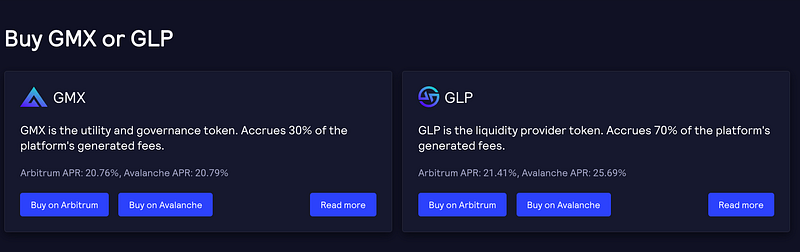
Yield opportunity on GMX:
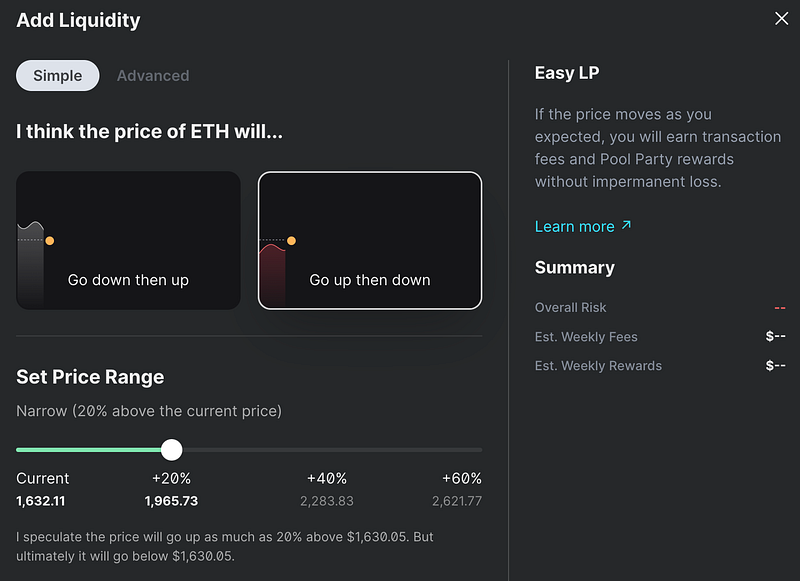
Simple front-end but often charts don’t load on launch. Running on Optimism for pennies of the gas fee. Perpetual Protocol has around 22m in liquidity which is a lot less than GMX. I suspect it’s because providing liquidity here involves users buying options. Not interesting for people who’d like to earn yield no matter the market direction is going.
Running on Polygon, gains network is on the same level as Perpetual Protocol in terms of TVL. According to this stat, it has a sizable volume, partly contributed by the fact it’s the largest perp platform on Polygon chain.
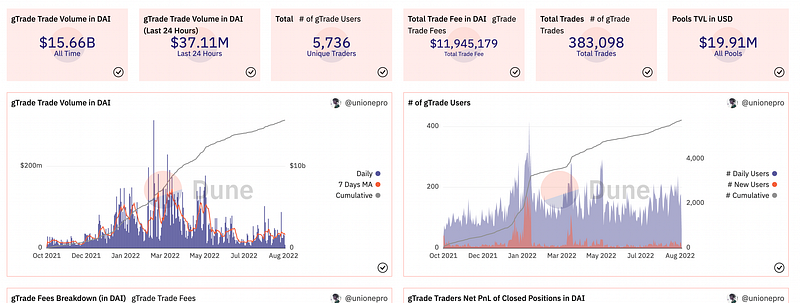
Gains network stats — Dune Analytics

However, I think it’s a mistake for them to choose Polygon chain as their home chain, as Polygon is notoriously slow. I experienced it immediately as I try to connect my wallet and switching the chain gives me an error from the start. I had to try several times. This is discouraging for traders who prioritize speed on the platform they use.

Has the inventor of perpetual itself, Arthur Hayes, among the advisor (also own 1% of the token.) Mycelium is new, but recently enjoyed a sharp rise in popularity, and TVL, thanks to the news of Arthur’s involvement.

The newness of this protocol can be seen on their trading platform. There are unfinished features, like limit order and stop loss.

Verdict

Seems to me the main focus of these perpetual protocols is to attract users and volume as much as possible to their platform. After all, that’s where the yield and liquidity come from.

To attract activities, you need a good GUI and a fast engine in the background. That is what’s required to steal users from CEXs, their biggest competitors.

Not to mention they will compete with each other too among these dApps. GMX and dYdX currently are ahead in the race. Especially GMX they do a good job attracting activities while balancing it with proper decentralization.

Overall, the initial growth is on a positive trajectory. The main strength is decentralization. That’s the key selling point CEXs don’t offer, and it will be a good idea if they polish this feature more.

Perpetual
Crypto Trading
Defi
Derivatives
Cryptocurrency
Recommended from ReadMedium