
The Reality of Being a Christian No One Talks About
The Real Story Of Believing In God
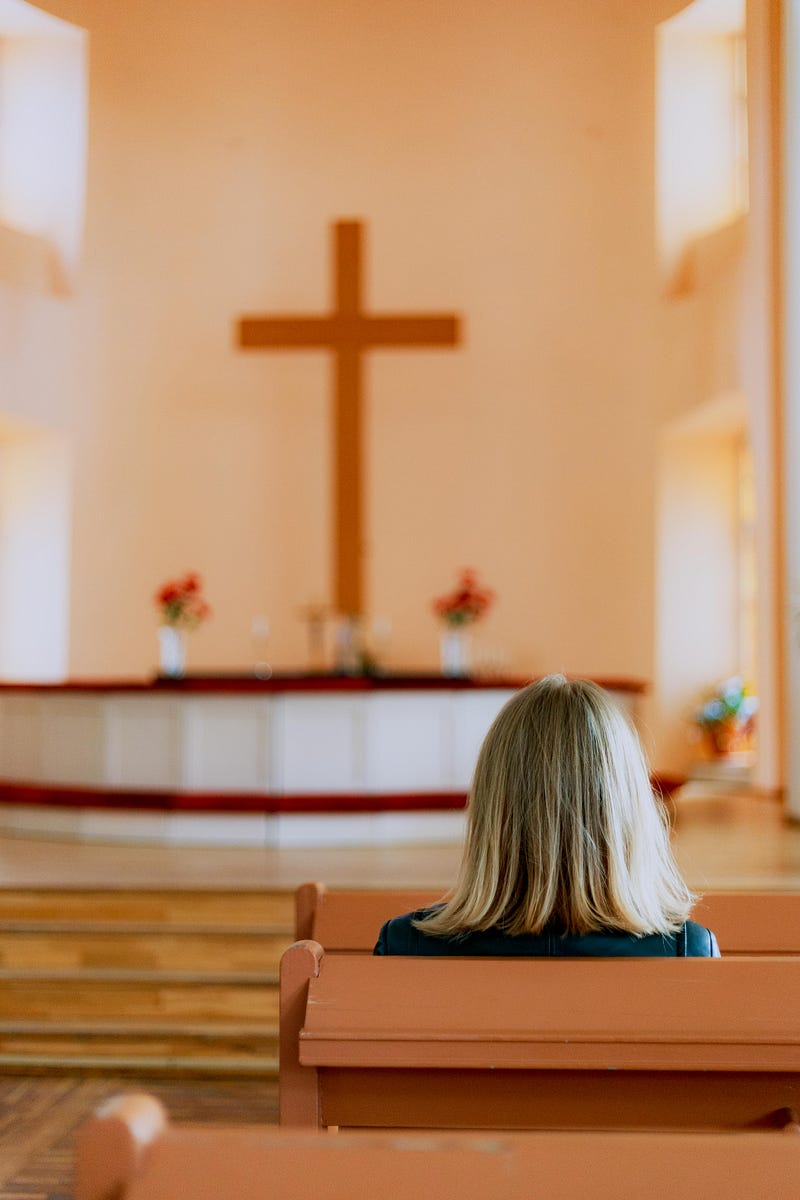
Being a ‘Christian’ these days gets a bad rep.
People automatically assume that if you are Christian, you are homophobic, transphobic, misogynist, racist, anti-abortion, conservative, and against anything considered ‘progressive’.
Well, that’s not true. Not all Christians fit this negative stereotype.
I’ve met Christians who are kind, compassionate, and generous but I’ve also met Christians who were narrowminded and bigoted.
Christians in general are all very diverse sets of people from differing backgrounds and cultures who have varying degrees of belief in God.
The Beginning of My Story
So I grew up at church because my family is mainly Christian (even though some family members have chosen to not go to church anymore). When I was a child I went to Sunday School and heard all the bible stories. Then I went to youth group when I was in high school which was also when I decided to accept Christ into my life. Now I am in university, so I have been going to church for the majority of my life.
The church has always been an important part of my life. When you become a Christian, it is the start of your personal relationship with Jesus. As a Christian, you choose to devout your life to serving him, serving others, and glorifying God in your life.
When you become a Christian, your faith in God becomes the foundation of your belief system. You read the bible to further solidify and learn more about who God is and his kingdom. It is a radical transformation in your life, where you choose to turn away from doing ‘sinful’ things (actions that disobey God) and choose to repent and seek a life obedient to God’s word, the bible.
I don’t think that many non-Christians fully understand the life-changing nature of becoming a Christian. It is a mind, body, and spirit change.
When you are a Christian, how you view the world is through the bible. You derive your meaning and purpose through God and you adapt everything in your life to act in accordance with his word.
That is why people who are Christians have such radical views on social issues like homosexuality because they base their whole life and belief system on the bible.
And this was me, for a very long time. Prayer and reading God’s word was a daily habit that I did every morning. I believed in God’s will and sought to live my life in accordance with his will not my own. I really did think that I had a personal relationship with Christ. I genuinely believed I was a Christian.
However, I know other Christians who think that if a Christian loses their faith, they were never a Christian in the first place or there was a false conversion. But I don’t agree with that sentiment because it completely disregards someone’s personal relationship with God. There are people who fall away from the faith who once did have thriving and strong relationships with God. They lived their life according to the bible, however, due to personal or intellectual reasons, they choose to not believe. Who are we as Christians to judge where someone else is at in their faith journey?
When the Doubts Started Coming In
When I started going to university, I was exposed to different ideas, perspectives, and experiences that challenged my Christian beliefs. Meeting people from different genders, nationalities and sexualities opened my eyes to the diversity of human nature.
It made me realize that the beliefs that I was taught at church about people with different sexualities and genders didn’t make sense. I didn’t understand why Christians were discriminating against people because of their sexual identification. Yes, Christians will argue that homosexuality is a sin but don’t we all sin? Why are we judging how others live their lives?
Because as Christians we are called to not judge others (Matthew 7:1–5) instead we are called to love God and love your neighbour as yourself (Mark 12:30–31). It’s the golden rule of Christianity.
Studying psychology at university also taught me how to think critically. I was taught to critically look at evidence from both sides of a debate and come to a conclusion based on the evidence. This is otherwise known as the scientific method, being able to observe evidence with no bias and from an objective perspective.
I learned to believe in things because they had evidence to back up those claims and it made me realize that I didn’t want blind faith. I wanted to find evidence to support Christianity and the existence of Jesus on earth.
Moreover, some family members who I use to go to church with also stopped going. For the first time in my life, I was no longer obliged to go to church because of my family. Now I had the choice to go or not. I had the choice to continue my faith as a Christian or not.
Discrepancies Between Jesus and Organized Religion
I love Jesus but hate organized religion. Unfortunately, I think organized religion has tainted who Jesus actually is.
The way that some Christians have discriminated against marginalized groups like the LGBTQ+ community and shamed nonbelievers for not believing in God is horrible. It doesn’t reflect how Jesus acted when he came on the earth. In fact, he treated those who were outcasted by society with love and respect. He didn’t shame or guilt-trip people into becoming Christians otherwise they would ‘burn in hell’. He showed them what it meant to live a life following God through his words and actions.
Instead, he came with the message of love. He came to bring peace and goodness into the world. He came to unite people from all different backgrounds, cultures, and genders to believe in him. He came with the main message to love Jesus and to love others. He came to save humanity from death and give us a choice to follow him.
Unfortunately, this message has been forgotten within the Christian church. We say we love everyone, yet discriminate against LGBTQ+ people. We say we are welcoming, yet shame people who have had abortions. We say we are accepting, yet act legalistically about Christian rituals and traditions. Christian pastors preach about being more holy and Christlike yet act completely differently when they aren’t on the pulpit.
No wonder people are leaving the church in droves, we are hypocrites.
Humans as Spiritual Beings
Sometimes I have thought to myself, what is it like to live your life without a belief in God? Would life feel empty? Would I be left with a spiritual void that I would try to fill with things on earth? When you are not basing your life around religion or God, you have to find your own meaning and purpose. A part of me is scared to do that. After all, believing in God is all you ever know when you grow up in a church.
Humans have always believed in some form of a God. I think despite, many believing in a naturalistic worldview, we all have some form of spiritual belief.
We still search for a God or some spirituality whether that be in religion, new age, or some other spiritual belief. Or we seek it within ourselves through mediation, mindfulness, and gratitude.
I also think our fear of death also plays a role in humans seeking the divine. We want assurance that there is life after death. We don’t want death to be a hole of nothingness. We hope that there is a heaven and hell because deep down we value life.
We as humans naturally also search for meaning and purpose in our lives. We don’t want to believe the earth was created randomly which means that our lives are inherently meaningless. It’s easy for humans to fall into nihilism and existential despair when we view our lives as pointless because we all die in the end. Nothing we do on this earth really matters if we simply just die right? Maybe that’s why we are so obsessed with creating a legacy and leaving an impact on this world.
Social Issues and Church’s Response
Social issues regarding abortion and homosexuality have been very controversial in the church. I would also say the church’s response to these issues has caused a lot of conflicts, more specifically it has caused more division between the Christian church and the secular society.
As a Christian, I find it abhorrent how some churches have treated these social issues. Shaming and guilting people to believe what you want to believe is not love, that is forced submission.
If Jesus was on earth, he would be shocked by how hateful some Christians have acted toward people who disagree with their faith.
Christians and Atheists
While we all acknowledge the problems still prevalent in the church. Growing up in a Christian church provides a strong sense of community. Every week, you know that there is a specific place where you get together to worship God.
It creates a sense of unity among your fellow believers that can’t be replicated outside any religion. It’s having that assurance that all your fellow believers are striving towards the same goal of Christlikeness and eternal life.
From my own personal observations, Christians have always been more nicer people in general compared to nonbelievers. They seem to have a sense of morality that is founded upon something greater than themselves. How they treat each other is a testament to the love shared within a Christian community. It really is one of the joys of being a Christian.
The Bottom Line
For those who have grown up at church like me, you may one day reach a point in your faith where you have to make a decision about what you believe in.
Do you want to continue your faith or do you not? Do you want to become a Christian or not? Or do you want to separate yourself from Christianity altogether?
The truth is currently I feel very conflicted about my faith. I feel like I am slowly deconstructing my faith and breaking it apart, analysing everything to find the truth.
I realized that it was okay to question my faith. It was okay to ask questions, to challenge your beliefs and preconceived notions. And that it was okay to change your beliefs when presented with evidence that proved the contrary. And I think that we as humans being can never 100% know that God exists or God doesn’t exist. We will never have a guarantee about God, that’s why we have faith. In fact, we all use faith to live our day-to-day lives. Faith is defined as believing in something you cannot see.
So under that definition, we have some degree of faith to live. We need faith that when we drive to work tomorrow, we won’t die in a car crash. We have faith that the sun will rise and set the next day. We have faith that the world will keep spinning even though we can’t see or feel the earth rotating.
Thinking more deeper about it, I realized that my faith was built upon fear. I was scared that if I stopped being a Christian or believing in God, then he would punish me. My life would unravel and I wouldn’t receive any of his blessings.
I now know that subconsciously I saw God like Santa, as long as I did all the ‘Christian’ things like going to church, praying, and reading the bible, the more blessings I would receive and the better my life would be.
But God doesn’t promise an easy life when you become a Christian. Instead, he promises a hard life. He says as a Christian, you will be persecuted because of Jesus. People will hate you because of Jesus. You will have trials and tribulations but God says he will never leave you.
So despite all my doubts about Christianity, where is my faith currently?
At this moment, I still consider myself a Christian. I still believe that God exists and he loves his people. However, I would say I am a ‘questioning’ Christian, someone who is investigating their faith deeper. Someone who is deconstructing their faith and hopefully putting it back together in a way that makes both logical and emotional sense. Someone who is searching for answers to their questions with an open mind. And I’m okay with not knowing everything because realistically we will never have the answers to all of life’s biggest questions.
We will never truly know how the earth was created or why bad things happen to good people. Sometimes we simply have to accept that we don’t know and that’s okay.
So to conclude, yes I’m still a Christian but I am searching for what really matters — the truth. However, while I don’t think we will ever know for sure if God exists or not, we can still search for what is the closest to the truth.
Check out my website and YouTube channel for more insights!


