
The Real Pinocchio Story Was Horrific, Unlike Disney Portrayal
The movie whitewashed what the author wanted to convey.
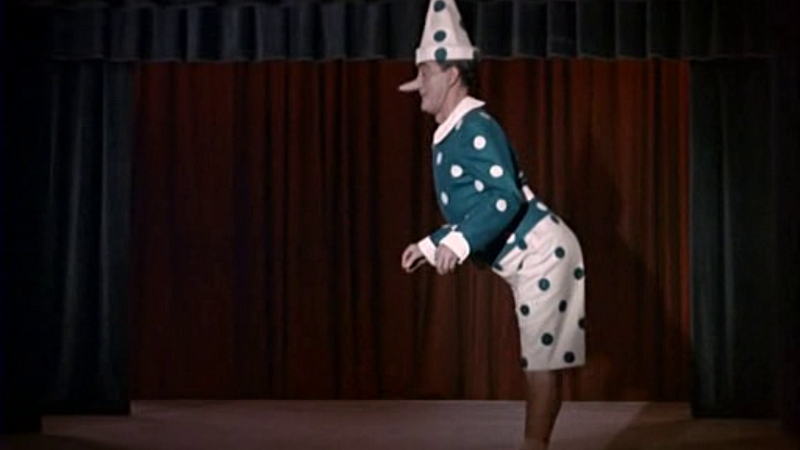
The name Pinocchio is well known amongst people of all ages due to the hit children’s movie from the 1940s “The Adventures of Pinocchio” by Disney. The story, as all know (but I’ll still give you a summary in case you don’t), revolves around a puppet of a boy that speaks and behaves like a real boy and learns real-life lessons in his journey.
However the real story of Pinocchio differs slightly from what we have seen on screen and in children’s story books; heck I think most of you might not even know that there exists an original version by C. Collodi — oh wait, you don’t know him either, do you? Well, keep reading to find out more about this old classic!
Meet C. Collodi — the Real-Life Geppetto
In the book and movie, Geppetto is the puppeteer who creates Pinocchio out of wood. He originally only specialized in making cuckoo clocks and did not intend in creating a marionette but when he is given a magical piece of wood, he decides to use it to create a puppet-boy so as not to waste its magic.
Similarly to Geppetto, the original mastermind behind Pinocchio’s character did not intend to write children’s stories (or even any other sort of stories) at all.
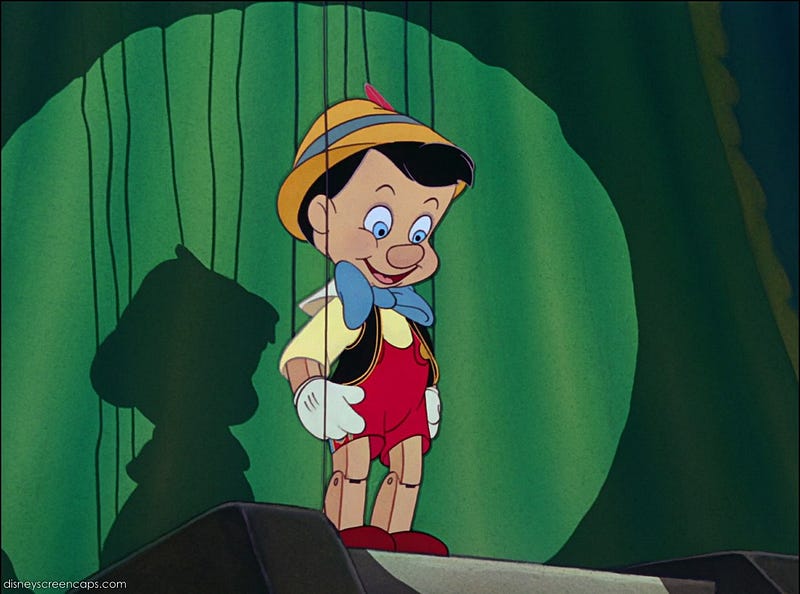
As a young man, Collodi joined the seminary and was set to become a catholic priest, while also tampering with journalism on the side. However, with the founding of the Kingdom of Italy, he resigned from both his previous positions and began writing children’s stories.
C. Collodi is a pseudonym for Carlo Lorenzini, an Italian man who lived during the 1800s in a town called Collodi. He later ended up adapting the town’s name as his pen name.
Collodi’s main reason for writing children’s stories rather than any other stories was because he wanted to teach children in Italy some important life lessons without boring them. And so, he was inspired to create the character we all know and love as Pinocchio.
The Lies Told In the Disney Film
One of the most shocking truths uncovered by literature students that read the original Pinocchio story is that Collodi speaks ill of Pinocchio many times, often calling him a “disgrace” and a “confirmed rogue”.
I think you might find it interesting to know that Collodi actually despised children and never intended to have any of his own.
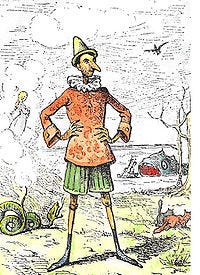
Looking at Pinocchio’s character, some might say that he was just a normal naive young boy that was often misled by evil-doers but the truth is that Pinocchio’s character directly mirrored what Collodi thought of children in his head.
You might argue with that last statement, because did Pinocchio not conquer his fears and prove his love for Geppetto in the film by saving him from a shark towards the end of the film?
Well, the thing about that is, that’s only what happened in the film. In Collodi’s original story, Pinocchio never gets to the part where he saves Geppetto from the shark; instead, he actually ends up dying.
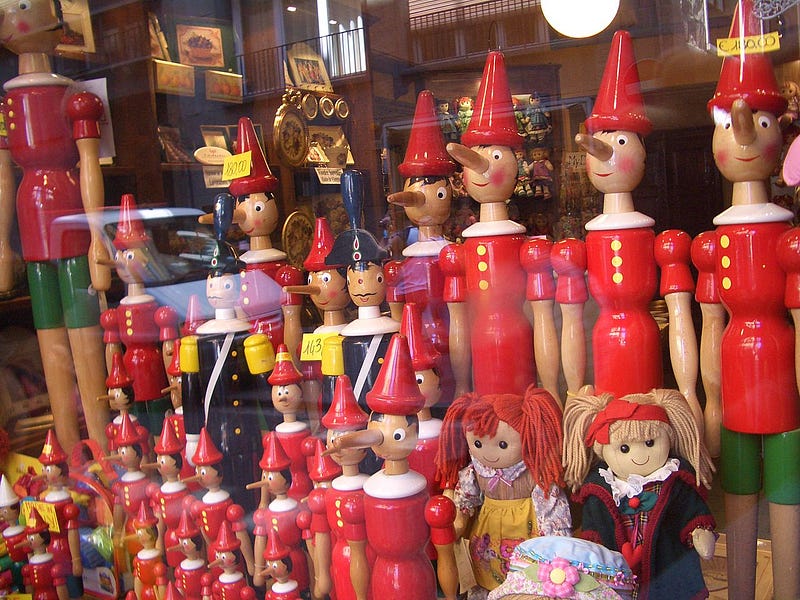
Yes, the real story of Pinocchio is indeed very dark and is meant to serve as a lesson for kids who are naughty. Collodi originally planned to show that Pinocchio, as a result of his carelessness, loses his life to the sly and evil Cat and Fox who hang him and steal his gold.
The publishers for Pinocchio expressed their dislike for the dark themes in a children’s story and Collodi was forced to introduce the character of the Fair with Azure Hair who is responsible for saving Pinocchio from death on multiple occasions.
The Weight of the Cricket’s Words
Among the many important and disturbingly conveyed lessons that Collodi aimed to teach children, the most prominent one was the importance of attending school and getting an education. Pinocchio’s story often emphasizes the importance of school for young boys.
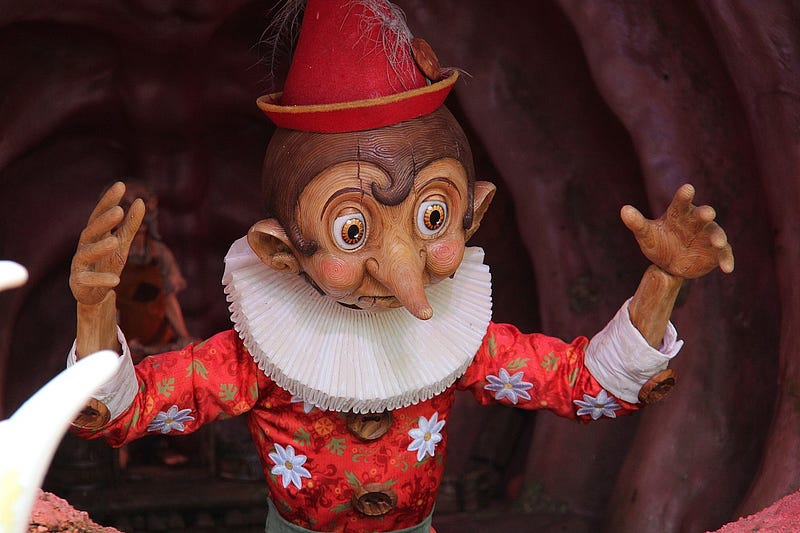
In fact, one of the bigger plot themes is directly related to school and is even included in the film and storybook. Though I’m sure most of you would probably not recognize it so easily due to its discreet nature so allow me to tell you.
While this statement comes off as a simple nag that many elders say, there is actually a deeper meaning behind it. The word “donkey” serves a dual meaning in Italian. It is used firstly to describe blue-collar workers that have to work hard every day to earn a wage and secondly for children who either refuse to attend a school or don’t study well.
Jiminy’s words hold greater importance when put into context because he is essentially telling Pinocchio that if he does not suck it up and get through school at his current age, he will regret it and have to live by day-to-day wages when he grows up.
The main point of Jiminy’s words is that if Pinocchio chooses to stay a donkey in the present, he will remain a donkey when he is older.
Final Thoughts
Pinocchio is widely loved as a simple children’s story with light themes like love, family, and facing one’s fears but a deeper dive into the original version shows the true intended meaning behind Collodi’s hit work.
A simple dissection of the original Pinocchio story has already told us much more than we already knew about the puppet and its creator.
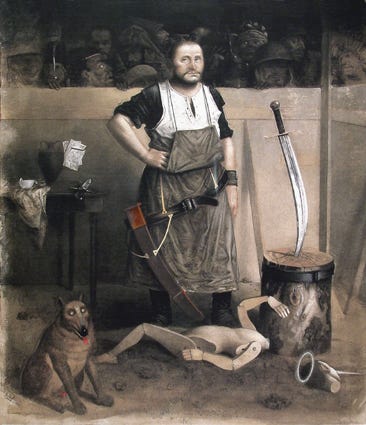
Though it is clear that Collodi had good intentions behind the dark themes he highlighted in the story, do you think it was appropriate to create such a distressing tale for children?
Haloo, my dearest reader. Want to follow up more from me and other fellow writers on Medium?
Hop on the chance to join:


