
The Railroader’s Wife, Part 2
A short story

Author’s note: This is the conclusion of a biographical fiction piece I wrote a few years back imagining my paternal grandparents as young teen lovers, young marrieds, young parents. They were pioneer stock, him a hard as nails railroad man, she a spirited young girl and a no-nonsense mother of four. Both born in the 1870s, this is my tribute to them. Some of it is true — the house turning — but most of it is supposed.
After a year in Springfield, Minnie agreed to marry Henry, but only because Mag and Grant got hitched first. Nine months and six days after Minnie’s and Henry’s wedding, she gave birth to baby Virgil. A year after that came little Lloyd. Velma followed him in three years, and then Lavelle four years after her.
In the first winter of the new century the yard foreman in Afton, Indian Territory, slipped on an ice-covered tie and fell under the wheels of a backing caboose. The man was a friend of Henry’s.
“Heard Jake Pagosa died yesterday,” Henry said at the supper table.
Minnie smacked the back of Lloyd’s head, who sat next to her. “Quit playing with your food and eat,” she snapped. Watching the boy reproachfully, she asked Henry, “Who’s Jake Pagosa?”
“Friend of mine. Believe you met him back in Texas. He’s been the yard foreman in Afton for eight years.”
Minnie shook her head and took up a bite from her own plate. “That was too long ago. I just don’t remember him. What happened?”
Henry glanced around the table at the children, all looking up at him expectantly, except the toddler, Lavelle. “Well, it was an accident.” His look told Minnie he’d give her the details later.
That evening in bed Minnie said to Henry, “Maybe you should see about that foreman’s job in Afton.”
“Good God, Minnie. Jake ain’t even cold in the ground yet.”
“Well, I mean no disrespect. It’s just… it could be an opportunity. You haven’t had many of those.”
Henry did not ask about the position his deceased friend vacated, but his superintendent recommended him for it anyway, and in the spring of 1901 he got the promotion, along with orders to move to Afton.
A farming community with a small rail switching yard, the town’s most prominent structure was the grain elevator from which the train cars would haul out the wheat and corn stored there.
Afton offered little in the way of houses. The only thing Henry could find was a small three-room shack with a stock shed and an earthen root cellar sitting on two acres of land. It had a pump right outside the main door, but no other plumbing inside. Nor did it have electricity. It’d belonged to an old couple killed by lightning one spring morning while planting their garden.
The house sat empty for a couple years. It would require some fixing up, but Henry felt he could do that before he brought Minnie and the children out. At six hundred dollars for the house and land, Henry thought the asking price was high, but he had few options. The only other was a doctor’s house, for which the man wanted three thousand dollars. He thought the railroad would help him get a mortgage for the six hundred.
“It’s small,” Minnie said when Henry first showed her the place.
“Yes, but I figure we can add a room,” Henry said.
“There’s no kitchen,” she said.
“No,” Henry agreed. He held his hat and followed Minnie as she wandered about the house, looking.
She stood at the open main door, looking out. “Why would anybody build a root cellar right outside their front door?” she asked.
Henry remained silent, having no actual answer to that question. But Minnie didn’t expect one. She turned from the door and walked back into the main room, stopping at the potbellied stove to run a finger across its top.
“Well,” she said. “I suppose it will have to do. But we’ll need to make some changes.”
That had been ten years past, and Henry made a couple of changes. He’d built on two small bedrooms for the kids and added a closet for Minnie after five years of listening to her complain about needing one.
He’d also put in electricity. That cost him dearly. Most things Henry could do himself, but the electricals were beyond his knowledge and skills, plus it scared him. He’d once seen a man knocked ten feet and out cold, his coat smoking, after messing with electricals at the yards. Once Minnie convinced Henry it needed doing, she hired it done. That cost him much more than he expected, and it required a second mortgage.
Minnie wanted more, but Henry was a frugal man. After the electricity installation, he put his foot down, telling his wife in no uncertain terms that he’d do no more improvements to the house until they had the money in hand to pay for it. There would be no further bank loans.
In the summer their daughter turned eighteen, Lloyd had gone off to France to fight the Hun, and Virgil had gone to The Chicago School of Art with flat feet. Velma received a brochure in the mail from The Tulsa Institute of Secretarial Sciences inviting her to attend the one year session starting in the fall. Minnie reasoned that would be a good avenue for her daughter to pursue, seeing as how she had her Aunt Mag’s carriage and appearance, and most likely would have to support herself through most, if not all, of her adult life.
The topic of getting an automobile had come up, too. More and more of them appeared around town, and Minnie thought it would be a good idea to have one. Now and then, Dugan O’Leary down at the livery brought in used motor cars to sell, and he currently had a dark green Maxwell Minnie particularly liked. Young Lavelle, then thirteen, highly supported his mother’s idea, as he was eager to learn to drive such a machine.
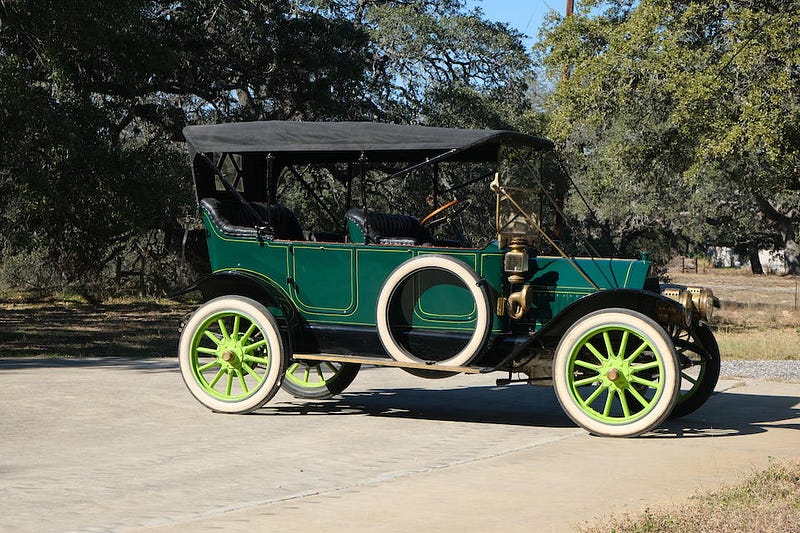
Henry was dead set against it. “Ain’t nowhere in this town you can’t walk to. Besides, we got a mule and a wagon. Those damn motor carriages are just a noisy waste of money,” he said.
Minnie let it lie until Velma’s school came up later that summer. She decided one night at supper to broach the idea once again. “You know, with Velma going off to school in Tulsa we could use an automobile to take her up there and bring her home.”
“I think that’s a dandy idea,” young Lavelle offered.
Henry shot a hot warning stare at the boy and forked half a boiled new potato, popping it into his mouth. “There’s two trains a day, one going to Tulsa and one coming back. She can ride those. An automobile? My God, Minnie, you’d put us all in the poor house.”
“Yeah,” Lavelle said enthusiastically. “And I could drive us there.”
Henry reached out and cuffed the boy soundly, sending him off his chair and rolling across the floor. No one said anything more at that supper table about purchasing or driving an automobile.
“I’m sick of looking out the front window and seeing that root cellar hump,” Minnie said.
They sat in the front room on a Sunday afternoon; Minnie in the rocker, crocheting, Henry in his chair reading his weekly copy of the Kansas City Star. He didn’t lower the paper or acknowledge her comment, as he knew what was probably coming. It wasn’t the first time she’d brought up the subject.
“Don’t understand,” Minnie continued into the silence, “why anyone would build a house where the front door didn’t face the street.”
“Maybe there weren’t a street at the time,” Henry offered, immediately regretting he’d spoken.
“And why on earth would they have the root cellar right outside the front door?”
A headline about a Union Pacific train wreck out around Laramie had caught Henry’s eye. Beneath the headline was a picture of three men standing amid the wreckage and a dozen dead cows. “Reckon it was handy,” he answered absently, his focus by then mostly on the train wreck story.
“Well, I don’t like it, never have. Believe the front of a house should face the street,” Minnie replied.
Henry sighed and turned to page eight to look for the column headed “Wreck” where the train story continued. “Mebbe so,” he said, thinking that would mollify his wife into believing he cared about what she spoke.
Sensing an opening, Minnie continued. “I’ve spoken to Ned Hamerstein down at the lumberyard. He has the means to fix this problem.”
“Um-hmm,” Henry said.
“Henry, are you listening to me?”
“Um-hmm.”
“Well, I’ve been thinking we could hire him to do it.”
Henry lowered his paper in a wadding crush. “Hire who to do what?” he asked, looking anxiously at his wife.
“Ned Hamerstein, down at the lumberyard.” She kept her gaze on the crochet work in her hands. “To fix the problem with the house.”
“Ned Hamerstein? I wouldn’t hire Ned Hamerstein to pour water out of a boot. The man talks more than he knows, and he over-charges for everything he sells down there. And what house problem are you talking about? I told you I’d put on a kitchen and an indoor privy next fall.”
“That’s not what I’m talking about.” She put down her handiwork and looked at him, exasperation in her voice. “You weren’t listening. We need to turn the house before we can add on a kitchen and privy.”
“Turn the house?” Henry almost shouted, his voice vibrating with astonishment and a dollop of anger. “What in the Sam Hill are you cooking up now, woman? That’s the craziest thing I’ve ever heard.”
Minnie fired back. “It’s not crazy, it’s — ”
“No! There won’t be no house turning! This is the last I want to hear about it!” Henry snapped his paper up in front of his face again.
That conversation occurred in early February. Henry had planned his trip to Grant’s for late April.
“You sure you don’t want to come along?” Henry asked the week before his scheduled departure.
“Too much to do here,” Minnie answered. “There’s the rest of the garden to put in, and I’ve got that quilting doings down at the church. Besides, I can’t leave Lavelle here alone.”
“That boy’ll be awright. Shoot, I’s out on my own when I’s half his age.”
“No, I don’t want to go.” Minnie busied herself peeling potatoes, and Henry didn’t totally object.
“Suit y’self,” he said, and continued with his breakfast.
Henry’s train pulled out at 7:15 in the morning, right on time. At 7:30 Minnie sent Lavelle to the lumberyard to tell Ned Hamerstein the coast was clear. At 8:15 Ned and his outfit arrived in Minnie’s front yard: two flatbed wagons each pulled by a team of mules, six hydraulic jacks, twelve sets of ropes and pulleys, three six-inch by thirty-foot oil rig pipes, and Harley Banks and Edgar Two Shoes, his work crew.
Ned put Harley and Edgar to rigging the oil field pipes into a tripod, peaked above the top of the house. Ned himself crawled under the house to set the jacks at the four corners and beneath the main floor joists. He assembled the ropes and pulleys at calculated points on the frame of the house and jacked the jacks.
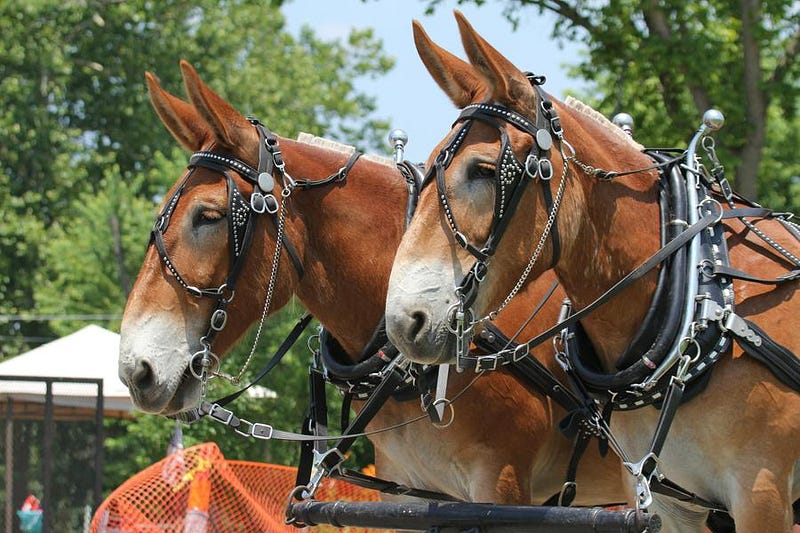
Harnessing the mules to more of the ropes, the crew and the mules lifted the square frame structure and rotated it ninety degrees, then lowered it back on its foundation blocks. The entire operation, including the crew’s lunch break, took less than ten hours to complete. Ned returned the next day with Edgar to finish securing the house to its new setting and built a front porch outside the door, which now faced the east toward 2nd Street.
Amos and Ada Wylie didn’t go back to sleep that early spring morning when Henry returned home to find his house turned. They couldn’t, even if they’d wanted to; the ruckus from the loud quarrel across the street would wake the dead, and neither Amos nor Ada wanted to miss it.
Missus Hendershot had put on her robe and come out onto her front porch to shush her dog’s frenetic barking, not so much to keep the animal from disturbing the peace, as to keep it quiet so she could better hear the goings on next door.
Henry’s fury that night reached summits he’d never known in his twenty-five plus years’ marriage to the woman. He yelled such vehement and hurtful things to her she broke down into sobs, but not before she sent back salvos of her own.
As the first sliver of daylight creased the morning horizon, Minnie had turned to her new closet and pulled out her valise. “I will not stay here and take this kind of abuse,” she wept. “I’m leaving!”
“Get dressed, Lavelle,” she said to the gangly boy standing at the bedroom door, himself having long since gotten up to see what all the yelling was about.
“Leaving!” Henry shouted. “Just where the hell you gonna go?”
“To Mag and Grant’s,” she answered.
“Ha! I’m sure they’ll welcome you and your damned extravagances. Well, good riddance!”
With that, Henry announced, “I’m going to go stay at the lodge.” He grabbed his own still unpacked bag and stormed out the new front door and onto the dawn damp grass where a walkway should’ve been. Missus Hendershot from her front porch, and Amos and Ada Wiley, from their bedroom window, watched Henry stride angrily out to Second Street and turn toward downtown. There was a code amongst his Masonic brethren which said any brother could seek shelter at the lodge in times of hardship or strife, and that included those of a domestic nature.
Henry sat on the swing hanging at one end of the porch, his front porch. By then, on that crisp fall morning, it was no longer a new porch. Ned Hamerstein and Edgar Two Shoes had built the porch decades past.
The day after their fight twenty-eight years ago, he came back to the house, and stood out on the street looking at it. It looked a little sad to him that warm spring evening, all empty and dark and closed up. He’d cooled off by then, and deep regret at the things he’d said seeped in where his temper had departed.
He had to admit the place looked better facing the street, and he liked the porch, had always wanted one. The idea of sitting there of an evening appealed to him. Maybe he’d put up a porch swing.
The next morning he’d stop in at Hamerstein’s Lumberyard and see about getting a load of lumber. He thought he could add on that kitchen Minnie wanted, with a door opening onto the now side yard where the root cellar hunkered. And he’d have to see about moving that pump inside, into the new kitchen.
As long as he was at it, he’d build on a water closet, too, and maybe ask Wylie across the street if he could look at his indoor Crapper, which he’d seen Amos put in a couple years back. ‘Course, he’d have to get a price on one of them from Hamerstein and hire Ned and his boys to do the plumbing and put in a septic tank. Lord, that old German would charge him a king’s ransom for all that, but he figured Lawson down at the bank would go him another loan.
He’d get all that done, and then he’d go fetch Minnie and the boy back. He’d tell her he was sorry, that he’d been a damn fool, that he just couldn’t live without her. If that didn’t placate her, he’d tell her about a surprise he had waiting for her back home. On the train ride back, he might even talk to her about that automobile she had her eye on.
But this bright autumn morning, thirty years later, Henry didn’t remember any of that. Fact was, he remembered little of anything except that green-eyed girl down in Quanah, Texas.

Lavelle’s oldest boy, Donald, himself now grown, had come out onto the porch bringing his grandfather some coffee. Henry looked up, folding his hands around the warm mug. Confusion clouded his face, then brightened with recognition. It was a misplaced recognition, though. He thought the young man was his long-departed friend Jake Pagosa.
Henry took a sip of the coffee. “You know, Jake,” he started, then paused for a long moment as he looked into his future. “I met me a green-eyed red-haired gal down in Quanah, Texas who’s just about the prettiest thing I ever seen. Smart, too, and feisty. Now that I got this house fixed up, believe I’m gonna go bring her up out of that dusty ol’ Texas town. Believe she’d like to live here.”
Donald’s brow furrowed in sadness. He didn’t have the heart to remind his grandfather that Grandma Minnie had died six months ago. Wouldn’t matter anyway, he decided. Might as well let the old man live where he sat. Donald nodded. “Believe that’d be a fine thing, Henry,” he said.
“Yessir,” Henry responded. He nodded, set the swing into motion, and took another sip of coffee. He looked out at the red brick walkway leading from the porch steps to the street, and a sparkle of anticipation passed across his eyes.
© 2021 by Phil Truman. All rights reserved PTI Publishing Broken Arrow, OK
Thanks for the read. That’s always appreciated.
A shout-out to writers I admire: Tree Langdon, Britni Pepper, Claire Kelly, Terry Mansfield, Stuart Englander, Liam Ireland, Bebe Nicholson, Fatim Hemraj, Trapper Sherwood, Roz Warren, Dr. Preeti Singh, Teresa Kuhl, Eve Paludan, Dr Mehmet Yildiz, Linda Halladay, Jeff Herring, Tim Maudlin