
The Quarantine Effect
What are You seeing, as Your Life S-L-O-W-S down?
Have you ever pulled into your driveway after a long day and realize you don’t remember driving those last few miles? At all.
I have … too often.
How many times have you carried you son or daughter up the stairs to bed, tucked them in and read them a story? How many steps did you climb on the way up?
Our lives are composed of acts that become hardwired into our brains. Unlocking the door. Lifting the toilet seat. Shaving our chins for the last 7,832 days.
We do things so many times that they simply slide into auto-pilot and we seldom consider them again at all. Not until time slows down and the actions that would previously go by in a blur, now proceed at a slower pace and we get to see what actually makes up our lives.
The Quarantine Effect
The Quarantine Effect slows everything down. Takes the cars off the road, the pollution out of the air, the animals returning to the streets. It’s not frightening, it’s just happening.
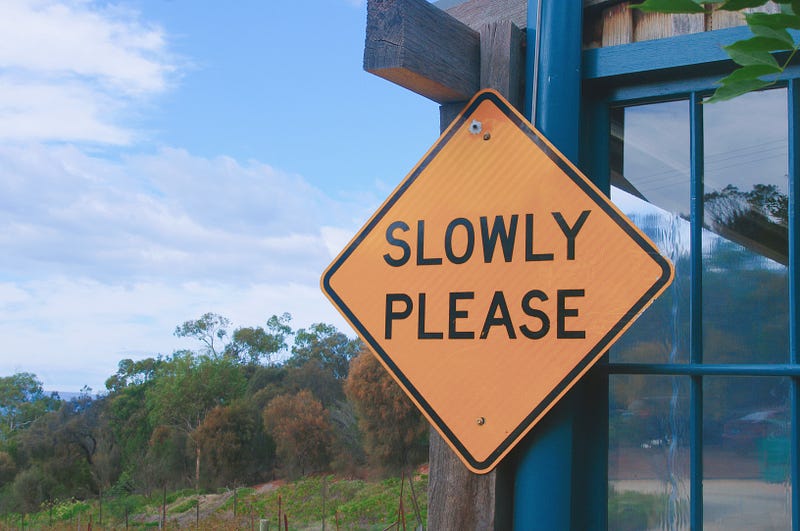
Those street signs that read: Slow Down, say that so you’ll pay more attention to the kids playing in the park or walking home from school. So, you’ll actually look for them. Funny how a punch in the head (Covid-19) makes us look a little more closely at what’s around us.
Every day you put your pants on one leg at a time. Which leg first? Do you think about, or does it just get done?
I was stepping into a pair of pants the other day, getting ready to go downstairs to check my emails, and start writing, when I stopped. I looked down into the twin tunnels of my trousers, leg hovering just above them, in a weird sort of ballet maneuver, when I thought, I’ve done this so many times, I don’t even see myself doing it anymore — it just happens.
For the rest of that day I felt like a voyeur peeking through the window of my own life. Seeing what I did when I greeted my wife. How I went through those familiar motions when feeding my cat every morning. One can of cat food, water, a small amount of crunchies.
I started seeing how life and all its constituent parts — were being reduced through the inactions of the Lockdown. Suddenly there was enough time between every action to actual see the beginning middle and end of it.
When times slows down, we are made to see more of our lives, ready or not.
We tend to not live the small things in our lives. The first cup of coffee, a piece of toast. Our kid racing for the school bus as we watch through the window. We do these things automatically on the way to something else. Something so obviously more important, that it relegates all these “mundane” actions into a large bin labelled miscellaneous.
When you shave in the morning, who do you see? The person you were, or the one you became?
Covid-19 has invaded our bodies, our minds, and our histories, in that it’s made us stop and look at the smallest increments of our lives. The type of salad on our plates, the brand of toilet paper that’s too rough, the color of the “new” wallpaper in the dining room that your wife hung 5 years ago.
When times slows down, we are made to see more of our lives, ready or not. You can’t claim, too much to do, when there’s time enough. You have to look at the moment as it — slowly -moves -past. You see more of it, even if it’s not that pretty.
You might even get to see what they mean when they say — be in the moment. Because that moment is right there in front of you. Slowly moving through the living room, down the stairs to your study. It’s hard to ignore it when it’s right there and it’s yours.
Enjoy the moment in front of you. If you don’t, what makes you think you’ll enjoy the future ones anymore?
Is the cat really talking to me?
When our lives are moving at 65 mph, we get into a habit of filling in the gaps with bits and pieces from our past, because right now is happening too quickly for us to see it, hear it or enjoy it fully. Our memories become a collage of today, yesterday and what we hope tomorrow will bring. We edit some old footage from our past into our present, to make it look more familiar and on we go to the next stretch of road. We do this automatically, because our attention is on the future. That part of our lives that we are constantly in the process of creating by doing all the things we do right now — but are we giving them their due?
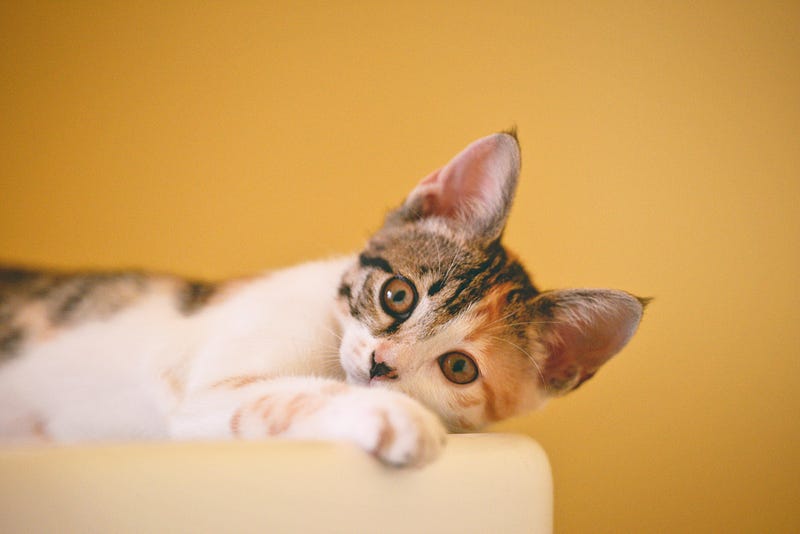
And the cat … yeah, it is trying to talk to us. It’s always been trying to talk to us, we just haven’t been paying attention. Lean down, scratch behind her ear, “good kitty” and move on. What she was probably trying to tell us, as she sat there, paws crossed, eyes focused on you, was what we’re all learning right now. Take it easy.
Enjoy the moment in front of you. If you don’t, what makes you think you’ll enjoy the future ones anymore?
Don’t edit your life, by inserting old images, colors and sounds. See them uniquely, right there, right now.
So, what now?
Put on your pants differently today — left leg first. Put your toothbrush in your other hand and brush. Don’t take that first sip of coffee while moving. Stop. Smell it. Cool it, then take a sip while closing your eyes. Feel the liquid careen over your taste buds and splash up against the side of your mouth. Now swallow.
Look at your kids and get their attention first. Say, good morning. Wait until they say it back. Repeat if necessary.
Look into your husband’s eyes and say nothing.
When you back out of your driveway, stop (safety first) and think, which way am I going this morning? Pull the directions up from your database. Wait for it. Then drive off.
Say good morning to the guard, the receptionist, the guy selling donuts. Make it last 4–5 seconds.
And when you drive home from wherever you’ve been, take note of the trees, the bumps in the road. That stop sign spray painted with, what is that, a body part? Look it over, store it away.
And before you turn into the driveway — look at your house. Count the windows you can see. How high the grass is, the plants needing water. What color your door is? How high off the ground is the doorknob?
Don’t edit your life, by inserting old images, colors and sounds. See them uniquely, right there, right now.
For Mother’s Day, let’s give Mother Nature a shout out for hanging in there with us, even though we are fucking lousy tenants. We spray paint her trees, dig out her hills, throw shit into her oceans and most of the time, she remains compassionate and kind. Most of the time.
Time to note that as well.
The Quarantine Effect can be a boon. It removes the blur we’ve been complaining about for years and gets us to recalibrate. No drastic changes required. In fact, Nature is doing a pretty good job of orchestrating the lessons. We just need to take note and pay attention. And at the end of all of this, there will be a test. But don’t worry, there’s no passing or failing grade. Just one final question being asked.
What did you learn?
Joe Luca is writer and editor for ILLUMINATION and a published author and writer of children’s stories, short fiction, non-fiction articles, screenplays and poetry. Publications include Child’s Life, Children’s Playmate and others. There are some other articles below — have a read. And thank you for stopping by.


