
The Psychedelic Renaissance Is Here — And The US Needs It Desperately
Will transcending our egos solve our mental health crisis?
Last week, the psychedelic movement reached a key milestone: on its front page, The New York Times stated that “the psychedelic revolution is coming” and that “psychiatry may never be the same”. Earlier that week, Rick Doblin of MAPS had published the astonishing results of his Phase 3 clinical trials on MDMA-assisted psychotherapy for PTSD.
The movement has gained a lot of traction over the past two years, with major leaps ahead after a whirlwind history. Psychedelics have been on a rollercoaster through culture, from heavily researched and beloved magic pills in the 50s and 60s, to sacred subculture substances in the 70s, to forbidden and vastly feared drugs for the past decades since. But now it looks like they are being safely navigated back into the harbor, with Rick Doblin and other key researchers like Robin-Carhatt Harris setting the course for safe and focused landing.
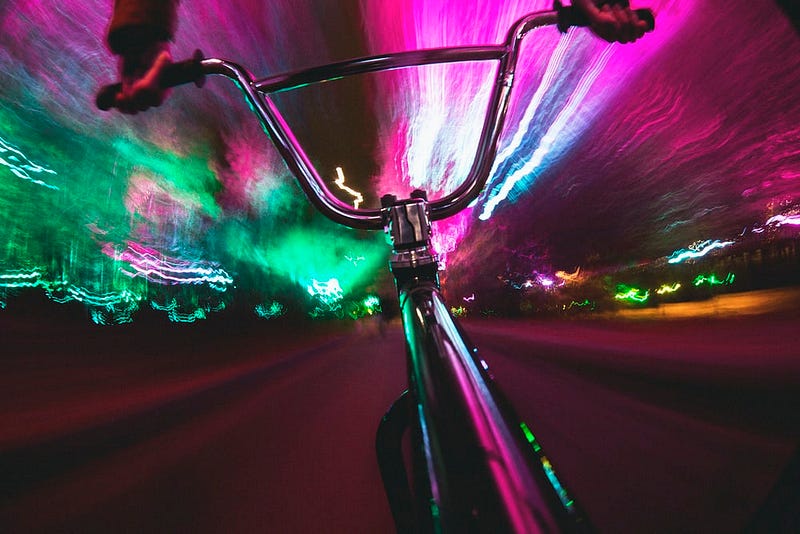
It was almost 80 years ago, on April 19, 1943, that chemist Albert Hofman rode his bike home after accidentally ingesting 250 micrograms of LSD. He was working for the Swiss pharma company Sandoz when he first synthesized lysergic acid and vividly described his first experience the next day:
“… affected by a remarkable restlessness, combined with a slight dizziness. At home I lay down and sank into a not unpleasant intoxicated[-]like condition, characterized by an extremely stimulated imagination. In a dreamlike state, with eyes closed (I found the daylight to be unpleasantly glaring), I perceived an uninterrupted stream of fantastic pictures, extraordinary shapes with intense, kaleidoscopic play of colors. After some two hours this condition faded away.”
And so the first acid trip was born, and April 19 became “Bicycle Day.”
What followed were the heydays of psychedelics, with psychoactive compounds slowly but surely trickling into our culture, peaking in the 60s and mid-70s. The psychedelic era gave birth to a host of rebels, thinkers, and artists like Timothy Leary, Alan Watts, Ram Dass, Aldous Huxley, and The Beatles. But the fun was over in 1970 when Richard Nixon established the “Controlled Substances Act”, which made all psychedelics illegal by putting them in the “Schedule 1” together with heroin, Marijuana, and MDMA.
Some Of The Brightest Minds Of Our Generation Advocate For The Use Of Psychedelics
Before I knew much about them, I had my own reservations about psychedelics. I pretty much just thought they were dangerously addictive hard drugs. But once I started educating myself, I was utterly intrigued by how many greatly successful visionaries openly advocated (or at least admitted to) the use of psychedelics.
Steve Jobs famously said:
“Taking LSD was a profound experience, one of the most important things in my life. LSD shows you that there’s another side to the coin, and you can’t remember it when it wears off, but you know it. It reinforced my sense of what was important — creating great things instead of making money, putting things back into the stream of history and of human consciousness as much as I could.”
Tech billionaire and long-time world’s richest man, Bill Gates, also admitted to using LSD and even defended it.
Then there’s Bill Wilson, founder of Alcoholics Anonymous, an institution that has helped millions of people recover from addiction over the last two decades. Few people know that Wilson actually wanted to incorporate the intentional use of psychedelics, specifically LSD, into his 12 steps. He argued it would accelerate the spiritual transformation required to achieve sobriety. Yet some backlash caused him to drop this part of the program and he ended up excluding hallucinogens from his Big Book.
Similarly, the father of modern genetics and Nobel Prize winner Francis Crick, was under the influence of LSD when he discovered the double-helix structure of DNA.
I could find countless more examples. There are many prolific individuals in the media who’ve started to openly advocate for psychedelics, such as Joe Rogan, Tim Ferris, and Sam Harris, just to name a few.
Why does this matter?
Well, all of it is anecdotal evidence that there must be something to it.
The Psychedelic Ecosystem Is Rapidly Evolving Thanks To Breakthrough Research And A Flood Of Capital
Of course, we don’t want to rely on anecdotal evidence only. That’s why it’s necessary to turn to traditional scientific research.
Research for psychedelic therapies is emerging rapidly. We’re seeing promising initial results for treating some of the most crippling mental health disorders of our time, such as depression, anxiety, and PTSD. Psychedelic research centers are popping up across the globe, with institutions like Imperial College London, Johns Hopkins, NYU, and Mount Sinai rushing to open centers. These centers are running trials on psychedelic compounds like psilocybin (magic mushrooms), LDS, DMT, and MDMA to treat mental issues such as PTSD, depression, end of life anxiety for cancer patients, addictions, and eating disorders.
Given these substances' illegality and political history, researchers have been approaching studies with a lot of sensibility. For example, the majority of the new studies are being conducted with psilocybin, the psychoactive ingredient in magic mushrooms, due to the fact that LSD seems to have the most stigma attached to it. Researchers are also focusing on debilitating issues that have very poor alternative treatment options, like PTSD, depression, and so on — which will make it easier for the FDA to fast-track trials and treatments.
The clinical research landscape is anchored around a few flagship studies:
- MDMA-assisted psychotherapy for PTSD (FDA granted breakthrough therapy status, MAPS just published its results from Phase 3 clinical trials, which is expected to be available in 2023)
- Psilocybin for treatment-resistant depression (Phase 2) and Major Depressive Disorder (Phase 2)
- Psilocybin for alcohol dependence (Phase 2)
- Psilocybin for cancer anxiety (Phase 1)
In addition, there are several other areas being investigated, such as eating disorders and smoke cessation.
Aside from medical research, there are various retreats across the globe where one can take psychedelics in a legal setting. The most prominent ones here include the Psilocybin retreat “Synthesis” in Amsterdam and Ayahuasca retreats like “Rythmia Life Advancement Center” or “Soltara Healing Center” in Costa Rica. In Gwyneth Paltrow’s Netflix series “Goop Lab”, her staff ventures to Jamaica to take part in a psychedelic mushroom ceremony.
All of these developments have not been left unrecognized by investors. Investment funds like The Conscious Fund, Palo Santo, and even Thiel Capital are pouring capital into the psychedelic start-up scene. Key players on the biopharmaceutical side (Atai Life Sciences, Mind Med, Compass Pathways) are attracting a lot of attention. There are also several consumer-facing ventures dedicated to rolling out psychedelics-assisted therapy or integration support. Companies like Field Trip Health and Mindbloom are leveraging the legal and clinically proven compound ketamine to build out their infrastructure, preparing to eventually serve consumers with a variety of psychedelic treatments for a variety of issues once they become legal. And in January, the first psychedelic ETF hit the Canadian market and blew up in value within its first weeks of trading.
Mental Illness Is Surging In The US, And The Pandemic Has Made Everything Worse
All of this progress in psychedelic treatments couldn’t come at a better time.
1 in 5 adults in the US experience mental illnesses each year, and suicide is the second leading cause of death among people aged 10–34. Anxiety disorders are the most common issues, with almost 20% of adults suffering every year. This is followed by major depressive disorder, which is experienced by an astounding 8% of adults in the US. Around 4% of adults suffer from PTSD, and another 3% from bipolar disorder.
These numbers are incredibly scary, and the fact that they continue to get worse despite allegedly effective treatment options shows us that something is going very wrong. In “Anatomy Of An Epidemic”, Robert Whitaker summarizes his extensive review of the existing literature of the last few decades and defies the thesis that psychiatric drugs are magic bullets. He sheds light on the fact that SSRIs, the main treatment option for depression, are not only proven to be ineffective compared to placebos but in some instances actually contribute to the worsening of the patients' mental health — or even the development of new issues — over the long run.
Intuitively, this makes sense, because we’ve had these medicines for decades (there’s been little innovation in psychiatry until now) — and if they worked, the mental health epidemic wouldn’t be where it is today.
Now, it’s already bad as it is, but the Coronavirus pandemic has certainly only made things worse. During the pandemic, 40% of adults have experienced episodes of depression or anxiety. But this is not where it ends. If we look to the research from previous (and arguably much smaller) pandemics, we find that the aftermath will likely be even worse. Some of the immediate and long-term effects ahead of us are alcohol abuse, PTSD, anxiety, anger, fear, perceived risk, uncertainty, and distrust.
We’ve all experienced the impact of this pandemic firsthand, to varying degrees. Undeniably, there’s never been a time when we needed a breakthrough in mental health treatments more urgently than now.
How Psychedelics May Help Solve Our Mental Health Epidemic
So, why are these compounds so impactful?
For a newbie, psychedelics are intriguing and intimidating. At least they were for me. We’ve all heard horror stories of psychosis or someone jumping off the roof on acid because they thought they could fly. It’s important to realize however that much of the lingering stigma is a direct result of the intentional media manipulation that took place during Nixon’s “War on Drugs”.
Yes, psychedelics are to be treated with intention and care. But are they as dangerous as we’re led to believe?
Most certainly not. First of all, these substances are not addictive, repeated use is unrewarding because of the quick development of tolerance, and most importantly, they don’t cause cravings.
So what do they do?
A popular way to describe how they work is the following: Imagine a ski slope with a clearly carved path. Every time the skier goes down the same path, he reinforces the existing pathways. Embarking on psychedelic journeys is like putting fresh snow across the slopes, evening out the tracks, and enabling you to find/create new paths. When we’re caged in mental rigidity, which is at the core of many mental illnesses, it’s hard to find a way out because that’s not how our brain is programmed. Addiction is so persistent precisely due to neuroplasticity. So the opportunity to “shake the snowglobe”, as Robin-Carhart-Harris likes to say, and rewire your brain is immensely valuable.
The other thing they do is change your perception of yourself and your place in this world. They put things into perspective. The ego takes a backseat, and in a sometimes beautiful but frequently intriguing way, they show us that the way we perceive reality is only a fragment of all there actually is.
Finally, they help us cultivate self-acceptance. A common theme of psychedelic journeys and mystical experiences is the feeling of pure love, utter self-acceptance, and a complete lack of judgment and shame. It’s very different to know you are worthy and loveable than to feel it in your body and soul. Of course, the intense feeling won’t persist, but you leave your experience with the knowledge that this feeling is available to you, and it’s hard to forget. As a result, you learn to cultivate it in your regular life.
Shamans often talk about the Western world’s “disease of disconnection”, which is the culprit for problems with the self, others, and our environment. Native Americans define “Wetiko” as “a disease of the spirit, causing to destroy oneself and nature”. This is precisely what psychedelics cure.
My story is not an uncommon one, but I do want to briefly share it here to provide another piece of anecdotal evidence of the power of these compounds. Before psychedelics, I was bulimic and depressed, chasing status and money in a high-paying job, successful on paper but completely disconnected from myself. I was miserable and frequently numbed myself with alcohol, drugs, and unnecessary purchases. Psychedelics have helped me repair my self-esteem and taught me real self-love, they’ve helped me heal from physical and sexual abuse, and they triggered me to quit drinking and smoking cigarettes (as well as using some other recreational drugs). They’ve made me a happier, healthier, more joyful, present, and caring individual. They put me back in touch with myself, and as a result, I’m much more in touch with others. I’ve had many journeys, none of them were “bad trips”, but several of them were difficult, which usually stands in direct correlation to the amount of healing you will receive from them.
But, it’s also important to note that these substances are not cure-alls or magic pills. Looking back, this may be one of the key things that went wrong in the 70s and the vast psychiatric research that was initiated back then. You won’t eat magic mushrooms and magically be cured. (Actually, some people will, but it’s not the norm — just trying to manage your expectations here.)
The real work lies in integrating these experiences, and that’s why experts place such a big emphasis on proper integration.
“After the ecstasy, the laundry” as meditation O.G. Jack Kornfield says.
Integration and intention will determine the benefits one will receive from their psychedelic journeys. Dropping acid on a festival will have a very different impact than going through a psychedelic therapy program.
In order for transformation to take place, we need to look inward.
And this takes courage.
But those who can muster the courage will be rewarded with a renewed sense of self-awareness and appreciation for life within and around them.
What The Path Towards Federal Legalization May Look Like
With the exception of Ketamine, which is technically a dissociative anesthetic and not a classic psychedelic, all psychoactive compounds (whether naturally or chemically derived) are still federally illegal in the US. There are exceptions, namely two Brazilian ayahuasca churches that in the name of religious freedom are allowed to serve the DMT-containing brew ceremonially, but access is highly limited. As Schedule I drugs, psychedelics are deemed to have a high risk of abuse and no proven medical treatment use — both of which do not reflect reality, as we’ve discovered.
However, there are already some places across the US that have decriminalized or even legalized psychedelic therapy on a local level. Denver, Colorado legalized hallucinogens in May 2019, Santa Cruz and Oakland in California followed suit in July 2019 and January 2020, respectively. Washington D.C. decriminalized psychedelic plants in November 2020. And in December last year, Oregon became the first state to decriminalize all psychedelics. California is set to follow suit, clearing the second Senate committee in April of this year.
Clearly, there’s a lot of traction right now. But the path is rocky. And, if we look to Marijuahan (which experts in the field generally don’t like to do), we can expect a state-by-state roll-out spanning over several years. But some also argue there’s hope for federal action with Joe Biden’s election to office.
While we don’t know how fast, one thing is for sure: the psychedelic revolution is coming.
And the one thing we can do in the meantime is to work on our psychedelic literacy, be curious and open-minded, potentially experiment, and fight against the stigma for the sake of our mental health.
Want to stay in touch? Join my e-mail list here.