
Education
The Pros and Cons of Homeschooling
Parents have to think about this very carefully.
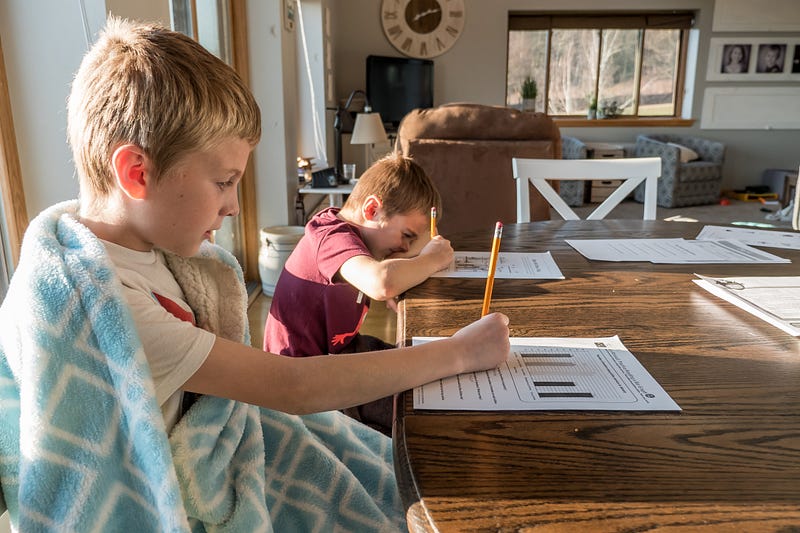
I always thought that homeschooling was not the ideal way to educate a child. I reflected on the training of teachers and social interaction with other children. How do kids learn how to cope with social dynamics, playing, witnessing, or coping with bullying, just to name a few? What about friendship, solidarity, and emotional maturity?
I have to confess that when I started to get rid of my bias and look at it more objectively, I was surprised. I would still send my kids to school but there are several good reasons why homeschooling is beneficial. But it also needs to be better regulated and checked.
First, the numbers. Now that there has been a lockdown, numbers of “homeschooled” kids have increased but that was and still is an emergency. Also, kids are still being taught by their teachers online.
Before lockdown happened though, the numbers I discovered were quite revealing. About 2.5 million children are homeschooled in the USA (2019) figures which are between 3%-4% of the total. It is also interesting to note that many countries have either banned homeschooling or there are severe restrictions on its practice.
There are of course very sound reasons why homeschooling in the USA needs to be checked on more carefully as outlined in the Harvard Magazine. These are also some of the reservations I have also had myself.
· Teachers can alert authorities if they suspect child abuse at home
· Qualifications of parents to teach are non-existent or not verified
· Curricula and programs at home are not checked in many states.
· Some states do not require parents to register their children as homeschooled. Some parents who were convicted of child abuse are allowed to homeschool their children.
When homeschooling is a trap
The book, Educated, by Tara Westover is an eye-opener. It is one of Barack Obama’s favorite books of the year and has received many accolades for throwing light on what many see as homeschooling going wrong.
However, the number of survivalist families who are living off-the-grid is limited so it is hardly representative. But it does drive home the point that such an “education” in a highly protective and narrow-minded bubble should never be allowed. We cannot call that education in any sense. The title of the book is truly ironic.
Another worrying aspect is that homeschooling religious families (for example evangelical Christians) are keen to “protect” their children from what they believe to be harmful beliefs, ethics, and morals that are present in mainstream education.
They may question science and medicine and prefer to believe in the power of healing through prayer.
However, many Christian parents are in favor of homeschooling because of safety issues, poor academic performance rather than Biblical lessons. This is a marked trend noted by the Christian Post.
What homeschooling must do above all.
If homeschoolers fail to teach their kids tolerance and the principles of nondiscrimination, then this can hardly be considered as true education.
Children in this bubble may never meet kids from different racial and social backgrounds and will risk growing up ignorant of the most basic values of democracy.
Do homeschoolers do better on standardized tests?
Homeschoolers have one great advantage in that this is personalized learning and now there are so many resources online that there are many advantages for them. Bill Gates is a great believer in letting students learn at their own pace whether in a school setting or at home.
John Taylor Gatto says that homeschooling avoids confusion in learning as the kids get one-on-one tutoring. They also can better develop their own learning styles without the severe competitive element in many public school classrooms.
There is a lot of debate about whether homeschoolers really do better on standardized tests than public school students. Results seem to depend on demographics, family income, and whether parents were college-educated or not. Some research studies do suggest that homeschoolers are doing better but it is still hotly debated.
Homeschoolers may be happier and more relaxed
There is some stress in the normal school classroom and many homeschoolers never have to cope with bullying or other social pressures. One book, A Sense of Self: Listening to Homeschooled Adolescent Girls by Susannah Sheffer maintains that teenage girls who were homeschooled were not suffering from a lack of self-esteem. Their emotional maturity was not affected in any negative way.
Homeschoolers are not isolated.
Most parents will ensure that their homeschooled kids will be able to develop their social skills through sports activities and other after school activities. They will be able to meet other children and develop friendships.
Flexibility is another great advantage for homeschooling
There is no panic in getting kids ready for school and parents can relax in that they do not have to attend school meetings or worry about how their child is doing.
Another great advantage is that holidays and educational trips can be planned at off-peak times as well as visits to museums and field trips. These can all be fitted in with parents’ schedules and are not dictated by the school calendar.
Homeschooling is ideal for kids with special needs.
Many kids with ADHD or other special needs do not get the ideal attention they deserve in public schools, in spite of the Accommodations for SAT tests. There will be no prejudice or stigma at home and the child will always be the number one priority
Final thoughts.
As we have seen, there are many advantages of homeschooling but also some risks involved when parents are given a free hand and there are no checks and balances in place.
Brian Ray is a researcher on homeschooling. There is no doubt in his mind that these homeschoolers will turn out to be better and more mature adults.
“They’re doing just as well or better.” Brian Ray.
Additional resources:-
Homeschooling? Really? We Didn’t Think We Could Do It, But…
Benefits and Disadvantages of Homeschooling
My other articles on Parenting/ Education:-