
The Promethean Revolt And The Cosmic Meaning of Art
Why aesthetic values are foundational
Arts and crafts class is often a favourite of children in public school or in summer camp. I remember finger painting and gluing macaroni to paper plates when I was young. My works were hung on my parents’ refrigerator instead of in an art gallery, of course, but at least the exercise showed me what it’s like to be creative.
That meme, “arts and crafts,” has a long history going back to ancient Greece. Crafts were more practical or low brow, while arts in the sense of liberal arts were loftier pursuits for the upper class. A similar distinction appears in the clash between blue-collar and white-collar work, and in the snobbish revulsion that the rich have against getting their hands dirty.
But from a philosophical perspective, techne, Technik, crafts, technology, and fine art are on the same continuum. We reshape and organize our environment for different purposes. We build shelters to protect ourselves from the elements, and we develop technologies to make civilized life safer and more efficient. We create art to prettify our shelters or to express religious faith or for self-exploration.
The Arts and Crafts Continuum
One danger in having so many creative impulses is that we might lose touch with reality. We create an artificial bubble in which informational feedback loops make us self-absorbed and fragment our perspective. We become isolated in our small corner of the enormous edifice of civilization, unaware of how the parts fit together. Religion and philosophy are commodified, preoccupied with academic, scholastic disputes, and they seem anachronistic since they compete with more efficient methods from the scientific and industrial sectors.
Just to ask about the meaning of art seems like a foolish waste of time. Isn’t art merely the stream of fleeting emojis that speeds by while you surf the net, or the television you binge watch, the editorials you consume and promptly forget, or the overpriced, abstract trash that wealthy people buy to show off or to launder their money? How could there be a deeper, unified meaning of all of that, and who would bother to inquire into such a meaning?
In the age of art’s digital oversupply and trivialization, though, it’s worth boosting art by emphasizing its relation to everything else we produce, including our tools, machines, cities, and even the worldviews or perspectives that occupy our mental spaces.
Many animal species modify part of their environment in building a nest, den, web, or underground shelter. But they aren’t hypercreative like we are. Animals reach an equilibrium with their natural environment so that their habitat reinforces their niche, the limited role the species plays. By contrast, we seek infinite growth and world domination.
Nature is No Blank Slate
Here, then, is where we should look for the purpose of art. Art is at the tail end of a process that defines our relationship to nature and thus our identity as an odd type of creature. To see what this relationship might be, consider whether we take the natural canvas on which we’re operating to be a blank slate, when we’re so productive that we override our natural role as social mammals and invade every terrestrial niche.
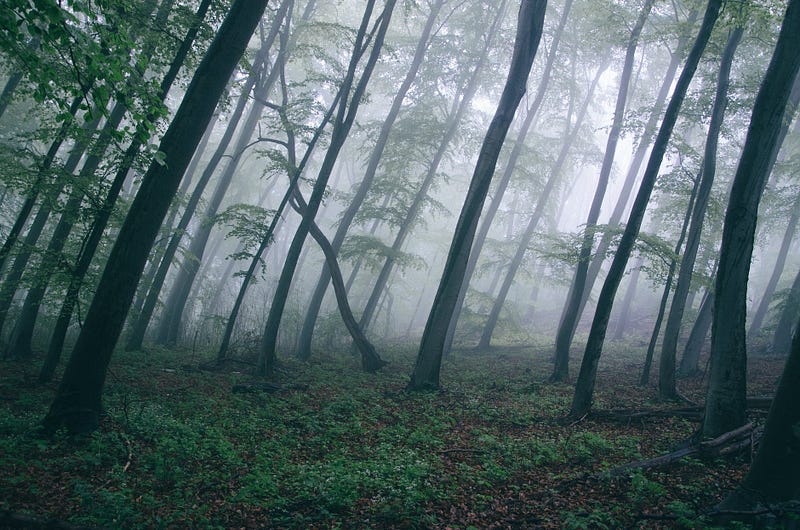
This canvas is the pristine wilderness, the pre-humanized environment, consisting of jungles, deserts, swamps, oceans, and so on. This is the world that developed long before the evolution of our species. In creating our self-serving, humanized worlds, are we merely filling in a blank left by natural forces and elements? Are we correcting nature’s waste of its creative potential, by building the type of world that should have been primary and everlasting?
To think so is preposterous. The wilderness that reaches far beyond the natural structures on our planet to encompass all the other planets, stars, and galaxies is obviously no blank slate. Nature was busy creating an unimaginable array of things before the first tiny organisms floated to the surface of Earth’s primordial ooze.
Consider what a blank canvas or page means to an artist or a writer. The fear of this blankness is that it represents pure nothingness, an infinity of possibilities that can be realized which can overwhelm the creator. Would any definite order be an improvement on pure nonbeing? In any case, pondering how something could ever have emerged from nothing is too burdensome and can block artistic inspiration.
Far from suffering artist’s block, though, behaviourally modern humans leapt from the gate and exploded onto the natural scene with cultural products, beginning around fifty thousand years ago (at least as far as the archeological record shows). There was no blank slate that might have intimidated our ancestors — unless you count the bulk of the Stone Age during which our technological output was much more static. Instead of nothingness, there was the teeming wilderness which early humans likely perceived as magically alive.
The Artificial Alternative to Nature
The point is that the canvas on which we painted our collective human masterpiece already had some value to our ancestors, as opposed to being blank and neutral. The question is what that value might have been. Overall, for example, was that value positive or negative?
No one can know for sure, of course. But for hundreds of thousands of years, throughout most of the Stone Age, early humans likely either felt at home in nature or lacked the degree of self-awareness that prompts alienation. Hunter-gatherers were egalitarian by practical necessity; they thought in terms of the clan’s collective good, and each member had an important role to play.
At some point, however, as language was used to organize practical knowledge, early humans must have started to apply their reasoning and cognitive maps to themselves, as the beneficiaries of the nature spirits they naively projected onto wildlife, the weather, and the seasons. There was a transition from enchanted, childlike naivety and submission to nature, to teen-like alienation and misgivings, which was marked by behavioural modernity and the outpouring of cultural works, including the arts.
The later transition to urban centers drastically intensified that dawning, Promethean egoism as well as the potential for alienation. After all, the greater concentration of people in big cities distanced us from the wild, inviting religious speculations about our supreme importance in the universal scheme. The upper classes, at least, cut themselves off from the balance of the ecosystems and immersed themselves in decadent power games and narcissistic conceits. Civilized life became solipsistic as we built a more self-sustaining artificial alternative to nature.
The Aesthetic Status of Our Promethean Revolt
The Promethean ideal would seem to be a machine that automates our happiness and that’s immune from nature’s cycles. That ideal is utterly anti-natural. Everything from the Eastern religions that promote the longing for liberation from nature via a state of blissful contentment with the emptiness of nature’s illusory forms, to the technoscientific facilitation of liberal consumerism is a negative reaction to nature.
To be sure, there are back-to-nature, archaic revivalist, or neoshamanic movements, but these are exceptions that prove the Luciferian rule. The cultural norms that define the species we’ve become are discontentment with the wilderness and a drive to settle in a more convenient, flattering world that we find we can supply.
In Western religious terms, this Promethean norm of pride in our accomplishments is equivalent to Luciferian wickedness, as symbolized by the myth of the angelic war in Heaven and is thus at the heart of our “original sin.” As Augustine put it in The City of God, “it is a perverse kind of elevation indeed to forsake the foundation upon which the mind should rest, and to become and remain, as it were, one’s own foundation.”
However, the problem with that theistic assessment is that it assumes we revolted not against the natural wilderness but against a perfect, immaterial, loving creator. As the Christian imagines it, our revolt must indeed seem perverse — as would a child’s rebellion against its parents — but the actual, historical revolt was much more understandable. Moreover, if treating yourself as your own foundation were sinful, wouldn’t that accusation apply to God too? If God’s freedom leaves him with no external foundation, why shouldn’t that analysis apply to free creatures like us?
Regardless, we left the wilderness because we were entranced with ourselves and with our emerging cognitive and creative powers. We built fortifications and pooled our resources to perfect our crafts and arts. And we did so because, as awe-inspiring as nature’s creativity and apparent hospitality may be, the universe’s wild powers are inhuman, alien, and monstrous in their evident godlessness. We prefer to live among our kind because we evolved to socialize, so nature’s inhumanity disgusts and haunts us. We flee nature’s metaphysical ugliness to our human-centered oases.
Animists tried socializing with nature, casting spells and praying for favour from the gods, but there was no progress in such ventures. Those were unfalsifiable religious games and cons based on childish collective hallucinations. Perhaps all large societies require some such ways of fooling ourselves since we need myths and arbitrary conventions to cooperate with strangers in urban centers. But the progressive civilizations were those that buttressed their myths with material advantages, with techniques that didn’t just hope for improvements but that brought them mechanically into being. Those flourishing societies proved more attractive than nomadic, small-scale life in the wild.
Thus, if our arts and crafts were motivated at least unconsciously by an aesthetic reaction, by disgust with nature’s otherness, all our products that might seem more important and useful than the arts would be likewise aesthetically grounded. We think of our tools, for example, as trusty extensions of our hands or senses, but existentially speaking, according to this philosophical perspective that unites all human products with the continuum of our Promethean alienation from nature, our tools are as vain as our most self-indulgent artworks.
The Imperative of Building a Fitting Home
In so far as we’ve plunged into a history of self-exploration, which has detached us from nature and exacerbated our egoistic conceits and our lofty self-image as masters of the planet, the human adventure has indeed been precisely self-indulgent. What other dynamic than the Promethean/Luciferian one could have inflamed our ambitions or eased our fears? A human baby is born in a caregiver’s womb. The typical mother loves her child because they share a nature. But our species was birthed in a mindless, indifferent, amoral wasteland, as far as clever, self-interested creatures can tell.
Sure, nature was already teeming with life when we emerged in Africa, but those species were animals, not people, meaning they were slaves to their evolutionary drives, whereas we grew into rational, alienated autonomy which distanced us from everything we couldn’t design and control. Animals were no fit companions for us. Prey, pets, and domesticated livestock they could be, as animals would later be conceived as mere fodder for our progress, as subjects for scientific experimentation, roadkill, or collateral damage in our advancement. But animals couldn’t show us what to do with our personhood, with our godlike mentality that oversees the universe in our imagination.
Contrary to the conservative religious myths, we had no suitable guide or lawgiver. We evolved our mentality by accident and had to find our way by trial and error. We came from nature and resented the fact that nature was no human or intelligent, benevolent parent; nature’s inhumanity appalled us because that was the source of all our hardships. As infants we’re born helpless and innocent, and the same is true of our collective birth as a species. The original sin wasn’t ours but nature’s, because of the universe’s godlessness, its monstrous and pointless self-unfolding to nowhere.
What, therefore, is art, philosophically speaking? Art is the tip of the aesthetic iceberg. Absolutely everything is just art. Human art is a reaction to nature’s art. Nature’s art is sublime but also revolting because for every unfathomable planet, galaxy, or universe that nature creates, that creation is necessarily inhuman, assuming theism is woefully wrongheaded as indicated by modern science and philosophy. We seek to improve on wild art with the intelligent design variety that we assume should have been there all along.
Every word we utter or step we take is art, meaning that it’s a product that has only aesthetic value in the long run. We create our personal identities as artworks made largely of the stories we tell ourselves. Nature created us as part of its monstrous art, and as you would expect from a monstrosity, that creation went astray. We evolved self-awareness and the cognitive power to understand the grotesqueness of our existential standing in the universe.
We’re the art that got away from its inhuman maker, and we fill our terrestrial womb with human art to protest nature’s universal waywardness. With its trillions of stars and its lack of vindicating direction, the natural universe is literally out of control. We didn’t flee our rightful home, called “paradise” or “Eden” by our naïve religions. We fled our state of homelessness, preferring the homes we build which are the only ones we’ll ever have.


