
The Productivity Secret of Pottering About You Are Missing Out on
Tiny productivity habits work

When we think about productivity, we often think about to-do lists, deep work, and all the bells and whistles that come with it.
Getting more done is the main emphasis.
However, there’s another hidden idea about how slowing down leads to higher productivity.
Last time, I talked about the concept of managing energy and not time.
Today, we build on the same concept by focusing on pottering about as a hidden productivity strategy.
Learning how to potter about will boost your productivity and give you a sense of control over your moods.
What is Pottering Anyway?
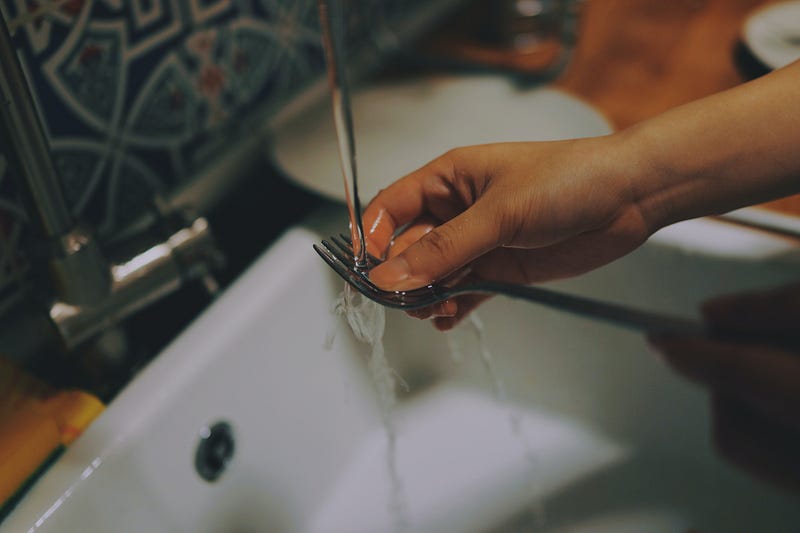
I first heard about pottering from a New York Times magazine article by Mike Powell.
In the article, Mike talked about how dishwashing was a secret bullet that helped him overcome anxiety and better control his mood.
For Mike, dishwashing was the pottering activity he adopted to fill up empty time. He described dishwashing as more than an ordinary activity.
“ordinary isn’t the enemy but instead something nourishing and unavoidable, the bedrock upon which the rest of experience ebbs and flows. Embrace this — the warm water, the pruned hands, the prismatic gleam of the bubbles and the steady passage from dish to dish to dish — and feel, however briefly, the breath of actual time, a reality that lies dormant and plausible under all the clutter we pile on top of it.”
Researchers also show that dishwashing is an informal contemplative practice, promoting the state of mindfulness along with attendant emotional and attentional phenomena.
David Robson from the BBC explained how he indulged in pottering activities whenever he felt that he was losing control. This was either from the uncertainty of waiting for a telephone call or facing writer’s block with an approaching deadline looming.
If I’m waiting for an important telephone call, or stuck in writer’s block with a looming deadline, I’ll inevitably rearrange my record collection or clear up the papers dotted around my office — and it’s sometimes the most relaxed I feel all day.
By now, you get the gist that pottering refers to activities we do without a definite plan or purpose and where we meander from one thing to another.
It could be low-level tidying up, such as color-coding your sock drawer or putting away the bamboo canes loitering in places they shouldn't be in the garden.
I came across a poem that captures the essence of pottering about intricately. This might put the definitions at rest.
I do this and that Nothing much Put things here and there Sit for a while Ponder What a lovely day!
That’s a novel idea. We can fill up empty time with activities that have no definite purpose and end up being more productive.
But how do you potter, if you may ask?
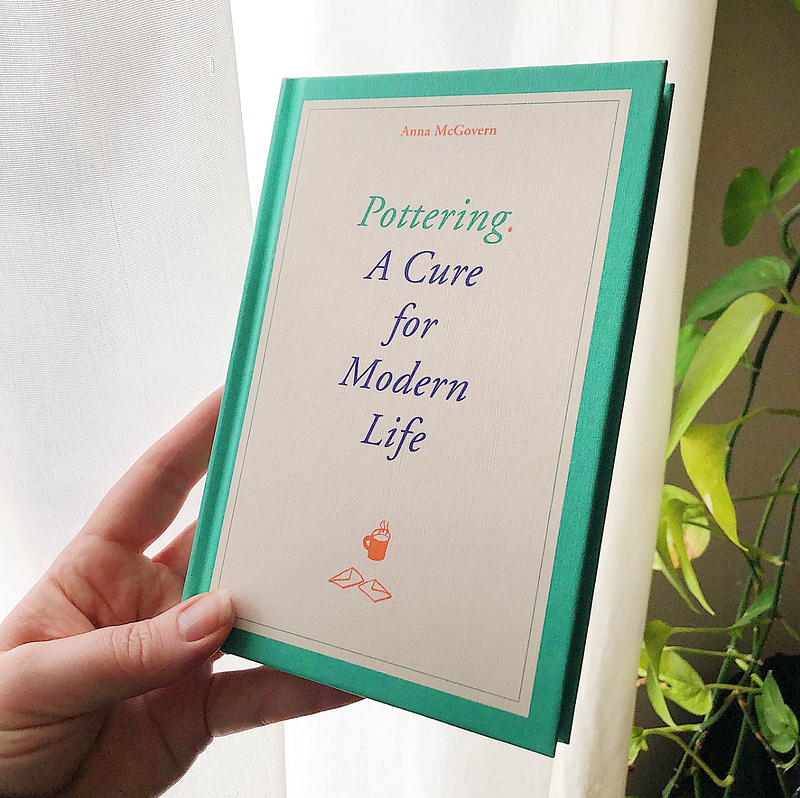
Anna McGovern wrote a book to address this question: Pottering: A Cure for Modern Life.
McGovern worked as a full-time digital producer, a mother raising three children, and took care of her aging father. However, after her father passed away, she realized that she was working too much and was struggling with burnout.
Instead of following the advice on how to become more productive and create extra hours in her day, she decided to forge a different path. That’s when she came up with the idea of pottering.
McGovern decided to take one day a week off work, during which she listened to the radio, flicked through magazines, and slowly worked her way through minor DIY projects.
A few months later, McGovern realized that what she was doing could only be described as pottering.
She shares some tips in her book that are useful to guide us in learning how to potter.
#1 Pottering is an enjoyable activity
I liked this quote from McGovern:
“I think you can lose yourself entirely while you’re pottering. It’s a mental break. It’s completely unpressured and it frees you momentarily from all responsibility. It may seem inconsequential, but it has a uniquely restful effect, which I only discovered by chance.” — Anna McGovern
Pottering is engaging in a tiny habit that you enjoy. I had a friend who loved ironing when stressed. Just to take her mind off things. It doesn’t have to be ironing for you.
Walking in the garden and pruning your plants might just work.
The bottom line: Pottering should be enjoyable and free you from responsibility.
#2 Pottering does not require practice
Mike Powell’s pottering activity involved simply washing dishes and being present as he felt the warm water and bubbles as he moved from one dish to the next.
McGovern tells us that we should not make pottering so hard that we have to master a technique. She explains;
“There are no benchmarks for success... No one is judging your performance when you find a matching lid and plastic pot in the odd assortment of containers you use for freezing leftover food. It’s just not something you can ‘excel’ at.”
The bottom line: Pottering is not hard to do.
#3 Pottering involves gentle movement
Pottering activities such as tidying your desk, walking in the garden, and dishwashing all involve some movement.
You wash one dish and move on to the next. Prune one flower and water some kale. Weed some of the flowers and keep busy throughout.
The movements are essential in promoting mindfulness and ensuring you can feel fully present in what you are doing.
The bottom line: Pottering involves moving about.
Reading McGovern’s book has helped me embrace a mindset where I slow down and pause my brain.
This is what leads to my higher productivity.
Pottering helps me maintain peace and let things fall into place as my unconscious mind finds solutions to problems.
You, too, can experience higher perceived control of your mood and better accomplish tasks after pottering about.
Join our newsletter to receive insights about actionable productivity tips.


