
The Prestige Television Service Formerly Known As HBO
“If it ain’t broke, don’t fix it.”

Once upon a time, there was the Home Box Office television network, better known as HBO. From its humble origins as a cable service created in 1972 by Charles Dolan, the founder of Cablevision, it evolved until it became the home of the most prestigious shows in television.
When people think of HBO, they immediately remember hits such as The Wire, The Sopranos, Six Feet Under, Sex and the City, Oz, Game of Thrones, and many, many more. The slogan “It’s not TV, it’s HBO” carried with it the promise that viewers would always get top-quality entertainment, and, for the most part, HBO delivered.
However, during the past year, strange changes have come to the network that used to be considered infallible, and audiences are beginning to fear what the future will bring.
“You’re burning down my network for the insurance money.”
Recently, we all have watched in disbelief how the network we enjoy so much is slowly being dismantled.
First, we had the disappearance of shows like Westworld. It wasn’t only canceled; it literally vanished from the platform, meaning that future audiences will have to find it elsewhere. Then we had the canning of the Batgirl movie, even though it was already finished and was supposed to premiere on HBOMax, all in the name of saving money.
No one put it better than Mr. Last Week Tonight himself:
I do get the vague sense that you’re burning down my network for the insurance money, but I’m sure that that will all pass. -John Oliver
And now, to the surprise of all of its viewers, HBO is changing its name to Max.
What’s in a brand?
There is an old saying that goes, “If it ain’t broke, don’t fix it.” Guess the folks at Warner Bros. Discovery, the people who now own HBO, never got that memo. Otherwise, it is impossible to understand why they would make such a foolish move.
Other streaming service providers would kill for the kind of recognition HBO has achieved. It is the standard against which we compare all other networks and streamers, to the point that, when we talk about prestige television, we usually mean HBO.
Still, starting on May 23rd, the company went ahead with its plan. And what exactly did this change mean?
In the Max era, the company promises to expand that offering significantly with an infusion of true-crime, reality, food, and comedy programming from the likes of HGTV, Food Network, Discovery Channel, TLC, and ID. Viewers can expect an “average of more than 40 new titles and seasons” added to the service every month. Some of the new shows announced include a prestige Batman spinoff called The Penguin, a decade-long Harry Potter series executive-produced by J.K. Rowling, a new spinoff of The Big Bang Theory, and the Game of Thrones prequel A Knight of the Seven Kingdoms: The Hedge Knight. — Vulture
Oh, awesome, the kind of shows viewers most certainly don’t go to HBO for, and a lot of reboots. Great!
However, now that the move from HBO to Max is in place, some incidents have taken place, and they would be hilarious if they weren’t also sad.
First of all, we have the irony of Max embracing the fact that the name HBO is recognizable beyond belief.
Then, there was that little mishap when users noticed that on the brand new Max website and app, instead of the usual credits (Directed by, Written by, and so on), filmmakers were lumped under “Creators,” a move that was immediately criticized by viewers, as well as the Directors Guild.
Max promised to fix the mistake, but there’s no doubt this was the worst possible timing for this kind of miscalculation, especially when we consider tensions are already running high in Hollywood, given the current WGA strike.

Viewers have also pointed out how chaotic the transition has been, starting with the fact that instead of the app updating itself, it was necessary to download a new one.
Add to that, some users have complained the “human” verification process to access the website is beyond complicated, prompting them to ask if Max even wants its users to be able to access the platform.
What will happen now?
Of course, problems can be expected with every transition. Still, viewers have taken it with humor and decided to roast the new streaming service at any chance they got.
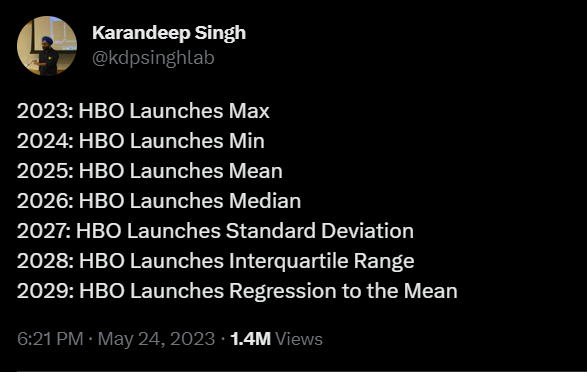
So, is this the beginning of the end for Max, formerly known as HBO? Most likely, no. After all, they still have that fantastic catalog, and it’s likely new great shows will be created in the years to come. Still, this whole thing has been a masterclass in what not to do when things are going well for your company.
Basically, you should do nothing except for focusing on the quality of the content you are putting out there, all packaged in a user-friendly platform.
Was this whole restructuring done just to save some money? Probably. However, how much will it cost the folks at Warner Bros. Discovery to recover from this mess, not only from the financial point of view but also from the PR nightmare they got themselves into?
Time will tell, of course. But while this whole thing sorts itself out, let us hold a moment of silence for HBO, the network — the streamer — that gave us so many delightful, bloody, and heartbreaking moments, usually at the same time.
*Cue static*


