
The premiere of Steve McQueen’s ‘Wanted Dead or Alive,’ featuring Michael Landon
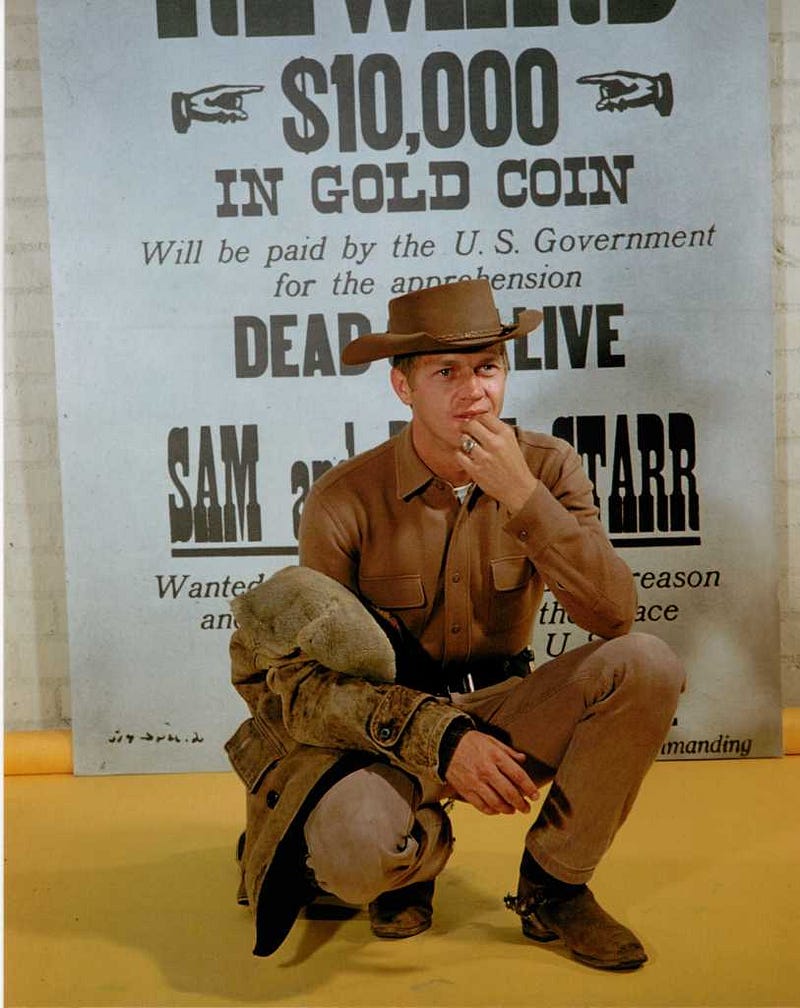
Before the debut episode of the classic western television series Wanted: Dead or Alive dropped, nobody knew who Steve McQueen was. Sure, the 28-year-old fledgling actor had trained in New York at the famed Neighborhood Playhouse as well as the Actors’ Studio, had his big screen premiere in a blink and you’ll miss it role as a knife wielding thug in Paul Newman’s Somebody Up There Likes Me [1956], and received good reviews for his Broadway performance of A Hatful of Rain.
But then McQueen filmed the cult favorite science fiction movie The Blob during August 1957. Although the film wasn’t released until after Wanted: Dead or Alive, former actor-then producer Dick Powell viewed a rough cut and liked what he saw in McQueen’s nuanced performance.
So the actor was quickly offered a role in Trackdown, another western series starring Robert Culp of future I Spy fame. Filmed in February 1958, “The Bounty Hunter” episode unleashed Josh Randall, a tough as nails individual who let no obstacle stand between he and his quarry.
With favorable fan reaction, one of the earliest spin-off series was born courtesy of Powell’s Four Star Television. Wanted: Dead or Alive commenced filming its debut episode in July 1958. And from the start, McQueen’s legendary temper, stubbornness and insecurity culminated in the firing of three stuntmen and a horse!
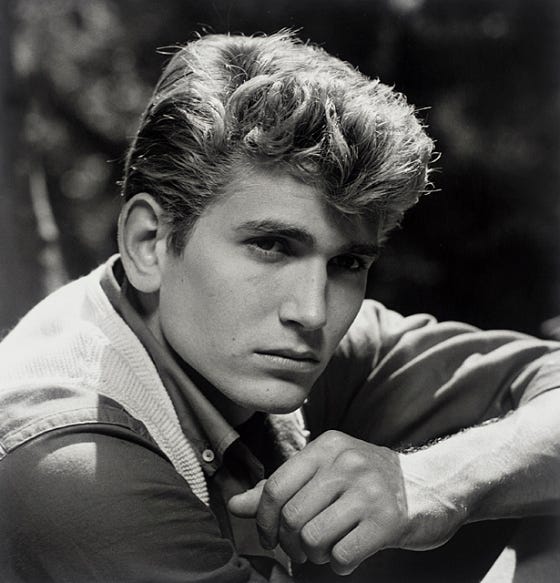
“The Martin Poster” episode featured a scrawny 21-year-old Michael Landon. Roughly one year before he shot to household name status on NBC’s 14-season juggernaut Bonanza, the passionate Scorpio had already filmed 30 guest appearances on television shows along with the occasional movie.
Both McQueen and Landon shared common traits — cult science fiction films and TV westerns launched their careers. For Landon, it was the campy horror, surprise box office hit I Was a Teenage Werewolf, released in July 1957 by the low budget American International Pictures.
Werewolf actually introduced him to audiences a full year before McQueen’s The Blob, but Landon had been unable to capitalize on that success with another stand-out role.
Further into the first season of Wanted: Dead or Alive in March 1959, Landon made a subsequent appearance, this time as a young man on the right side of the law, in “The Legend,” thus ending his early association with McQueen.
“The Martin Poster” boasted another familiar guest star with Nick Adams. He enjoyed strong supporting roles — easily more than his costars up to that point — in Rebel Without a Cause, Picnic with William Holden, Teacher’s Pet with Clark Gable and Doris Day, and Andy Griffith’s No Time for Sergeants.
Intimate pals with James Dean and Elvis Presley, Adams was likely searching for a breakout leading role when he appeared with McQueen and Landon. That serendipitously came the following year when he starred as “Johnny Yuma” in The Rebel western series. Adams reunited one more time with the King of Cool in the underrated war drama Hell Is for Heroes [1962].
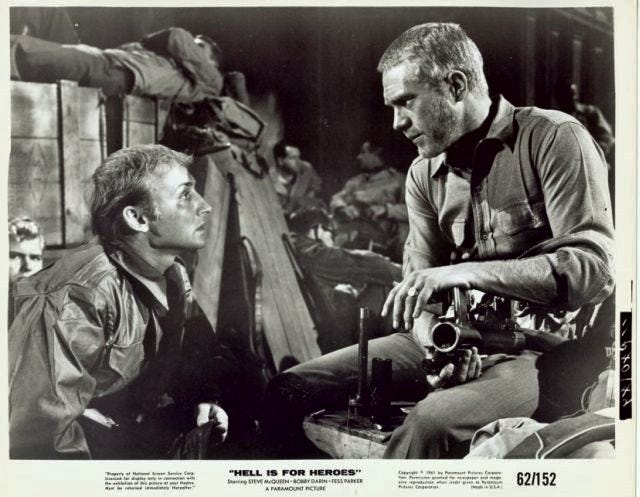
After receiving a Best Supporting Actor Nomination for his role in the courtroom drama Twilight of Honor the next year, Adams’ career took a nosedive, and after starring in the decidedly grade Z flick Mission Mars, he was discovered dead in February 1968 of an apparent suicide exacerbated by prescription drug abuse. Adams was only 36 years old.
The always reliable Dabbs Greer is cast as “Tom Wade,” the citizen who is forced to retrieve Randall’s horse. Notching over 300 character roles in an envious 54-year career, Greer finally found wide-spread recognition in 1974 when Landon asked him to delineate “Reverend Alden” on the long-running Little House on the Prairie.
Vaughn Taylor is the wise-cracking town doctor who is shown no mercy by Adams’ character. Stealing his scenes quite effectively, the balding, mustachioed, rail thin individual was a mainstay of film and television through the ‘60s — westerns were his forte — portraying various frontier citizens who were often world-weary and refused to help the protagonist. His best-known role was in Hitchcock’s Psycho as doomed femme fatale Janet Leigh’s boss. You can also spot him in Don Knotts’ The Shakiest Gun in the West or Truman Capote’s unsettling In Cold Blood.
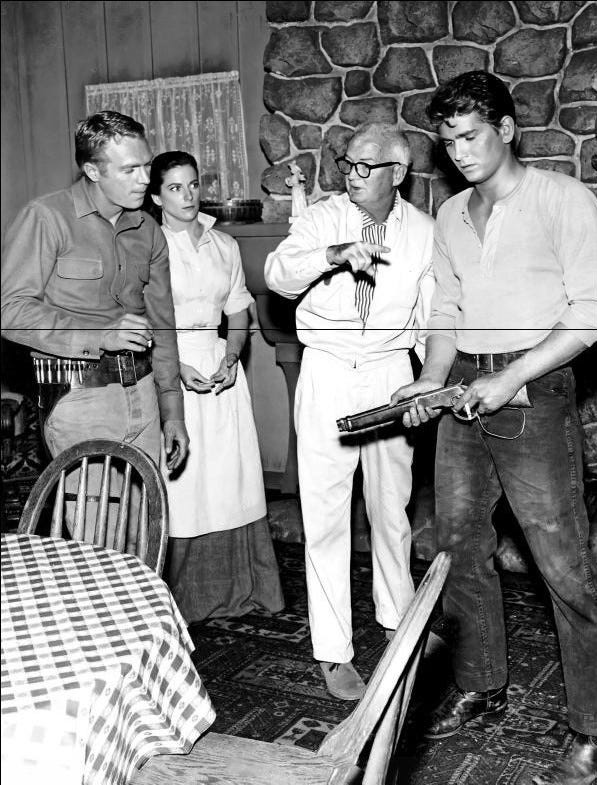
The gentleman who questioned Randall in the marshal’s office was character actor Robert Anderson. He materialized in wide-ranging minor roles in sagebrush sagas, including another debut episode from television’s longest running, prime time live-action series of the 20th century, Gunsmoke.
In the taut September 1955 script “Matt Gets It,” Anderson was the marshal gunned down just before Matt Dillon was almost killed himself by a quicksilver gunslinger who had to be disarmingly close to his target as he never took adequate time to aim.
Jennifer Lea is the sister of the antagonists, and her brief scenes with McQueen are ably delivered. Her career, almost exclusively relegated to television westerns, only lasted 10 years and less than 30 roles before she disappeared after a 1968 episode of the comedy series Family Affair, starring Brian Keith and Johnny Whitaker. Perhaps she got married or found a less glamorous line of work.
Tautly directed by Thomas Carr, who worked on over 100 B-westerns and television series — including one quarter of Wanted: Dead or Alive’s episodes and a further 28 episodes of Rawhide with Eric Fleming and Clint Eastwood — “The Martin Poster” opens with Josh Randall riding into the dusty town of Las Tunas to converse with the marshal about one of the notorious Martin Brothers [Adams].
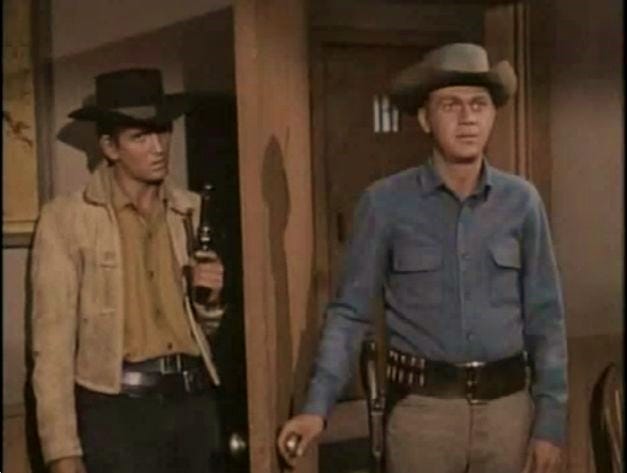
Turns out, both siblings — Landon and Adams — are escaping from jail, and Randall must track them down with the aid of his specialized .30–30 Winchester Mare’s Leg. Without giving too much of the well-written 26-minute story away, there is plenty of action and exceptional acting.
Landon is experiencing extreme physical distress throughout “The Martin Poster,” his best scene coming near the end when McQueen confronts the bed-ridden, injured hombre at his sister’s farm. While Adams had more lines than Landon and wore an eye-catching cowhide colored vest to boot, Landon’s name was nevertheless billed over him in the end credits.
In viewing the episode six decades on, McQueen doesn’t fully have a grip on his characterization of Randall, so his acting is less assured in “The Martin Poster” compared to later episodes.
Randall was tough when he needed to be, yet gentle and kind around kids and ladies. In this episode, as well as others, the bounty hunter anonymously donated part of the reward to the criminal’s family. So even if he had a cynical bounty hunter stigma attached to him, he was one of the good guys, although critics had a field day underscoring the supposedly exorbitant violence factor.
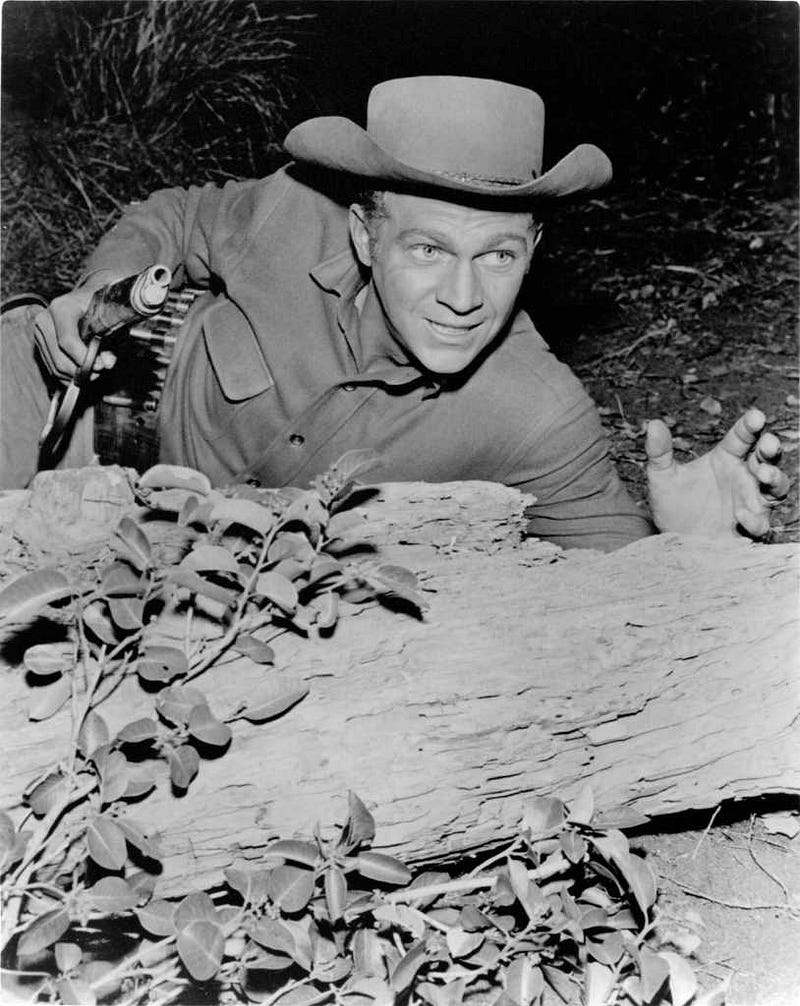
Above all, you believed Randall was dangerous and wouldn’t stop until he captured his quarry. From the beginning McQueen took his role seriously, altering scripts to reduce his dialogue and injecting realism into the fight scenes — he was a former United States Marine after all.
By the end of the 1958–1959 television season the show was ensconced in Nielsen’s Top 20 at No. 16, a remarkable feat for a brand-new production.
Airing every Saturday evening on CBS after Perry Mason — it’s such a shame that network execs now view Saturday evenings as a graveyard for ratings-challenged shows — it would continue to remain popular until its three-season run ended in 1961. Wanted: Dead or Alive could have lumbered on for at least two more seasons if McQueen hadn’t been itching to jump head-first into motion pictures. His scene-stealing role in 1960’s The Magnificent Seven proved his instinct to be intact.
All 94 black and white episodes of Wanted: Dead or Alive were issued repeatedly on DVD by Mill Creek Entertainment and are now fetching lofty prices due to a lag in manufacturing. Your best bet is to watch “The Martin Poster” surreptitiously below. It’s a great opportunity to witness two future icons on the cusp of stardom.
******************DON’T GO ANYWHERE YET!******************
Exclusive Interview: In “Steve McQueen Took a Major Part of His Life — In Step with Passionate Wordsmith Andrew Antoniades,” the first-time British author, guilty as charged for the mammoth coffee table book entitled Steve McQueen: The Actor and His Films, doesn’t hold back, weaving fascinating anecdotes of growing up with his father and being blown away by viewing Papillon, whether McQueen only made movies for the money — think The Towering Inferno — why he gave the stodgy Le Mans a second chance, the reason McQueen temporarily quit making movies at the height of his fame in 1967, and whether McQueen was wrong to turn down One Flew Over the Cuckoo’s Nest.
© Jeremy Roberts, 2011, 2017. All rights reserved. To touch base, email [email protected] and mention which story led you my way. I appreciate it sincerely.