The Porn Hustler
Evangelical author Stephen Arterburn says porn ruined his life. Did he lie about everything?
When you’re an Evangelical Christian looking to get God’s views on porn, you’re more likely to end up with Stephen Arterburn’s.
His book Every Man’s Battle was published in 2000 and went on to sell 3.5 million copies. I had questions. The book gives an impression that he’s a mental health professional. Why does it look like he’s not?

The preface calls him “an experienced and widely respected counselor.”
A typical reader must assume he’s a mental health professional. “From my counseling experience,” he writes.
Every Man’s Battle presents as a book by a Christian psychologist. Arterburn is typically identified this way—a “respected Christian psychologist”—in Evangelical forums as prominent as the website of Focus on the Family.

He’s often called “Dr. Stephen Arterburn.”
(See here, here, here, here, here, here, here, etc.) This seems to be a Christian man who has a doctorate in psychology.


But then the author bio on Every Man’s Battle says that he “carries degrees from Baylor University and the University of North Texas.”
That’s odd phrasing. And he sometimes adds “M.Ed.” to his name.
But that’s a master’s degree in education.
A 1976 news story notes his college major was ‘elementary education’.
In his 2009 book, Every Young Man’s Battle, he writes: “I graduated college with the easiest degree I could find, just to get out.”
This is the story of a Christian con artist.
Take the anecdote that opens Every Man’s Battle and frames its anti-pornography message. There Stephen was in 1984, driving along, when he spotted a pretty woman out jogging.
His eyes feasted on this “goddesslike blonde” with an “ample bosom” and those “rivulets of sweat cascading down her tanned body…”
“Blam!” — he smashed into another car.
It was God’s lesson, he realizes, in what happens when a married man isn’t focused on his wife. “I was cheating Sandy out of my full devotion…”
He lays down a rule that, he assures men, is coming from God:
“You are sexually pure when no sexual gratification comes from anyone or anything but your wife.”
He neglects to mention that his marriage was horrible, and would soon end in divorce.
He drops more details about that subject in his next book, Every Man’s Marriage, where the marriage is described as non-sexual. He writes:
“When Sandy and I were dating, I attempted to hold her hand one night. She jerked back and said that the thought of holding my hand kind of made her sick. She said it in the nicest way possible, but for whatever reason, I simply wasn’t appealing to her.”
After marrying, he says, “I was shocked to find that sex was a painful experience for her. She wanted no part of it.”
They were an “infertile couple,” as he puts it. They adopted a baby girl, and were “making progress,” he thought, toward having a healthy marriage.
Then he noticed, as he writes:
“…something was severely wrong. Of course, something had always seemed wrong in our marriage — since our wedding day, we both felt we had made a big mistake.”
They got a divorce in 2002.
He updates the story in a 2005 book, Every Single Man’s Battle. Why had they even married? He writes:
“I rushed the relationship because I was acting out of fear that I would go through life unmarried, unloved, and an outcast in the Christian community.”
It was a relationship, he adds, “so very broken for twenty difficult years.” Then he learned from a “mutual friend” that Sandy was having an affair. When confronted, she filed for divorce.
I email Sandy Simonian, who has reverted to her maiden name, if she ever used his. I ask for confirmation his stories about her were true. No reply.


Stephen Forrest Arterburn was born on June 18, 1953.
He was raised in Ranger, Texas to strict Southern Baptist parents. In Every Man’s Battle we learn the key event of his childhood was going to visit his grandfather’s shop, where he saw images of unclothed women.
“My favorites were the women wearing hard hats and operating heavy machinery,” he writes.
He says that looking at these images set a pattern of oversexualization. A male friend showed him how to masturbate. Then as a teenager, he started having sex with many women. He writes:
“They were objects of my gratification, just like those pictures on the wall of my grandfather’s shop.”
Unless there was there more to it?
In a 2020 profile, we learn more details that complicate the portrait of Stephen’s young life. He recalls he reacted against his parents’ Christian legalism, and had “a constant struggle with his weight.”
He has ADHD and apparently struggles in academic settings.
He mentions on occasion that his mother was depressed following her father’s suicide. He’ll mention that his two brothers, Terry and Jerry, were all “three very prodigal sons.”
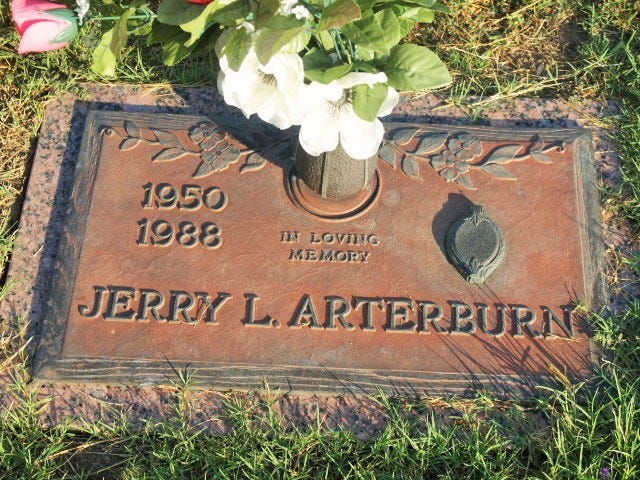
Terry’s life is is kept private, but Jerry’s “sin” of being gay will come out in time. “He was a talented, brilliant man whom I looked up to for most of my life,” Stephen writes. Or elsewhere he recalls of Jerry:
“He was the moral one, I was the immoral one who had slept with all these people, gotten a girl pregnant in college, I paid for her to have an abortion.”
Young Stephen cycled through girlfriends.
“Eventually, I had sex with anyone at any time,” he writes.
He found a girl he liked, but didn’t like it when she got pregnant. He made her get an abortion. The 2012 profile adds details to that story. After he’d written about the abortion, his unnamed ex-girlfriend had contacted him to remind him that:
“…he had not merely paid for it, but had actually pressured and manipulated her to get it. In fact, he had made it clear to her that he would not be there for her and their child if she went through with the pregnancy.”
So this horrible character all goes back to looking at photos of naked women in his grandfather’s shop? That’s the goofy story he sells—and the Evangelical world bought it.
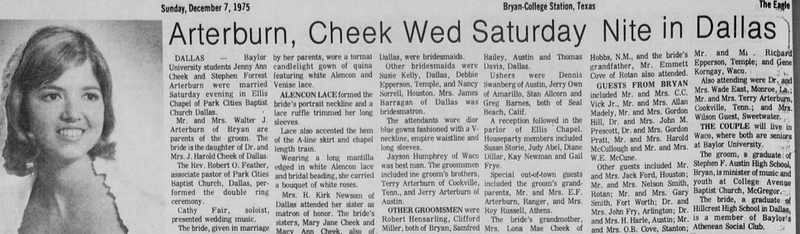
In 1975, he married Jenny Ann Cheek, a fellow Baylor student.
He’ll say nothing about this first marriage except to fleetingly allude to concealing it from his second wife. He writes in Every Man’s Marriage:
“Sandy was a ‘catch’ — bright, attractive, talented, and gracious — and I didn’t want to mess up this courtship. I would hide who I really was.”
Early on, he seems to have had a desire to be a Christian counselor. In a 1976 newspaper clip he’s identified as a student at Southwestern Baptist Theological Seminary studying ‘psychology and counseling’.
That newspaper clip seems to be the start of his career as an Evangelical commentator—with an anti-gay attack. He argues that gays are basically pedophiles. He quotes an unnamed gay person who’d revealed to him:
“…he and many other homosexuals prefer young boys as their sex partners. This is evident in homosexual pornography that features pictures of young boys participating in homosexual activity.”
He urges parents to “detect any unnatural behavior that could be a sign of homosexual involvement.” If such symptoms are found, he writes, the children must be “made to understand normal sexuality.”
He divorced Jenny, and married Sandy.
The story of the divorce is concealed—as Stephen moves along to his next identity. He was working as an administrator in a company that specialized in drug and alcohol detox, but had his eye on the Evangelical book market.
That seems to have owed to Tim Timmons, a local celebrity pastor with a string of Evangelical bestsellers, like Maximum Marriage, and established himself as a guru on ‘Christian relationships’.
In 1985 they co-authored Hooked on Life: From Stuck to Starting Over. Arterburn’s bio in the book says:
“He is currently vice president of operations for Comprehensive Care Corporation, a health care management firm specializing in behavioral medicine.”
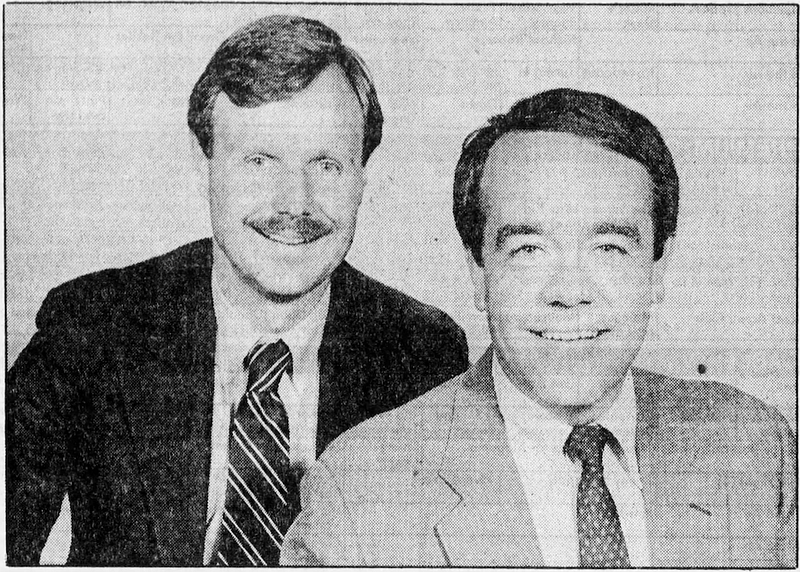
Arterburn wanted to found a new company that referred Christians to therapists.
Evangelicals getting into therapy was new, as therapy had been religiously disapproved. Timmons and Arterburn set out to turn ‘Hooked on Life’ into a larger brand. Timmons would be providing the clerical cover.
But then Timmons got a divorce and resigned from his church, as the L.A. Times noted, amid “rumors about marital infidelity and financial impropriety.” Without a cleric as company mascot, it was over.
I write Timmons, asking about memories of Stephen Arterburn. No reply.
Timmons does write recently about his career in Christian self-help as having been, now that he thinks of it, pure narcissism:
“Whenever my esteem was low and I needed another fix of affirmation, I went to the mall. I was sure to run into people who needed help or who had already been helped by me. Or I would visit the bookstores where I could see my books on display and be greeted enthusiastically by the sales’ staff or the customers.”
Arterburn kept up the Christian self-help gig.
From his posh home in Southern California, he churned out a factory of books. He’d write more than 70. His method was to spot trends in ‘self-help’ discourse and write Evangelical versions.
A 1985 news item has him pitching a film series called Hooked on Life, which is about how “negative emotions interfere with relations to other people.” The author biography calls him a “counselor who has helped many people recover from drug and alcohol abuse.”
Then his brother Jerry was dying of AIDS. Panicked over his spiritual fate, Jerry was in full flight from his sexuality. The two brothers co-wrote the 1988 book, How Will I Tell My Mother?: A True Story of One Man’s Battle With Homosexuality And AIDS, which remains a classic in the literature of Evangelical reparative therapy.
As Jerry died, the book changed Stephen’s life.
He started getting booked on national talk shows—passing himself off as a more loving and forgiving Christian pastor. He did Oprah.
He recalls the experience to the Los Angeles Times:
“On the show, in the midst of all these people yelling at each other, I came on and said, ‘Look, whether you think homosexuality is right or wrong, you have to love your children.”
With amazing dexterity he shifted into the image of a sensitive, gay-friendly and feminist-friendly Christian man. He positioned himself as an Evangelical version of the “Sensitive New Age Guy,” as the lingo went.
He seemed to be a medical health professional. A 2012 Publishers Weekly profile says: “Arterburn wrote his first book in 1984, after working at a psychiatric hospital and seeing the impact of family relationships on patients.”
He did conferences on ‘reformed masculinity’.
As a low-level Christian celebrity, he held his marriage with Sandy out as a model. He praises his marriage in a 1995 interview: “When I come home, there’s nothing I want to do more than spend time with my little girl,” he says. “But I spend time with my wife first, and then my child. That way, there’s balance. It helps the whole family.”
He sold books crossing many subjects. One about porn hit big in the Evangelical audience. Then, he was the porn expert.
He divorced Sandy—and married Misty, who was younger, and blonder, but strikingly similar in appearance to his first wife.


He was rich and Hollywood glamorous.
In 2006, a writer for GQ interviews Arterburn for an essay on the Evangelical “purity” culture. He’s described:
“Arterburn is fully as good-looking as anyone in Hollywood, with a compact, lean physique, neat, close-cropped hair, and a symmetrical tanned face. Nice shoes as well, very glossy, black, and soft. Very American Giglio, actually.”
That’s a movie about a high-priced male escort.
“I used to go to the Golden Globes,” he says idly, amid names of the Hollywood stars he’s known, and “lots of prime time T.V. stars.”
Then he moved to Indianapolis.
In 2012, he tells Publisher’s Weekly he’s “a doctoral student at Newburg Seminary and Bible College.” The school is now called the Newburgh Theological Seminary. It’s an unaccredited degree mill. He dropped out.
He hosts what his website calls “the number one nationally syndicated Christian counseling talk show…” He does conferences.
Hair dyed blond, facelifted, he’s a regular in Evangelical media. He’s the porn expert, drawing on his extensive experience as a ‘counselor’.


He kept up activism for reparative therapy.
Jerry Arterburn is the continuous shadow in his brother’s career—present when, as often, Stephen agitates for conversion therapy. He seems loving. He puts a nice face on it. He says in 2016: “I just loved him, but I knew what he was doing was wrong.”
I look over Jerry’s life. He was in the newspapers in the late 1970s advocating for civil rights. “This law discriminates against minorities and women,” he says in 1979. He had a sexual awakening, and got AIDS.
Meanwhile, he had a brother who said gays were pedophiles, while forcing his girlfriend to get an abortion and blaming everything that went wrong in his life on moments of looking at women.
Was Jerry the one who was sick? 🔶