
The Pet Shop Owner who Killed and Disposed of his Customers
The real “Little Shop of Horrors” and the serial killer who owned it.
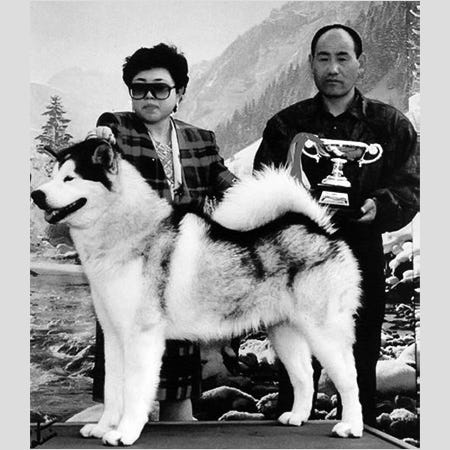
For most people, going to a pet shop is a fun and exciting chance to see cute animals and maybe even bring one home to be part of your family. Images of families and children with their noses pushed up to the window of a glass that separates them from the furry, fluffy creatures are what come to mind when thinking about these stores.
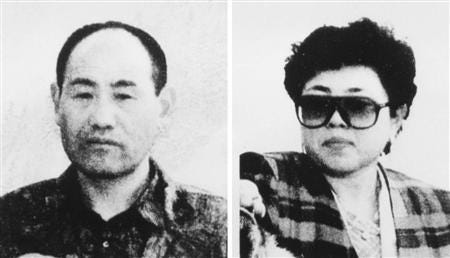
However, this story is about a different kind of pet shop. This pet shop run by scam artists Gen Sekine and Hiroko Kazama involves fraud, theft, assault, murder, and dismemberment. What this couple did, not only shocked the country of Japan but became a widely publicized crime that was adapted into a movie and television drama.
Preying on animal lovers and those looking to invest, this couple tricked people into paying exorbitant prices for exotic dogs that they claimed would make them rich. Then by lying, stealing, and tricking them, they were able to rob them then make them disappear. The lengths they went to remove any trace of their remains were extraordinary.
How did they start this dog breeding business and pet shop? Who were their victims? How were they killed and disposed of? How did the couple get caught and what happened to them? This is the story of a couple who took advantage of dog lovers and became one of Japan’s most infamous serial killer couples.
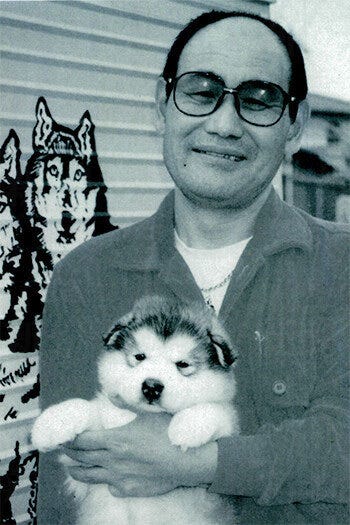
Gen Sekine’s Life of Crime
“I should be awarded the gold medal for murder.”
Sekine who was born in Saitama Prefecture in Japan in 1942 came from a middle-class family but had always been trying to accumulate wealth from an early age. According to Wikipedia about the case as well as Japanese reports on the case, Sekine’s father was a craftsman who made geta, which are traditional Japanese sandals worn with kimono.
Sekine was known in junior high school as a liar and embellisher and though he wasn’t very popular or spectacular in any way, he often craved attention, acted out in school, and was known to do things like jump off the school roof for fun.
As Western culture took over Japan, most people moved from kimonos and geta to shoes and Western-style clothing. So Sekine’s father closed his shop. His father started farming and Sekine who was 18 at this time decided he would start breeding dogs and other animals on his father’s property.
He also opened a pet shop in his hometown but used unethical means to grow his business. It was reported that he would sometimes sell a dog, then steal the dog from the owner and re-sell it to another customer. Other times he would sell a dog to someone, poison the dog so the owner would have to return to the pet shop to buy another dog.
As he grew older, he started getting interested in breeding more exotic dogs and other animals such as tigers, bears, and lions. And according to the Independent UK and other news sites he gained popularity and acclaim in Japan as he was responsible for the introduction of the Alaskan Malamute which became the 19th most popular breed at the time.
Sekine with his fame and success in the breeding world would often embellish stories of his success, experience, and life both to customers around him but also to news outlets. He told people he was a graduate of Kyoto University an elite school despite not even having graduated high school. According to Yahoo News, he is quoted as saying,
“I spent 11 years in Africa, 8 years in Alaska, and 2 years in Siberia. I spent half my adolescent life in a hot, cold climate.”
“I smeared zebra blood on my body and rushed into a group of lions”
“In a blink of an eye I entered barefoot into a swamp with 150,000 ferocious piranhas that skeletonized a cow.”
“There was a BBC documentary made about me in the UK that called me the ‘Japanese Tarzan’”
But despite his lies, he continued becoming well known in the animal breeding field and was known to have ties with yakuza and other underground shady organizations. He also lost a pinky finger which he said was cut off by yakuza leaders when he couldn’t repay some of his debt.
In 1982 he opened a shop called the African Kennel in Saitama during the Japanese economic boom when cash was flowing and people were spending money on many luxurious items including exotic pets.
He was quite popular because of his animal breeding, his physical strength, and charm. At age 19, Sekine married, divorced, then re-married the same woman. He then married one more time before finally marrying the woman who would be connected to his crimes in 1993. In 1984 at age 41 he met and married Kazama who was 26 at the time.
The couple ran the African Kennel together and were enjoying the success of his animal breeding business.
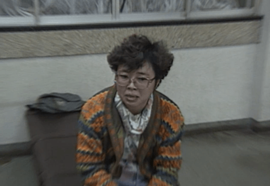
Who is Hiroko Kazama?
“I thought he would be a good father because he was cheerful, powerful, and kind to my child”
Hiroko Kazama was born in Saitama in 1957 and came from a well-to-do family. Her parents were involved in real estate and other businesses. Kazama is described as a “quiet but strong woman,” on Wikipedia and helped her father with his work. She was known to be a lover of big dog breeds.
“Kazama studied surveying at Chuo College of Technology in Kita-Ku, Tokyo, and after graduating, worked at a surveying office in Kumagaya City. She married a bank clerk in 1976, but divorced in 1982 due to her husband’s infidelity problems.” She had a son who was in kindergarten when she met Sekine.
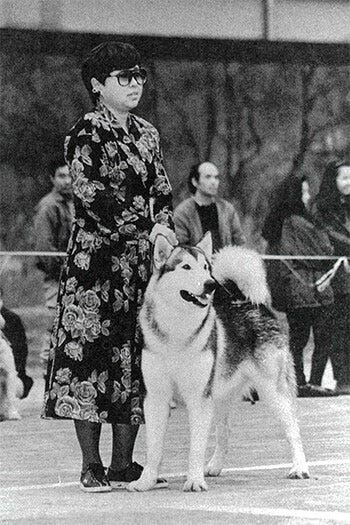
After dating and marrying Sekine, she and her son moved in with Sekine and began helping out with his business. She was often involved at dog shows with Sekine as a handler. She was also responsible for the money and accounting for Sekine’s businesses.
Although she was originally known to be honest and serious, it might have been Sekine, his shady business practices, and criminal ways that made her change her ways. Sekine had a lion tattoo on his back, and he convinced her to get a dragon tattoo on hers. He was also known to hit and assault Kazama as was reported by her son and their daughter in an interview with Yahoo News.
The couple who started feeling the effects of the economic bubble burst in Japan realized their business was in jeopardy and started resorting to a variety of fraudulent and illegal ways to stay afloat. Kazama was able to avoid tax issues by filing for divorce from Sekine, naming herself as the president of the kennel business, and living apart. They were still together and moved back together eventually.
And as loans and debts started to add up they decided they needed to make them disappear by murdering people and making them disappear as well.
The First Victim
Although the official first victim of Sekine and Kazama was reported in 1993, Sekine was connected to three different disappearances involving customers at his shop. Fuji TV reported that in 1984, three people disappeared and were reported missing. The Saitama Prefectural Police Kumagaya Central Station began an investigation and found a link that connected them all. They were all connected to Sekine and his pet shop.
Despite investigating Sekine and conducting a wide search for the missing people, the whereabouts of the people could not be found and the investigation went cold. Sekine was never charged with anything.
A popular scam that Sekine and Kazama were also running from their shop was to convince customers to buy exotic dog breeds at prices ten times the price they were worth. They told them that they would make a huge profit by getting the breeds to mate and sell the puppies for a huge profit.
Sekine would often tell the buyers he would personally buy back the litter of puppies but never did. Often times he would sell dogs that were too old to breed and would never refund anyone’s money when they complained.
According to James Balmunt’s story on the case,
“Sekine’s racket came to a head when he convinced an Industrial Waste Disposal company director to part with 11 million yen (around $100,000) for a pair of Rhodesian Ridgebacks in 1993.”
Akio Kawasaki, who had bought the two dogs had “used all his money from his savings account, cashed in a life insurance policy, sold his car and borrowed money from his mother.” But he realized the female dog was too old to mate and then one of the dogs “went missing”.
Kawasaki complained and demanded his money back. Sekine said he would refund the money and asked Kawasaki to meet on April 20, 1993. He was never seen alive again. Instead, Sekine, his wife Kazama, and a staff member named Yamazaki that worked at the African Kennel met with Kawasaki.
Sekine offered Akio a capsule claiming it was a vitamin supplement. It was actually a capsule he had gotten from a veterinarian friend of his that contained nitric acid strychnine, which was used to put down dogs.
After Kawasaki died, Sekine threatened to kill the staff member Yamazaki and his family if he didn’t help him get rid of the body. According to the testimony of the staff member, Sekine dismembered the body and they drove Akio’s car to a garage in Tokyo station and abandoned it.
Akio’s body was taken to Yamazaki’s home which was in a remote area and was dismembered in the bathroom. Sekine and his wife used a knife and other tools to cut up the entire body into tiny pieces and scatter them into the river.
They then took all the bones and possessions and burnt them in a steel drum until they were ashes. They spread the ashes into the forest making it almost impossible to find any trace of Akio.
The day after Akio disappeared, his family filed a missing person report and police found his vehicle in the garage. The police suspected foul play as Akio’s family told police about some trouble Akio was having with the pet shop. Sekine was once again under suspicion for another missing person case.
Going After Yakuza
Sekine’s next confirmed victims were a yakuza boss and his driver. According to Asegai News, on July 21, 1993, a couple of months after killing Akio, gang members Yasunobu Endo, 51, and Endo’s driver Susumu Wakui, 21, were also murdered.
The yakuza members were aware of the murder of Akio and were also in disputes with Sekine over land ownership of his house and kennels. They were blackmailing him for hush money and so Sekine decided to kill them.
Sekine killed the yakuza leader Yasunobu and asked his wife to pick him up from Yasunobu’s home. Kazama also told the court that she saw Yamazaki in the van while Sekine strangled the driver Susumu with some kind of rope.
The trio took the two bodies once again to Yamazaki’s home and dismembered the corpses like before. Once again disposing the flesh into streams, burning the bones and possessions in a drum, and scattering the ashes into the forest.
The final victim
Mitsue Sekiguchi was a 54-year-old housewife who lived in the neighborhood. She was the mother of one of Sekine’s employees at the African Kennel. He was romantically linked with her and even convinced her to become a shareholder so he could rob her of her money. However, she quickly figured out his scam and confronted him.
On August 26, 1993, he gave Mitsue a capsule containing the deadly poison and stole about 2.7 million yen or about $27,000 from her which was the amount of the land she owned that she had signed over as an investment. After killing her, he called Yamazaki to help him take her body to Yamazaki’s house to dispose of her the same way he did with the others.
Arrest And Sentencing
Along with the cases of the disappearing people around Sekine, the police were also investigating many cases of fraud. Sekine, Kazama, and Yamazaki were all being targeted and questioned about all the criminal activity revolving around the African Kennel.
Also, in a strange coincidence, a dog breeder in Osaka was caught murdering his clients and was caught. This news led to chatter about the Saitama African Kennel case and a lot more attention and focus was placed on the trio.
Yamazaki under interrogation cracked and confessed to helping dispose of the bodies. He told police about Sekine, the threats he made, and how he was forced to help the couple transport and dispose of the victims.
He led police to the sites where they scattered the ashes and police were able to find bone fragments as well as a burnt Rolex watch whose serial number matched one owned by one of the victims.
Sekine and his wife were arrested on January 5th along with Yamazaki on the 8th. Yamazaki was convicted of three counts of mutilation and four counts of abandonment of a corpse. He received 3 years in prison in 1995. He later wrote a book about his ordeal.
Sekine pleaded guilty to the murders but his lawyers argued he should be given an indefinite or lesser prison term. Kazama acknowledged she transported the bodies of two of the murder victims but pleaded not guilty to murdering them.
According to the Japan Innocence & Death Penalty Information Center, “in March 2001, a district court in Saitama Prefecture sentenced them to death for committing, in the words of its presiding judge, ‘cruelly ruthless and extremely heinous crimes.’”
They appealed the sentence but the Tokyo High Court rejected it in July 2005. The Supreme Court once again upheld the decision in 2009 finalizing their death sentence.
However, Sankei News reported that in November of 2016 while awaiting execution at the Tokyo Detention House, Sekine had a heart attack and was taken to hospital. He was being treated at the detention center but died of his illness in 2017 at the age of 75.
Kazama is currently still awaiting her execution. In 2011, a movie based on their murders called Cold Fish directed by Sion Sono shows the gruesome details of their crimes. In 2020, Fuji TV also made a drama based on the life and crimes of Sekine and his wife Kazama.
Despite not being as ruthless as some of the other serial killers and mass murderers in Japan, this crime and murdering couple grabbed the attention of people around the world because of its connection to animals. Unlike other killers in Japan that are known to have a mental illness, sex fetishes, pedophilia, or otaku culture-related issues, this case involves an average guy who works with animals.
Usually, we see animal lovers as caring, affectionate, and nice people. Rarely do we connect them to those who could brutally kill, dissect, and dispose of people. This story reminds us that we never truly know who among us has dark secrets and is potentially a serial killer.
If you liked this story, please check out more stories of true crime: