
The People Who Hang Out With Their Dead Relatives for Years
Ma’nene: A unique death ritual to honor the deceased
Can you live in the same house with any of your dead relatives just for one week? I hope not. But some people hang out with their dead relatives for years.
Death. The most shocking yet inevitable event of one’s life — and a joyless occasion for all who had to say goodbye to their loved ones. But Indonesia’s Toraja people are entirely different. They celebrate death with a grand event that takes years of preparation. They honor their deceased ones in an unconventional way that may seem really strange to us. But Toraja people believe that it’s a way to help the dead ones in the afterlife.
The preparation for a grand funeral takes years. At that time, Toraja people keep their dead relatives in their homes. They treat the mummified deceased as if they were alive.
They use local preservation techniques to protect the body. The loved ones change their clothes, provide them with daily foods, water, and take good care of the rotten body before they are, eventually, buried. Young ones even hang out outdoors with the deceased.
So, literally, the deceased ones live among their relatives many years after their death. This unique tradition is called the Ma’nene death ritual.
Ma’nene means ‘the ceremony of cleaning corpses.’
Torajans: People of the uplands
These indigenous Toraja people live in the South Sulawesi region of Indonesia. That is one of Indonesia’s largest islands. In the early days, they lived in autonomous villages and practiced animism — a belief that objects, places, and creatures all possess a distinct spiritual essence.
They hardly had any contact with the outside world until 1906, when the Dutch started seizing their land. The word Toraja means “people of the uplands.” Dutch colonial government gave them this name in 1909.
Later, Dutch missionaries slowly converted these people from animism to Christianity. Now, most modern-Torajans hold Christian beliefs, and some of them are Muslims — though many still practice animism.
They still believe that their heavenly ancestors descended to Earth using a divine stairway.
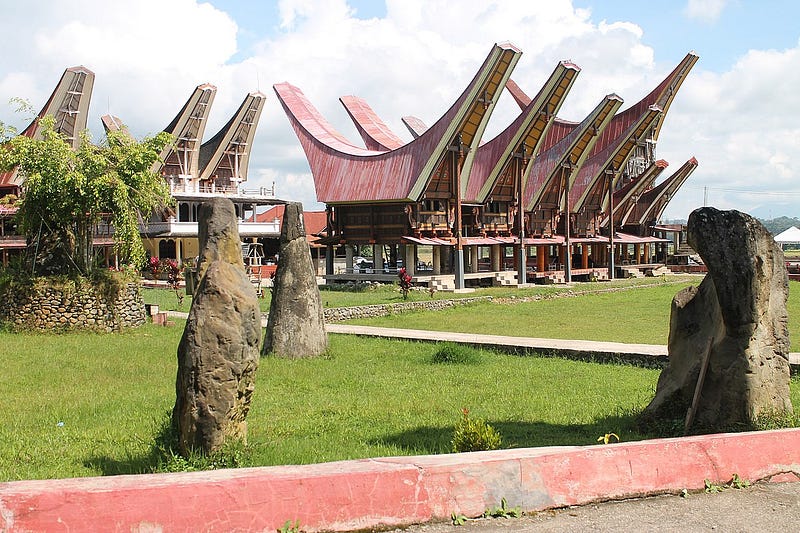
Torajans are unique in their lifestyle. They live in small villages and have distinct houses named tongkonan. The houses sit high on stilts, and the roof is curved like a boat, made of a bamboo structure.
The myth about the tongkonan house goes like this — The first tongkonan house was built in heaven on four poles, roofed with Indian cloth. And the first Torajan ancestor descended to the earth imitated that house following a grand ceremony.
Now tongkonan has become the center of their life. All major functions like weddings, religious ceremonies take place there.
Today, thanks to the peak of tourism, the world also knows Torajans for their unique tongkonan houses, and of course, for their unusual treatment of the deceased, known as Ma’nene.
Ma’nene death ritual
According to their tradition, when a person dies, he/she remains with the family until a huge burial ceremony.
This funeral ceremony is expensive and elaborate. Sometimes, the entire village, thousands of men and women, attend the event. Depending on the importance of the deceased, the event lasts for several days.
And it takes place weeks, months, even years after the actual death of a person. So, during that time, the deceased stays with the family. It’s hard to imagine for us yet common for Toraja people.
The family members treat the deceased as makula, a sick person. They protect the body from being rotten, offer daily foods and water, and change their clothes regularly. The young ones go outdoors, walk, share cigarettes, take photographs, and have a good time with the deceased. Thus they take care of the dead person, including him/her in their day-to-day life.
Then, when the fund is ready, the family arranges the final funeral ceremony and invites hundreds of villagers. If the family is well-off, thousands of people are invited to the event.
This expensive funeral event is called Rambu Solo, which usually happens in August or September each year. And it lasts for several days.
Huge feasts are offered where hundreds of water buffalo get sacrificed. The event also includes different activities, including dancing, singing, prayers, mourning, cockfights, etc. On the final day, the body is taken to its eternal resting place.
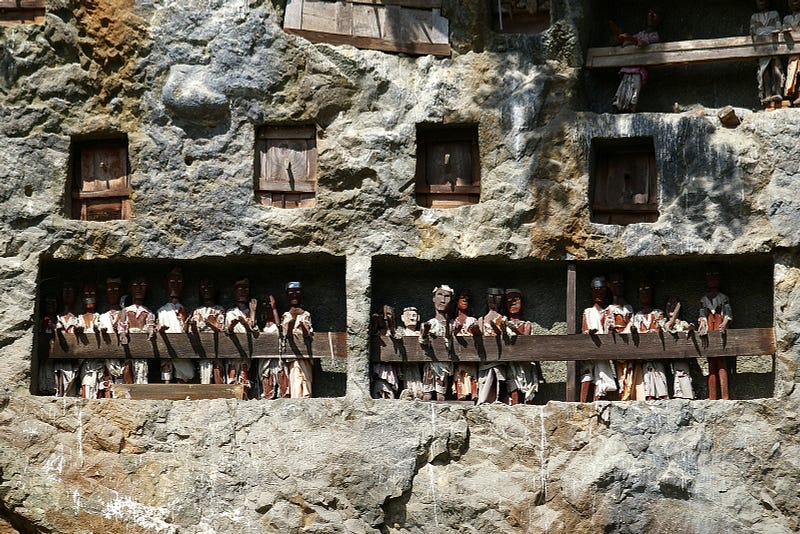
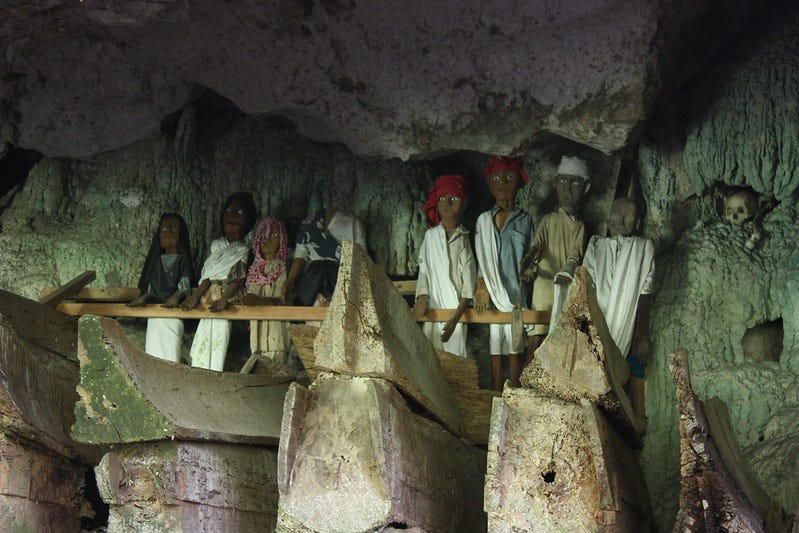
Burial methods vary depending on the deceased’s importance. The high rank deceased gets the higher place. The coffin may be placed in a cave or put in a carved stone grave, or if the person is of high social status, it is hung on a cliff.
Interestingly, some tombs are kept 100 feet high above the ground. And it contains many gifts and possessions that the deceased may need in the afterlife.
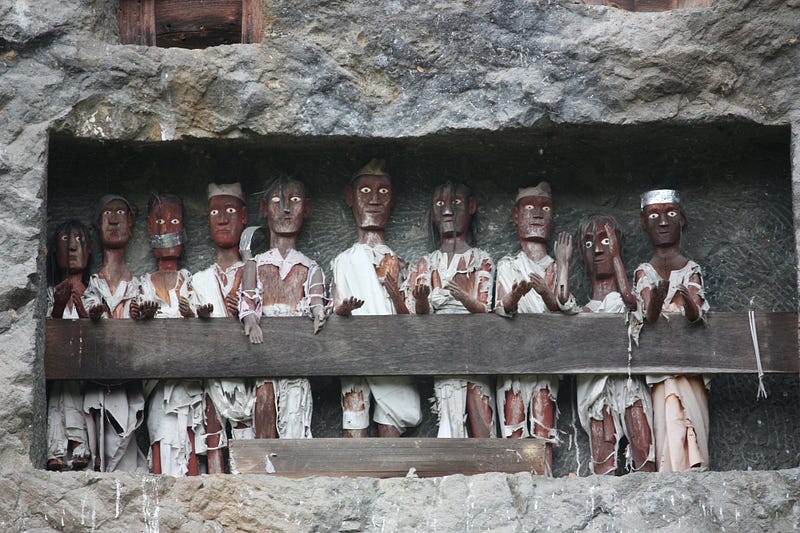
Usually, a wood-carved effigy called Tau tau, placed in the cave. Moreover, the coffin of a kid or child is generally hung with ropes from a tree or cliff.
Toraja people even take care of the deceased long after the final burial. They regularly visit and take care of the body. It’s their way of honoring their dead relatives. It also creates an opportunity for the younger generation to meet their ancestors.
Torajan’s idea of death is different than ours. They treat the deceased in a way that they never really left the family. They honor their dead relatives by actually living with their corpses for years. And when they say goodbye, they do it with a grand celebration of joy and happiness.
They see death as a transformation of life, an inevitable step that must be celebrated, not feared.
Thank you for reading.
References
- Torajan people — Wikipedia
- Cleaning the dead: the afterlife rituals of the Torajan people (The Guardian)
- In Indonesia, a Blurred Boundary Between the Living and the Dead (NYT)
- Learn About the Grief and Death Ceremonies of Torajans (NatGeo)
- Indonesia’s Toraja People Keep Their Family Around For Years After They Die (ati)
If you want to read more of my writings, you may read my popular articles on Medium from the following links —


_01.jpg)