
The paleo diet has gained considerable popularity. But is it really so healthy and natural for us?
We should eat what our ancestors ate, say proponents of a way of eating known as the paleo diet. But switching to such a diet can be difficult and risky.
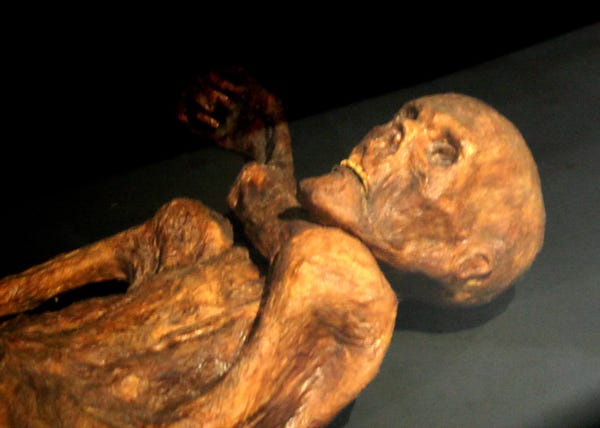
When Erika and Helmut Simon, hikers from Nuremberg, deviated from a marked trail in the Ötztal Alps in September 1991, they found a corpse at the bottom of a ravine at an altitude of more than 3,000 meters. The man was lying face down on the ground, and next to him was something like a backpack. At first it was thought to be a missing tourist who had suffered an accident here a few years earlier. A few days later, no one doubted anymore that the accidental find was the biggest archaeological sensation in years.
The mummified Ötzi — as the find was named — was a 160-centimeter-long, 50-year-old man from five millennia ago, right in the middle of the Neolithic period. The perfectly preserved corpse has given science a glimpse into the life of a European man from the time when the Saharan savannah began to become a desert and the population fleeing it established the first Egyptian cities.
They also allowed a glimpse into his stomach. Ötzi’s last meal was deer and chamois meat. Probably hunted shortly before his death, as indicated by a bow with a quiver full of arrows. Roots, fruits and wheat grains were also found consumed in the form of bread.
By the time Ötzi went on his last trek, Europe was long past the Neolithic revolution. Wild vegetation had been tamed, animals had been domesticated, and the nomadic lifestyle had turned into a sedentary one. Agrarian achievements made it easier — food was at hand, day after day. The 25 million representatives of Homo sapiens populating the land in Ötzi’s time, having alleviated the age-old problem of hunger, were able to subdue the land more effectively.
The development of agriculture changed our diet
While solving the problems that plagued them, however, they unknowingly created new ones that still give us trouble today. Careful study of the Alpine mummy made it possible to conclude that although the Ice Man — for that is what the media called him — did not starve, led an active lifestyle, and had a balanced diet, he still suffered from atherosclerosis, and was at risk of further cardiovascular disease. If Ötzi, transferred to our time, were to make an appointment with a nutritionist, he might hear the same thing most of us hear: “You are eating poorly.” And increasingly: “Please switch to an ancestral diet.” The Paleolithic diet, the cave diet. But why?
Dr. Loren Cordain, an American who studied the diet of Stone Age Homo sapiens, was the first to provide an answer to this question. In most areas of Europe, farming did not begin until 5–6 thousand years ago. So we are only a mere 300 to 500 generations away from the first farmers. That’s far too few for the following genetic mutations to have caused a major remodeling of the digestive system and adapted it to today’s diets.
Suffice it to say that successive generations of bacteria inhabiting our digestive tracts have more chances in a day to perpetuate beneficial mutations than mankind has had since farming began. In short, our stomachs with appendages are no different not only from Ötzi’s guts, but also from those of our common ancestors hundreds of thousands of years ago.
Paleolithic man fed mainly on wild deer meat or ancestors of today’s cattle, carrion, eggs, insects. Skeletons found from that time indicate that he enjoyed good health and a tall height of up to 180 cm. Meanwhile, 10,000 years ago, in an area of the Middle East called the Fertile Crescent by archaeologists, skeletons appear with traces of decay, anemia, rickets and numerous zoonotic diseases. The average height dropped to 1.6 meters. This is how the beginning of agriculture was marked.
Caries, rickets and diseases of civilization, with diabetes and celiac disease at the top of the list, have become a permanent part of our species’ disease card. Our digestive system is not adapted to digest certain proteins found in grains. Lectin and gluten irritate it and cause us to make much worse use of nutrients from other valuable foods. They backlog in the body and interfere with the absorption of vitamins, minerals, proteins that we need.
Paleo diet ingredients
- The basis is game — both lean and fatty.
- Nuts, seeds and seeds are a source of calcium.
- Simple sugars, on the other hand, are provided by fruits, and vegetables are also a source of energy.
In the diet, which is nowadays referred to as Paleolithic or cave diet, the elimination of grains is crucial. The other undesirable element is dairy, also alien to Paleolithic man. The bad reputation of lactose is common knowledge in the First World. We don’t digest it, but we drink yogurt, kefir or milk and eat cheese every day, with no adverse symptoms.
Paleolithic diet talks about the hidden effects of such action. We will feel the difference only when we give up these products. We will forget what gas and indigestion are. We will discover that probiotic bacteria supplied artificially are unnecessary, because we have their own pool, which can feed on non-protein products. Nuts, seeds, vegetables will become the source of calcium. While the source of sugars — fruits.
Although, in fact, our ancestors did not eat them at all as much as we might think. Their diet was based on proteins and fats, and the latter were the fuel. The modern human body derives energy from glucose. If we deprive it of it, after some time it will switch to using ketone bodies obtained in the metabolism of fats. Proponents of the paleo diet argue that they perform the energy function much more efficiently than glucose, which should be included only in the case of high physical activity, and therefore at certain times of the day. In the form of — of course — fruit.

Our ancestors were carnivores
However, according to Dr. Cordain’s research, between one and two-thirds of the calories consumed by modern hunter-gatherers, and therefore their ancestors, come from animals. Paleolithic Homo sapiens was not a vegetarian. He combined the characteristics of a herbivore, hunter and scavenger. It is this fluidity of human eating habits that is the key to our tremendous evolutionary success.
The final proof of the contribution of meat to the primate diet is the structure of our digestive system. It is far from the precipitous stomachs of herbivores, capable of processing the most woody plant fragments. Instead, it copes with delicate vegetables and fruits, being one of the most versatile organs of all species.
Man has always eaten meat. Ethical doubts arose only when mankind reached the stage where we can fulfill our nutritional needs in a different way. The Paleolithic diet is decidedly meat-based.
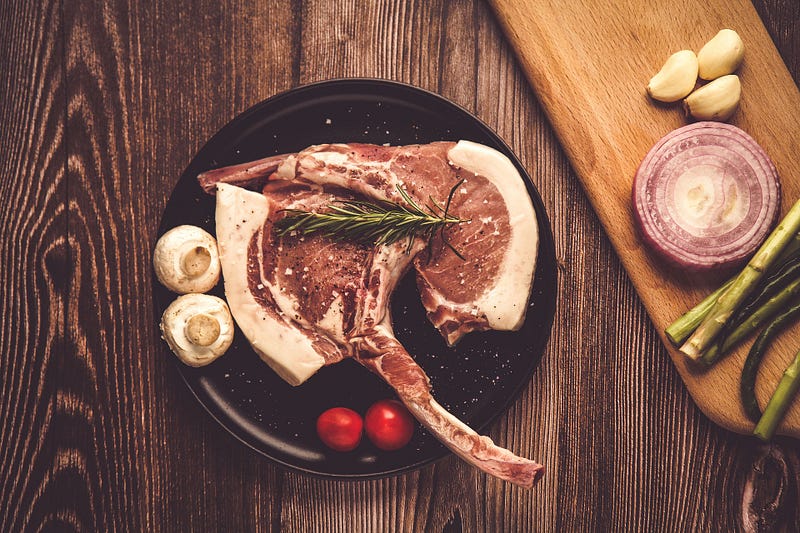
Game, rabbits, guinea fowl, pheasants, anything that lives wild, in the wild. Whether it be a wild boar that has put off a lot of body fat before winter, or lean rabbits or birds. However, getting game from the wild on a daily basis is an abstraction in today’s world.
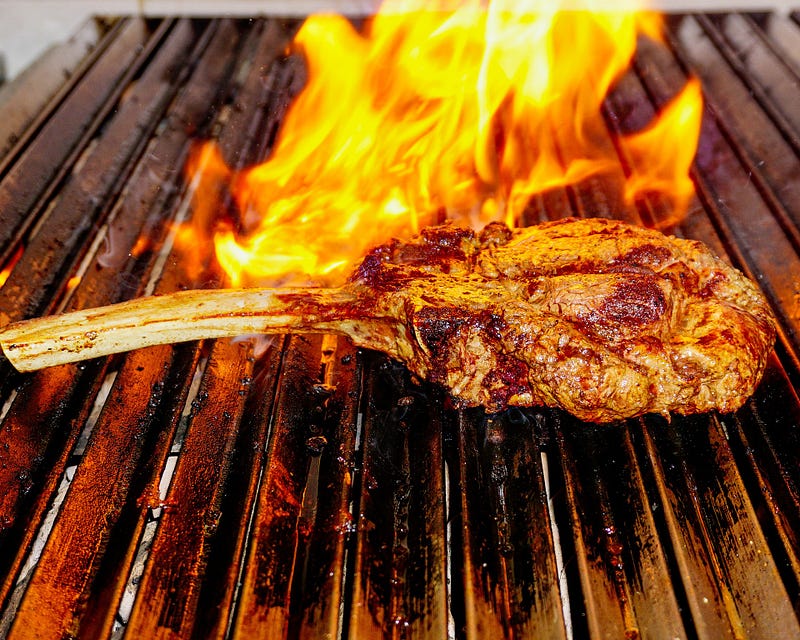
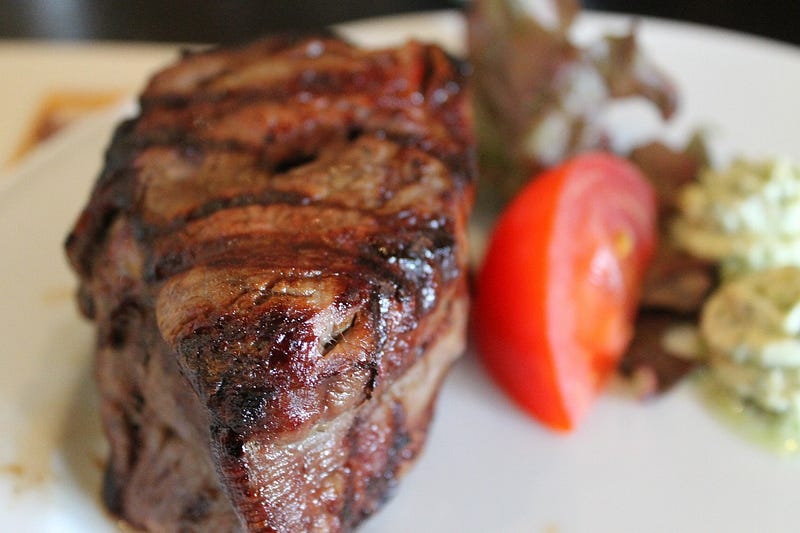
What really remains is to buy meat from organic farms. Meat raised on grass, not fed with corn or soy feed. And not just poultry. Very many Paleolithic cuisine recipes include beef. Since fat is indicated, we can fry, bake, grill it.
The paleo diet carries risks
After listening to the enumeration of the advantages of the Paleolithic diet, the question that comes to the lips is why don’t we all eat this way? For Ötzi’s ancestors struggling with hunger, grains were a gift from the heavens. Gluten-related indigestion was probably considered an unworthy side effect of increased access to food. Today, however, knowledge stands at a much higher level. So?
Unfortunately, this diet is very restrictive and requires consistency, and there are so many temptations all around us. But if the whole world were to switch to paleo today, the effects would certainly be much more beneficial to health than with the current diet. However, the same would happen if it switched to healthy, balanced vegetarianism. This is all due to the elimination of processed foods and the restriction of gluten and plenty of vegetables.
In theory, two months of rigor is enough for the body to get rid of unwanted substances and achieve the optimal figure for the person. And although the diet is intended to be practiced for a lifetime, even a few months of following it can properly tune a person and give him layers of energy he has long forgotten.
Critics point out the potential dangers of overloading the body with protein and fat, even if they come from good sources, and the lack of complex carbohydrates. They suggest that such a drastic change in nutrient ratios could have long-term dire consequences, especially for diabetics. Without hesitation, however, they agree with the few remaining tenets of the diet. For Ötzi and his ancestors, they are exceptionally obvious.
These include exercise, staying in the sun, long sleep, and a proper daily rhythm. The representative of hunter-gatherer communities was constantly on the move. Physical activity was his whole life, so energy obtained from fats digested longer than carbohydrates had an appropriate outlet. In the past, hypertrophy of the left ventricle of the heart was the norm, because humans were used to intense exercise. Today, when tests show hypertrophy of this chamber, we talk about an anomaly. We stopped moving, so the left ventricle doesn’t have to work as much. And Ötzi, although not a specimen of health, had to be in constant motion. After all, he died during a mountain hike.
Our diet differs from the Paleolithic not only in composition, but also in the number of meals. The five-course day was a fiction a few millennia ago. Our species is predestined to put off extra pounds. The Paleolithic diet assumes that a properly regulated stomach will tell us itself when to eat. Sometimes only four meals are enough, someone else may eat six, but smaller ones.

The paleo diet may have been toxic
Our ancestors did not necessarily enjoy good health — in fact, they may have consumed unhealthy amounts of toxic heavy metals. According to a study published in the journal Quaternary International, between 6,300 and 3,800 years ago (so a little after the end of the true Paleolithic period), the seafood that dominated the diet in what is now Norway contained dangerously high levels of lead and cadmium. Scientists say this may be related to the changing climate after the last ice age, which ended about 11,700 years ago.
Since the climate is changing at an alarming rate all the time, these results indicate that we too can expect higher levels of heavy metal contamination in some foods.
With no access to human remains from that period, scientists at the University of the Arctic in Norway have turned to fossilized trash. The midden, a layer of soil containing various wastes, such as animal bones, human feces, plant remains, shells and other remnants of past human activity, allowed the researchers to analyze the diet of our ancestors in more detail.
From piles of ancient waste at eight archaeological sites, scientists collected shellfish shells, Atlantic cod and harp seal bones. The remains were thoroughly cleaned and then turned into a fine powder, from which the scientists extracted collagen for analysis. Of the 124 bones sampled, only 40 produced sufficiently good quality collagen, and the analyses revealed shocking levels of cadmium and lead. The team also measured mercury levels in the bones and found that while they were within modern safety limits, they were also noticeably high.
Cadmium occurs naturally in the soil and accumulates in the body over time, especially in the liver and kidneys. It can cause cancer, as well as kidney, liver and lung disease, and osteoporosis. Lead also occurs naturally in the soil, and over time accumulates in the human skeleton. It can adversely affect the brain and nervous system. Mercury, on the other hand, can cause serious neurological and immunological problems.
Cool that you made it to the end of this article. I will be very pleased if you appreciate the effort of creating it and leave some claps here, or maybe even start following me. It would be nice if you also left a tip! Thank you!