
Africa is splitting in half. A new ocean will form between the plates
Africa, like other continents, is experiencing geological processes that have been going on for millions of years. When will it be possible to see their effects?
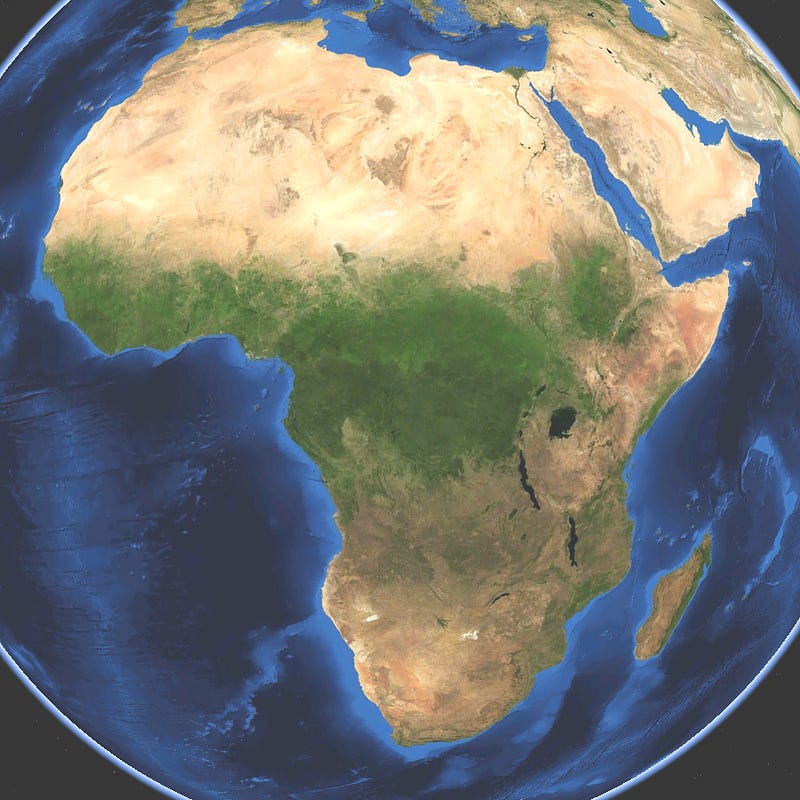
The division between Europe, Asia, the Americas, Australia, Antarctica and Africa is something we take for granted, but that doesn’t mean it will stay that way forever. Over millions of years, our planet has changed many times. This is best seen in visualizations showing the formation of supercontinents. Scientists emphasize that the processes of their formation, although not felt on a daily basis, are going on all the time. What will the Earth look like in a few million years?
This is how Africa is changing
One geological process is the slow splitting of Africa in half. Geologists predict that in the future, millions of years from now, East Africa will break away from the rest of the continent. This, in turn, could lead to the formation of a new ocean.
Why exactly there? The African tectonic plate is divided into two: the smaller Somali plate and the larger Nubian plate. According to a study published in 2004 in Earth and Planetary Science, every year the plates move a few millimeters away from each other.
The main “culprit” is the so-called East African rift system. One of the largest tectonic rift systems in the world stretches across thousands of kilometers and several African countries, including Ethiopia, Kenya, Malawi and Mozambique.
The world heard about Africa’s progressive geological breakdown in 2018, after a crack appeared in the ground in Kenya. The phenomenon has been linked to African tectonic fractures, but scientists reassure that there is no cause for concern. The continent will not crack in half for a very long time yet. A new ocean between the Somali plate and the Nubian plate is expected to form in the next 5 to 10 million years.
Our planet is in constant motion
Traces of tectonic plate movements can be seen with the naked eye not only in Africa. Another well-known example is the San Andreas Fault. The formation extends in California for about 1,200 kilometers. It is a natural boundary between the Pacific and North American plates. The region is prone to earthquakes.
A similar place is located in the Middle East. It is the Dead Sea transform fault, running along the southwestern coastline of the sea, connecting the Jordan Valley with the Gulf of Aqaba. It is one of the most seismically active regions in the world, causing numerous earthquakes of varying intensity each year. One of the most severe in history occurred in 1967.
Supercontinents have been and will be
The splitting and merging of tectonic plates has occurred many times in Earth’s geological history. The most famous supercontinent, Pangea, was formed about 300 million years ago. Pangea was supposed to have been formed from the merger of the continents of Laurasia and Gondwana. After its breakup, some of the continents look like matching jigsaw puzzles on the world map.
Researchers say that the formation of supercontinents occurs about every 250 million years. According to forecasts, the next supercontinent, named Amazonia, will form in the next 150–200 million years. Considering the time scales of Earth’s geological history, that’s not that long at all.
Supercontinents have a huge impact on the geology, climate and environment of our planet. The formation of a supercontinent can cause the climate to become extreme. Thus, it can lead to some areas becoming much warmer or colder. In addition, the formation of a new supercontinent is likely to cause changes in ocean currents that could drastically alter the Earth’s environment.
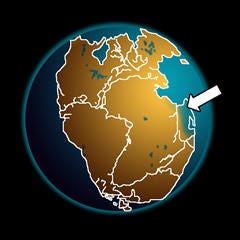
What is continental drift?
Alfred Wegener was the first to discover that the continents once formed a supercontinent. Reviewing a friend’s atlas in 1910, he concluded that some force was pushing the continents and that is why they moved away from each other. His theory of continental drift was not immediately understood. Many senior scientists even ridiculed him. The courageous researcher could not get a professorship at any university in Germany. Only the University of Graz in Austria appointed him professor of meteorology and geophysics in 1924.
Cool that you made it to the end of this article. I will be very pleased if you appreciate the effort of creating it and leave some claps here, or maybe even start following me. It would be nice if you also left a tip! Thank you!


