
Mycenaean civilization was dynamic and ferocious. However, it eventually came up against a stronger opponent
Mycenaean civilization is among the oldest Greek-speaking cultures. It developed in the Bronze Age in mainland Greece, from where it spread to the rest of the Aegean region. Its decline brought Greece into the period of the so-called Dark Age. What else do we know about the Mycenaean culture? Below I explain when it arose, what characterized it and what factors determined its end.
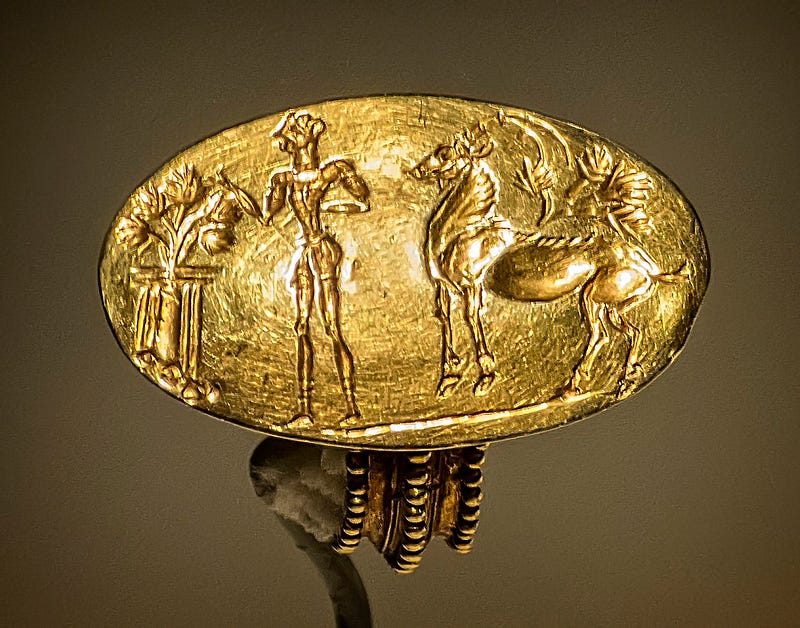

Greece’s natural conditions were conducive to the development of independent civilizations. Areas crisscrossed by mountain ranges and islands isolated from the mainland created excellent conditions for settlement and defense. As a result, in the most ancient times Greek society did not form a compact state organism. It consisted of civilizations that, depending on their needs, maintained economic relations or fought battles. One of the most powerful Mediterranean cultures of the time was the Mycenaean civilization.
When did the Mycenaean civilization emerge?
The genesis of Mycenaean culture is full of twists and turns and dead ends. There are several theories about the origin of the Mycenaeans. The thing is that the modern state of scientific knowledge does not allow to state unequivocally which of them is correct.
According to the most popular view, the creators of Mycenaean culture were the Achaeans, who came to the area of mainland Greece in the second millennium BC, most likely from the Balkan Peninsula. After conquering Thessaly, they were said to have mixed with the local population and created a new culture.
Mycenaean civilization took shape in the area of mainland Greece during the Bronze Age, between 1700–1100 BC. The period of greatest Mycenaean power was between 1450–1225 BC. As in the case of the Minoan culture, for a long time scientific knowledge about it was scarce. The scientific world managed to learn a little more about the Mycenaeans only at the end of the 19th century, thanks to the excavations carried out by German archaeologist Heinrich Schliemann.

What were the characteristics of the Mycenaean civilization?
Inhabiting Crete, the Minoan civilization was a peaceful people who focused on trade, land cultivation and cattle breeding. In contrast, the Mycenaean Greeks were born warriors. The warlike disposition of the Mycenaeans is evidenced not only by their buildings — powerfully fortified and ready to repel enemy attack — but also by the art of the people. There is no shortage of figures of warriors with full armament, battle scenes and depictions of hunting. It is worth mentioning that Mycenaean paintings and sculptures depict men with beards. In those days it was a symbol of strength and aggression.
The warlike nature of the Mycenaeans is confirmed by archaeological research and some written sources. During Mycenaean times, there were battles for hegemony on the Greek mainland. The Mycenaeans were also said to have been mercenaries for Pharaoh, supporting Egypt with their naval fleet. They also did not shy away from aggression against neighboring peoples. In 1450 BC they invaded the Minoans and gradually began to take over Crete. Some historians believe that the military actions of the Continental Greeks also contributed to the end of the Minoan period of the old palaces.
It should be mentioned, however, that the Mycenaeans did not toil only in battle. Their coastal location and developed shipping gave them the opportunity to make merchant expeditions. They were primarily interested in obtaining gold, but also tin and copper, which were used to make bronze for tools and, above all, weapons. The Mycenaeans traded with the entire Aegean world, and their reach extended to other parts of the Mediterranean. Important centers for them included Sicily and Italy.

What was life like for the Mycenaean civilization?
After displacing the indigenous population living in mainland Greece, the Mycenaeans began to establish their city-states, around which villages were concentrated. These settlements were self-sufficient — the peasants produced their own food, the tools and clothing they needed.
Mycenaean city-states maintained their independence. Each of them was headed by a ruler bearing the title of “vanaks”. The second person in the city was the “lawagetas,” or commander of the troops. The warriors subordinate to him, among whom were many representatives of aristocratic families, were just below him in the hierarchy. Lower than the warriors were the artisans who made weapons, tools, vessels and ornaments and jewelry from gold and bronze. The lowest strata of Mycenaean society were peasants and slaves.
The latter provided forced labor for the ruler and the aristocracy. However, it should be noted that peasants were not free people either. This was due to the fact that all the land within a given city-state was owned by the ruler. The peasant could cultivate it, but in return he was obliged to pay tribute.
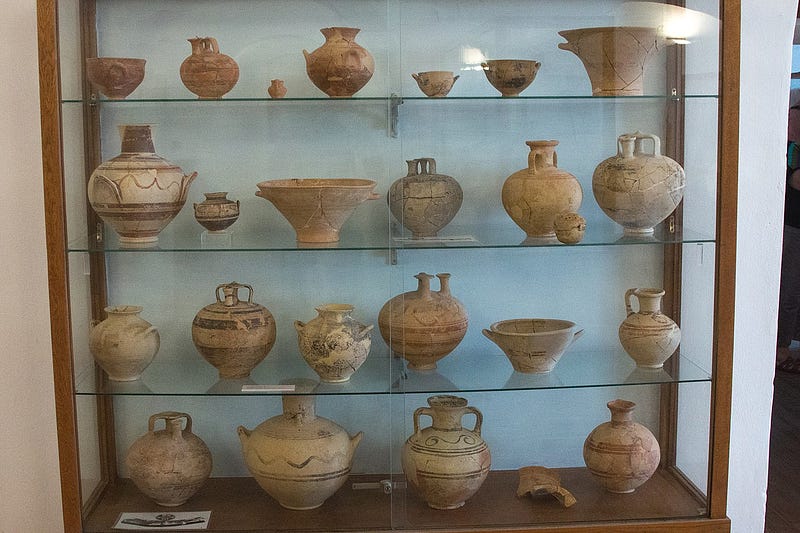
“Wanaks” controlled every aspect of political, social and economic life. There were no free merchants in the Mycenaean world, engaged in external trade. Only those appointed by the ruler, who decided on all transactions, could trade. Mycenaean export goods were primarily pottery, textiles and oil. Ships going on trade missions returned laden with tin, copper, gold and silver. Luxury goods were also imported, especially ivory and amber.

What was the main center of Mycenaean civilization?
When the Achaeans — the most likely creators of Mycenaean civilization — arrived in mainland Greece, they began to successfully displace the peoples living in those areas. In the conquered areas they began to establish their city-states. The land of the Mycenaeans — Argolida — included the northeastern area of the Peloponnesian Peninsula.
Unlike the Minoans, the Mycenaeans did not manage to build such an efficient state organism with a centralized structure. However, it should be noted that one city held a dominant position in the Mycenaean world. We are talking about Mycenae — a city that, according to the mythological account, was supposed to have been founded by Perseus, the son of Zeus and Queen Danae, the founder of the Perseid dynasty.
The strong influence of Mycenae was already mentioned by Homer. His account has been confirmed by archaeological research. What determined that Mycenae (to which Mycenaean civilization owes its name) managed to exert the strongest influence on the other city-states of Mycenaean Greece? The factor was its coastal location, which largely facilitated the organization of merchant expeditions. Trade in Mycenae flourished extremely dynamically and, as a result, the city quite quickly became the richest center of Argolida.

What did the Mycenaean civilization invent?
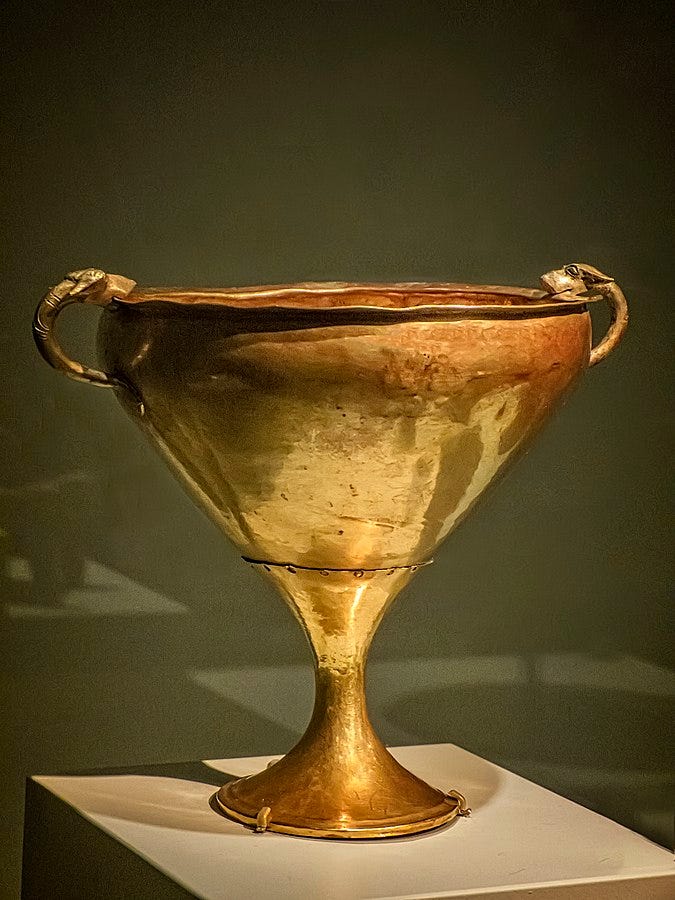
In the case of the Mycenaean civilization, it is difficult to talk about original ideas and solutions. After all, it should be mentioned that in terms of crafts and arts, the Mycenaeans were strongly influenced by the Minoans, from whom they took the most characteristic patterns. Besides, the same also applies to the culture and to a large extent — the organization of the state. Also, the B linear script, which the Mycenaeans used for official matters, was developed from the Cretan A linear script.
It must be stressed, however, that while Minoan inspiration in the field of Mycenaean crafts and art is evident, we cannot speak of unreflective copying. They adapted their products and works to their own needs and lifestyles.
Mycenaean architecture
Minoan inspiration was evident not only in the area of applied and decorative arts, but also in architecture. Both Mycenaean palaces and houses referred to buildings erected in Crete. At the same time, the biggest differences between the two cultures occurred in this area.
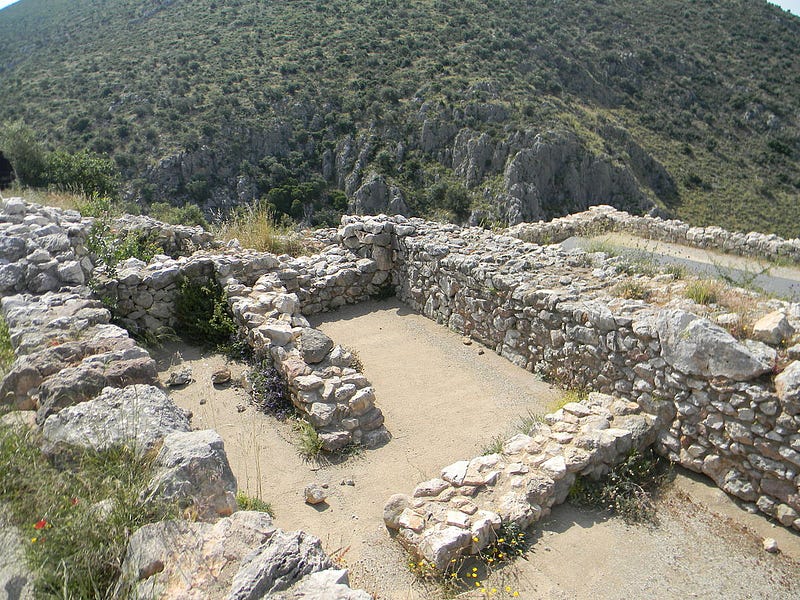
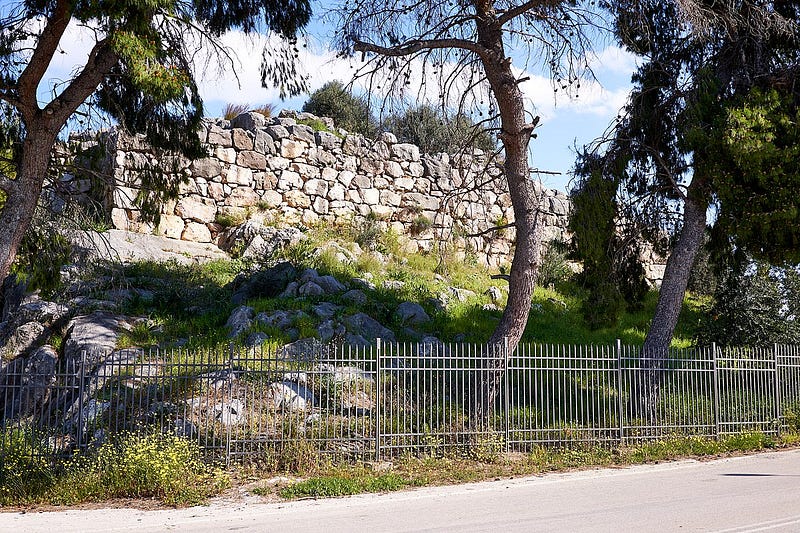
The Minoans did not bother to erect defensive walls. The palaces of the Mycenaeans, which, like the buildings of the Cretan world, served as the seat of the ruler, a political and economic center, were surrounded by massive fortifications. The most distinctive element of their architecture was the so-called Cyclopean walls, built from large rock walls. Mycenaean houses, on the other hand, took the form of rectangular megarons with a hearth in the central part.

Culture and religion of the Mycenaean civilization
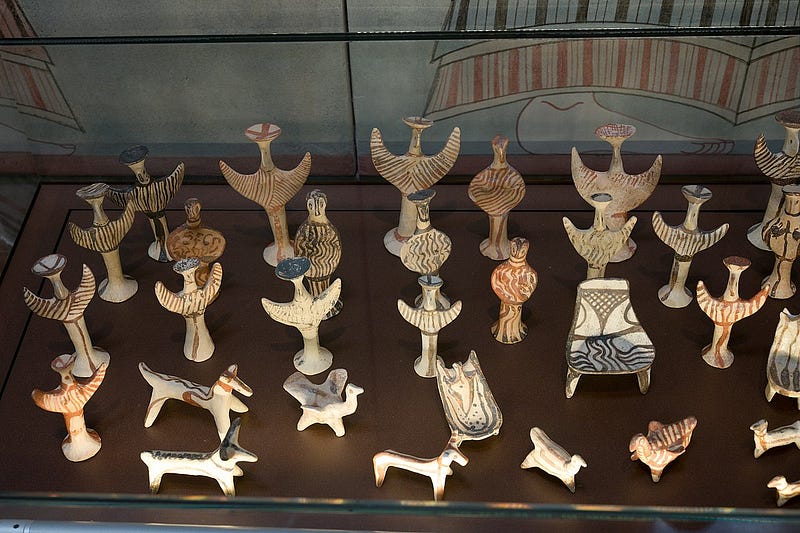
In Mycenaean culture, the cult of battle was perfectly visible. One of the most characteristic Mycenaean wares are statuettes depicting warriors. Some show helmets decorated with horns.
Mycenaean religion was polytheistic in nature. Already in their world some of the deities of classical Greek religion were known, including Hera, Dionysus, Athena and Artemis. They also worshipped Zeus, but it should be noted that in Mycenaean beliefs he was not the supreme god. That position was held by Poseidon.
The decline of Mycenaean culture
The twilight of Mycenaean culture came as a result of external invasions. Circa. 1200 BC there was an invasion by the Sea Peoples — a mysterious people of unknown origin.
At this point it is appropriate to mention that it is this very issue that points to a rather modest historical knowledge of the Mycenaeans. Indeed, some scholars express the belief that the Achaeans, who are commonly credited with the creation of Mycenaean culture, were in practice representatives of the very Sea Peoples. And they mixed with the Mycenaean people of mainland Greece only in the declining period of that civilization’s existence.
Weakened by hostile raids, the Mycenaeans became an easy target for the Dor tribe, who invaded their lands in 1100 BC. This sparked internal conflicts between Mycenaean city-states, which assumed unprecedented proportions. A great crisis began in Mycenaean Greece, and the local population began to settle in other lands, including Cyprus.
Cool that you made it to the end of this article. I will be very pleased if you appreciate the effort of creating it and leave some claps here, or maybe even start following me. It would be nice if you also left a tip! Thank you!