avatarDark Energy Articles

Free AI web copilot to create summaries, insights and extended knowledge, download it at here

2474

Abstract

s. <b>To defend themselves, the insects used formic acid.</b></p><p id="f6d9">At about the same time, their cousins lived in the primeval forests growing in the present-day state of Wyoming. They are Titanomyrma lubei ants belonging to the same genus. In 2011, a fossil of a queen from this species was encountered. It turned out that this ant was the size of a hummingbird. The fossil dates back 49.5 million years.</p><figure id="9580"><img src="https://cdn-images-1.readmedium.com/v2/resize:fit:800/1*u1pIUzrU_y5fW9C2bc0K1w.jpeg"><figcaption>[Photo: The photographer and <a href="http://www.AntWeb.org">www.AntWeb.org</a>, <a href="https://creativecommons.org/licenses/by/4.0">CC BY 4.0</a>, via <a href="https://commons.wikimedia.org/wiki/File:Titanomyrma_lubei_DMNH9041_02.jpg">Wikimedia Commons</a>]</figcaption></figure><h1 id="0bc7">How did the ants get to America?</h1><p id="d92b">Also from the Eocene are fossils recently described in the scientific journal The Canadian Entomologist. These are ants whose footprints were found in present-day British Columbia, Canada.</p><p id="3fa2">Unfortunately, this fossil did not survive the millions of years separating us from the Eocene in good condition. Scientists are not sure what specific species left it behind. However, they have no doubt that the Canadian ants can be attributed to the genus Titanomyrma. Their body length is also debatable: based on fossil data, researchers estimate it at 3–5 cm.</p><p id="5c41">Thus, these ants may have been as large as their cousins from Germany and Wyoming. Which leads to an important question: <b>how did they come to cool Canada? </b>It must have been through a strip of land that was then located at the site of today’s Bering Strait.</p><h1 id="3f3d">The great migration of prehistoric ants</h1><p id="b2f6">Fifty million years ago, the continents already resembled the shapes we know from modern maps. Europe was separated from Greenland. North America was connected to Asia by a wide strip of land. It was with it that living organisms traversed the hundreds of kilometers separating Asia and America.</p><p id="85b4">For invertebrates such as ants, this trek must have been fraught with difficulties. Prehistoric ants were most likely variably warm (a.k.a. ectothermic) animals. Unlike warm-blooded animals, they did not maintain a constant body temperature independent of their environment.</p><p id="a2ed">Scientists have so far believed that giant ants had a ch

Options

ance to cross the land bridge between America and Asia only during those periods when the Earth’s climate warmed a lot. Outside of these periods, access to America was impossible for them.</p><figure id="9eb5"><img src="https://cdn-images-1.readmedium.com/v2/resize:fit:800/1*9lhPKYuZnP81SVCLxR7XUg.jpeg"><figcaption>[Photo: Simon Fraser University Public Affairs and Media Relations, <a href="https://creativecommons.org/licenses/by/2.0">CC BY 2.0</a>, via <a href="https://commons.wikimedia.org/wiki/File:Bruce_Archibald_and_Rolf_Mathewes.jpg">Wikimedia Commons</a>]</figcaption></figure><h1 id="9d0b">The largest insects on Earth</h1><p id="d4c2">The new fossil has not made it possible to verify this theory. This will happen only when scientists find other fossils of Eocene ants in places with cooler climates. Then they will be able to determine whether the ants must have changed their body sizes to cope with lower temperatures.</p><p id="c661">Today, the largest insects are found where temperatures are highest, namely near the equator. The longest insect is the stick insect Phryganistria chinensis, measuring up to 64 centimeters. The heaviest, meanwhile, is the locust Deinacrida heteracantha, weighing up to more than 70 grams. That is, more than, for example, a sparrow. But perhaps in the past, ants found some way to cope with the cold and conquer new continents even despite the cold.</p><div id="3f49" class="link-block"> <a href="https://readmedium.com/can-a-spider-hunt-a-mammal-this-terrifying-video-shows-how-a-false-black-widow-overpowers-a-shrew-e376b875aa26"> <div> <div> <h2>Can a spider hunt a mammal? This terrifying video shows how a false black widow overpowers a shrew</h2> <div><h3>Scientists have recorded a very rare case from the animal world. The video shows for the first time a successful shrew…</h3></div> <div><p>medium.com</p></div> </div> <div> <div style="background-image: url(https://miro.readmedium.com/v2/resize:fit:320/1*1sMnggvjULAkF3wybLONKQ.jpeg)"></div> </div> </div> </a> </div><p id="9b75"><b>Cool that you made it to the end of this article. I will be very pleased if you appreciate the effort of creating it and leave some claps here, or maybe even start following me. It would be nice if you also left a tip! Thank you!</b></p></article></body>

50 million years ago, ants the size of birds roamed the world. How could they have been so gigantic?

Ant fossils from tens of millions of years ago have been discovered in Canada. They belong to a prehistoric genus of giant ants. That is, the largest ants that ever walked the Earth.
[Photo: Simon Fraser University Public Affairs and Media Relations, CC BY 2.0, via Wikimedia Commons]

Ants are mobile and ubiquitous. They are not associated with large sizes. On the contrary: they are small enough to fit into any crevice. This makes it easy for them to get into our apartments and houses, among other places.

However, the ants we know from today’s Earth are lilliputians. At least compared to their extinct relatives of the genus Titanomyrma. They are a variety of prehistoric giant ants from the Eocene. That is, the period that began about 56 million and ended 34 million years ago.

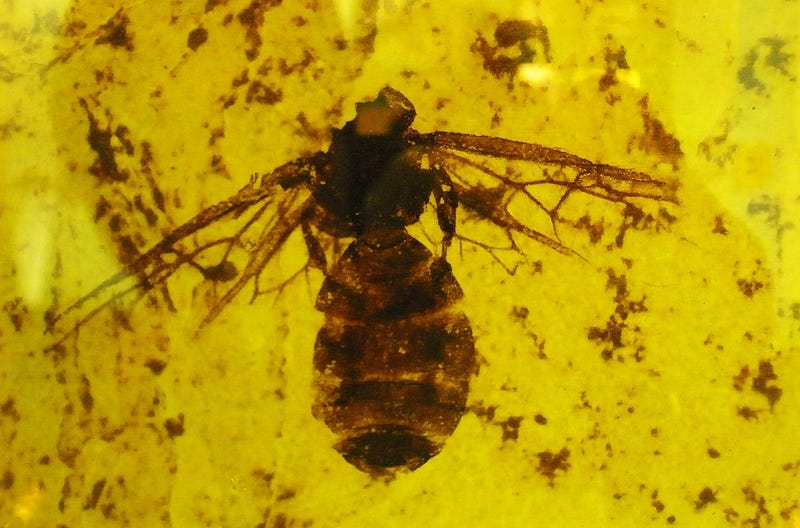
Dinosaurs were no longer on Earth at that time. In the ecological niches vacated by them, mammals developed intensively. In turn, huge ants roamed at their feet. Dating back to the Eocene, a fossil of the world’s largest ant, named Titanomyrma gigantea, was found in Germany.

The queens of this species were five centimeters in length, with a wingspan of several centimeters and a body weight of a grosbeak. The worker ants were half that size — which still means that their body length reached three centimeters.
[Photo: Ghedoghedo, CC BY-SA 3.0, via Wikimedia Commons]

Carnivorous giant ants

Titanomyrma gigantea were a species well adapted to fighting for survival. Scientists surmise that these ants belonged to carnivorous animals. They lived in huge colonies. An army of workers — moving around — could hunt lizards, small mammals and even birds. To defend themselves, the insects used formic acid.

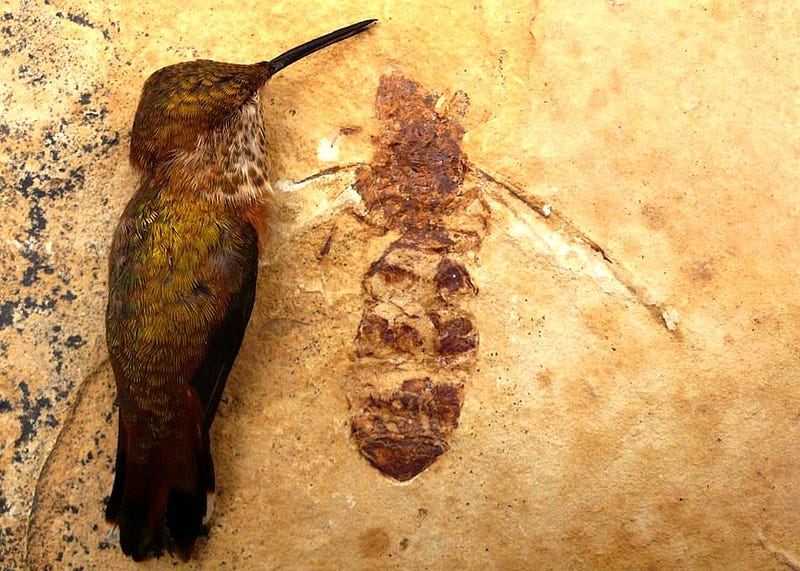
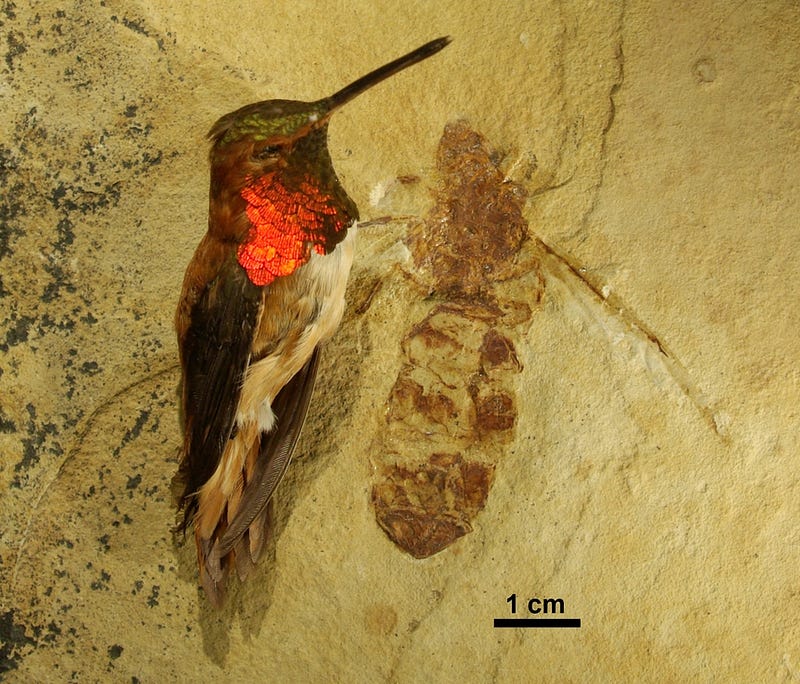
At about the same time, their cousins lived in the primeval forests growing in the present-day state of Wyoming. They are Titanomyrma lubei ants belonging to the same genus. In 2011, a fossil of a queen from this species was encountered. It turned out that this ant was the size of a hummingbird. The fossil dates back 49.5 million years.
[Photo: The photographer and www.AntWeb.org, CC BY 4.0, via Wikimedia Commons]

How did the ants get to America?

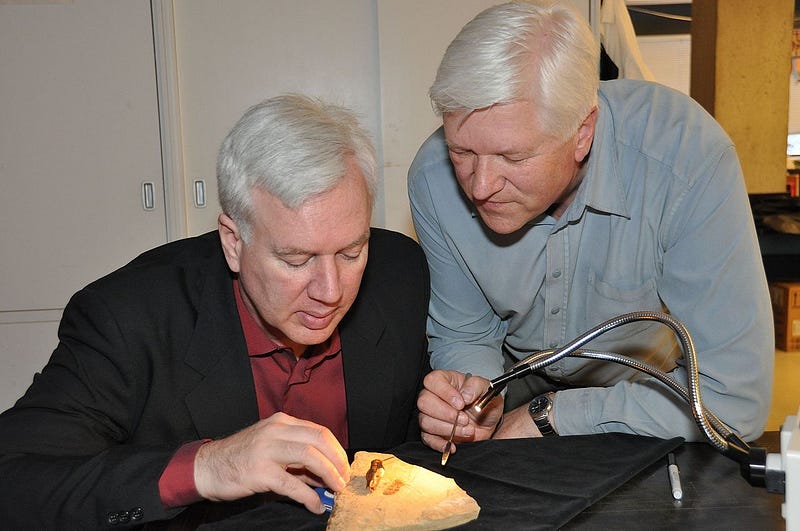
Also from the Eocene are fossils recently described in the scientific journal The Canadian Entomologist. These are ants whose footprints were found in present-day British Columbia, Canada.

Unfortunately, this fossil did not survive the millions of years separating us from the Eocene in good condition. Scientists are not sure what specific species left it behind. However, they have no doubt that the Canadian ants can be attributed to the genus Titanomyrma. Their body length is also debatable: based on fossil data, researchers estimate it at 3–5 cm.

Thus, these ants may have been as large as their cousins from Germany and Wyoming. Which leads to an important question: how did they come to cool Canada? It must have been through a strip of land that was then located at the site of today’s Bering Strait.

The great migration of prehistoric ants

Fifty million years ago, the continents already resembled the shapes we know from modern maps. Europe was separated from Greenland. North America was connected to Asia by a wide strip of land. It was with it that living organisms traversed the hundreds of kilometers separating Asia and America.

For invertebrates such as ants, this trek must have been fraught with difficulties. Prehistoric ants were most likely variably warm (a.k.a. ectothermic) animals. Unlike warm-blooded animals, they did not maintain a constant body temperature independent of their environment.

Scientists have so far believed that giant ants had a chance to cross the land bridge between America and Asia only during those periods when the Earth’s climate warmed a lot. Outside of these periods, access to America was impossible for them.
[Photo: Simon Fraser University Public Affairs and Media Relations, CC BY 2.0, via Wikimedia Commons]

The largest insects on Earth

The new fossil has not made it possible to verify this theory. This will happen only when scientists find other fossils of Eocene ants in places with cooler climates. Then they will be able to determine whether the ants must have changed their body sizes to cope with lower temperatures.

Today, the largest insects are found where temperatures are highest, namely near the equator. The longest insect is the stick insect Phryganistria chinensis, measuring up to 64 centimeters. The heaviest, meanwhile, is the locust Deinacrida heteracantha, weighing up to more than 70 grams. That is, more than, for example, a sparrow. But perhaps in the past, ants found some way to cope with the cold and conquer new continents even despite the cold.

Cool that you made it to the end of this article. I will be very pleased if you appreciate the effort of creating it and leave some claps here, or maybe even start following me. It would be nice if you also left a tip! Thank you!

History
Ants
Nature
Science
Life
Recommended from ReadMedium