avatarDark Energy Articles

Free AI web copilot to create summaries, insights and extended knowledge, download it at here

2548

Abstract

"480" width="854"> </div> </div> </figure></iframe></div></div></figure><p id="5a12">The video lasts only a little over thirty seconds. It shows the effect of the hunt: the shrew is already immobilized and pulled between the rafters of the house. There, we suspect, its consumption will occur.</p><p id="6019">However, what happened before? How did a spider, one and a half centimeters long, manage — literally — to entangle a vertebrate that is ten times heavier and four times longer than it? As per the researchers’ findings, it was not a coincidence. They surmise that the shrew climbed onto a glycine bush growing under the window of the house. There she became entangled in a web and was attacked by a spider. <b>This one paralyzed it with a powerful venom containing neurotoxins.</b></p><h1 id="999f">How long it took to digest the shrew</h1><p id="da98">The spider then began dragging the shrew under the roof of the house. What can be seen in the video is the final stage of this process. As the researchers wrote, during the observation,<b> the spider pulled the shrew up as much as 25 cm. </b>The mammal was still alive — the spider’s venom did not kill it, but only prevented it from breaking out of its mat.</p><p id="cb45">After about 20 minutes, the shrew disappeared under the eaves of the roof. The work shows that the false black widow swept it carefully into the web and then digested it for three days. The leftovers from the feast were then discarded.</p><blockquote id="34a2"><p>According to the researchers, all that was left of the shrew was “fur, skin and bones.”</p></blockquote><p id="02a8">This is the third case in the last five years that Steatoda nobilis spiders have been observed successfully hunting vertebrates. These spiders are an invasive species in the UK — and other Western European countries.</p><p id="31c9">Steatoda nobilis are native to Madeira and the Canary Islands. However, they are now also found in Spain, France, Italy, as well as the United States, Chile and Colombia. The species is spreading so rapidly that it has been recognized as <b>the world’s most invasive spider.</b></p><figure id="1367"><img src="https://cdn-images-1.readmedium.com/v2/resize:fit:800/1*PlYRk_2afPfEo8pa8cyd_g.jpeg"><figcaption>[Photo: Martin Cooper from Ipswich, UK, <a href="https://creativecommons.org/licenses/by/2.0">CC BY 2.0</a>, via <a href="https://commons.wikimedia.org/wiki/File:Noble_False_Widow_(Steatoda_nobilis)_(18476684753).jpg">Wikimedia Commons</a>]</figcaption></f

Options

igure><p id="f067">This is not surprising, since the arachnid appears to be able to catch a wide variety of prey.</p><blockquote id="033c"><p>“Our observations indicate that Steatoda nobilis is perfectly adapted to catching large prey”, says zoologist Michel Dugon, lead author of the paper. — “It knows how to hunt, has a strong venom and weaves an exceptionally strong web”, he adds.</p></blockquote><p id="7df4">It is worth mentioning at the same time that this spider is not dangerous to humans.</p><h1 id="1368">How large a prey can a spider capture?</h1><p id="1dc5">The discovery is unique because Steatoda nobilis are not large spiders. Their much larger and more powerful cousins — belonging to the bird spiders — can hunt vertebrates. But even to them it happens rather rarely.</p><figure id="02a7"><img src="https://cdn-images-1.readmedium.com/v2/resize:fit:800/1*FQmly2Y09Zm87YHBh40Dkw.jpeg"><figcaption>Theraphosa blondi — [Photo: Ryan Somma, <a href="https://creativecommons.org/licenses/by/2.0">CC BY 2.0</a>, via <a href="https://commons.wikimedia.org/wiki/File:Theraphosa_blondi_flickr.jpg">Wikimedia Commons</a>]</figcaption></figure><p id="6362">The world’s largest spider, the goliath spider (<b>Theraphosa blondi</b>), hunts frogs, mice, lizards and sometimes even small birds. However, it has the “conditions” to do so. Its body is 12 centimeters long, its leg span reaches 30 centimeters, and its weight — a quarter of a kilogram. In turn, female giant birds live up to 20 years.</p><div id="e0f3" class="link-block"> <a href="https://readmedium.com/the-milky-way-was-formed-not-long-after-the-big-bang-what-secrets-does-our-galaxy-hold-2795c8e4c851"> <div> <div> <h2>The Milky Way was formed not long after the Big Bang. What secrets does our Galaxy hold?</h2> <div><h3>It has existed for several billion years, and in ancient times was called the Blue River. I am, of course, talking…</h3></div> <div><p>medium.com</p></div> </div> <div> <div style="background-image: url(https://miro.readmedium.com/v2/resize:fit:320/1*BrzJX4mxVRC4DzcAOek2jQ.jpeg)"></div> </div> </div> </a> </div><p id="c703"><b>Cool that you made it to the end of this article. I will be very pleased if you appreciate the effort of creating it and leave some claps here, or maybe even start following me. It would be nice if you also left a tip! Thank you!</b></p></article></body>

Can a spider hunt a mammal? This terrifying video shows how a false black widow overpowers a shrew

Scientists have recorded a very rare case from the animal world. The video shows for the first time a successful shrew hunt performed by a spider belonging to the so-called false black widows.
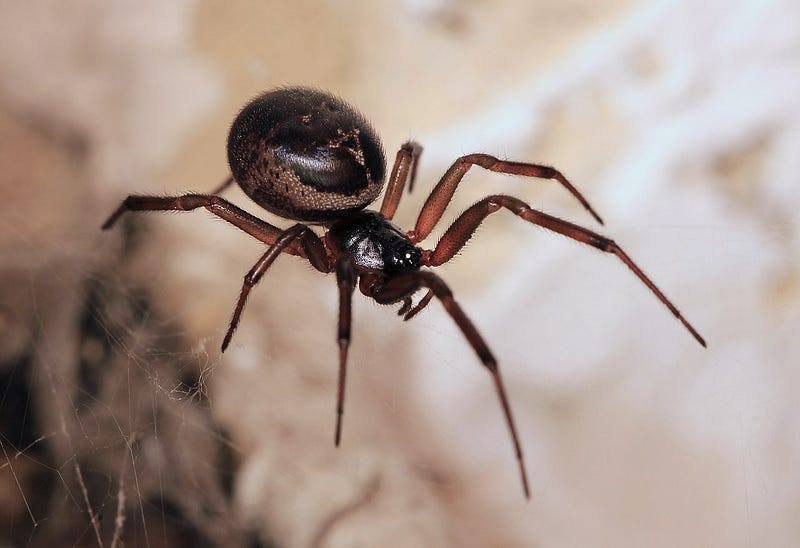
[Photo: Stu’s Images, CC BY-SA 4.0, via Wikimedia Commons]

Southern England, city of Chichester. The top edge of a window overlooking lush greenery. In the foreground hangs a small rodent caught in a spider’s web. The spider wanders back and forth over the victim. Its long tail dangles inertly.

At the end of the half-minute recording, the little mammal seems to make weak movements. It’s not much help to him. The spider slowly pulls him up between the rafters. The sight is chilling.

This is the first video showing a spider of the genus Steatoda hunting a shrew. The incident is so surprising that zoologists at the University of Galway described it in a paper published in the scientific journal Ecosphere.

How did the spider hunt the shrew?

The protagonists of the unique video are two species. The predator is a spider of the Steatoda nobilis species, which belongs to the genus Steatoda. These spiders, belonging to this particular genus, are occasionally referred to as false black widows because they bear a striking resemblance, only in terms of their appearance, to the poisonous black widow spider (Latrodectus mactans). The prey is the tiny shrew (Sorex minutus) — it is a few centimeters long.

The video lasts only a little over thirty seconds. It shows the effect of the hunt: the shrew is already immobilized and pulled between the rafters of the house. There, we suspect, its consumption will occur.

However, what happened before? How did a spider, one and a half centimeters long, manage — literally — to entangle a vertebrate that is ten times heavier and four times longer than it? As per the researchers’ findings, it was not a coincidence. They surmise that the shrew climbed onto a glycine bush growing under the window of the house. There she became entangled in a web and was attacked by a spider. This one paralyzed it with a powerful venom containing neurotoxins.

How long it took to digest the shrew

The spider then began dragging the shrew under the roof of the house. What can be seen in the video is the final stage of this process. As the researchers wrote, during the observation, the spider pulled the shrew up as much as 25 cm. The mammal was still alive — the spider’s venom did not kill it, but only prevented it from breaking out of its mat.

After about 20 minutes, the shrew disappeared under the eaves of the roof. The work shows that the false black widow swept it carefully into the web and then digested it for three days. The leftovers from the feast were then discarded.

According to the researchers, all that was left of the shrew was “fur, skin and bones.”

This is the third case in the last five years that Steatoda nobilis spiders have been observed successfully hunting vertebrates. These spiders are an invasive species in the UK — and other Western European countries.

Steatoda nobilis are native to Madeira and the Canary Islands. However, they are now also found in Spain, France, Italy, as well as the United States, Chile and Colombia. The species is spreading so rapidly that it has been recognized as the world’s most invasive spider.
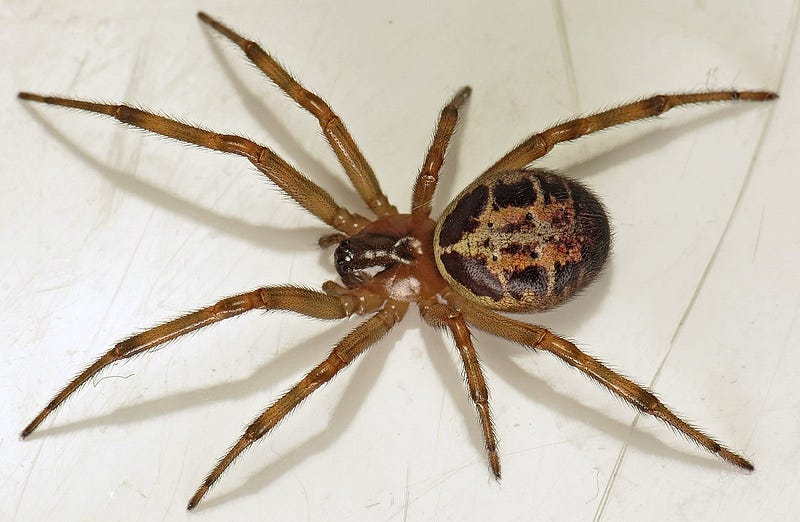
[Photo: Martin Cooper from Ipswich, UK, CC BY 2.0, via Wikimedia Commons]

This is not surprising, since the arachnid appears to be able to catch a wide variety of prey.

“Our observations indicate that Steatoda nobilis is perfectly adapted to catching large prey”, says zoologist Michel Dugon, lead author of the paper. — “It knows how to hunt, has a strong venom and weaves an exceptionally strong web”, he adds.

It is worth mentioning at the same time that this spider is not dangerous to humans.

How large a prey can a spider capture?

The discovery is unique because Steatoda nobilis are not large spiders. Their much larger and more powerful cousins — belonging to the bird spiders — can hunt vertebrates. But even to them it happens rather rarely.
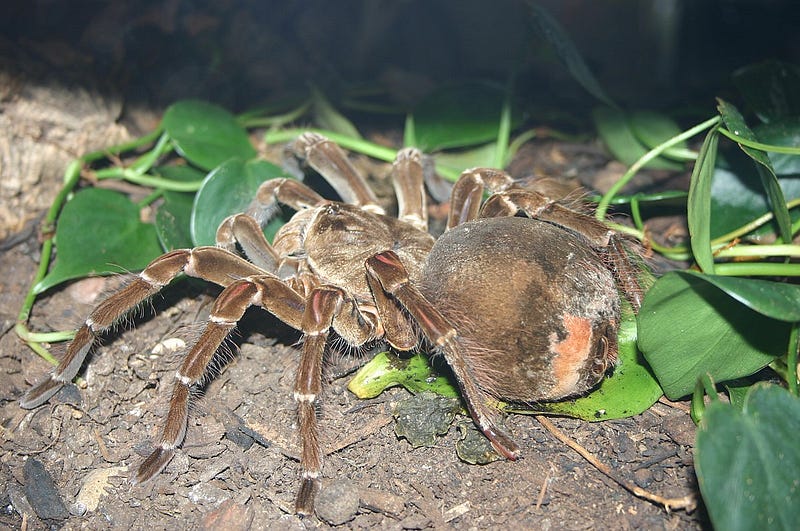
Theraphosa blondi — [Photo: Ryan Somma, CC BY 2.0, via Wikimedia Commons]

The world’s largest spider, the goliath spider (Theraphosa blondi), hunts frogs, mice, lizards and sometimes even small birds. However, it has the “conditions” to do so. Its body is 12 centimeters long, its leg span reaches 30 centimeters, and its weight — a quarter of a kilogram. In turn, female giant birds live up to 20 years.

Cool that you made it to the end of this article. I will be very pleased if you appreciate the effort of creating it and leave some claps here, or maybe even start following me. It would be nice if you also left a tip! Thank you!

Videos
Spiders
Animals
Science
Life
Recommended from ReadMedium