
The overwhelming world of Japanese web design
In most parts of the world, modern websites are simple. The array of links, banners and icons that were common in web design in the early 2000s have been replaced with concise, relevant content that helps users achieve goals.
But in Japan, most major websites have changed little since the early 2000s, and still use designs overloaded with information and links.
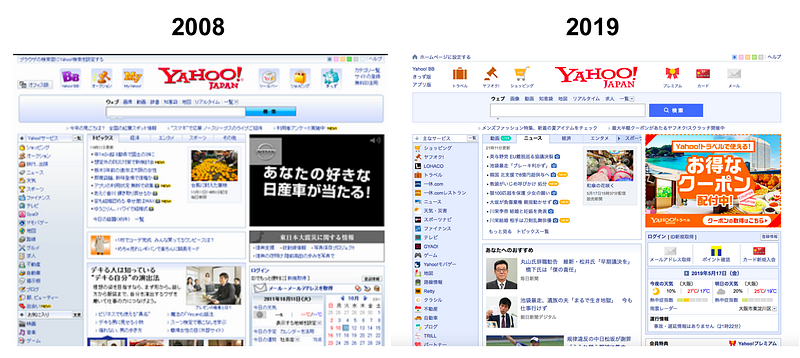
Yahoo used to be Japan’s most popular search engine, and is still popular as a home page for desktop internet browsers. As you can see, the design has changed very little in the last decade.
Another classic is Rakuten, the country’s largest online shopping mall. Merchants on Rakuten have free reign to design their product pages, resulting in a dizzying array of bright images, banners and popups on pages that require about 30 scrolls to reach the bottom.
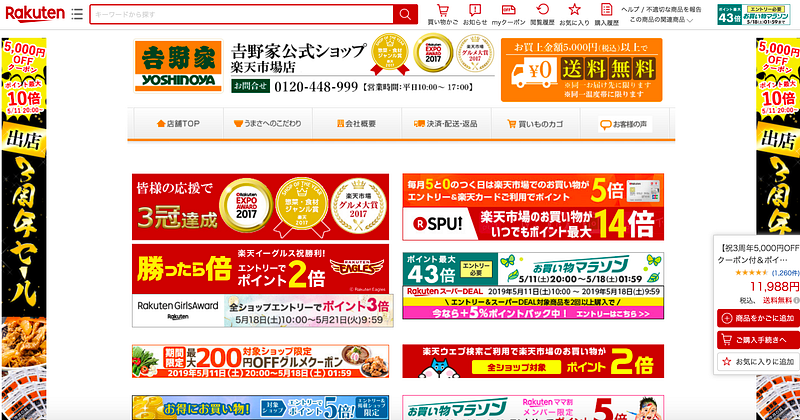
Rakuten has been around since 1997 and the paper catalogue style of their pages make it popular with older users, however the simplicity of Amazon is proving to be more popular with users in their 20s and 30s.
Why are so many websites still like this?
The majority of these sites have been around for decades, and people are used to their current design. They tend to have older users who are more sensitive to change and use desktop computers instead of smartphones or tablets.
This makes it difficult for big companies to make changes and adopt more modern and user friendly designs.
Japan’s most popular messaging app, LINE, made a small change to simplify their home tab recently, which resulted in a wave of one star reviews requesting that the design be changed back.
Additionally, the importance of good UI/UX design is only just beginning to be recognized, meaning that the majority of older web companies tend to have few product designers, focusing more on content and features than presentation.
This style of information overload is reflected in bricks and mortar stores.
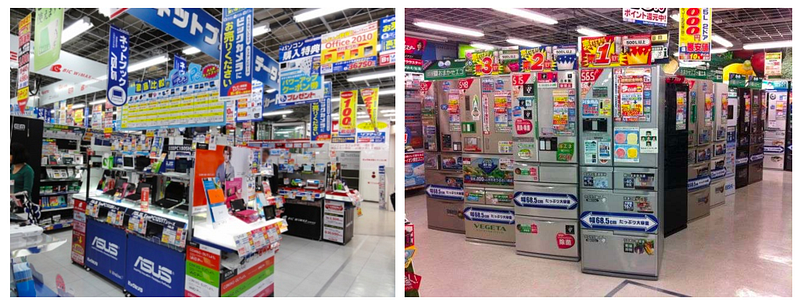
Stepping in to an electronics store in Japan is overwhelming — the brightly lit stores have advertising on every surface (including the floor) and product displays often have speakers playing a jingle or advertisement. Staff wear microphones connected to speakers on their belt and are encouraged to constantly advertise their wares.
I spent two years working in one of these stores and often walked around the store yelling into my microphone “iPads! We’ve got iPads! You can touch and then buy them!”, just a few meters away from the calculator man yelling “Calculators! Get your calculators here!”
While this would likely repel customers in Western countries, in Japan the goal is to create a bustling atmosphere that makes it seem like the store is popular and busy — encouraging customers to come in and buy. This is also what the websites are aiming for.
Changes on the horizon
Recent years have seen a number of new mobile first companies appear that are appealing to younger audiences with simpler, smartphone friendly designs.
Mercari, an online auction service, has a simple and user friendly interface that saw it quickly become the most popular auction app in Japan, overtaking Yahoo Auctions, which spent decades at the top.
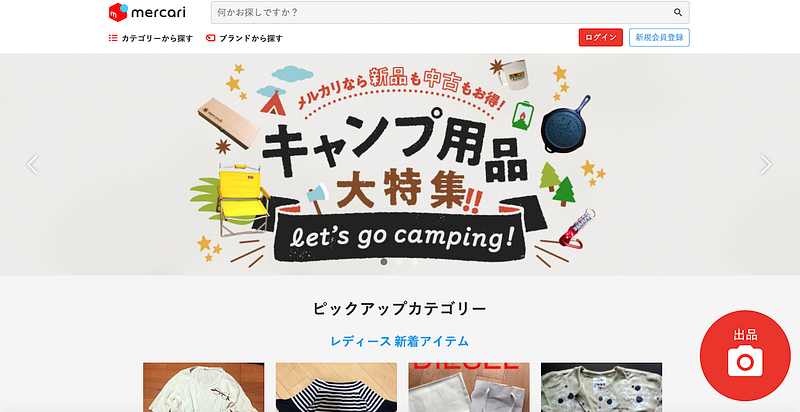
Success stories like this are proving the importance of good UX, and slowly encouraging more Japanese companies to hire UI/UX designers.
Older Japanese web companies will need to take the plunge and adapt more modern designs in order to appeal to younger users, or risk losing out to new, more agile competitors.
Thanks for reading! Learn about how some of these Japanese companies have created new mobile payment experiences in my newest article.


