
CULTURE
The Only Novel I’ve Ever Read That Ends in A Comma
Revisiting René Daumal’s classic surreal novel, Mount Analogue
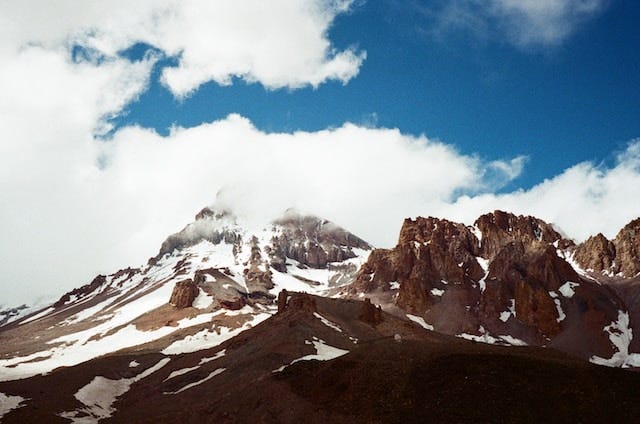
I was recently reading René Daumal’s allegorical novel Mount Analogue when it ended abruptly with a Comma.
Baffled, I turned the page, but the next page was blank. So was the next. After turning another page, I hit the back cover. I went back and checked. But yes, that really was THE END.
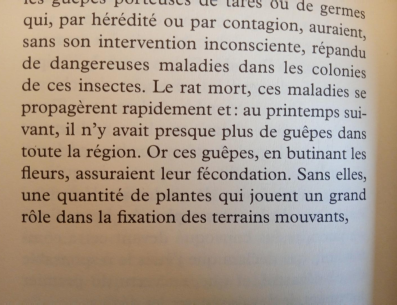
I had an English copy as well, so I checked that, perhaps thinking there had been a printing error.
But it was the same, minus the comma.
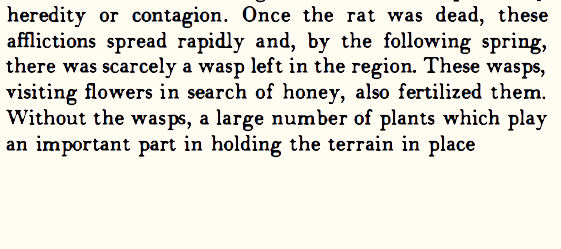
I read the notes in my English translation (City Lights Books, 1971) and read that the book had indeed famously ended mid-sentence. In the middle of the fifth chapter, to be exact.
According to the postface written by his wife, Vera Daumal, while working on the book, a visitor had knocked on René’s door, and not wanting to keep him waiting, put down his pen and answered the call.
It was the last thing he ever wrote.
Already suffering from chronic Tuberculosis, Daumal died a few weeks later in Paris on 21 May 1944, aged 36, with Le Mont Analogue, unfinished.
Le Mont Analogue
The book follows eight explorers led by their mysterious leader, Père Sogol, to Mount Analogue. Sogol believes there is a mountain higher than anything discovered so far. A mystical mountain, a gateway between the ‘real’ world and ‘another’. A link between Heaven and Earth. A place that cannot exist, but exists. The Holy Mountain.
Sogol believes it remains undiscovered due to certain substrata within the ‘magic’ mountain that causes light to bend around it. Just like a star in deep space can bend light rays, Mount Analogue creates a field or “coque” (shell) around it, making it invisible to humans who sail around it.
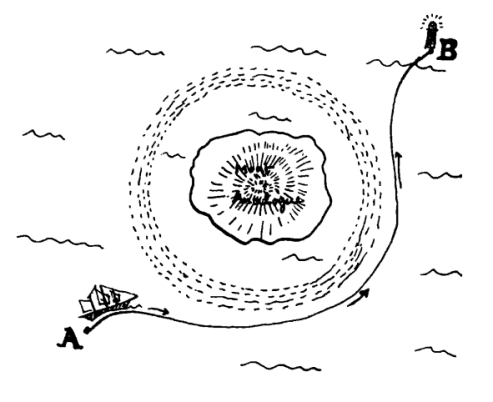
So how do you get in?
One of Sogol’s conditions for the existence of Mount Analogue is that it’s inhabited, and therefore habitable. Indeed, the whole economy of the continent of Mount Analogue, he believes, is set up to cater solely for people coming to climb the mountain. Therefore, there must be a way in, and concludes that only at sunset can one enter, and only by people who have the willingness and desire to find the truth.
So where is it?
Sogol pinpoints its location on the premise that the majority of the world’s land masses occur in the Northern Hemisphere. To balance the earth’s gravitational fields, there must be another huge landmass found in the south. Sogol speculates that this is in the South Pacific, somewhere off the coast of New Zealand.
After months of detailed preparation, the eight explorers set out in a yacht called Impossible, in search of Mount Analogue.
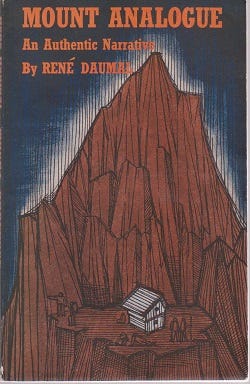
After an arduous trip, they finally enter the continent of Mount Analogue and find it’s indeed inhabited. Shipwrecked mariners and explorers who found Mount Analogue and decided to stay. The way of life is simple, and the monetary system is based on Peradem, a diamond-like stone that serves as the equivalent of gold. Buying and selling as done by exchanging tokens.
After spending time in the settlement of Port-de-Singes, which is like a Mediterranean fishing village from the 17th century, they head up the mountain to set up a base camp below the summit. After many weeks of moving equipment back and forward in terrible weather, the party is finally ready to make the final ascent up the unknown slopes of Mont Analogue. Then the book ends.
Just like that…
Without the wasps, a large number of plants which play an important part in holding the terrain in place…
My thoughts on Mount Analogue
Despite the abrupt ending, I enjoyed the book immensely. It’s peculiar, imaginative, and eccentric. While at the same time perfectly accessible to anyone interested in spirituality and mountaineering.
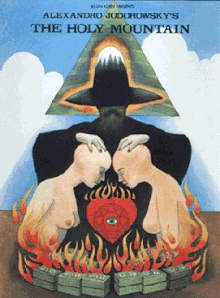
Indeed, Alejandro Jodorowsky’s surreal movie The Holy Mountain was in part inspired by Daumal’s novel. And tells the tale of eight explorers heading up a mystical mountain. Jodorowsky clearly attempting to complete the story where Daumal left off.
In many ways, the abrupt conclusion to Mount Analogue, increases its power. Adds to the sense of mystery. Just as Sogol and the explorers were about to enter the unknown, the story ends. As though Daumal had done it on purpose. Asking the reader to make their own ending up. Challenging us to climb our own Mount Analogue. Make our own spiritual journey up the steep slopes of our own mind.
What’s the point, Daumal himself asked? What’s the point of walking up a mountain to come down again, where’s the sense in that? But if you never get to the top, he concluded, you’ll never know what is above. Whereas, if you get to the top, you’ll always know what’s below.
In my teens and early twenties, I climbed many high mountains with my father, and I still do when I get the chance. It’s one of the few times in life (perhaps the only) when I feel genuinely free.
Something happens up there. You have a perspective of the world beneath that is impossible to gain from ‘below’. This is the lure of the mountain. The lure of the summit, the lure of the unknown. And when you finally make it to the top, you feel untouchable.
This is when you know you’ve conquered Mount Analogue.
You can read Mount Analogue in English here: https://avalonlibrary.net/ebooks/Ren%E9%20Daumal%20-%20Mount%20Analogue%20%28English%20translation%29.pdf
Vous pouvez lire Mont Analogue en Français ici: https://avalonlibrary.net/ebooks/Ren%E9%20Daumal%20-%20Le%20Mont%20Analogue.pdf
Thanks for reading, for more books, see


