
The only healthy way to approach Dry January
Any initiative that gets people thinking about quitting alcohol is a good thing, but be careful not to fall into the Dry January trap.
I touched on this back when Sober October was going on, but I thougth it was worth revisiting given the increasing popularity of Dry January.
For some people, New Year’s Resolution season is all about getting back to the gym, eating less garbage, or finally putting their nose to the grindstone and getting to work on their side hustle.
If you’re a regular reader of my stuff, one of your New Year’s Resolutions probably involves stopping, or continuing to avoid, drinking alcohol.
And that’s great!
My only caveat: use Dry Jan as a launching point for drastically reducing the amount of alcohol in your life, not as an excuse to continue exessive drinking the rest of the year.
The Dry January Trap
Here’s what I wrote back in October:
I’ve read a lot of articles now from people who are currently taking part in Sober October and/or Dry January or have done so in the past, and they all seem to follow the same format.
The writer wants to experience health benefits from not drinking. The writer has tried sober months before and loved it. The writer feels great again after X days. Eventually the writer plans to start drinking again (and later writes an article confirming it).
One line I see used over and over again in these kinds of articles: “I wanted to prove to myself I could do it.”
Here’s where I think these sobriety months can be detrimental to your long-term sobriety and health if you come at them the wrong way.
First of all, if you need to prove to yourself that you can stop drinking alcohol for a relatively short period of time, I think that’s probably indicative that you already have a problem.
To be clear, I’m not saying that in a judgmental way.
This was the cycle I was trapped in for many, many years.
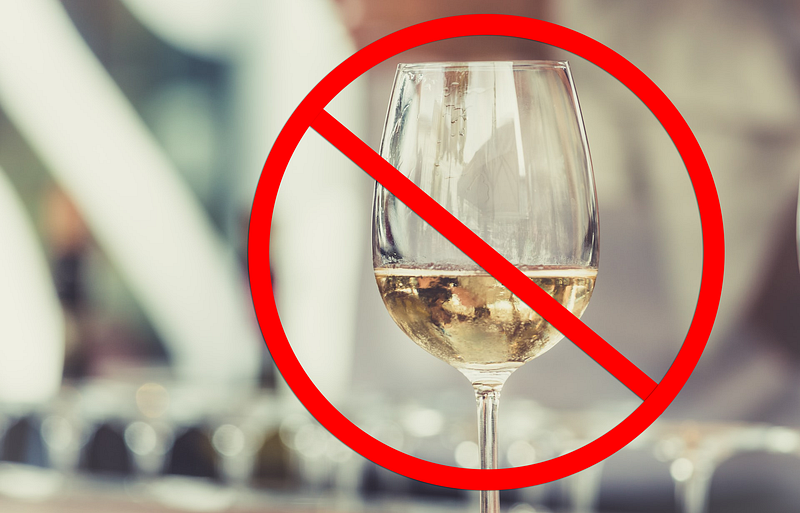
Lies we tell ourselves
I always told myself that I could stop any time I wanted to — it was just that I didn’t want to.
This was a lie, of course.
If I didn’t know instrinsically that I did have a problem, I wouldn’t have spent so much time thinking about it and convincing myself that I didn’t.
Every time I’d go a few days or even a few weeks without drinking alcohol, I’d hold it up as evidence that I could stop any time I wanted to.
Yet I always slid back into my old, daily drinking ways.
This is how sly the poison is. It tricks your brain into doing all manner of mental gymnastics to keep it around.
Dry January backslides
Here’s a quick story I’ve already told once before, but I’m going to touch on it one more time because it’s actually a real-life example of a Dry January backslide.
It occured during a period of time after I’d initially decided to quit alcohol but still wasn’t completely free. At the time, I was on a 60+ day streak without booze.
I was out for breakfast with my son’s hockey team after an early morning practice, and one of the other dads and I got to talking about Dry January.
The dad said he decided to try it and that he hadn’t felt this good in years (this was in mid-February, so he’d already extended his new lifestyle deep into the winter).
I explained how I’d quit drinking too and that I was feeling absolutely fantastic.
It was at this point that he mentioned his family was heading down South for a winter vacation, and I was curious: “Are you going to stick with the no drinking thing?”
He laughed.
“Oh God no!”
Here was another person who’d discovered the magic of quitting, yet couldn’t wait to go back to feeling like crap again.
You may think you’ve ditched alcohol, but believe me: it’s waiting for us.
Alcohol is always waiting for problem drinkers to slip up.
It waits for us to forgot that our baseline level of health is actually to feel really good, and then it makes its move.
Maybe you’ve had a terrible day. Maybe you’ve had an amazing day. Maybe it’s Friday night and just one drink won’t hurt.
Then, the cycle begins anew.
The right Dry January approach
Please don’t misconstrue this story as me discouraging you from taking part in Dry January.
But please allow me to suggest using it as a starting point for longer-term healthy decisions rather than a forced intermission in your suspected alcoholism.
Here’s a great way to remember the benefits of quitting alcohol when the calendar flips to February: write it down.
Keep a log in your notes app of how you feel every day of Dry January. Log the withdrawals in the first week or two, but also keep track of how amazing you feel after the poison has left your body.
Do what I did and make a spreadsheet noting the amount of money you saved every day you didn’t drink that month, and create a cell for the sum of all those amounts.
You’ll be shocked how much you’ve been spending.
Note all the accomplishments you make, recognize the improvement in your appearance, your elevated mood, your bank balance.
And then, when you’re considering going back to your old ways, consult your notes and ask yourself if you really want to return to the poor sleep, the associated grumpiness, the puffy, dry face, the bloated appearance, the overall emotional malaise.
If you’re really honest with yourself, you may decide not to go on that bender to celebrate the end of Dry January after all.
Freedom February, anyone?
Thank you for reading this post all the way to the end, my friends! If you enjoyed it or found it inspiring, please give it a clap or two so others can find it!
New readers: did you know Medium membership starts at just $5 a month (and you can cancel any time)? To read more stories like this risk-free and give me a ‘lil kickback, please consider supporting this publication directly by using my link to sign up!
My most-read posts:
- I quit alcohol for one month and my side hustle income exploded
- Do these 4 exercises and you’ll be in the best shape of your life
- The one priceless book that kicked off my quit alcohol journey
- Gary Oldman explains why it’s never too late to quit alcohol
- When alcohol trapped Gwyneth Paltrow
- Why I finally decided to quit drinking alcohol
- You won’t age gracefully if you don’t quit alcohol
- What musician James Taylor taught me about sobriety (and myself)
- Cheryl Burke reveals the key to avoiding alcohol
- Try this Dax Shepard trick to quit alcohol
The latest from me: