
The Only Book You Need to Write Better
Six lessons from William Zinsser.

Several writing books can make you a better writer, and I’ve written about them here. But if you can only have one, if you have to live out the rest of your life on a desert island and you can only take one book on how to write better, take this one.
On Writing Well by William Zinsser.
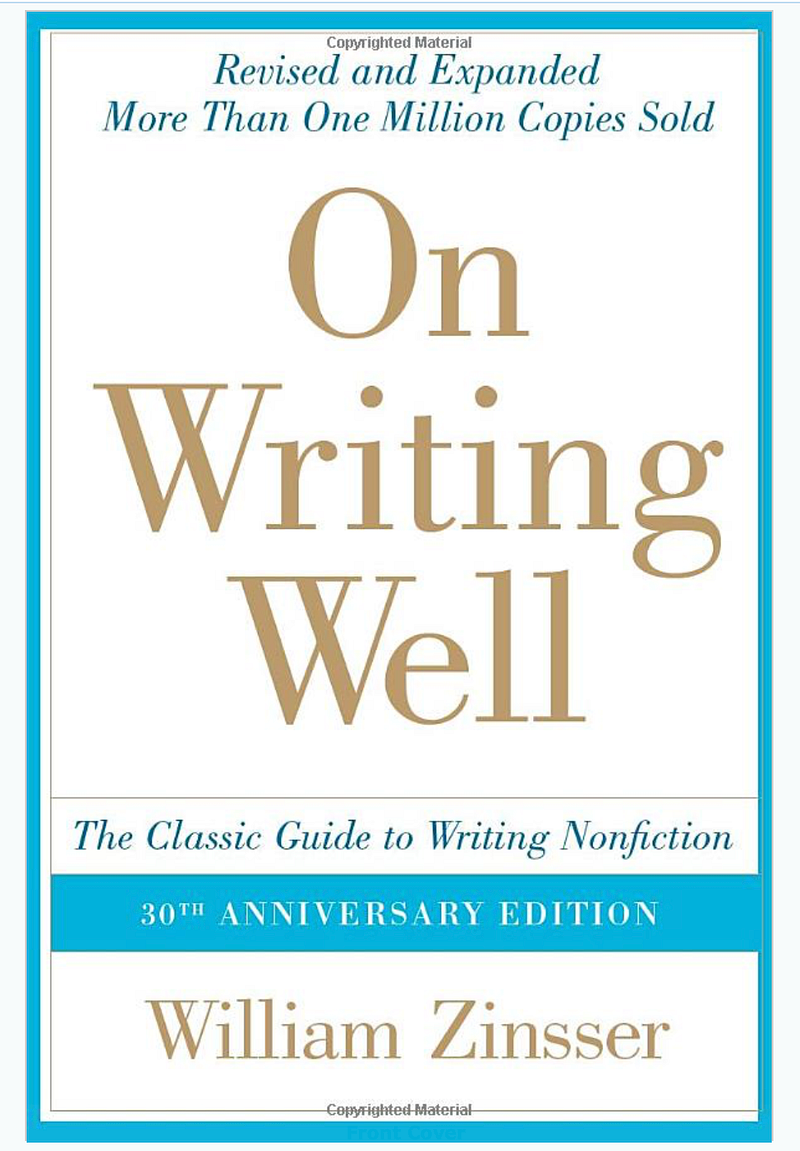
A few comments on my post, Five Books and One Website That Will Teach You How toWrite Better, mentioned this book.
Thank you, dear readers. You are so wise. This book is excellent.
Zinsser shares a draft of On Writing Well in the second chapter on pages ten and eleven.
(I took a screenshot of them and have included them below.)
I read both pages slowly a few times and took his editing advice to heart.
I immediately went to my writing and edited it in the same vein, taking out the small unnecessary words, which significantly sharpened my piece. His two-page advice improved the next piece I edited, making it clearer and more precise — what a gift.
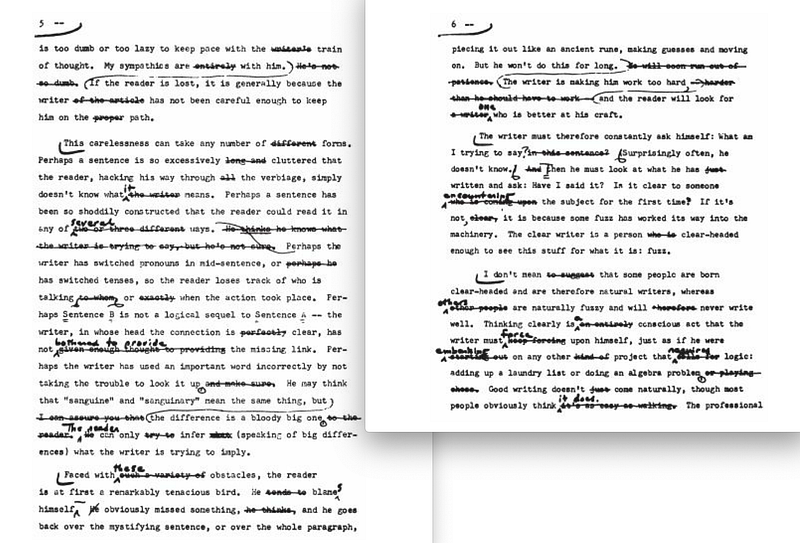
I learn best visually, and by example, this draft included is priceless. As if Zinsser was there himself editing my work.
Each chapter offers some gem like this.
Following — six lessons I picked up on my first read of the book.
(I planned to include many more lessons — his book is so rich with advice. But this post is already too long. It begs for a second story on the same topic. Stay tuned)
1) Writing is a craft, not an art.
Crafting words to make sense for the reader is where the hard work of writing comes, “rewriting is the essence of writing.”
Zinsser points out, and clearly demonstrates in the example above that “professional writers rewrite their sentences over and over and then rewrite what they have rewritten.”
The two pages included above are of the final manuscript of the second chapter of On Writing Well. It may look like a first draft, but they had been rewritten four of five times.
You sculpt and refine in the editing process, just like an artist sculpts clay into a masterpiece. A lot of marble was chipped away before Michelangelo achieved his masterpiece David.
Just write, and forget about editing while writing.
You want a lot of words to work with because, in the editing process, you will make your piece bleed with red ink and chip away to get to the essence of an article, eliminating the clutter as you edit.
Editing removes words that don’t serve a sentence, paragraph, or story to achieve the greatest clarity and strength.
The secret to good writing is to strip every sentence to its cleanest components. Every word that serves no function, every long word that could be a shot word, every adverb that carries the same meaning that’s already in the verb, every passive construction that leave the reader unsure of who is doing what — these are the thousand and one adulterants that weaken the strength of a sentence. — Zinsser
2) Good writing doesn’t come naturally.
Writing is more skill than talent.
Some are born better writers than others. They hear the melody of words with a writer’s ear. Some writers are born with an analytical mind that lays out an argument clearly on the page.
But anyone can get better at writing if they put their time and mind to it. Anyone.
Many people believe that good writing comes naturally, and that is not true. Writing takes work, even for the talented.
Writing is hard work. A clear sentence is no accident. Very few sentences come out right the first time or even the third time. Remember this in moments of despair. If you find that writing is hard, it’s because it is hard. — Zinsser
3) Reading aloud is required.
All great writers read aloud before submission.
(Previously, I have used both “aloud” and “out loud” in different posts. Now that I have read Zinsser’s book, going forward, I’m going to only use aloud, like Zinsser.)
The more books I read on writing by famous authors, the more this becomes true. Read your writing aloud.
Zinsser,
I try to make what I have written tighter, stronger, and more precise, eliminating every element that’s not doing useful work. Then I go over it once more reading it aloud, and am always amazed at how much clutter can still be cut.
Reading aloud is an easy way to spot mistakes, clunky writing, and sentences that just don’t sound right to the reader.
At first, you may feel silly reading aloud to yourself — especially when people are home — but you quickly realize how it improves writing and gives you an insight into how the reader hears your words.
When reading aloud, mark any parts that stumble or drag, then go back and rewrite those sentences.
Your writing will improve.
4) Writing takes confidence.
Two months into my daily writing and publishing practice, I realized writing takes confidence.
You are sharing your ideas, thoughts, and words with the world to be read and judged. People will judge. Wrap your brain around that quickly and come to terms with it. It will make you a better writer.
Writing takes confidence.
The days when I’m feeling more confident about life are the days when my writing is the best; my writing reflects my mood — for better or worse.
Have an opinion, even an unpopular one.
God invented the mute button for a reason, she wants you to use it. I haven’t had to block anyone on Medium, but I know where the block button is and how to use it if I need it.
I love when people disagree with me; sometimes, my articles with the best engagement were written as a response to counter a comment I don’t agree with from one of my readers.
Your audience reads you for your opinion, have one.
Don’t be condescending. Back up your argument with facts, convince the reader your idea is valid. Don’t sermonize; no one wants to be lectured to, but prove your point to your audience.
Believe in your own identity and your own opinions. Writing is an act of ego, and you might as well admit it. Use its energy to keep yourself going. — Zinsser
5) Be yourself as you write.
Readers read certain writers for their personalities. This does not mean you ignore craft.
There are two parts to writing and gaining an audience, the first part is craft, and the second Zinsser speaks of is attitude.
The craft you can master through practice and active learning — like reading Zinsser’s book On Writing Well — taking a writing class, and working with an editor. My writing gets better every time I work with a talented editor.
The second part of the equation — attitude — is “how you use that skill to express your personality.”
Zinsser says, write how you speak. Don’t use words you wouldn’t use in conversation.
If you’re not a person who says “indeed” or “moreover,” or who calls someone an individual (“he’s a fine individual”), please don’t write it. — Zinsser
6) Enjoy it.
A few months ago, I hated getting out of bed because I knew I had to write. I had a bad attitude. The income wasn’t coming like I thought it should. I was putting so much time and effort into writing with little financial gain. My poor attitude was reflected in my writing at the time.
Readers don’t want to read writing that comes from a place of resentment.
I acknowledged what was happening and quickly changed my attitude.
You gotta love it.
Writing takes love and heart, and if you don’t have it, your readers can tell. They are savvy as hell, and there is a lot of completion vying for their attention. If you don’t love what you are writing, your readers won’t like it either and will know you’re drudging through it.
If you’re struggling to reread and edit something you wrote, it’s a good bet your readers will also. They can sense your boredom, it will be all over the page.
You have to push through the hard parts, but you can’t hate it or be resentful.
One thing that changed my attitude is I asked myself, what would be fun for you to write today? Forget what does well, what do you want to write?
I wrote a fiction piece, and I had the best time writing it. It sparked my love of writing again. That month I had the best payout I’ve had on Medium.
Enjoy the process. Your writing and your readers will thank you.
“You are writing primarily to please yourself, and if you go about it with enjoyment, you will also entertain your readers who are worth writing for.”
More inspiration for writers…
Jessica is a writer, an online entrepreneur, and a recovering type-A personality. She lives in Los Angeles with her extrovert daughter, two dogs, and two cats.


