avatarDark Energy Articles

Free AI web copilot to create summaries, insights and extended knowledge, download it at here

2618

Abstract

e.</p> <figure id="2c47"> <div> <div> <img class="ratio" src="http://placehold.it/16x9"> <iframe class="" src="https://cdn.embedly.com/widgets/media.html?type=text%2Fhtml&amp;key=a19fcc184b9711e1b4764040d3dc5c07&amp;schema=twitter&amp;url=https%3A//twitter.com/the_geeky_news/status/1570785883753746433&amp;image=https%3A//i.embed.ly/1/image%3Furl%3Dhttps%253A%252F%252Fabs.twimg.com%252Ferrors%252Flogo46x38.png%26key%3Da19fcc184b9711e1b4764040d3dc5c07" allowfullscreen="" frameborder="0" height="281" width="500"> </div> </div> </figure></iframe></div></div></figure><h1 id="d24e">Oldest heart in the history of paleontology</h1><blockquote id="e092"><p>“I’m a paleontologist with 20 years of experience, and I was really amazed to discover such a well-preserved heart from 380 million years ago,” — says Kate Trinajstic, author of the study from Curtin University in Australia. — “Evolution is a series of small steps, but the fossil we’ve discovered suggests that there was a very large leap between different vertebrates This ancient fish has a heart almost in the same place where today’s sharks have one,” the scientist adds.</p></blockquote><p id="8add">Armored fish lived from the late Silurian until the end of the Devonian about 420–360 million years ago. They are counted among the oldest representatives of fishes. They had a cartilaginous axial skeleton and a dorsal strut. The head and a large part of the trunk were covered by a strong, characteristic carapace, which consisted of large plates.</p><p id="91de">They were characterized by <b>large and sharp teeth</b>. The feature that distinguished armored fish was the joint that connected the skull to the body armor. These creatures lived at the bottom of the oceans and had a typically flattened body for fish living at these depths. Their final demise occurred during the Devonian mass extinction.</p> <figure id="f956"> <div> <div> <img class="ratio" src="http://placehold.it/16x9"> <iframe class="" src="https://cdn.embedly.com/widgets/media.html?type=text%2Fhtml&amp;key=a19fcc184b9711e1b4764040d3dc5c07&amp;schema=twitter&amp;url=https%3A//twitter.com/websternwebster/status/1570746088902266881&amp;image=https%3A//i.embed.ly/1/image%3Furl%3Dhttps%253A%252F%252Fabs.twimg.com%252Ferrors%252Flogo46x38.png%26key%3Da19fcc184b9711e1b4764040d3dc5c07" allowfullscreen="" frameborder="0" height="281" width="500"> </div> </div> </figure></iframe></di

Options

v></div></figure><h1 id="e97f">The astonishing similarity between the organs of primitive fish and humans</h1><blockquote id="565a"><p>“What is truly unique about the fossils from the Gogo Formation is that they are preserved in remarkable condition. Our discovery of soft tissue only confirms this,” admits paleontologist Per Ahlberg of Sweden’s Uppsala University, who was involved in the research. The scientist adds that “such a thorough analysis, without interfering with the structure of the fossils, would not have been possible without state-of-the-art technology.”</p></blockquote><p id="d31d">What’s more, in addition to the heart, <b>the study discovered preserved fragments of the stomach, intestine and liver.</b></p><blockquote id="32cb"><p>“For the first time ever, we can see the organs of a prehistoric fish. But what surprised us most was that their structure was not much different from human organs,” says Prof. Trinajstic.</p></blockquote><p id="c0d5">This suggests that we are even more similar to primitive fish than scientists had previously suggested.</p><p id="6226">However, the scientists point out that the liver itself was relatively large compared to the fish’s body. Presumably, such a structure enabled it to swim the way sharks do. The researchers hope to soon find more similar fossils that they can study using the same method. According to the authors,<b> this could provide entirely new information about the evolution of prehistoric species.</b></p><p id="d872"><i>Source: <a href="https://www.science.org/doi/10.1126/science.abf3289">Science</a></i></p><div id="1d58" class="link-block"> <a href="https://readmedium.com/a-new-study-shows-that-a-large-part-of-the-amazon-will-never-regenerate-again-3a1888940f1b"> <div> <div> <h2>A new study shows that a large part of the Amazon will never regenerate again.</h2> <div><h3>Scientists have discovered that the destruction of a large part of the Amazon areas, which is caused by deforestation…</h3></div> <div><p>medium.com</p></div> </div> <div> <div style="background-image: url(https://miro.readmedium.com/v2/resize:fit:320/1*KFsz1H9l4xLZvK_zv-lqQQ.png)"></div> </div> </div> </a> </div><p id="4b78"><b>Cool that you made it to the end of this article. I will be very pleased if you appreciate the effort of creating it and leave some claps here, or maybe even start following me. It would be nice if you also left a tip! Thank you!</b></p></article></body>

The oldest fossilized heart in history. It is 380 million years old — who did it belong to?

Paleontologists have found a mineralized heart in the fossilized remains of an armored fish. Scientists were impressed by how well the organ was preserved after about 380 million years.
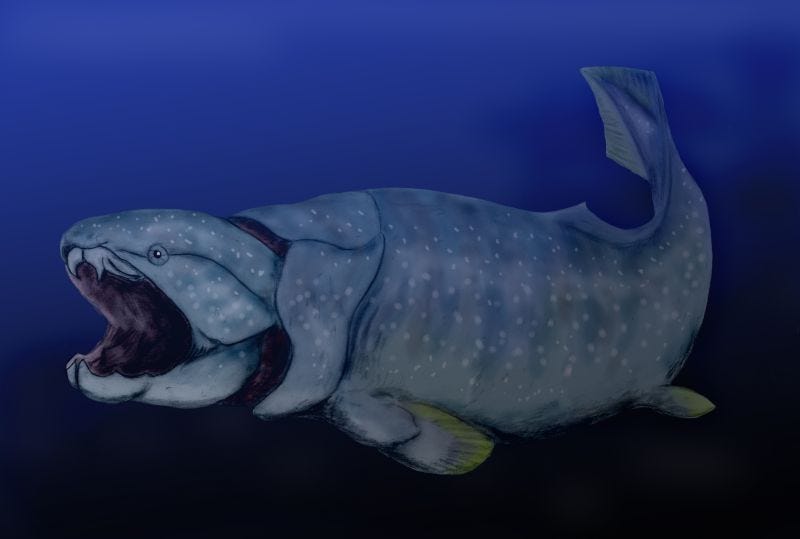
[Photo: Nobu Tamura (http://spinops.blogspot.com), CC BY 3.0, via Wikimedia Commons]

Finding fossils of organisms from millions of years ago is always quite a success for paleontologists. Thanks to prehistoric remains, we continue to learn more about evolutionary history and our planet. However, it is very rare that skeletons also contain fragments of soft tissue.

This is because it is the tissue that degrades the fastest. On the other hand, it also contains a great deal of information about a creature’s genetic material. That is why we can call the discovery of a dinosaur fossil with a skin fragment in Canada spectacular.

The fossil was found in Australia’s Gogo Formation

In Western Australia there is the Gogo Formation, which is the so-called Fossillagerstätte. That is, a place where a huge number of perfectly preserved fossils have accumulated. Among other things, it is here that an amazing prehistoric coral reef from the Devonian period was found. Australian scientists have recently made another remarkable discovery. They unearthed a fossil of an armored fish from 380 million years ago, with a mineralized heart inside. They described their research in the pages of the prestigious scientific journal Science.

The researchers decided to examine the fish organ using a 3D method, which allowed them to determine the detailed anatomy of the creature. The authors of the study described in the article that the organ resembled the letter S, and had two chambers. The smaller one was located at the top, and the larger one at the bottom. The scientists admit that the discovery was surprising, and they did not expect to find such a significant source shedding light on the body structure of such an ancient creature.

Oldest heart in the history of paleontology

“I’m a paleontologist with 20 years of experience, and I was really amazed to discover such a well-preserved heart from 380 million years ago,” — says Kate Trinajstic, author of the study from Curtin University in Australia. — “Evolution is a series of small steps, but the fossil we’ve discovered suggests that there was a very large leap between different vertebrates This ancient fish has a heart almost in the same place where today’s sharks have one,” the scientist adds.

Armored fish lived from the late Silurian until the end of the Devonian about 420–360 million years ago. They are counted among the oldest representatives of fishes. They had a cartilaginous axial skeleton and a dorsal strut. The head and a large part of the trunk were covered by a strong, characteristic carapace, which consisted of large plates.

They were characterized by large and sharp teeth. The feature that distinguished armored fish was the joint that connected the skull to the body armor. These creatures lived at the bottom of the oceans and had a typically flattened body for fish living at these depths. Their final demise occurred during the Devonian mass extinction.

The astonishing similarity between the organs of primitive fish and humans

“What is truly unique about the fossils from the Gogo Formation is that they are preserved in remarkable condition. Our discovery of soft tissue only confirms this,” admits paleontologist Per Ahlberg of Sweden’s Uppsala University, who was involved in the research. The scientist adds that “such a thorough analysis, without interfering with the structure of the fossils, would not have been possible without state-of-the-art technology.”

What’s more, in addition to the heart, the study discovered preserved fragments of the stomach, intestine and liver.

“For the first time ever, we can see the organs of a prehistoric fish. But what surprised us most was that their structure was not much different from human organs,” says Prof. Trinajstic.

This suggests that we are even more similar to primitive fish than scientists had previously suggested.

However, the scientists point out that the liver itself was relatively large compared to the fish’s body. Presumably, such a structure enabled it to swim the way sharks do. The researchers hope to soon find more similar fossils that they can study using the same method. According to the authors, this could provide entirely new information about the evolution of prehistoric species.

Source: Science

Cool that you made it to the end of this article. I will be very pleased if you appreciate the effort of creating it and leave some claps here, or maybe even start following me. It would be nice if you also left a tip! Thank you!

History
Life
Science
Dinosaurs
News
Recommended from ReadMedium