
A new study shows that a large part of the Amazon will never regenerate again. What lies ahead for the “lungs of the Earth”?
Scientists have discovered that the destruction of a large part of the Amazon areas, which is caused by deforestation and burning, has reached a critical point. This means that these forests may never recover again. What now?
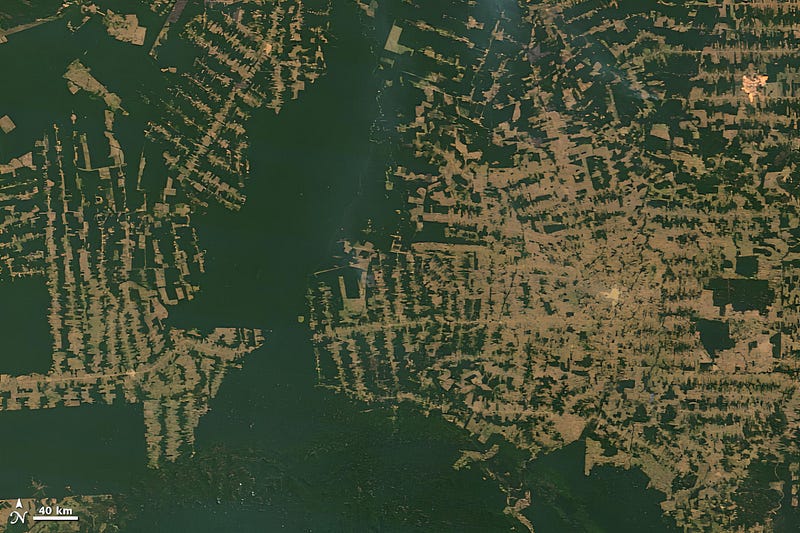
Last year I wrote about the record level of logging in the Brazilian Amazon, which reached 22% from August 2020 to July 2021. This means that some 13,235 square kilometers of forest were cut down. This was the highest deforestation rate since 2006. The first half of 2022 showed no improvement. What’s more — these six months showed that harvesters and saws did not slow down. From January to June, another 3988 km2 of Amazonian forests were cut down.
Experts unanimously point to the culprit behind these crimes against nature. It is Jair Bolsonaro, a former military officer, right-wing politician and current president of Brazil.
74% of the Amazon’s original forests have survived deforestation
An international team of scientists, in cooperation with the Coordinator of Indigenous Organizations of the Amazon (COICA, or Coordinator of Indigenous Organizations of the Amazon River Basin), have conducted an extensive study on the extent of destruction of Amazonian forests throughout the region. The researchers’ conclusions are striking. The forest has reached a crisis point, and in many areas the Amazon is turning into savannah.
“Brazil and Bolivia account for 90% of deforestation and destruction in the Amazon. In these two countries, you can already see that the forests are turning into savannah. Unfortunately, this is no longer just a black scenario for the future. It’s a reality that is evident in many parts of South America.” — report the researchers.
The situation is very bad in most countries where Amazonian forests grow
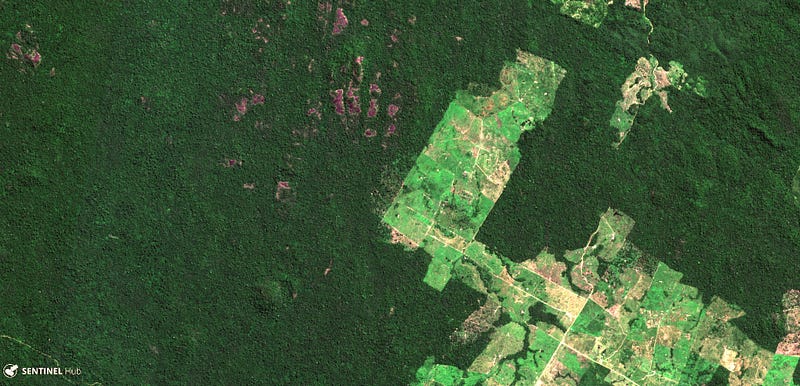
Scientists have carefully analyzed the situation of the nine countries where the Amazon is located. It turns out that only in the area of two countries the situation is relatively good. These are Suriname and French Guiana. At least 50% of the forest area on their territory remains intact. Many oragnizations have long been raising to protect 80% of the Amazon forest, but scientists say it is too late to do so. According to them, only 74% of the trees have survived.
Experts remind that a large area where indigenous peoples live is also subject to illegal deforestation. The lives of the Amazonian people are regularly disrupted, and there is often a struggle for life and for survival. This was very well shown in the recent documentary “Territory,” directed by Alex Pritz, which we wrote about recently.
The biggest threat to the Amazon is agriculture and… populism
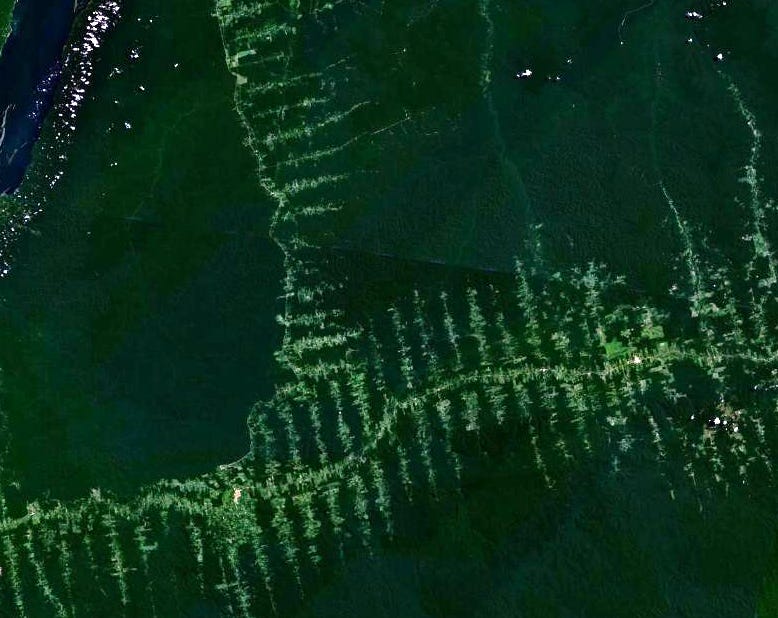
The authors of the study point out that the causes of deforestation are several. These include mining and oil extraction. The deposits are located in a relatively large area of the Amazon. However, the biggest problem is agriculture. It is responsible for 84% of total deforestation. Very often there are conflicts between farmers and indigenous peoples. Farmers very often lead to uncontrolled arson in order to get land (often illegally) for their crops. The Amazon problem is a structural and multi-layered problem. Therefore, very large-scale cooperation is needed to solve it.
Recall that when Jair Bolsonaro took office as Brazil’s president in 2019, the right-wing politician heralded success in the fight against logging. He gave numbers, data and dates. The facts, on the other hand, are that since the beginning of his term in office, logging in the Amazon has begun to accelerate at a rapid and record pace. The Brazilian president reiterates at every possible opportunity the importance of strengthening the national economy, but this is growth at the expense of rainforest exploitation. Political populism and staying in power seem more important than ecology, the “green lungs of the Earth” and the future of our planet. Unfortunately, this attitude is evident in many countries around the world today.
Still, there is light at the end of the tunnel, and there is a chance that there may be a change in domestic politics in Brazil itself. Presidential elections will be held there this October. Brazilians will decide to whom they will entrust power, as well as the role of “savior” of the Amazon and its indigenous peoples. In the latest poll, it is Brazil’s former president, Luiz Inacio Lula da Silva, who is winning over Jair Bolsonaro. His lead is as high as 12 percentage points. Recall that during Lula da Silva’s term, the scale of deforestation was much smaller.
Cool that you made it to the end of this article. I will be very pleased if you appreciate the effort of creating it and leave some claps here, or maybe even start following me. Thank you!


.jpg)
