
The Old Woman that Lived in the Shoe was my Friend
A Poem, a Tale, from before ‘The end.’
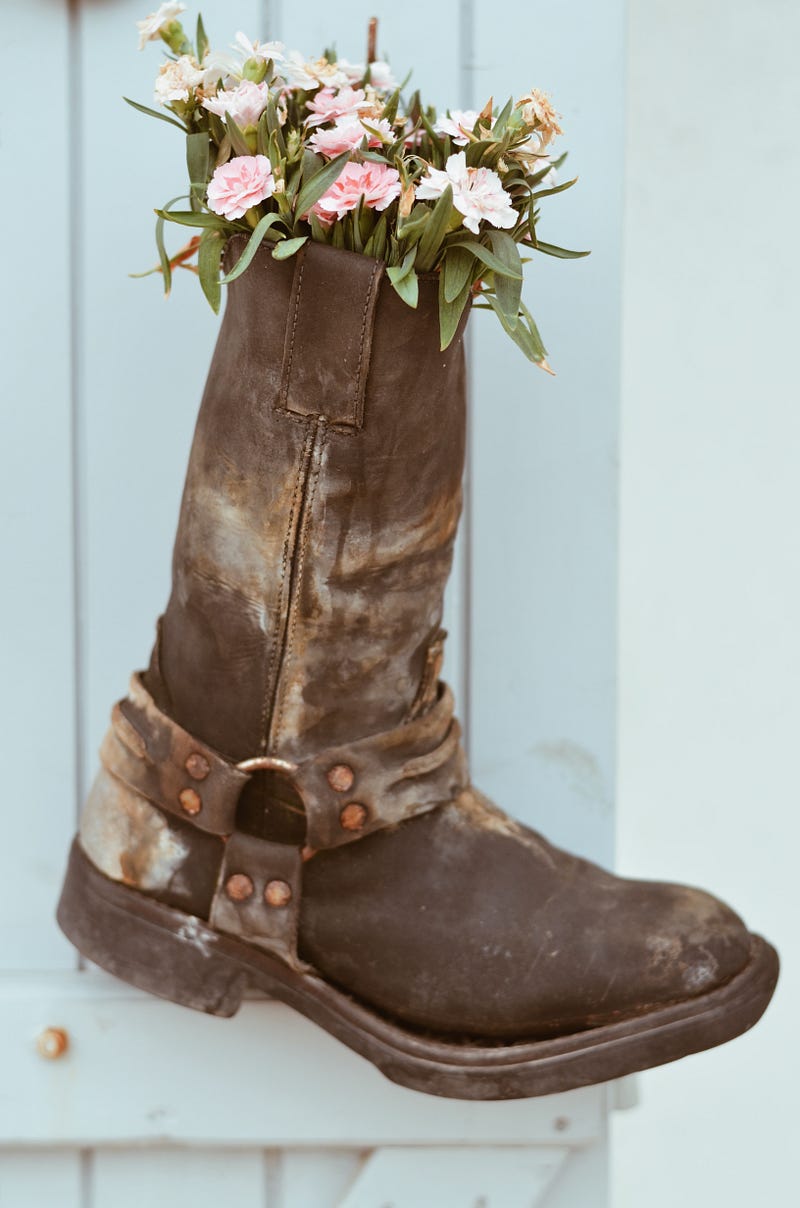
For starters, our home —’twas never a shoe. Only tied to our door, was a boot without laces, With flowers to sell, to the Little-to-do; Left by Eliza — who we lost to the races.
Nor were we whipped, or beat with a stick, There wasn’t the time; far too many to mind. That idiot Jack, who thought himself quick; Rhymed for the littlies — and he was not kind.
We were each left alone, in the wild world to fend, Breadcrumbs didn't matter, we weren't wanted, I fear. And if I ever catch Hansel & Gretel round any bend… We baked ginger all week, to bring those lying brats here.
Snow White called us dwarves, but she always pretended. It was just a small house, that was packed to the rafters, With children being grown, fixed-up and mended, Till we could each move along, to our own Happy-afters.
I’ve often thought that ‘The Old Woman who Lived in a Shoe’, must have been a type of foster carer for storybook orphans. I fancy it's where the Pied Piper dropped off all the little ones that he took from Hamelin. But of course, none of this makes any sense if you don't know the English nursery rhyme:
There was an old woman who lived in a shoe. She had so many children, she didn’t know what to do. She gave them some broth without any bread; And whipped them all soundly and put them to bed.
Children and young people ‘in care’, that is, in foster homes or kinship care, etc, are rarely, ‘not wanted at home’ as my poem suggests. It’s just that for whatever reason, home isn't the best place for them for a time. For some, just a short while, for others, many years. And in those times, birthdays and Christmas still happens. This is a cause close to my heart; I’ve seen many a child receive gifts wrapped up (or funded) by strangers, calling themselves ‘Santa’. It's a wonderous thing, for children who sometimes ask, ‘but how will Santa know where I am?’
Thank you to Trisha Traughber who asked us to write about causes we care about in this Vagabond Voices prompt:
And on a totally different note- The failed Sonnet
I really, really, tried for ages to make this poem a sonnet. But it’s hard; the syllables, the iambic whatnots, the couplet, all of that… I think it's the discipline. As soon as someone says ‘it must be ten lines’; it becomes impossible for me to write any less than twelve — No I could, but I hated losing story to do it.
Anyway, Thank you (and hats off )to William J Spirdione who inspired the attempt in the first place. (He makes beautiful sonnets every day.)
And if you’re attempting a sonnet yourself, I found this online syllable counter which even offers you rhyming words. And the site has lots of great info on different types of structured poetry (if you’re like me, who hasn't retained any of that from high school).


