
The Odd Comfort Of Eggs
But you were probably taught the wrong way to cook them.
When I was single, a group of friends and I would get together on a Sunday morning, with hang-overs still intact and the only rescue was a shared cheap breakfast and stories. I love breakfast and I especially love eggs but I was always secretly horrified when one of my friends would say to the server,
“I like my bacon — black. Burnt charcoal black. And I want fried eggs cooked hard. Tennis ball hard.”
I kid you not. She’d really say this.
The server would look at her with horror or a smug smile and I have to say — we all did too. We laughed at her actually. Her food tastes were in an alternative eggy universe I wanted no part of.
Eggs and how they are cooked make people persnickety. But I think it comes down to this. Unless you’re one of the lucky few — you were probably taught the wrong techniques to cook them.
I can’t imagine what kind of egg-hell-childhood my friend had.
Now — don’t get all high and mighty on me. There are many wrong ways to cook eggs. Eggs are meant to be respected, damn it.
Hard-boiled so hard the yolk turns chalky green? Or under-cooking them so clear jelly sloops out? If you’re a fan of either of these methods — stop reading now. My egg essay will just drive your blood pressure up.
The best cooking techniques are always based on what you plan to do with that simple yet delightful egg in your hand.
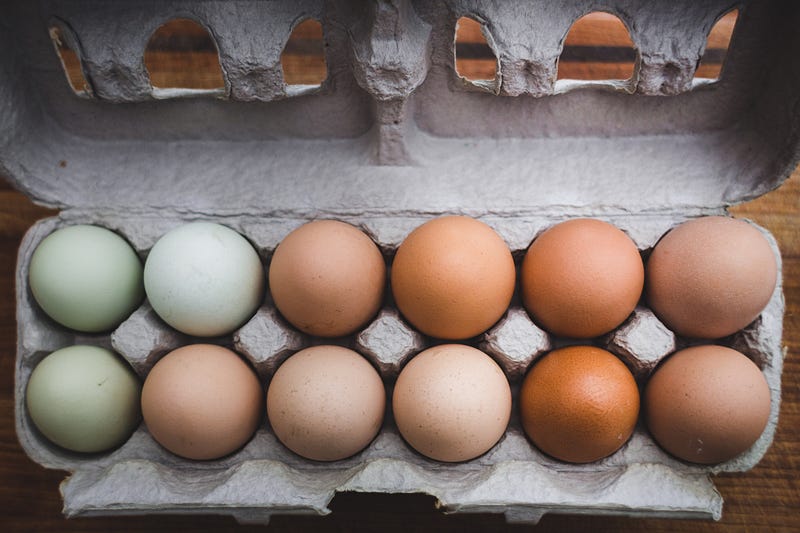
And remember — a brown egg isn’t healthier than a white egg. Brown eggs come from brown chickens and white eggs come from white chickens. Blue eggs come from Easter Egg Chickens called Americaunas. How do I know? I’m a former farm girl. Sorry to burst your bubble.
The most important thing? Buy local and organic eggs if you can and if you can’t? Buy cage-free and free-range eggs which means the chickens had a little more room to move. Respect the chicken and respect the egg, please.
So let’s get cracking, shall we?
Hard-boiled
First of all — if you’re playing the Egg On A Spoon game outside to see how far someone can run without spilling the egg — well — by all means, overcook the hell out of them. 30 minutes at high heat will make them bounce.
But for anything else — let’s talk.
Perfect hard-boiled eggs don’t have the weird grey discolored ring around the yolk. The yolk should have a creamy texture and a squidgy-firm white that hasn’t turned into rubber.
Years ago I bought a beat-up Julia Child cookbook called Mastering the Art of French Cooking.
When I started reading the Egg chapter I thought,
“C’mon — eggs are simple. How can she write a whole chapter on this?”
Well — was I ever wrong. And when I followed her advice, I stopped having hit or miss hard-boiled eggs.
I love hard-boiled eggs. And if I’m making egg salad where the eggs get mashed with a small amount of mayonnaise — I don’t care about the odd grey-ringed egg. But in a salad or anything else, my modified Julia Child method works great.
Yes — I was naive enough to modify Julia Child’s recipe and it worked.
It’s easy. Think Cold-Hot-Cold.
Put 6 eggs in a pot with about 2–3 inches of cold water. No part of the egg should be above water. Bring to a boil and then immediately pull off the heat and put a lid on the pot for 17 minutes. Use your timer.
When the timer rings, drain the water out and put the eggs into a bowl with super cold water for 5 minutes. This makes them easier to peel and you won’t have the weird grey colored yolk that has a chalky texture.
Thanks, Julia.
Scrambled
I hated scrambled eggs when I was a kid. My dad liked them cooked dry, brown, and with onion. I did everything I could to avoid them.
And when I was a young adult — I never cooked them or ate them anywhere. Until I was 27 and went to Paris and then my scrambled egg world was changed forever.
I was at a little cafe and it was closer to lunch than breakfast. The waiter brought me a coffee and then suggested scrambled eggs for lunch. I know I gave him a look but I didn’t want to appear unsophisticated — and so I ordered scrambled eggs with a lump in my stomach.
But when he brought out the scrambled eggs — a pale cloud of them on my plate — nary a dried, brown clump in sight — I knew I was in for something different.
And when I took the first bite of those pillowy soft, creamy scrambled eggs, I almost wept, they were that good.
So here’s my version that I’ve made ever since:
I use 2 eggs per person as a rule and I only make 4 at a time as I don’t like to crowd the pan. People can wait for the next batch as it only takes 2 minutes. Yes — you read that right.
2 eggs
1–2 tablespoons of cream
1 tablespoon butter for the frying pan
- Crack eggs into a small bowl and add 1–2 tablespoons of cream. Whip with a fork until blended.
- Warm a small frying pan and add butter (never too big of a pan as then the eggs spread too far and cook too quickly) over medium heat.
- Once the butter has melted but not browned, add the egg and cream mixture.
- DO NOT STIR. Instead, let them gently cook but with a spatula or wooden spoon — gently fold the eggs on top of each other every 30 seconds. Never let them brown. You must stay by their side and nurture them. After 1 minute when you see the eggs are creamy and almost cooked — remove them from the heat.
Get a plate ready. Slide the creamy cloud of scrambled eggs onto your plate and add a small amount of salt and pepper. Don’t use ketchup or salsa — try eating them plain with toast on the side. And pop the bread into the toaster just before you put eggs in the pan. They’ll be done at the same time.
Voila! Now you’ve had real scrambled eggs.
P.S. If you’re a caviar fan — add a small teaspoon of sour cream onto the top of your cooked scrambled eggs before serving — with a small teaspoon of caviar on top of that. Swoon!
Poached
My sister always tells me I make the best-poached eggs and I’ll make her breakfast anytime for that compliment.
I’m not a vinegar-in-the-water kind of girl as it does leave a faint taste I don’t care for. So my poached eggs aren’t perfectly shaped but they taste perfect.
The secret is managing the simmering heat of the water.
In a medium-ish pan — add 2 inches of water and bring to a gentle simmer on medium heat. Crack 2 eggs into a small bowl first (just in case you get some accidental shell — you can fish it out without boiling your finger). Slide them gently into the water.
Put a clear glass lid on top of the pan. Once foamy water rises to the top of the lid — take it off the heat for 2 minutes. Use a slotted spoon to remove the eggs and if you’re super fussy you can put them on a paper towel quickly to get any excess water. Just don’t break them.
The eggs will be cooked medium-soft which makes most people happy.
Fried-ish
Yowza. I can’t stand the look, taste or texture of the over-cooked skin of a fried egg. It just about takes me down. However, I do like a basted egg. Which is a compromise even my fried-egg-loving husband accepts.
You still put the eggs in a little butter in a frying pan but you add a few tablespoons of water in too and then put the lid on.
Cook over medium heat where most good things are made. The white tops will gently steam(no slime for me or you) but the eggs won’t be wet like a poached egg. Only cook until the top of the egg has covered itself with a white skin that doesn’t wiggle on top — about a minute, maybe two. Give it a try.
Omelet
Nothing can test a relationship like cooking eggs — especially an omelet. For years my husband would make a Denver omelet that was basically a frisbee to deliver cooked ham, onions, peppers and mushrooms. It was a steamed nightmare.
I couldn’t eat it. I’d had an omelet in Paris and I knew how it should taste and look. So I would make my thin, French version with a whisper of Parmesan and some basil leaves and he’d crank out a 5 lb frisbee for himself.
We went to Paris many years later and you bet — I bought him breakfast one morning but he had to have an omelet. The French way.
The waiter brought it out to our table on the sidewalk where we dined with Parisians with their flowing scarves. The omelet was thin but perfectly cooked and yes it did have a slender slice of ham inside with cheese and small wisps of basil. His eyebrows went up and I knew what he was thinking.
He took a bite and well — somebody had an epiphany.
He looked at me and said, “Are you kidding me??? This is unbelievable! Why didn’t you make me do it your way?”
That comment alone was worth the price of the breakfast.
Omelets are similar to making scrambled eggs. You gently push the cooked eggs toward the center of the pan. You also gently heat the filling in another pan and then add to the omelet just before serving.
2 eggs
salt and pepper
1 tablespoon butter for the frying pan
- Crack eggs into a small bowl. Whip with a fork until blended.
- Warm a small frying pan and add butter(never too big of a pan as then the eggs spread too far and cook too quickly) over medium heat.
- Once the butter has melted but not browned, add the egg mixture.
- DO NOT STIR. Instead, let them gently cook but with a spatula or wooden spoon — gently push the eggs toward the center every 30 seconds and let the other uncooked eggs cook on the outside. Never let them brown. You must stay by their side and nurture them. Don’t flip it.
- After 1 minute when you see the eggs are creamy and almost cooked — remove them from the heat. Add the small amount of filling on top and fold the egg over onto itself like an envelope.
I’m not a flipper of omelets as Julia Child was — however when you slide this omelet onto someone’s plate they will flip with joy when they eat it.
So there you go.
Maybe you just discovered you’ve been cooking eggs right some of the time or perhaps you’ve discovered why you hate eggs — because they were always slimy or overcooked.
But no matter what you do, please never let me catch you ordering them tennis-ball-hard.
Thanks for reading! I have loads of food essays (delicious recipes too) and thoughtful and quirky simpler living essays waiting for you. (Well over 100 of them!) And this story caught the attention of NBC News in New York!
Thank you to Mark Bittman for the inspiration