
The Number One Problem Stunting The Youth And Maybe The World.
The Internet is a very resourceful place. However, turning it into a hub of entertainment may be what’s going to end us.
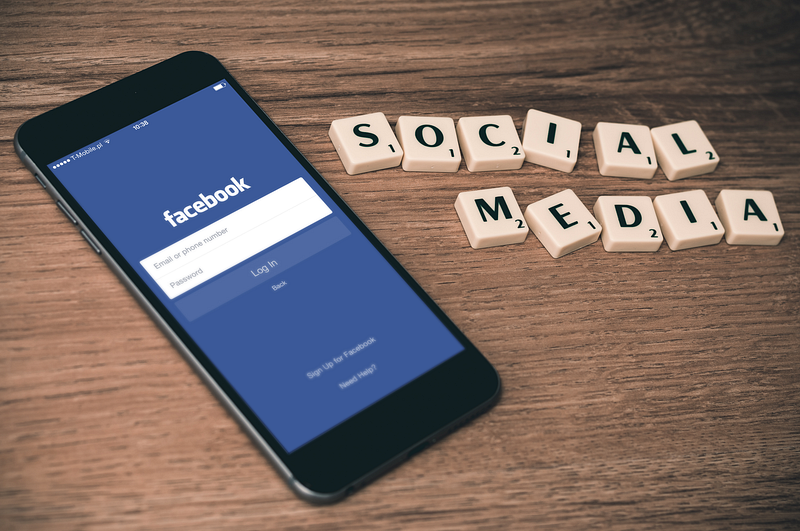
I’m being dramatic. Maybe not.
But the truth is, we are so glued to our phones and so dependent on social media that we no longer communicate or interact with one another — we’ve forgotten how to socialize.
Even I, a millennial who works as a bartender and interacts with people daily, have fallen into this trap.
The worst part — it’s so readily available. Just a touch away.
I remember a time I purposely went out of my way to avoid an interaction because I felt incapable of talking to another person. It boggled my mind.
I talk to people for a living. I take their food and drink orders. Why did I think it was best to completely avoid interacting with another human being?
We’ve put so much emphasis on how we appear on social media that we don’t care how we appear in real life.
We care more about what random strangers think about us on the internet than strangers in real life.
Not to say that we should care about a stranger's opinion at all. It’s wild to think we care so much about a fake persona online.
It all stems from wanting to escape our reality.
This ability to create a life, a facade online, is a perfect opportunity to run from our lives with actual conflict, challenges, and problems.
Life is hard, and social media and entertainment offer us an opportunity to forget about our day-to-day struggles.
But it’s become problematic because now we use it as a coping mechanism. It’s become a drug.
We’re very much addicted to it.
Here’s the biggest kicker — we’ve hand-delivered it to our children.
Children are not learning how to communicate, solve problems, or deal with challenges, whether it’s something they are dealing with by themselves or involving others.
They’re not learning how to navigate the world, only how to escape from it.
How are we supposed to raise capable adults this way? We can’t.
I’m afraid these children will have a much harder life because of it.
I’m already seeing some of the consequences, and I’m debating which social media platforms I should stop participating in.
We no longer know what boredom feels like. This is one of the reasons I, and I’m sure many others, suffer from a lack of creativity.
I haven’t come up with a solid idea in weeks. And when I do, I struggle to focus and get all my thoughts out coherently.
My mind has shut down, and I’m trying to turn it back on.
We’re taking away our children’s and our ability to think for ourselves and be creative.
Even though social media is an excellent place for inspiration and creativity, since there’s such a large amount of content, it makes us think that our ideas and creations are not worth sharing.
Someone has already done it, so why bother?
Until we can regulate social media, we’ll be victims of its mind-numbing.
If you lack ideas or feel out of sorts with the real world, give a social media break a try.
I’m about to commit to an extended break where I will only allow myself to participate on the platforms where I’m creating content.
It’s time to stop mindlessly consuming content to pass the time.
I’m tired of feeling like I have nothing to offer. Like there’s nothing I can do because so many others are already doing it.
I want to feel the motivation, the drive that comes from using your mind and being creative. Coming up with ideas is a huge serotonin boost.
It makes me feel accomplished. It makes me feel like I’m living a life with purpose.
I’m sure many of you can relate.
So the first step to help us come back to a creative state is to regulate how much time we spend scrolling social media.
I recommend setting a timer so you don’t scroll for hours without realizing it.
Another recommendation is to use social media with a purpose. Are you doing research? Are you using it as a source of inspiration?
If not, put the phone away and walk away from it.
It’s time to take back control of our minds and our time.