
The Number One Trait To Increase Your Read-To-View Ratio Past 50%
Use this knowledge to get more reads
I like to look back at my stats and ask myself a few questions about what makes a story work.
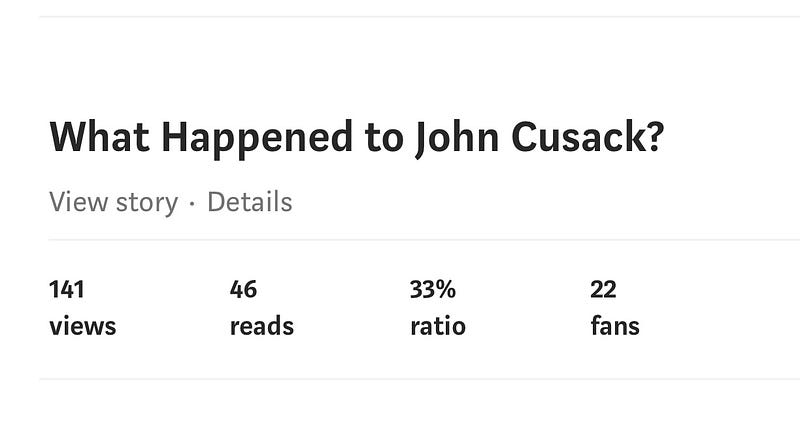
Why does one of my stories have a 33% read ratio and another 89%? Was it the title? The opening paragraphs? Was it the subject?
I’ve been on Medium now for four months and have published 187 articles. I’m still figuring out what makes one story succeed and another bomb, but I think I’ve discovered one trait that stories with a 50% or higher read ratio have in common.
The number one trait of my stories with the highest read ratio is this: It relates to a pain point or some frustration of a niche audience.
Here’s is an example of an article relating to a pain point or problem of a particular niche:
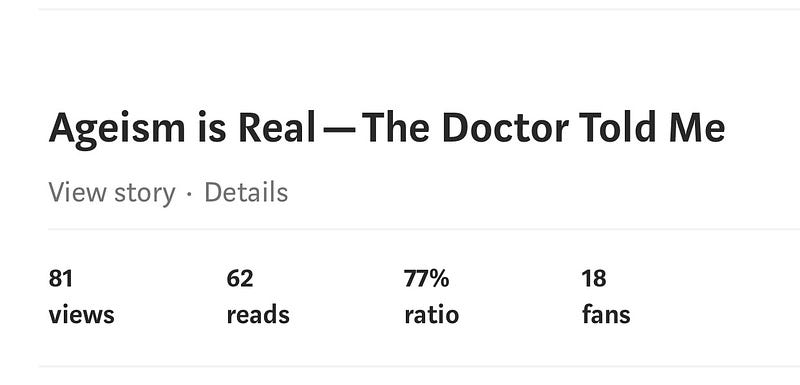
My audience for this story was people from the Baby Boomer generation, and I think the 77% read ratio related to ageism being a common concern or worry they have as they get older.
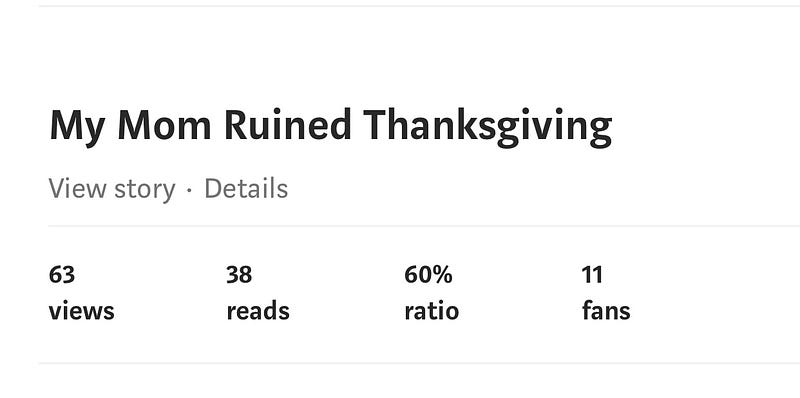
Another pain point in Baby Boomers is dealing with family members every Thanksgiving:
Some of my other stories with a high read ratio deal with recovery, and it’s the main paint point they’re dealing with is wanting to remain sober.
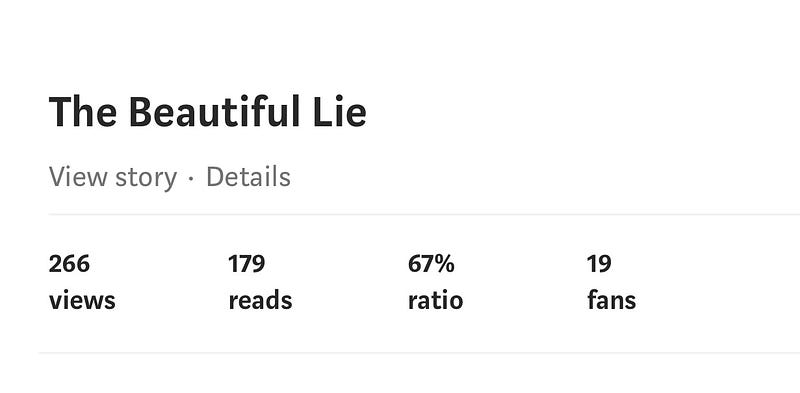
What these examples show is the key to writing stories with high read ratio is not just throwing a story out there and hoping people will read it.
It’s taking time to understand your audience, to know your story relates to people’s interests.
Understanding your audience
You can see this trait in Jesus when he interacted with people during his time on earth. In the book of Mark, some religious teachers criticized him for eating with sinners and tax collectors.
“It is not the healthy who need a doctor, but the sick. I have not come to call the righteous, but sinners.” — Jesus, Mark 2:17
This shows Jesus was clear that he was here for the sinner, the hurting, the poor, and those with a physical disability or in need of peace — and he wasn’t here for the self-righteous people who didn’t think they had problems in their lives.
In other words, he had a great understanding of the pain point of the people he wanted to reach, and he didn’t waste time talking to people that he knew weren’t interested in what he taught.
Ways to know your audience better
Here are three simple questions I ask myself about my audience before writing a story:
- What problems do they have?
- How might your story solve their problem?
- What do they want, and how do they think?
If my story can hit on a problem a lot of people in a niche or demographic have (Five ways to find The One), my story will have a chance to have a higher read ratio because I’m writing about a topic that’s relevant to many people.
Finding a built-in audience
Writing for publications is a great way to find a built-in audience for your stories. As you know, publications are structured around a subject like love or parenting, and each one has a target audience.
This makes it a lot easier to understand the pain point and problems of your particular audience.
Take Crow’s Feet, for example. Here’s what founder/editor Nancy Peckenham says she is looking for in her Submission Guidelines:
Are you 25 going on 40 and can already see that aging is unavoidable, no matter how many tricks you may play?
When you see an older worker being joked about, do you smirk knowingly along with your co-workers, or do you shudder at the prospect of your decline?
Have you trimmed the first decade of your working life from your resume so at least you will get a foot in the job interviewer’s door?
Do you look in the mirror at your 60-something face and give thanks for making it this far in life?
Do you love life and all it brings you, no matter what decade of life you’re in?
Are the characters in your imagination young or old?
The focus of Crow’s Feet is aging. If you want to write a story with a high read ratio for this publication, you just need to find a topic people in the 50+ demographic is going through in their lives and write the story well.
What’s a good read ratio?
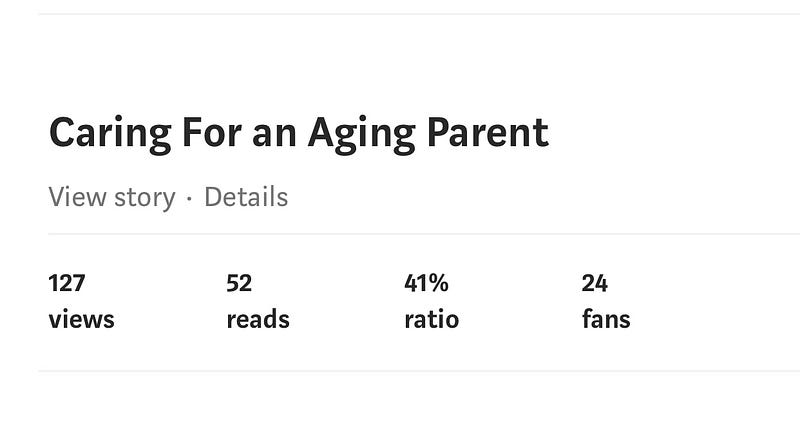
You might say 41% is not a great read ratio for a story. I’ve read other writers say they consider anything over 40% to be a good read ratio.
Writing on Medium to me is like playing baseball where if a player gets a hit in one of every third time up at the plate then they’re regarded as a great hitter.
You might aim to 50% or higher in your stories, but it’s better to be realistic and to understand Medium readers are often on a high-speed car chase.
They click to open an article and move on if it doesn’t grab their attention right away, so to me a story with a 40% or higher read ratio is doing well, and then I keep promoting these stories in links at the end of my latest story.
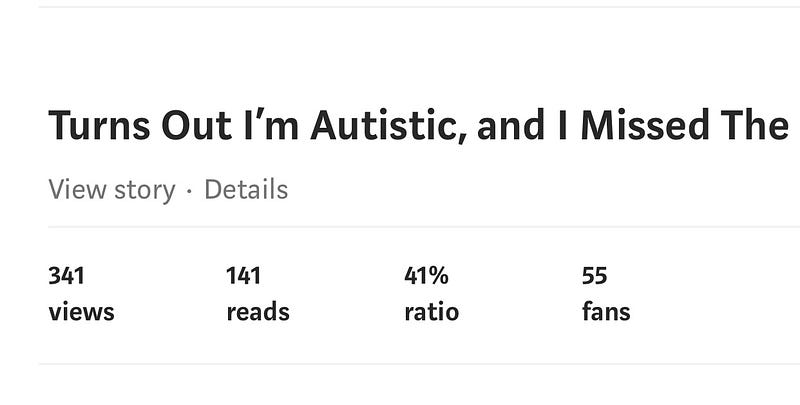
I hope this story gave you some ideas to increase the read ratio to your stories since we’re paid whenever people read our stories, and we all want to earn a little more coffee money or buy a new car.
Thanks for reading my story.
You might also like:
Or check out my YouTube video on a common writing problem.


