
The New World Order
How Covid-19 is accelerating the coming changes
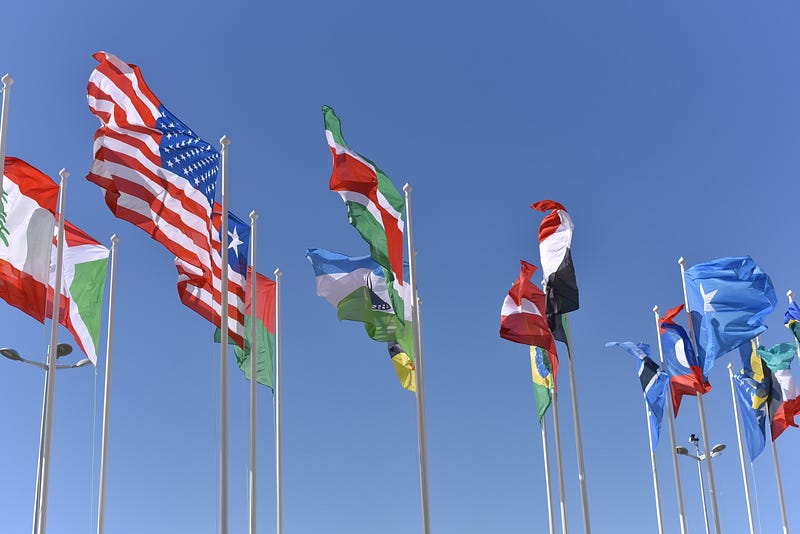
So, farewell globalization. As the virus accelerated in its propagation throughout the world, one after another nation decided to close down its borders except to the most essential traffic. Freedom of movement in the EU was promptly, but quietly, revoked, and nations circled the wagons in fearful self-defence.
One of the features of this new introspection touches on trade in vital medical supplies. Tests, masks, ventilators and other requisites first became the subject of bidding wars, and were then embargoed for export and redirected internally.
Supply chains and dependency on cross-border provisioning were laid bare. Who seriously thinks that we will ever return to how things were, rather than endeavouring to become self-sufficient in what we now know to be essential goods and services?
In the BC (Before Coronavirus) years, liberal commentators were keen to lambast the rise of national populism as being the winding back of decades of progress in international co-operation. It may be hard for them to find a ready audience for a while. In the UK, the fragmentation has gone down to regional level, with popular holiday spots deemed out of bounds to vacationers and second-home owners.
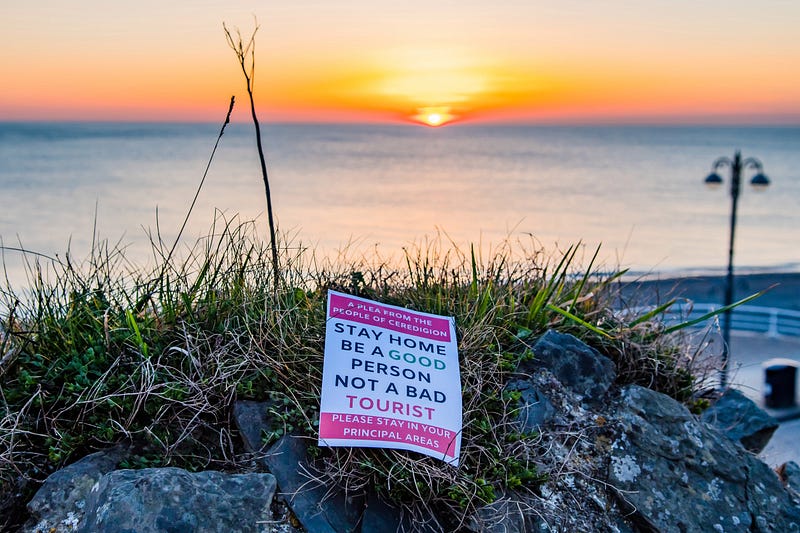
Much of this is understandable. The beauty spots of Cornwall, Wales and Scotland may be delightfully remote from the UK centres of the virus. But they are also underprovided with Intensive Care Units, so will barely cope with local demand should the virus take hold, and could be severely overstretched by the extra requirements of large volumes of “incomers”.
Outside this rationalising, of course, there is a large measure of festering tribalism and hostility to outsiders which has been given a veneer of acceptability in the current extraordinary circumstances.
No matter. I don’t need a hut in the Highlands. I would rather have reliable (at present) internet access to obsess over the daily statistics, and physical proximity to the larger healthcare centres in the event of falling victim.
The internet, of course, has now become one of the most vital of services, as it allows us to cut out the middlemen, the intermediaries who used to be our only conduit for goods, services and information. This change was already afoot, but has been given rocket fuel by the enforced isolation of the populace.
Here are some of the ways in which traditional structures are being bypassed, which are unlikely to be immediately relinquished when and if the world returns to “normal”.
- As soon as non-essential stores (like clothing and electrical goods) closed down, online ordering services saw a spike in demand. It is so obviously more efficient to order what you can see direct from a warehouse than to trek around the shops looking for just the right colour or style or specification. Why do we need to return to that investment in premises and staffing, which of course has to be added to the price? It’s not going to happen, which will accelerate the death of the already moribund High Street. Except for food stores (which are having a bumper time of it, perhaps aided by the closure of restaurants and bars).
- Cinema and concerts have been replaced by Netflix and other streaming services. This was on the increase in any case, but has been given such a boost that they have had to throttle the bandwidth needed by titles (by distributing lower quality versions) simply to cope with the rising tide of viewers. My guess is that isolation is going to create a lot more germophobes, who will continue to prefer a private performance in their own home rather than rushing back to crowded cinemas and music venues.
- The Federal Reserve (along with many other central banking authorities) has devalued the cash in people’s pockets and their bank accounts by declaring unlimited quantitative easing. This means that they are giving themselves a licence to print as much money as they want to keep the economy afloat, at the expense of the value which citizens will obtain for the money they already have. Coming up on the outside track is Bitcoin and its pals, essentially internet money, which governments do not control and cannot directly devalue in this way. Bitcoin, since inception, has been programmed to have a maximum quantity ever of 21 million coins, the majority of which have already been mined and distributed. It may be volatile in terms of asset price, but it is completely stable in terms of supply, as that is programmed into the protocol. It may also be transmitted around the world almost instantly with transaction fees measured in cents. No wonder central and other banks don’t like it. It is outside of their control and, once it takes hold, they will be effectively disintermediated, meaning that their services will no longer be required, or will be hugely reduced in scope.
- Print journalism has been on the decline for many years, and most publications have tried to spin up online versions of themselves, with varying success. But undermining these traditional (and very often tainted) sources of truth, citizen journalism via Facebook, Twitter, Youtube, even Medium, can give a voice to those stories which would otherwise be overlooked or suppressed. Less credence was given to Chinese official accounts of Coronavirus management once bloggers broadcast scenes of apartment doors being welded shut and pictures from inside the hospitals. Uncurated and unverified popular blogging can be a minefield of disinformation, but in among the dross people will find the unpalatable truths that would otherwise never be made known. That genie is out of the bottle and the cork is never going back in.
Does anyone else see the contradiction above? Countries and governments are putting up the barricades. But under the surface, people are more globally connected than ever. The internet is the great leveller which will usher in a new era of peer to peer connectivity, supporting flows of both information and financial value, across national boundaries and largely outside of the control of national authorities.
Any political party which recognised and promoted this new reality could count on my vote.
There’s one social adjustment currently taking place whose passing I believe will be lamented. Furloughed staff in the UK are having their wages guaranteed up to 80%, with a cap of £2,500 per month. Given the reduced expenses on commuting, petrol and going out, some people will find this a most satisfactory arrangement.
I am still fully employed (from home) but have found I have more time (and inclination) to keep in touch with family and friends, do the occasional burst of writing and dust off the mothballed musical instruments in order to torture the family.
I’m sure that some of the people obliged to stay at home, but with secure funding for their isolated existence, will find it suits them just fine.
It’s tone-deaf to say one is having a good lockdown, when so many are suffering and so many others are putting themselves at mortal risk to alleviate that suffering. But until and unless the virus strikes closer to our little nest, I would be lying if I said it was intolerable.
Nagging at the edge of my mind, even as I write this, is my oldest son, who is working on the frontline as an NHS consultant serving a Covid-19 ward. Anxiety as to his safety (and the safety of his wife when he returns home) is never far from my consciousness. But, as in all stressful situations, I am obliged to compartmentalise, not to imagine the worst that can happen, and to carry on doing what’s required of me at this precise moment.
Which is to STF at home.
Many thanks for reading!
More pondering the imponderable on Coronavirus below.


