
The Naked Truth About German Nudity Culture
19th century’s wild history of the nudist movement.

German socialists considered nudism to be a sign of class struggle. George Hull has explored the emergence of nudist movements in the overpopulated and dirty German cities of the 19th century, before the Nazis.
They used it in their quest for racial purity. Let’s dig into the concept:
The Cultural Shock of Nudism

There aren’t many sources of cultural shock for a British citizen traveling in Western Europe, except for one; coming across naked people on German beaches.
The nudists are to be found everywhere in Germany. You can find them applying their sun creams in Frankfurt’s Grüneburgpark Park near the traffic and bustle of the city. They can also be found near Munich’s Englischer Garten or at any German sauna.
The English Perception of German Nudism
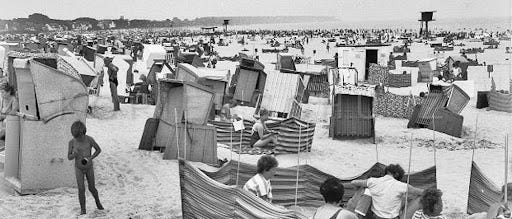
While being shocked by the pervasiveness of nudism in Germany, an English tourist might also perceive it as a manifestation of primitive romanticism on which the Kitsch paganism of the Nazis was drawn.
However, this perception is not even close to the truth. Nudism grew out of the progressive left in Germany. The Nazis banned nudism when they came to power.
The Socio-Economic Background of the 19th Century
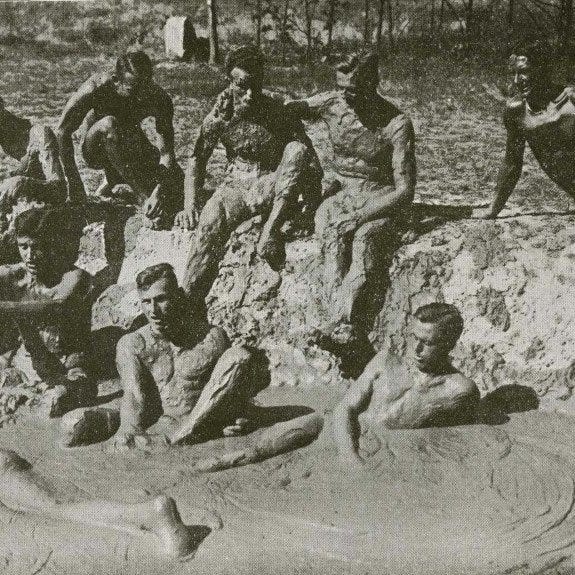
The last quarter of the nineteenth century was characterized by massive industrialization and internal migration in Germany.
Almost half of the German population moved from their place of birth to the urban centers, and such an enormous influx of population created a variety of civil societies and urban subcultures in metropolitan cities.
It also led to overcrowded cities with unhealthy and damp living conditions, so in response to unhealthy living conditions, different communities developed strategies to counter substandard living conditions.
Some communities followed vegetarianism, while others saw abstinence from alcohol as an effective means to be healthy. Some groups adopted Lichtluftbäder’ (‘light and air baths’) — naked sunbathing — as a natural therapy during that period.
Classical Inspiration: Karl Diefenbach

Karl Diefenbach, a painter, and reformer advocated nudism as a way of life. He lived in a quarry outside Munich with his family wearing nothing but a hair tunic in winters.
He was arrested for roaming naked in public but eventually persuaded the court to acquit him. He believed that nudity represented the ideal in classical Greek art as well as in life. He propagated the idea of harmony between body and mind through nudity.
Secret Societies
In the urban artistic circles, secret societies grew with the aspirations of achieving the ideal propagated by Diefenbach. For example, an artistic group called Deutsch-Hellas would meet in the woods and paint each other naked like Greek gods and goddesses.
They also held “beauty evenings,” where the members posed nude as living statues. Sometimes they would also watch celebrities like Olga Desmond dance naked on these evenings. These artists published their photos and musings in a magazine called Die Schönheit (Beauty).
Fidus — Diefenbach’s Most Famous Pupil
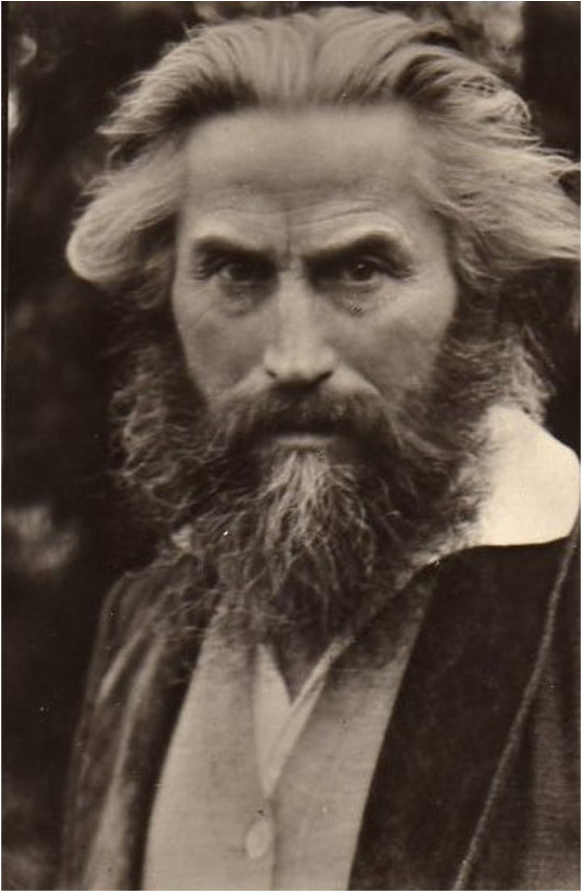
Hugo Hoppener, also known as Fidus, was inspired by Diefenbach and used the German past instead of the Greeks as his ideal. According to the Roman historian Tacitus, Germans had fought the imperial legions in mixed ranks of naked men and women.
Fidus modeled his etchings on these naked warriors as the perfect Nordic figures. Some years after his etchings, Fidus published articles in which he called for a new German culture based on racial purity derived from these warriors.
The Germans embraced these ideas because they associated the public health crisis with racial degeneration.
A Lifestyle Formula
The living conditions worsened for the urban workers, but life expectancy and quality of life generally improved in nineteenth-century Germany.
A new middle class emerged, with no classical education, and had no idea about Tacitus or other scholars who idealized nudism.
The uneducated middle-class was nevertheless impressed by life reformers like Richard Ungewitter. Ungewitter propagated a mixture of veganism and nudism as the lifestyle formula to become physically strong.
He developed the idea of a pure German race, which the Jews and the Africans poisoned. He proposed nudism as the solution as it allowed genetically superior breeders to recognize each other.
A Fitter Proletariat
In the first quarter of the twentieth century, the most popular life reformer was Koch. He had witnessed the adverse impact of industrialization on the young firsthand as he worked as an elementary teacher in Berlin.
He believed that the proletarians needed to be physically and sexually more fitter to uproot the causes of the health crisis. He combined nudism with political discussion and sex education.
After school, he would keep his class and engage them in nude gymnastics, political talks, and sex education. He set up his private school to follow his strategy freely in 1924. By the end of the the1920s, there were 13 Koch schools in Germany.
Nazi Appropriation
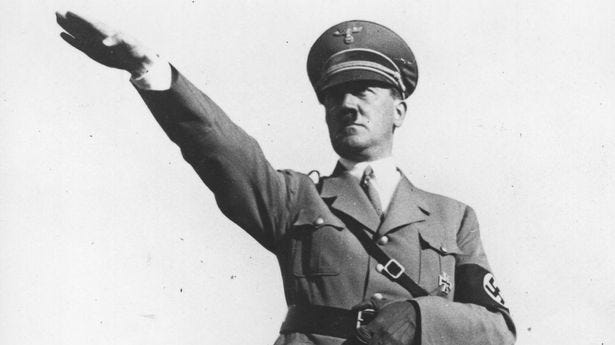
On March 3, 1933, Hermann Goring passed a decree that abolished nudism in Germany. All nudist associations were hunted down and destroyed. Koch tried to carry on with his schools but failed eventually.
The only nudist association tolerated by the Nazis was the League For Body Discipline, as German army commander Hans Suren headed it.
After the war, Koch tried to revive his schools, but his socialist ideals found no support in the new republic. Nudism lost its political and social value after the war.
The 1942 ordinance remained in force, which meant that people no longer had to join nudist associations and clubs. Nevertheless, nudism can still be witnessed on German beaches and in parks.
More from the author:


