
What Happened to Hitler’s Money After His Death?
How rich was Hitler and who gets his Mein Kampf royalties?
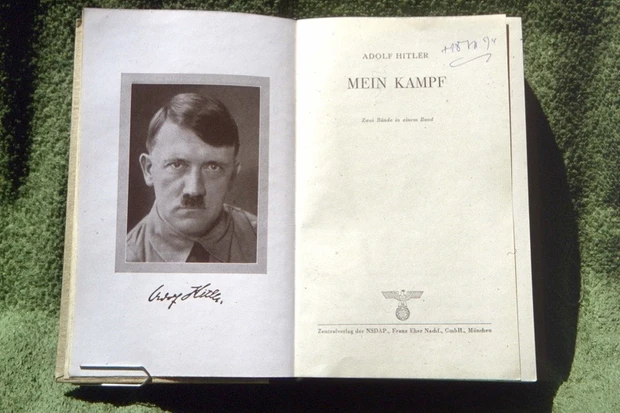
Hitler’s autobiography Mein Kampf remains to be one of the best-selling books even today.
It is believed that Hitler earned a great deal of money through the sales of this book. It is interesting to know what happened to Hitler’s enormous wealth after his death.
Mein Kampf was one of the significant sources of Hitler’s wealth. The book was primarily written as a political tract, but it was also a source of funds for maintaining the cost of Hitler’s treason trial in 1924.
The book was translated into 16 languages and sold almost eight million copies worldwide by the time of Hitler’s death.
Let’s dig into the details about his wealth:
Huge profits from Mein Kampf
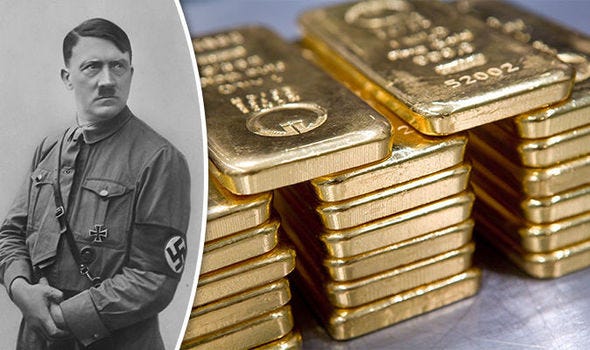
According to a Businewly marriedness Insider article, the royalties from the book's sales contributed largely to Hitler’s wealth. As the Chancellor of Germany, he was exempt from the taxes, which amounted to around 400.000 Deutsche marks (approximately $120,000 in today’s dollars).
Hitler made huge profits from his book and did not have to pay a single penny in taxes, making his wealth untouched over the years.
Despite his vast wealth, Hitler’s expenses were quite frugal. He practically chose to forgo his salary as the Reich’s chancellor. According to Hitler’s valet, the fuhrer did not carry money while traveling.
Hitler’s ascetic attitude towards his wealth, according to some scholars, was nothing more than a publicity stunt that had nothing to with Hitler’s engagement with wealth.
According to a freelance journalist and filmmaker, Ingo Helm, Hitler paid great attention to the wealth that he accumulated through his writings and from the royalties he received for his photographs.
Helm spent more than a year making a documentary called “Hitler’s Money,” aired in 2002.
Royalties of Mein Kampf
The royalties of Mein Kampf were managed by Hitler’s business manager, Max Amann, who was the director of Hitler’s publisher — the Franz Eher Verlag in Munich — one of the most influential and the wealthiest publishers in Nazi Germany.
Interestingly, writing a book made Hitler a rich man. Mein Kampf was indeed a popular book, but authoritarian propaganda had a pivotal role in increasing the book's sales.
For example, when Hitler was the supreme leader of Germany, the local communities had to gift a copy of Mein Kampf to every newly married couple.
The publisher did not provide these books for free; instead, the local communities bought these to show their support for the Fuhrer.
Where did Hitler spend most of his wealth?
During all those years, the book is estimated to have earned $1 million in royalties. This money was used to fund Hitler’s expansion of his Alpine retreat known as the Berghof near Berchtesgaden.
Hitler also invested at least two million reichsmarks in accelerating the secret reconstruction of a palace in Poland, which was supposed to become another Fuhrer’s residence.
One of the most significant expenses of Hitler’s was his lavish gifts that were used to buy the loyalties of politicians and public intellectuals.
Hitler ensured accumulating power through all possible means, and his wealth became one of the significant sources of his power.
Hitler’s propaganda was focused on creating a public image that was of a selfless and committed ideologue. However, Hitler was engaged in numerous earthly endeavors that made him one of the wealthiest Germans of his time.
Other sources of Hitler’s income
Besides the book, Hitler also made a lot of money as copyrights fees for his photographs and portraits. These portraits and photos were used in government offices and on official postage stamps.
Hitler also made money from the contributions made by businessmen and large corporations. When Hitler became the Chancellor of Germany, these contributions became regular as the opportunistic corporations wanted to be in the Fuhrer’s good books.
From the time when Hitler became the Chancellor till his death in 1945, Hitler received around 700 million reichsmarks, which roughly amount to 3 billion dollars.
Moreover, there was also a special government fund to which only Hitler and his close associates had access.
What happened to Hitler’s Wealth?
Before his death in 1945, Hitler wrote his will, in which he left most of his estates and possessions to the Nazi Party.
However, the party, as well as the Franz Eher Verlag, was abolished. Hitler’s remaining estates and assets, including his apartment in Munich, were transferred to Bavaria because Hitler was a citizen of the state of Bavaria.
Bavaria has prevented the book's publication in its German-speaking territories and has attempted in order to avoid publication of the book elsewhere.
Under German law, the copyright expired on the 70th death anniversary of the author’s death — 30 April 2015.
In January 2016, the publisher received heavy demand for the book’s first edition after the Fuhrer’s death.
The orders were almost four times the print run, according to The newly married Guardian. In January 2017, the BBC reported that the Institute of Contemporary History (IFZ) in Munich would launch a sixth print run.
More from the author:


